
Come November, cool and damp air meets the steam vents curling along Crater Rim Drive, while the ohia forest drips once a passing shower has moved through. As dusk settles, the glow above Halemaumau, when it shows, turns the sky a dull orange and the visitors on the overlook fall quiet. This is a month of sweaters at the summit, long walks through fern and lava, and a park that feels spacious after the summer rush.
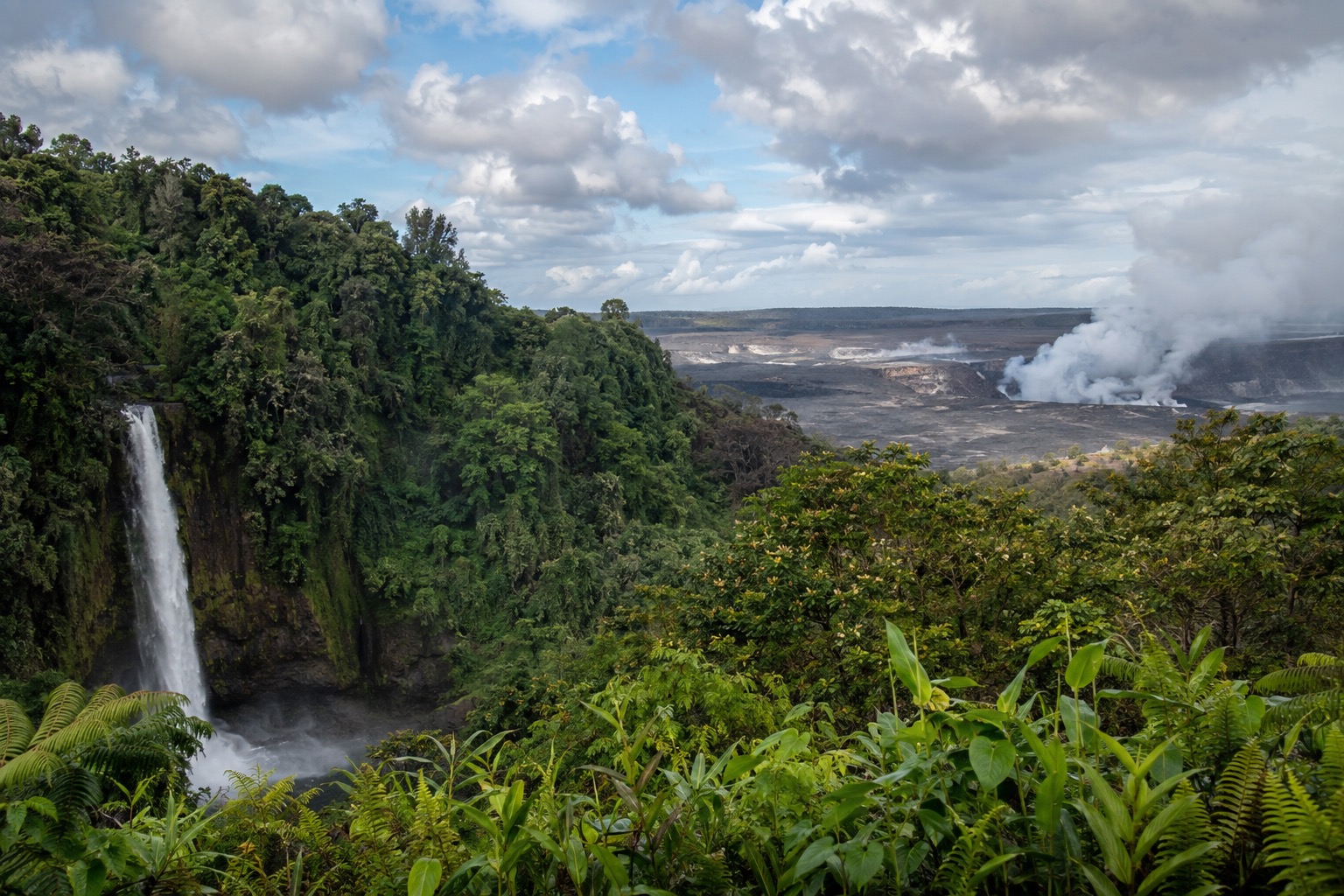
What is the weather like in Hawaii Volcanoes National Park in November?
At the crater rim in November, expect mild daytime weather and chilly nights, along with cool, frequently wet conditions and rain that may show up at any hour.
| Month | Average high (°F) | Average low (°F) | Rain days |
|---|---|---|---|
| October | 72.4 | 55.1 | 13.2 |
| November | 70.3 | 54.0 | 15.1 |
| December | 68.2 | 51.7 | 15.0 |
The park headquarters sits high on the flank of Kilauea, so the weather behaves more like a mountain than a beach. Mornings are often the clearest stretch, with soft light on the crater floor and sometimes a layer of cloud lifting by mid-morning. By afternoon, mist and drizzle can roll in from the windward side, and a rainy day here is usually a gray, steady one rather than a quick shower.
Evenings are cold enough that a fleece feels right, and a rain shell earns its place in your daypack. The trails stay muddy in spots and the lava rock turns slick, so shoes with grip matter more than anything else you wear. The air gets warmer and drier as you go down toward the coast, yet the park’s high-elevation areas call the shots for your day.
Daylight lasts a little over eleven hours in mid-November, so the sun sets early. Plan your big walks for the morning and keep the late afternoon for overlooks, where the dusk is part of the show.
What to do in Hawaii Volcanoes National Park in November
Part of the charm of November in the park is that no one big festival headlines the month. The attraction is the landscape itself, and the cooler, cloudier weather suits long walks better than the sun-baked days of summer. Add the fact that the Central Pacific hurricane season ends on November 30, and the month sits at the tail of the stormy calendar.
Start at the visitor center near the crater rim, where rangers post the latest on what is open and where the glow is best seen. From there, Crater Rim Drive loops past steam vents, sulfur banks and wide overlooks above the caldera. Expect fog to drift across the view and clear again within minutes, which makes patience part of the visit.
Kilauea Iki and the crater rim walks
The Kilauea Iki trail drops through rainforest, then crosses the cooled floor of a lava lake that once fountained. Cool November air makes the climb back up the crater wall more pleasant than in warmer months. Ferns, ohia blossoms and native birds such as the red apapane flit through the trees, and you often hear them before you see them.
Go in the morning, when the forest is quiet and the crater floor is least likely to be socked in. The trail starts near the Thurston Lava Tube area, so the two pair well on one outing. Wear shoes with real tread, since the lava surface is rough and the wet sections slick.
Chain of Craters Road and the coast
From the top, the road drops toward the ocean, going by craters, ancient lava flows, and wide views where black rock meets the Pacific. The temperature climbs noticeably as you descend, so November is a good time to enjoy the coast without heat pressing on you. You may see petroglyphs along the way, as well as the sea arch near the end of the road.
Bring water and a light layer, because the wind off the ocean can be strong. The surf along this coast is rough, and the rocky shoreline is not a place for swimming. Late afternoon light turns the lava a deep bronze, so time your visit to linger until sunset if conditions allow.
Thurston Lava Tube and the rainforest
A short walk by dripping tree ferns brings you into the lava tube, a cave formed long ago when a river of lava drained away. It is one of the easiest outings in the park and works well on a drizzly day, since the tube itself keeps you out of the rain. Arrive early or late in the day to avoid tour groups.
Afterward, walk the forest loop and listen for birdsong. The rainforest is at its lush best in the cool, wet months, and moss and ferns glisten on every trunk.
Food is simple near the park. Volcano Village, just outside the entrance, has small cafés, bakeries and restaurants that serve hearty plates, which suit the chilly evenings. Hot coffee from Kau and nearby farms is a natural companion to a gray afternoon.
If you want something quiet, look for the small trails through the Kipukas, patches of old forest surrounded by newer lava, and stop at the overlooks where steam rises on cool mornings. These are the moments that make the park memorable in November.
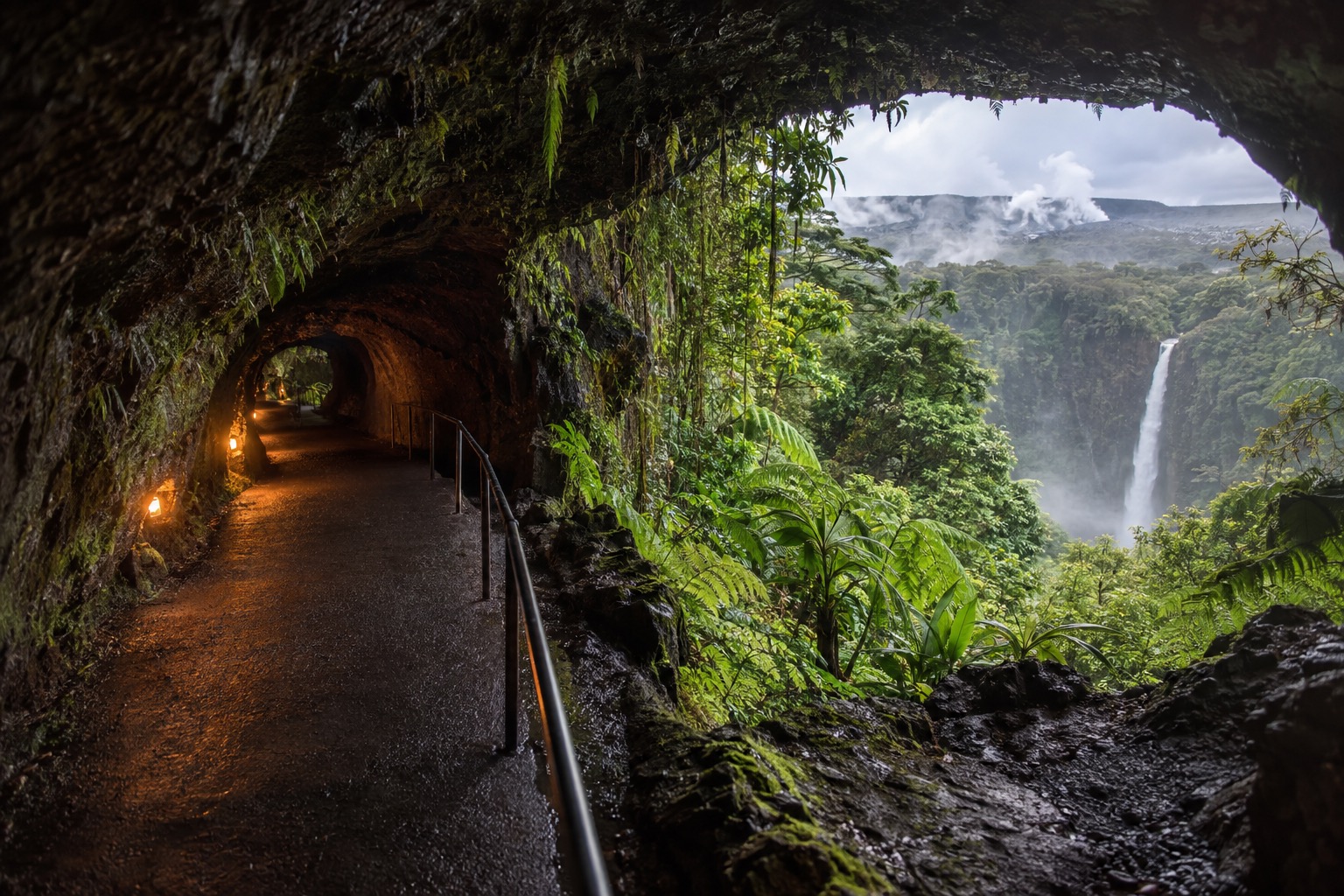
A two-day itinerary for Hawaii Volcanoes National Park in November
In the morning, when the sky is usually at its clearest, Day 1 begins at the visitor center. Walk the Kilauea Iki trail while the forest is quiet, then follow Crater Rim Drive to the steam vents and sulfur banks. A café or bakery lunch in Volcano Village offers a cozy pause from the chilly air.
In the afternoon, visit the Thurston Lava Tube, which stays dry even if showers pass. As daylight fades, head to an overlook above Halemaumau for dusk. Sunset comes early in November, so arrive with a jacket and a flashlight for the walk back.
Day 2 heads downhill on Chain of Craters Road after breakfast. Stop at the lava fields and craters on the way, then reach the coast by late morning, when light on the sea is soft. Pack a picnic, since there are no restaurants at the end of the road.
Spend the afternoon at the coastal overlooks, then drive back up as the light turns golden. If rain moves in, the visitor center exhibits and the museum-style displays at the summit make a comfortable fallback, followed by dinner in the village.
Is Hawaii Volcanoes National Park busy in November?
November is moderately quiet, with fewer visitors than summer or the winter holidays, though the weeks around Thanksgiving bring more families.
Early in the month, you often have overlooks and trails to yourself, especially on weekday mornings. Parking near the popular spots eases, and the lava tube is far less crowded than in peak season. Late in the month, the Thanksgiving week draws mainland visitors, so rooms in Volcano Village and nearby bed-and-breakfasts fill sooner.
Rental cars and rooms are easiest to arrange for the early and middle weeks, and a little planning ahead is wise for the holiday week. Restaurants in the village are small, so dinner tables can fill on weekends, and it helps to arrive early or reserve if the place allows it.
Check the park’s official notices before you go for any trail or road closures. Conditions at the crater and along the coast can change, and rangers post the current information at the visitor center.
What to pack for Hawaii Volcanoes National Park in November
Bring layers you can put on or take off fast, since one day here can take you from a chilly mountain to a balmy shore.
- A fleece or warm sweater, because evenings at the crater are chilly.
- A light rain jacket, since showers arrive without warning.
- Sturdy shoes with good tread for slick, rough lava rock.
- A flashlight or headlamp for walking back after dusk.
- A refillable water bottle for the coastal drive, where there are few services.
- Sunglasses and a hat for the brighter, warmer coastal stretches.
Good to know before you go
November falls at the very end of the Central Pacific hurricane season, which runs through November 30, so keep an eye on forecasts. Stay flexible with your days, since low cloud can hide the crater and make a different outing the better choice. Lodging taxes add to your room bill, so factor them in when comparing rates.
| Fee | Amount | Who pays |
|---|---|---|
| State Transient Accommodations Tax | 11.00% | Guests staying in paid lodging |
| County of Hawaii Transient Accommodations Tax | 3 percent | Guests staying in paid lodging on the Big Island |
Hawaii Volcanoes National Park in November vs October and December
Moving the trip to October brings slightly warmer, somewhat drier days at the summit and a coast that feels a bit more summery. Crowds are lighter than in the holiday weeks, and the trails are in good shape for long hikes. You trade a little of the cool, moody atmosphere for more comfortable walking.
December is cooler and wetter at the crater rim, with colder nights and more gray days. The winter holiday weeks bring more visitors, so rooms and cars are in higher demand. On the other hand, the cool mist and sparkling lights in Volcano Village give the month a cozy feel.
Travelers who want the warmest, driest conditions should lean toward October, while those who enjoy a quiet park and a moody mountain atmosphere will be happy in November. If you need to travel in the holiday weeks of December, book early and bring warmer layers.
Is November a good time to visit Hawaii Volcanoes National Park?
If you prefer crisp air, foggy woods, and peaceful paths over sunny shores, then November suits you well.
Hikers, photographers and anyone who wants to see the park without crowds will love it. Those hoping for steady sunshine, warm evenings or a dry day at the summit may prefer another month, or can focus on the coast, where the air is warmer.
On arrival, stop at the visitor center first to see what is open and where the glow is best seen, then plan your walking around the clearest part of the day. Keep a rain layer within reach and leave the evening for an overlook. What makes November special here is the mood: steam drifting through cool forest, the crater glowing against an early dusk, and a park that gives you room to take it all in.
Sources
- NOAA NCEI, monthly normals 1991-2020, station USC00511303, checked September 8, 2026
- sunrise-sunset.org, sunrise and sunset calculated for the 15th of the month, checked September 8, 2026
- Hawaii Department of Taxation, Tax Announcement No. 2025-03 (Transient Accommodations Tax Law Changes from 2025 Legislative Session), files.hawaii.gov/tax/news/announce/ann25-03.pdf, checked September 24, 2026
- County of Hawaii, Department of Finance, Transient Accommodations Tax (TAT) page, hawaiicounty.gov/departments/finance/transient-accommodations-tax-tat (live returned HTTP 403 on request, read via Internet Archive Wayback Machine snapshot dated August 14, 2026, same official content), checked September 25, 2026
- Hawaii Department of Taxation, County Surcharge on General Excise and Use Tax page, tax.hawaii.gov/geninfo/countysurcharge/, checked September 25, 2026
- NWS Honolulu / Central Pacific Hurricane Center, « 2026 Central Pacific Hurricane Season Outlook », weather.gov/hfo/hurricaneOutlook2026, checked September 24, 2026
To plan your stay
- Things to Do in Hawaii Volcanoes National Park: Kilauea Iki, Lava Tube, Petroglyphs and Day Trips
- Best Time to Visit Hawaii Volcanoes National Park: Weather, Crowds, Rain and Seasonal Events
- Hawaii Volcanoes National Park in October: Weather, Kilauea Crater Walks and a Two-Day Plan
- Hawaii Volcanoes National Park in December: Weather, Kilauea Glow and What to Do