
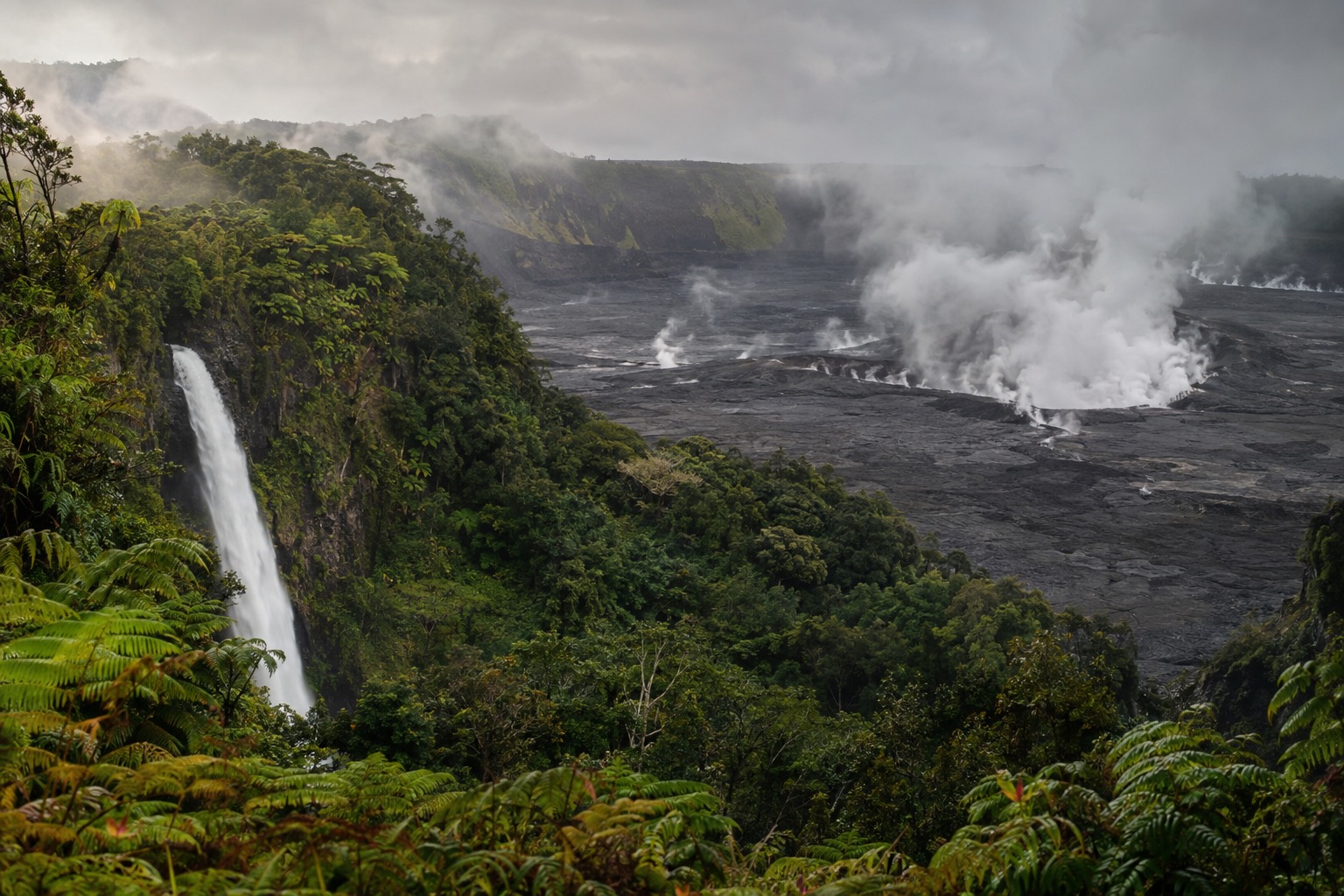
An April morning at the edge of Kilauea brings a scent of damp ohia and sulfur to the air, with wispy steam rising from fissures in the earth as a cloud moves over the caldera. Birds call from the rain forest, and the light turns silver, then gold, in the space of a few minutes. April is a cool, damp, atmospheric month for walking a volcano, with fewer crowds than the winter holidays and a landscape that rewards a warm layer and some patience.
What is the weather like in Hawaii Volcanoes National Park in April?
Cool and damp, with mild afternoons, chilly nights and showers on most days. Perched at a high spot on Kilauea’s slope, the park headquarters experience weather that is entirely unlike what you find at the beaches an hour away.
| Month | Average high (°F) | Average low (°F) | Rain days |
|---|---|---|---|
| March | 67.5 | 50.7 | 15.7 |
| April | 68.3 | 51.9 | 17.1 |
| May | 70.5 | 53.0 | 13.3 |
Mornings start cool and often misty, and they are usually the best time for a view across the caldera before clouds build. Afternoons are mild enough for a light jacket, not shorts weather, and the rain comes as passing showers that can turn heavy for a short time. This is the wet, windward side of the Big Island, so a dry day is a pleasant surprise rather than a given.
Rain falls on most days of the month, and only a couple of those days bring a real downpour. Showers tend to soak the rain forest trails and the crater rim, while the lava deserts down the Chain of Craters Road side can be sunnier and drier. Evenings are properly cold for Hawaii, so you want a fleece or sweater once the sun goes down.
The light is long enough for a full day outdoors, with roughly twelve and a half hours of daylight in the middle of the month. Clouds sometimes break at dusk and give the crater a glow, and the steam vents look their most dramatic in the cool air. There is no coastline to swim from inside the park, so the sea is a view from the cliffs, not a plan.
What to do in Hawaii Volcanoes National Park in April
April is a good month for walking, because the cool air makes long trails comfortable and the wet forest is at its greenest. Ferns unroll along the paths, native birds flit through the ohia blossoms, and the steam rises thickly in the damp air. It is also the week after Easter when the Merrie Monarch hula festival fills Hilo, the nearest town, with dancers and visitors when Easter falls early enough, and the festival gives a cultural counterpart to the volcano visit.
The park is also a place of deep meaning to Native Hawaiians, who see the crater as the home of Pele. Stay on the marked trails, leave lava rocks and plants where they are, and treat the steam vents and the crater rim as sacred ground rather than a backdrop for photos.
Kilauea caldera and the crater rim
The rim of the caldera is the heart of any visit, and the overlooks near the visitor area give wide views into the crater when the clouds allow. Steaming vents line the road and the trail edges, and the ground smells of sulfur in places. The cool April air makes the steam thick and photogenic, especially in the morning.
You can drive the crater rim road, stop at several overlooks and walk short sections of trail between them. The rim can feel exposed when mist and wind roll through, so even for a quick stop, pack a layer. A visit here suits almost everyone, including families with small children and travelers who prefer not to hike far.
Thurston Lava Tube and the rain forest
Near the rim, a short loop leads through tall tree ferns to a cave formed by flowing lava, now a tunnel lit for walking. The fern forest around it is dripping and bright green in April, and birdsong echoes through the canopy. Plan on a slow, easy walk, and expect the path to be wet and the tunnel cool.
It is one of the most popular stops in the park, so early morning or late afternoon tends to be quieter. A rain jacket is more useful than an umbrella under the dense trees, and shoes with grip help on the damp stones.
Chain of Craters Road and the coast
This road winds down from the cool summit area through old lava flows toward the sea, and the temperature rises as you descend. You pass black lava fields, craters and, at the end, tall sea cliffs where waves crash against the rock. The coast feels dry and open compared with the misty summit, and April light can be dramatic over the black rock.
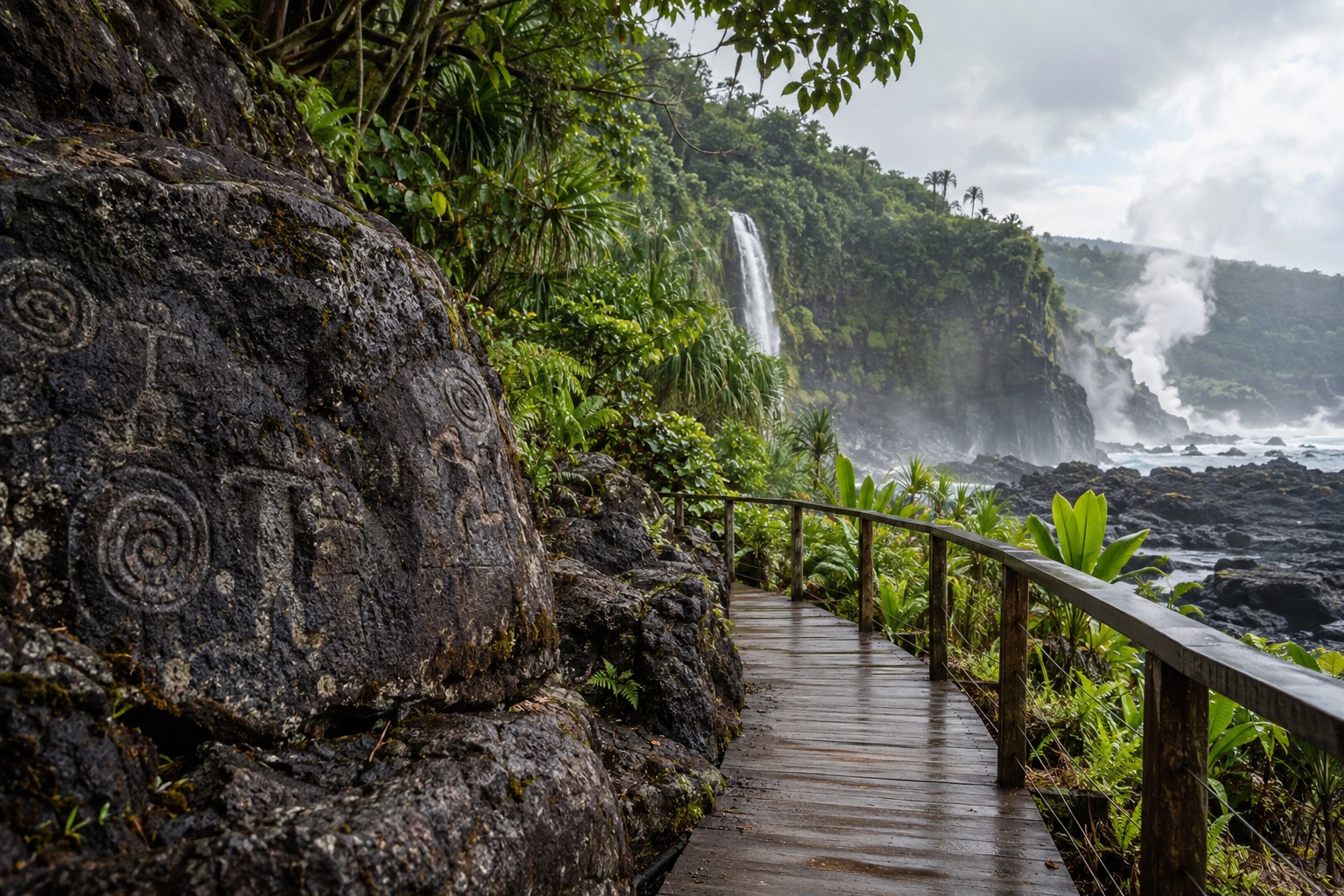
Petroglyphs near the road tell an older story of the people who lived here, and a boardwalk keeps visitors off the carvings. The surf along this coast is powerful and the shoreline rocky, so this is a place for looking at the ocean, not swimming. Bring water and sun protection, because there is little shade.
Beyond the main stops, a few shorter walks reward the time: a loop across an old crater floor, a stroll along the rim at dusk, and a stop at the steam vents when the air is cold. Food inside the park is simple, so many visitors eat in Volcano village just outside the gate, where small restaurants and bakeries serve warm meals on damp days, and the cool weather suits soup and coffee.
A two-day itinerary for Hawaii Volcanoes National Park in April
Day 1 starts early at the crater rim, when the air is coolest and the clouds have not yet settled. Walk the overlooks and the steam vents first, then take the short loop through the fern forest to the lava tube before the tour groups arrive. Eat a warm lunch in Volcano village, where bakeries and small cafes suit a damp day.
In the afternoon, drive the crater rim road to the remaining overlooks, and stop at the visitor center for a look at the exhibits and a ranger talk if one is on. If the weather turns heavy, the museum and the visitor center are the dry fallback, and the village cafes make a cozy wait. Come back to the rim near dusk, when the sky can glow over the crater, and bring a fleece because the evening is cold.
Day 2 heads downhill on the Chain of Craters Road, with stops at the old craters and lava fields as the weather warms. The air at the coast is drier and sunnier than at the summit, so this is the better half of the day for a longer walk. Pause at the petroglyph boardwalk and then continue to the sea cliffs at the end of the road.
Have a picnic at the coast, since there is little food on the road, and begin the drive back by mid-afternoon to leave time for the viewpoints on the way up. If you want an early dinner, go to the village. On a rainy day, shorten the coast trip and spend the hours in the fern forest and at the visitor center, which hold up better in wet weather.
Is Hawaii Volcanoes National Park busy in April?
April brings a moderate level of activity, with visitors arriving steadily but without the crowds that come during the winter holidays or summer school vacation. The park draws day-trippers from the Kona and Hilo sides of the island all year, so the main overlooks and the lava tube always have people.
Spring break from the mainland and the Easter week can bring more families, and the Merrie Monarch festival in Hilo, held the week after Easter, fills hotels and rental cars on that side of the island. Outside those weeks, April is calmer, and rooms in Volcano village and Hilo are usually easier to find. The small inns and vacation rentals near the park are limited in number, so book early for Easter and festival weeks and a little later for the quiet weeks.
Rental cars on the Big Island are worth reserving ahead for the holiday weeks. Restaurant tables in the village are few, so dinner is easier early in the evening. Mornings at the main stops are quieter than midday, and the road down to the coast is usually peaceful.
What to pack for Hawaii Volcanoes National Park in April
Think layers and rain, because you will be at about four thousand feet where it is cool and wet, then possibly down at a hot, dry coast.
- A light rain jacket, since showers come on most days.
- A fleece or warm sweater for cold mornings and evenings at the rim.
- Footwear that grips well on slick paths and jagged lava stone.
- Long pants for the cool air and the sharp lava.
- For the open coast road, bring a hat and sunscreen.
- A refillable water bottle for the long, shadeless stretches.
Good to know before you go
April falls outside the official hurricane season, which runs from June 1 to November 30. Two things matter most when you plan: the summit’s chilly, damp conditions and the scarce places to stay close to the park. Hawaii taxes on lodging apply to rooms in the area, and they are added on top of the nightly rate.
| Fee | Amount | Who pays |
|---|---|---|
| State Transient Accommodations Tax | 11.00% | Guests of hotels and short-term rentals |
| County of Hawaii Transient Accommodations Tax | 3% | Guests of hotels and short-term rentals |
Hawaii Volcanoes National Park in April vs March and May
Moving the trip to March gives a slightly cooler and wetter park, with more showers in the forest and the tail end of winter in the air. Whale season is still on along the Kona coast, so a trip that combines the volcano with the coast may suit March better. The crowds are a little heavier around spring break.
May is warmer and drier at the summit, with fewer rainy days and softer evenings, and the spring crowds have thinned. The Merrie Monarch festival is over, so Hilo is calmer, and rooms are easier to find. The coast becomes hotter and brighter, which suits long walks less but gives clearer views.
If you want the festival and the green forest, stay with April. If you prefer more dry hours and mild evenings, move to May. If you want to pair the volcano with whale watching, choose March.
Is April a good time to visit Hawaii Volcanoes National Park?
Absolutely, it works for visitors drawn to crisp air, lush woods and an overcast sky, and who are fine with bringing along a rain jacket. It suits walkers, photographers and families who want a quieter park than the holiday season brings.
It is less suited to anyone hoping for dry, sunny days at the rim, because showers are the norm and clouds often cover the crater. If that matters, a later month gives better odds. When you get there, swing by the visitor center first to see what the day holds and which spots are open, then make your way to the rim before the morning gets away. What makes April special here is the mix of steam, fern and mist, with the crater appearing and disappearing behind the clouds while the rain forest drips around you.
Sources
- NOAA NCEI, monthly normals 1991-2020, station USC00511303, checked September 8, 2026
- sunrise-sunset.org, sunrise and sunset calculated for the 15th of the month, checked September 8, 2026
- Hawaii Department of Taxation, Tax Announcement No. 2025-03 (Transient Accommodations Tax Law Changes from 2025 Legislative Session), files.hawaii.gov/tax/news/announce/ann25-03.pdf, checked September 24, 2026
- County of Hawaii, Department of Finance, Transient Accommodations Tax (TAT) page, hawaiicounty.gov/departments/finance/transient-accommodations-tax-tat (live returned HTTP 403 on request, read via Internet Archive Wayback Machine snapshot dated August 14, 2026, same official content), checked September 25, 2026
- Hawaii Department of Taxation, County Surcharge on General Excise and Use Tax page, tax.hawaii.gov/geninfo/countysurcharge/, checked September 25, 2026
- NWS Honolulu / Central Pacific Hurricane Center, « 2026 Central Pacific Hurricane Season Outlook », weather.gov/hfo/hurricaneOutlook2026, checked September 24, 2026
To plan your stay
- Things to Do in Hawaii Volcanoes National Park: Kilauea Iki, Lava Tube, Petroglyphs and Day Trips
- Best Time to Visit Hawaii Volcanoes National Park: Weather, Crowds, Rain and Seasonal Events
- Hawaii Volcanoes National Park in March: Weather, Crater Rim Walks and Two Days Around Kilauea
- Hawaii Volcanoes National Park in May: Weather, Crater Walks and a Two-Day Plan