
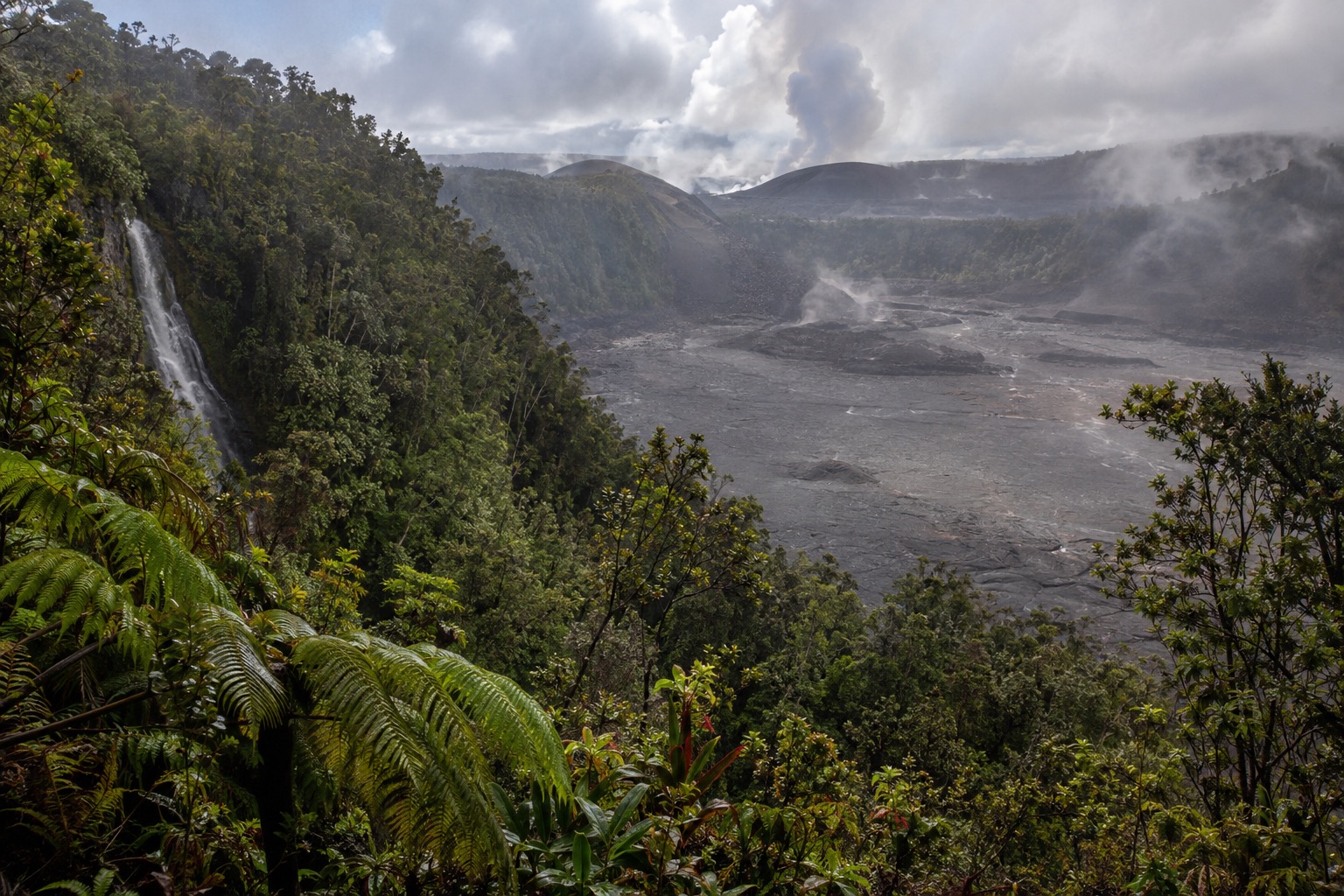
Beside the trail at Kilauea’s rim on a February morning, steam rises from cracks in the ground while the air carries the scent of sulfur and wet ohia. Clouds slide across the caldera and break apart, and the light turns silver and then gold within an hour. February is a cool, green and fairly quiet month for walking a volcano, with ferns glistening and the forest full of birdsong.
What is the weather like in Hawaii Volcanoes National Park in February?
At the crater rim in February, expect damp and cool conditions, days that stay mild, nights that turn chilly, and rain that drifts in and out. The park headquarters sit high on the mountain, so the weather feels nothing like the beaches of Kona or Waikiki.
| Month | Average high (°F) | Average low (°F) | Rain days |
|---|---|---|---|
| January | 68.3 | 49.4 | 10.7 |
| February | 68.2 | 49.3 | 9.6 |
| March | 67.5 | 50.7 | 15.7 |
Passing showers ride in on the trade winds, and a gray drizzle may hang over the rim for an hour until the sun comes back. Mornings are often the clearest stretch, so early starts reward you with open views across the caldera. Afternoons tend to bring more cloud and mist.
Evenings feel properly cold for Hawaii, sweater and jacket weather, and the nights are cold enough that you will want a warm layer for stargazing. Days are comfortable for hiking in a light rain shell over a fleece. The day lasts a little over eleven hours, so plan your longer walks for daylight.
The Kau Desert side of the park is drier, and the coast at the end of Chain of Craters Road is warmer and sunnier than the summit. The sea there is rough with big surf and strong currents on much of this shoreline, so treat it as a place to look at, not to swim.
What to do in Hawaii Volcanoes National Park in February
February is a good month for the park’s classic walks because the cool air makes long hikes pleasant. It is also winter for the islands, so the nights are clear enough, on the right evening, for remarkable stargazing from the high ground. The park has no big festival of its own this month, but the Hawaiian winter season carries a quiet feel of cultural respect, as Kilauea is sacred to Native Hawaiians and the home of Pele.
Winter is also a nesting and flowering time for native forest birds, and the ohia trees may show red lehua blossoms. Look and listen, and keep to the trails. Cool, damp days suit the park’s rainforest, lava tubes and steam vents better than any beach day would.
Kilauea caldera and the rim
For your first stop in the park, head to the caldera rim, the park’s beating heart. Crater Rim Drive gives you overlooks, steam vents and the Kilauea Visitor Center, where rangers tell you what is happening on the volcano that day. Eruption activity changes, so ask there before you plan around any glow.
Walk the trail along the rim near the steam vents for a feel of the landscape, with the fern forest on one side and the broken crater floor on the other. Early morning gives the clearest air. If the caldera fills with cloud, the forest trails stay atmospheric and are lovely in the mist.
This stop suits everyone, from families to serious hikers, and takes anywhere from an hour to a half day depending on how many overlooks you add. Bring layers, because the wind off the crater is chilly.
Nahuku (Thurston Lava Tube) and the rainforest
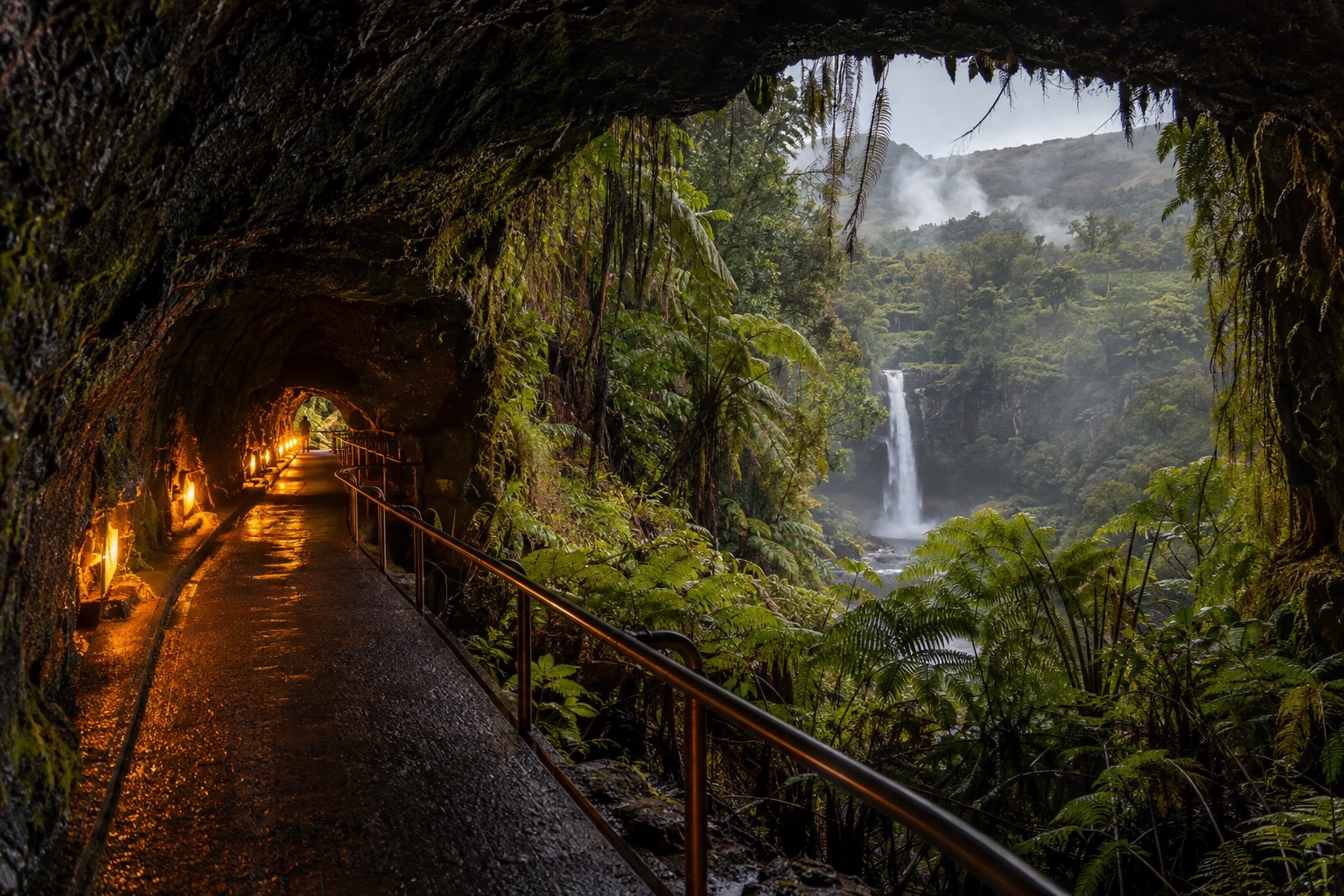
A brief stroll among dripping tree ferns brings you to a lava tube, the cave left behind when lava drained from a flow and hollowed out a tunnel. February rain keeps the ferns bright and the forest quiet and dripping. Birdsong fills the trail early in the day.
It is an easy stop for children and for anyone who wants a gentle outing, and it works well on a drizzly day because the tube itself keeps you under cover. Bring a flashlight or phone light for the darker parts and wear shoes with a grip, since the ground is wet.
Chain of Craters Road to the coast
This road drops from the cool summit down toward the sea across old lava flows, passing craters and wide views of black rock meeting blue water. The change in climate is striking, from misty forest to open, warmer, sunnier coast.
At the bottom you can look at the sea arch and the rocky shoreline, with pounding surf in winter. Stay well back from the edge, since the waves and the unstable cliff are the danger here. Allow a half day, bring water, and fill the gas tank before you go because there are no services along the way.
Stargazing at the summit
The park sits far from city lights, and on a clear February night the sky is crowded with stars. Cold air makes the sky crisp when the clouds clear, so check the evening forecast and go out after dark in a warm coat.
A short walk from the visitor area is enough, and there is no need for special gear beyond a flashlight with a red filter if you have one. Clouds are common, so treat a starry night as a pleasant chance rather than a promise.
| Item | Detail | |
|---|---|---|
| Park rim and coast | Open year-round | Entry fee set by the park, posted at the gate |
A two-day itinerary for Hawaii Volcanoes National Park in February
Day 1 begins at the Kilauea Visitor Center in the early morning, when the air is clearest, to ask the rangers about conditions. Walk the rim trail and the steam vents first, then drive Crater Rim Drive to the overlooks. Late morning is the time for the lava tube and the rainforest walk, which stay pleasant in a drizzle.
Lunch is a simple picnic or a casual meal in the village near the park entrance, where small cafes and lodges serve sandwiches and hot soup that suit the cool weather. In the afternoon, take a second, shorter walk near the rim, then watch the light change as the sun sets, with the day just over eleven hours long. If the clouds clear after dark, step out for the stars.
Day 2 is for the coast. Start early and drive Chain of Craters Road down to the sea, stopping at the craters and the overlooks. The lower elevation is warmer and sunnier, so this is the right order, with the cool rim saved for the first day. Spend the late morning at the sea arch and the lava fields, keeping well back from the surf.
Have lunch before or after the drive, since there is little on the road itself. In the afternoon, climb back to the cool air and finish with a quiet hour in the museum area or a stop in a nearby village for coffee. If rain settles in, shift to indoor stops such as the visitor center exhibits and a long meal.
Is Hawaii Volcanoes National Park busy in February?
February is moderately busy, with a steady stream of visitors but rarely the crush of summer or the winter holidays. Winter brings mainland visitors escaping the cold, and the park gets a mix of day trippers from Kona and Hilo and travelers staying nearby.
The overlooks and the lava tube fill up in the middle of the day, while early mornings and late afternoons are calmer. Long weekends and the Presidents Day weekend bring more people, so aim for early starts on those days. Rooms in the village and nearby lodges can be tight on busy weekends, so book early for holiday weeks and a little later for quiet midweek stays.
Rental cars are the way most people reach the park, and tables at the few restaurants nearby fill at lunch, so a picnic helps. Check the park’s official notices for any trail or road changes before you go, since conditions can shift after storms and volcanic activity.
What to pack for Hawaii Volcanoes National Park in February
Pack for a cool, damp mountain rather than a beach vacation. Layers matter most, since the temperature swings between the rim and the coast.
- A light rain jacket, because showers pass through often.
- For chilly nights at the crater’s edge, pack a cozy fleece or sweater.
- Sturdy shoes with good grip for wet lava and mossy trails.
- For exploring the lava tube and watching the stars, bring a flashlight or headlamp.
- Sun protection and a hat for the sunnier coast.
- A refillable water bottle, since there is little to buy along the trails.
Good to know before you go
February falls outside the official hurricane season, which runs from June 1 to November 30. The main planning points are the cool weather, the long drives from Kona or Hilo, and filling the gas tank before heading down the coast road. Lodging in the area carries state and county taxes on top of the room rate.
| Fee | Amount | Who pays |
|---|---|---|
| State Transient Accommodations Tax | 11.00% | Guests of hotels and rentals |
| County of Hawaii Transient Accommodations Tax | 3% | Guests of hotels and rentals |
Hawaii Volcanoes National Park in February vs January and March
Moving a month earlier to January gives nearly the same weather, with a bit more rain, and the holiday crowds have just left, though early January can still feel busy. The cool air and green forest are much the same, so there is little to gain or lose on the weather side.
March brings more rainy days, and the showers and mist become more frequent, so the clear windows for views and stargazing shrink. Spring break visitors begin to arrive later in the month, which can mean more traffic at the overlooks.
If you want the best chance of dry mornings and quiet trails, February is a sound middle choice. Travelers who want the least rain risk should lean toward February over March, while those tied to the holidays or school breaks can happily shift without losing much.
Is February a good time to visit Hawaii Volcanoes National Park?
February works well for photographers, hikers, and anyone drawn to landscapes that are cool and misty. The air is comfortable for long walks and the crowds are manageable.
Beach lovers and people who dislike chilly evenings or rain should look to the coast instead of the mountain, or choose a drier month. On arrival, start at the visitor center to ask about conditions, then take the rim walk while the morning air is clear. What is special about February here is the mix of steam, fern forest and cold clear nights, a winter mountain in the middle of the tropics, with a sky that on the right evening fills with stars above the crater.
Sources
- NOAA NCEI, monthly normals 1991-2020, station USC00511303, checked September 8, 2026
- sunrise-sunset.org, sunrise and sunset calculated for the 15th of the month, checked September 8, 2026
- Hawaii Department of Taxation, Tax Announcement No. 2025-03 (Transient Accommodations Tax Law Changes from 2025 Legislative Session), files.hawaii.gov/tax/news/announce/ann25-03.pdf, checked September 24, 2026
- County of Hawaii, Department of Finance, Transient Accommodations Tax (TAT) page, hawaiicounty.gov/departments/finance/transient-accommodations-tax-tat (live returned HTTP 403 on request, read via Internet Archive Wayback Machine snapshot dated August 14, 2026, same official content), checked September 25, 2026
- Hawaii Department of Taxation, County Surcharge on General Excise and Use Tax page, tax.hawaii.gov/geninfo/countysurcharge/, checked September 25, 2026
- NWS Honolulu / Central Pacific Hurricane Center, « 2026 Central Pacific Hurricane Season Outlook », weather.gov/hfo/hurricaneOutlook2026, checked September 24, 2026
To plan your stay
- Things to Do in Hawaii Volcanoes National Park: Kilauea Iki, Lava Tube, Petroglyphs and Day Trips
- Best Time to Visit Hawaii Volcanoes National Park: Weather, Crowds, Rain and Seasonal Events
- Hawaii Volcanoes National Park in January: Cool Crater Rims, Rain Showers and a Two-Day Plan
- Hawaii Volcanoes National Park in March: Weather, Crater Rim Walks and Two Days Around Kilauea