
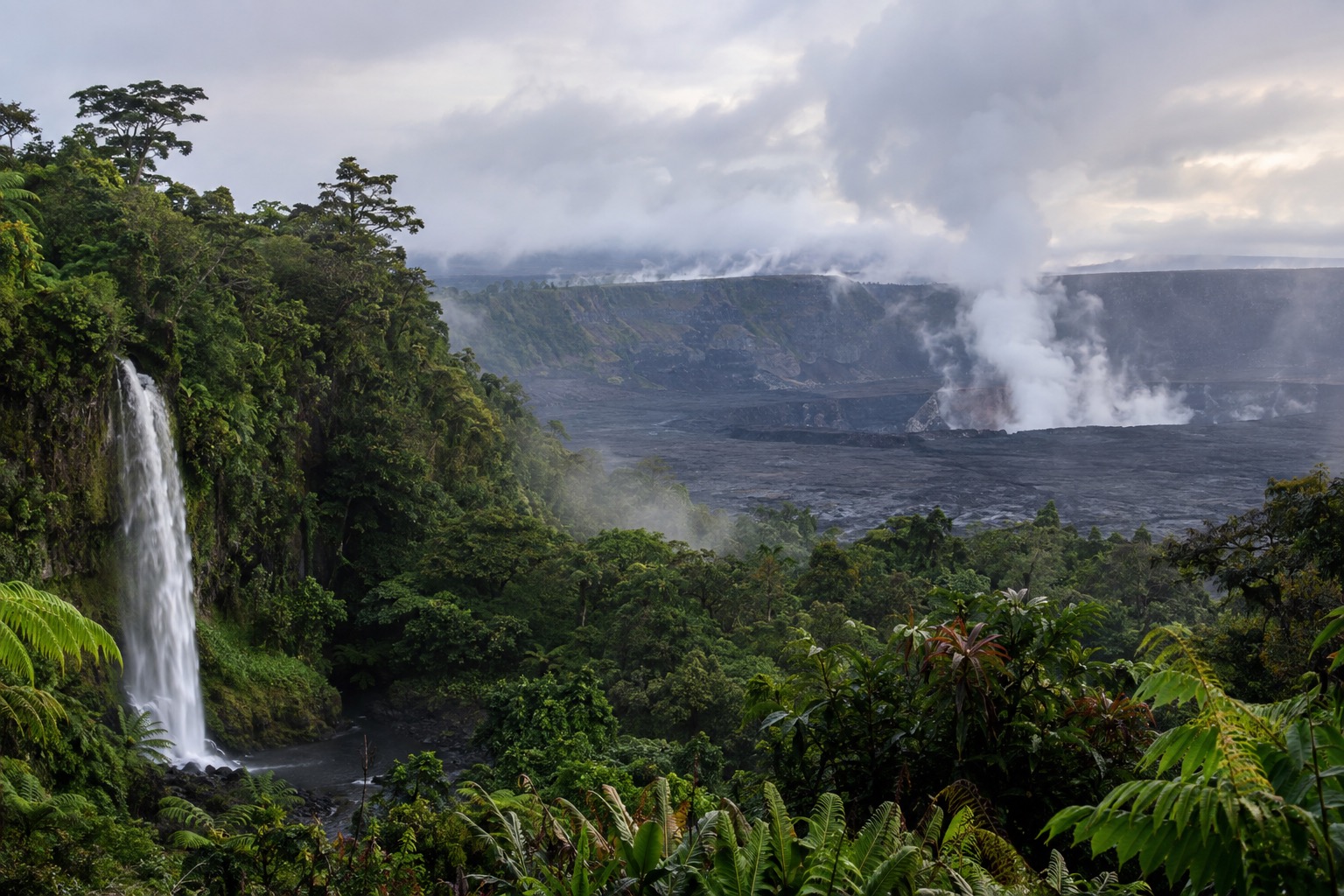
On a January morning at the rim of Kilauea, the air smells of wet ohia and sulfur, and steam drifts from vents in the ground while a thin mist slides across the crater floor. Nene geese pick at the grass near the road, and the first light turns the caldera pewter and then gold. The park is cool and quiet in this season, a good month for walking through rainforest and across old lava, with a jacket on your back.
What is the weather like in Hawaii Volcanoes National Park in January?
January in the park is cool, damp and changeable, closer to a mild spring day in the mountains than to the beach weather most people expect from Hawaii. The park headquarters near Kilauea sits at about 3,970 feet, which explains the chill.
| Month | Average high (°F) | Average low (°F) | Rain days |
|---|---|---|---|
| December | 68.2 | 51.7 | 15.0 |
| January | 68.3 | 49.4 | 10.7 |
| February | 68.2 | 49.3 | 9.6 |
Afternoons are comfortable for walking in a light layer, and mornings and evenings call for a sweater or a rain shell. The rain usually comes as passing showers that blow in on the trade winds, sometimes a steady drizzle that settles over the rim for hours. A few days in the month bring a real downpour, and that is when the crater views disappear into cloud.
Because the summit area is on the wet, windward side of the volcano, the weather can change several times in a day. A gray start often clears by late morning, and a sunny noon can cloud over by three. Daylight lasts a little over eleven hours, so the evening comes early and the crater rim gets dark and cold after sunset.
The coast of the park is a different world, warmer and much drier, and a short drive down the Chain of Craters Road takes you out of the cloud. Winter surf can make the shoreline wild, and the sea cliffs are for watching, not for swimming. Beach and ocean conditions decide what is wise, so heed any signs you see.
What to do in Hawaii Volcanoes National Park in January
January is a month for the big, moody landscapes of the park: the caldera in changing light, lava tubes dripping with moisture, and rainforest trails where birds are loud and the ferns are glossy. The cooler air makes long walks easy, and the lower crowds after the holiday weeks leave overlooks calmer than they are in summer. Plan for weather to shape each day, and keep an indoor option in your pocket.
Kilauea caldera and the rim
The rim is the heart of the park, and the place to start. The Crater Rim Drive and the viewpoints around the visitor center give you the wide look into Halemaumau, where the crater floor can be lit with a glow after dark when the volcano is active. Whether there is any glow or eruption depends on the volcano, so treat it as a chance, never a promise, and ask rangers at the visitor center what is open and visible.
Early morning is the quietest time, with mist in the crater and few people on the paths. Dusk is the second best moment, when the sky darkens and any glow becomes easier to see.
Dress for the wind, because the rim is open and cold at night in January. Closures and trail conditions change with the volcano and the weather, so the park’s official page is the place to check current conditions before you set out.
Thurston Lava Tube and the rainforest
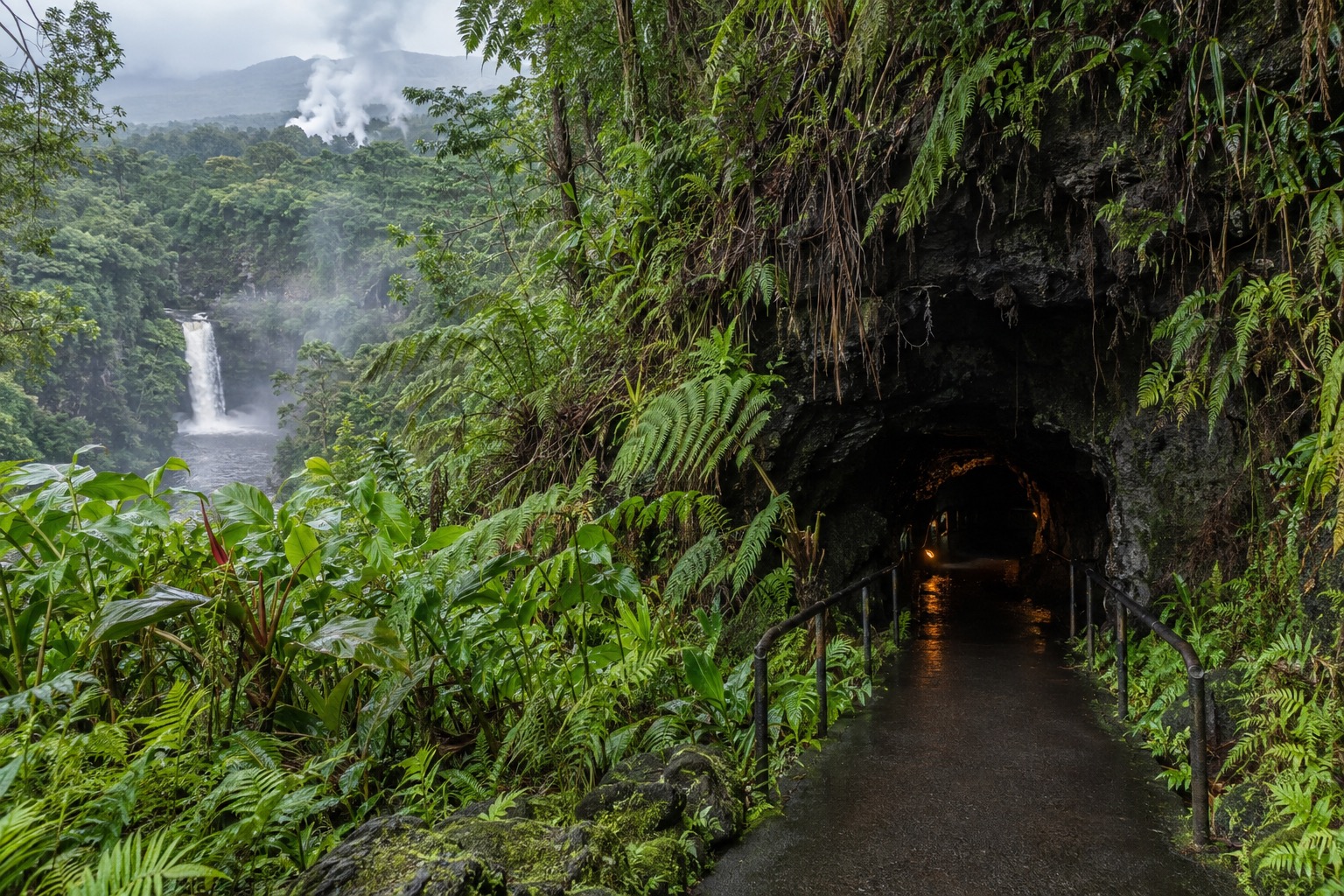
A short walk through tree ferns leads to the lava tube, a tunnel formed by flowing lava, now dripping and green at the entrance. January’s rain only adds to the effect, with the forest dense and dripping and birdsong in the canopy. The tube suits families and anyone who wants an easy outing, and it makes a fine stop when the rim is socked in with cloud.
Wear shoes with grip, because the path can be slick in the wet season. Bring a flashlight or use your phone light for the darker stretch beyond the lit section, and be ready for a few drips. Pair it with a slow walk through the forest around it, where honeycreepers sometimes flit through the ohia blossoms.
Chain of Craters Road and the coast
The road drops from the cool summit down to the sea through old lava flows, passing pit craters and fields of black rock that look like another planet. As you descend, clouds thin and the air warms, and at the bottom the coast opens onto sea arches and cliffs with the Pacific breaking below. The drive is the point, with pullouts for photos and short walks to see petroglyph fields along the way.
Winter swells make the coast dramatic, so stay well back from the edges and keep an eye on the waves. There is little shade at the bottom, so bring water and a hat, even in January. Allow a relaxed half day for the road, and plan to come back up before dark, as the ride in the dusk is slow and the road has no lights.
Smaller stops fill the gaps in a day. The Steam Vents and the Sulphur Banks sit near the rim, where warm gas rises through cracks and the ground feels alive.
Kilauea Iki is a trail across a hardened lava lake, a good walk for those with energy when the sky is clear. The Volcano House, a historic lodge on the rim, is a warm place to stop with a view over the caldera and a hot drink in your hands.
Food in the village of Volcano just outside the park leans toward cozy comfort in this season: soups, plate lunches, baked goods and coffee grown on the slopes of the island. The little art galleries and craft shops are good for a gray afternoon, and some local farms sell fruit and honey at stands along the road. On a cool evening, a table by a warm fire is half the pleasure of a January visit.
| Item | Rate | Notes |
|---|---|---|
| Hawaii state Transient Accommodations Tax | 11.00% | Applied to lodging |
| County of Hawaii Transient Accommodations Tax | 3% | Applied to lodging in the county |
A two-day itinerary for Hawaii Volcanoes National Park in January
Day 1 belongs to the summit area. Start early at the rim, when the mist lies over the caldera and the paths are quiet, and walk the viewpoints with a hot drink in hand.
Mid-morning is a good time for Thurston Lava Tube and the forest around it, since the dripping green is best in the damp. Lunch is simple, a plate lunch or a bowl of soup in the village of Volcano or at the lodge on the rim.
In the afternoon, visit the Steam Vents and the Sulphur Banks, then return to the rim for dusk, as daylight is just over eleven hours and the dark comes early. If the sky is clear, linger at an overlook to see whether the crater shows any glow. If the weather turns, spend the gray hours in the visitor center exhibits, a gallery in the village, or the lodge by the fire.
Day 2 heads down to the coast. Leave after breakfast along Chain of Craters Road, stopping at the pit craters and lava fields on the way, and reach the sea cliffs and arches by late morning. Walk to the petroglyph fields if the skies are dry, and take a picnic lunch, since there are no restaurants at the bottom.
Climb back up in the afternoon, leaving enough time to be off the road before dark. Spend the evening in the village over a warm dinner, and if you have energy left, a short walk on the Kilauea Iki trail the next morning is a fine way to end. If heavy rain sets in, shift the coast drive to the clearest hours and keep the indoor stops for the rest.
Is Hawaii Volcanoes National Park busy in January?
January is moderately busy early in the month and quieter as the winter holidays fade. The first week brings families on vacation from the mainland, and then the park settles down, with fewer cars at the overlooks and parking easier to find near the visitor center.
The village of Volcano is small, so rooms and cottages are limited and fill up fastest around the holiday weeks. Book lodging early for the first days of the month, and later for the quiet stretch after. Rental cars on the island are easier to find in the calm weeks, though it helps to reserve ahead anyway, since you need a car to see the park well.
Restaurants in the village are few and small, so dinner tables can be tight on weekends. Early dinners are easiest, and many places close early in the evening. In January, visitors often combine the park with a stay in Hilo or on the Kona side, and day trips from those towns make the middle of the day busier at the main viewpoints. The mornings and late afternoons stay calm.
What to pack for Hawaii Volcanoes National Park in January
Pack for a cool mountain park with rain, not a tropical beach, and add a lighter layer for the warm coast.
- A warm fleece or sweater, for the cold mornings and nights on the rim.
- A waterproof jacket, since showers blow through at any hour.
- Shoes with good grip, for wet trails and slick lava rock.
- A flashlight or headlamp, for the lava tube and the dark evening drive.
- A hat and sunscreen, for the open coast at the bottom of the road.
- A water bottle and snacks, since there is little food inside the park.
Good to know before you go
The Central Pacific hurricane season runs from June 1 to November 30, so January falls outside the official season, though winter rain and wind can still disrupt roads and trails. Cell service is patchy in parts of the park, and the drive to the coast has no services, so fill the tank and bring food. Volcanic activity can change what is open, so ask at the visitor center on arrival.
| Fee | Amount | Who pays |
|---|---|---|
| State Transient Accommodations Tax | 11.00% | Guests staying in lodging |
| County of Hawaii Transient Accommodations Tax | 3% | Guests staying in lodging in the county |
Hawaii Volcanoes National Park in January vs December and February
Moving the trip to December means a wetter park, with rain falling on most days, and the holiday crowds and higher demand for rooms. The lows are a little milder, but the clouds cover the crater more often, so the views are less certain.
February is slightly drier, with a few more clear hours at the rim and similar cool temperatures. The holiday crowds are long gone, and the park feels calmer, though the Presidents Day weekend can bring a short rush of visitors. The coastal surf remains big in both months.
If you want the best chance at open views, February edges ahead of January. If you want holiday atmosphere, December has it, with the wettest weather. January sits in the middle, and suits travelers who want quieter paths and are comfortable with a changeable sky.
Is January a good time to visit Hawaii Volcanoes National Park?
Yes, January is a good time for hikers, photographers and anyone who likes moody, misty landscapes and cool air. The crowds thin after the first week, the forest is lush, and the crater rim has a quiet drama that the warmer months rarely match.
It suits less those who want guaranteed sun or a beach day, since showers and cloud are part of the month. If views matter more than anything else, build in extra time so that one clear window can reward you. On arrival, stop first at the visitor center, ask about current conditions, and then head to the rim while the light is soft. What makes January special here is the contrast: a steaming crater under cold mist, a dripping green forest, and a black coast where the winter surf crashes against the lava, all within one short drive.
Sources
- NOAA NCEI, monthly normals 1991-2020, station USC00511303, checked September 8, 2026
- sunrise-sunset.org, sunrise and sunset calculated for the 15th of the month, checked September 8, 2026
- Hawaii Department of Taxation, Tax Announcement No. 2025-03 (Transient Accommodations Tax Law Changes from 2025 Legislative Session), files.hawaii.gov/tax/news/announce/ann25-03.pdf, checked September 24, 2026
- County of Hawaii, Department of Finance, Transient Accommodations Tax (TAT) page, hawaiicounty.gov/departments/finance/transient-accommodations-tax-tat (live returned HTTP 403 on request, read via Internet Archive Wayback Machine snapshot dated August 14, 2026, same official content), checked September 25, 2026
- Hawaii Department of Taxation, County Surcharge on General Excise and Use Tax page, tax.hawaii.gov/geninfo/countysurcharge/, checked September 25, 2026
- NWS Honolulu / Central Pacific Hurricane Center, « 2026 Central Pacific Hurricane Season Outlook », weather.gov/hfo/hurricaneOutlook2026, checked September 24, 2026
To plan your stay
- Things to Do in Hawaii Volcanoes National Park: Kilauea Iki, Lava Tube, Petroglyphs and Day Trips
- Best Time to Visit Hawaii Volcanoes National Park: Weather, Crowds, Rain and Seasonal Events
- Hawaii Volcanoes National Park in February: Weather, Kilauea Hikes, Night Skies and a Two-Day Plan
- Hawaii Volcanoes National Park in December: Weather, Kilauea Glow and What to Do