
In Kona, on a morning in July, snorkelers form a line by the rocks at Kahaluu as the earliest fishing boats head out of the harbor, while the scent of just-brewed coffee floats down from porches on the slope. The leeward coast of the Big Island is sunny, dry and easy in the summer, with warm water and long evenings on Alii Drive. It is a month for beach days, ocean outings and slow dinners, aimed at families and anyone who wants reliable sun.
What is the weather like in Kona in July?
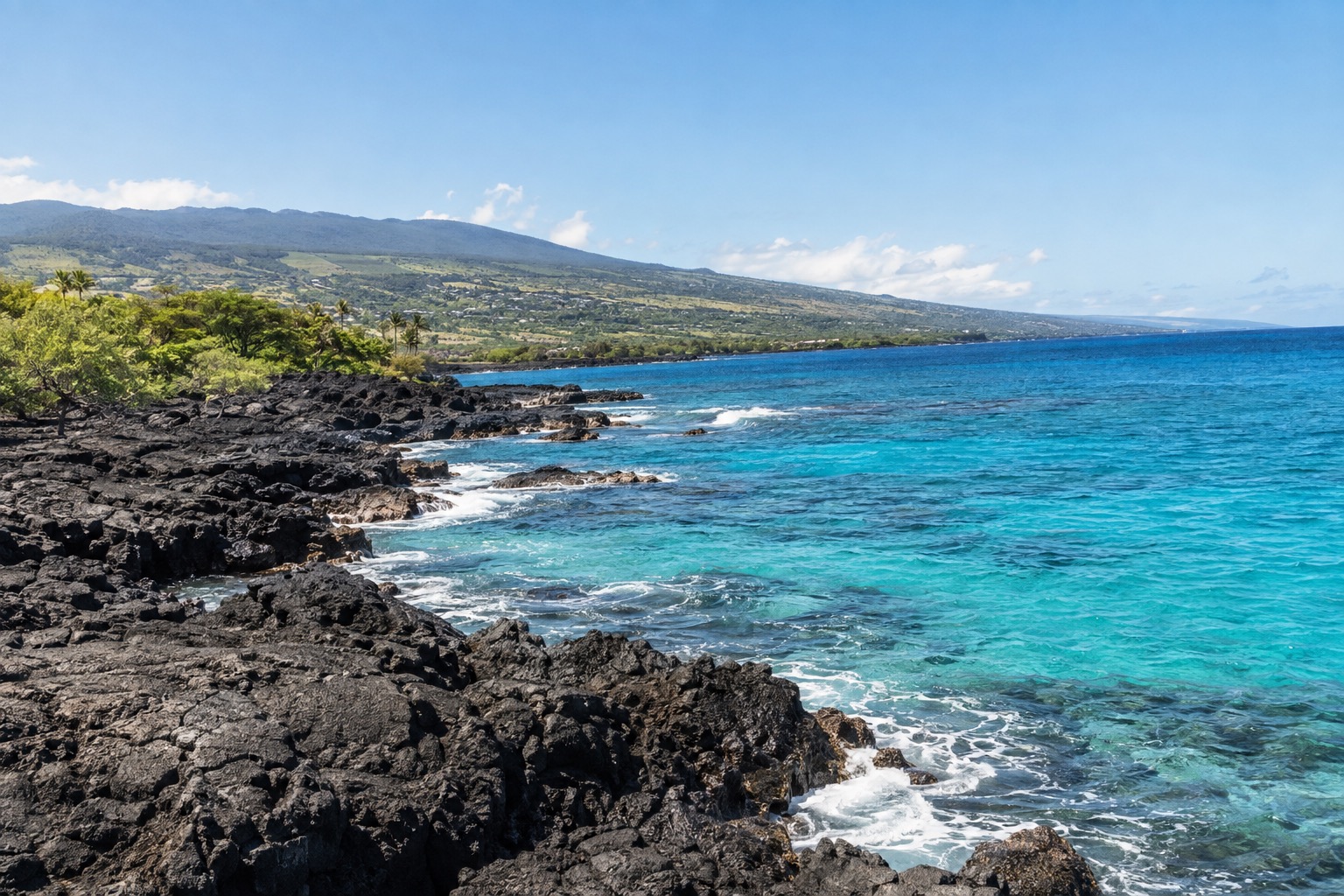
July in Kona is hot, sunny and almost entirely dry, with warm nights and a sea that feels like part of the climate. The airport station sits on the dry leeward coast, which is exactly where the resorts and the town are.
| Month | Average high (°F) | Average low (°F) | Rain days | Sea (°F) |
|---|---|---|---|---|
| June | 85.2 | 74.0 | 1.7 | 80.4 |
| July | 86.1 | 74.9 | 1.3 | 80.9 |
| August | 87.3 | 75.7 | 1.4 | 81.5 |
Clear, bright mornings are the finest time for hiking, snorkeling and any activity that calls for exertion. By early afternoon the sun is strong, so shade, a hat and a cold drink become part of the plan. Clouds sometimes build over the slopes of Hualalai and Mauna Loa in the afternoon, which softens the light along the coast without usually bringing rain to town.
Rain is a rare event here. When it does fall, it is a brief shower, and the wet weather of the Big Island belongs to the windward side around Hilo, where it rains all year. If a gray day on the Kona side gets you down, the drive across the island will find you a very different climate.
Around the middle of July, you get about thirteen hours of daylight, which means sunset comes late and the nights stay warm enough for dining outside in a T-shirt. Light cotton clothes, a swimsuit that dries quickly and a thin layer for air-conditioned restaurants are all you need near the water. If you head up to the volcano or the high slopes, bring a real jacket, because it is cool and often rainy there.
Can you swim in Kona in July?
You can certainly take a long swim here with no wetsuit, since the water stays warm, and snorkelers usually remain in it for at least an hour. Big winter swells pound the north shores, but the Kona coast sits protected, and on west-facing beaches summer tends to be the calmer season.
Kahaluu Beach Park, right by the road in town, is the classic snorkel spot, where reef fish and sea turtles are often seen close to shore. Magic Sands, Hapuna and the beaches along the Kohala coast are favorites for lying out and wading. Waves are usually moderate in July, but surf can pick up with southern swells, especially at Magic Sands, so watch the water before you go in.
Families will find the sheltered coves easiest, and nervous swimmers do best staying near the lifeguard stands. Follow the beach signs and the lifeguards, who decide the day. Keep off the reef, never chase or touch turtles and monk seals, and bring a rash guard or mineral sunscreen for the long hours in the sun. Reef-friendly marketing aside, check the label on what you buy.
What to do in Kona in July
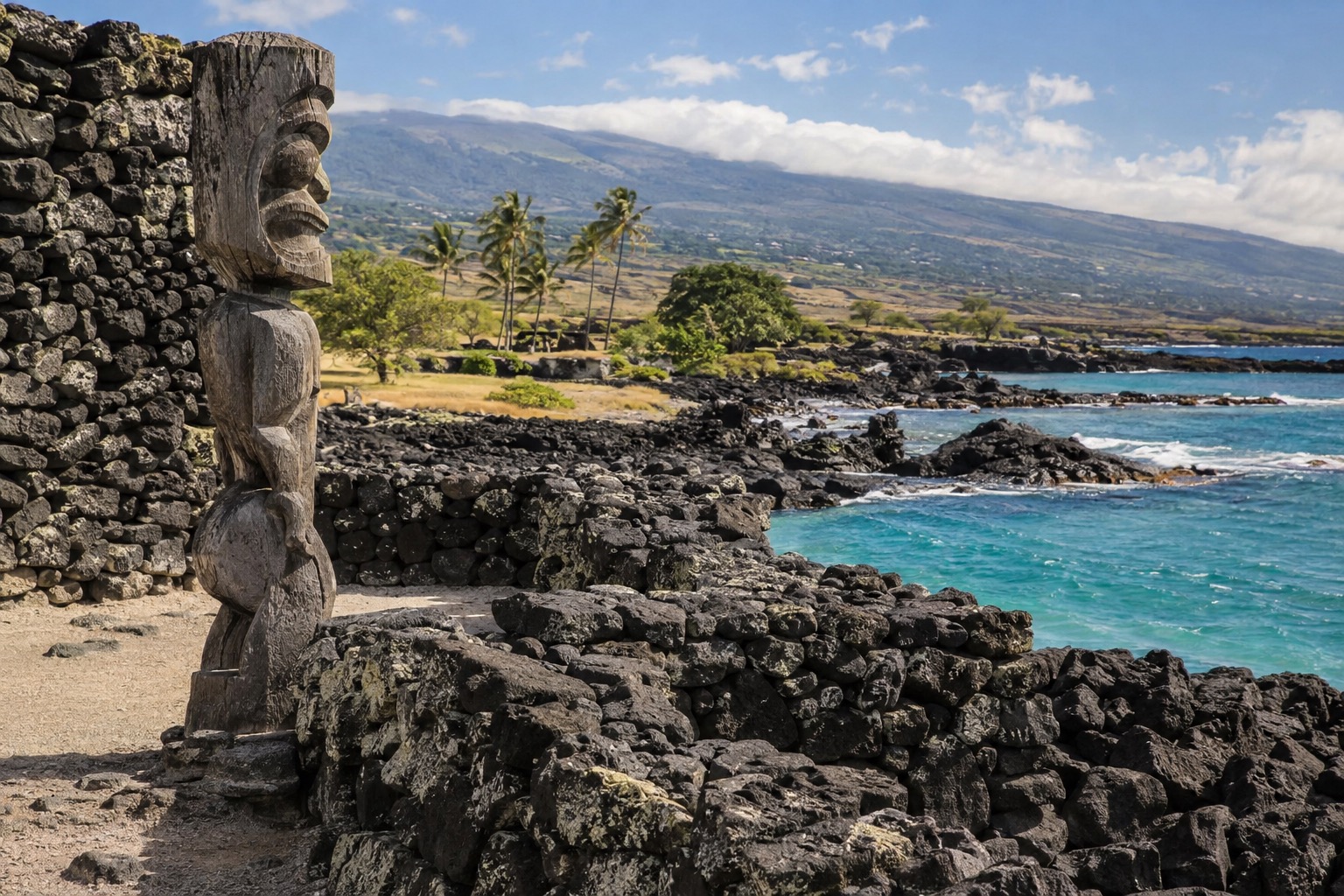
July is a water month on the Kona coast. The days run from early snorkeling to a slow lunch to a late swim, with coffee farms and the old town for the hours when the sun is highest. The summer also brings a lively local calendar, with community events, hula and outrigger paddling along the shore.
Snorkeling and ocean outings
Kahaluu is the easy start, with shallow water and plenty of fish, and many people return a second morning once they know the layout. Boat tours leave from Honokohau and Kailua piers and head along the coast for snorkeling in clearer, deeper bays such as Kealakekua, where the white monument marks the place connected with Captain Cook.
Manta ray night snorkels and dives are a Kona specialty, run after sunset off the resort coast, where lights draw plankton and the rays come to feed. You may see several gliding by, though wildlife is never guaranteed. Choose the evening if the day was hot, because the cool dark water is a pleasure after a sunny afternoon.
Coffee country and the slopes
Above the coast, the Kona coffee belt runs along the slopes through small towns such as Holualoa, which has galleries, a hillside cafe or two and a calm, artistic mood. Farms offer tastings of the local beans, and the drive up is a cooler break from the beach.
Go in the late morning, when the air is still pleasant and the views over the coast are clear. It suits couples and families with older children, and it pairs well with a stop at a farm stand for fruit on the way back down.
Kailua Village and Alii Drive
The old waterfront of Kailua-Kona is where you stroll, shop and eat. Huliheea Palace and the stone church of Mokuaikaua sit along Alii Drive, and the seawall fills with people watching the sunset, paddlers heading in and surfers waiting for a set.
Plates of fresh ahi poke, grilled fish and shave ice are the staples of the town, along with plate lunches from local counters. In the evening, open-air bars and restaurants stay lively without being loud, and the mood is relaxed and sunburned.
If a day on the coast tires you out, Hawaii Volcanoes National Park is a long but rewarding day trip across the island, with a cool and often rainy crater rim that feels like another world. Pack layers and start early.
A two-day itinerary for Kona in July
Day 1 begins early at Kahaluu Beach Park, before the sun gets hard and the car park fills, for a first snorkel among turtles and reef fish. Stay until the heat builds, then walk to a plate-lunch counter or poke shop in Kailua Village for a simple meal. In the afternoon, stroll the seawall, see the palace and the church, and stop for shave ice.
As the evening cools, find a table facing the water for sunset, when the light turns gold over the bay. The sun sets late in July, so there is no hurry. If you still have energy, a manta ray night snorkel is a memorable way to end the day.
Day 2 heads uphill in the morning, to Holualoa and a coffee farm, when the air is cooler and the views are open. Browse the small galleries, taste a cup and buy beans for home. By noon, head back down for lunch at a cafe or a food truck along the coast.
Spend the afternoon on a beach such as Magic Sands or Hapuna, with a swim, a nap and a book, watching the waves before you wade in. If the weather turns gray, which is unusual on this coast, the galleries, a coffee tasting or a long lunch in town make easy indoor plans.
Is Kona busy in July?
Yes, July is one of the busier months, because school is out and families fill the resorts and condos along the coast. Beaches have more people, boat tours sell out sooner and the roads along Alii Drive are slower at midday.
Rooms, rental cars and popular restaurant tables are easiest to secure when you book early, especially for the weeks around the Fourth of July, when holiday travelers arrive in force. Later in the month the pace can ease a little, but it still pays to reserve ahead for boat trips, manta ray outings and dinner on a sunset night.
The mornings are your friend: beaches are quieter before mid-morning, and a sunrise start gives you the best parking and the calmest water. Mid-afternoon is the busiest hour at the popular snorkel spots. Some sites on the island, such as Hawaii Volcanoes National Park, are open to walk-ins, but check the official park pages for any entry arrangements before you go.
What to pack for Kona in July
Think sun, salt water and the occasional cool evening or drive uphill. A small day bag with the essentials will serve you all week.
- For strong sun and long stretches in the water, pack a rash guard and mineral sunscreen.
- A snorkel mask that fits well, for the reef at Kahaluu and the boat trips.
- A wide-brimmed hat and sunglasses for the bright midday glare.
- Water shoes for rocky entries and lava-rock shorelines.
- A light jacket for the volcano and the coffee slopes, where it is cooler.
- A reusable water bottle for hot days on the trail and the beach.
Good to know before you go
The Central Pacific hurricane season runs from June 1 to November 30, so July falls inside it, though most days are simply sunny. For getting from the beaches to the coffee slopes to the volcano, nothing beats a rental car, and during the holiday weeks you should reserve one well ahead. Lodging bills carry state and county taxes on top of the room rate.
| Fee | Amount | Who pays |
|---|---|---|
| State Transient Accommodations Tax | 11.00% | Guests staying in hotels, condos and short-term rentals |
| County of Hawaii Transient Accommodations Tax | 3% | Guests staying in lodging in the County of Hawaii |
Kona in July vs June and August
Moving the trip to June gives you slightly cooler air, a touch more of the early-summer calm and fewer families, since many schools are still finishing. The sea is a little cooler, though still very comfortable for swimming and snorkeling. The first part of the month also falls before the Fourth of July rush.
August is a shade hotter and the water is at its warmest, which suits long swims. Families are still around, but some schools restart, so the crowds can thin toward the end of the month. Rain remains rare on the Kona side in both neighboring months. Choose June if you want a calmer pace and easier bookings, July if you want the full summer mood and holiday atmosphere, and late August if you want the warmest sea with a little more breathing room.
Is July a good time to visit Kona?
July works well for beachgoers, snorkelers, families enjoying summer vacation and anyone seeking reliable sunshine on the Big Island’s dry side. The days are long, the water is inviting and the evenings are easy.
It is less ideal for travelers who dislike crowds, who want cooler hiking weather or who prefer to find lodging at the last minute. If that is you, a shoulder month will feel calmer. On arrival, secure your boat or night snorkel booking first, then fill in the beach days around it. What makes July in Kona memorable is the rhythm of the coast: morning turtles at Kahaluu, lunch with the ocean in view, then a late sunset that turns the bay gold while paddlers head home.
Sources
- NOAA NCEI, monthly normals 1991-2020, station USW00021510, checked September 8, 2026
- Open-Meteo Marine API, average 2015-2024, checked September 8, 2026
- sunrise-sunset.org, sunrise and sunset calculated for the 15th of the month, checked September 8, 2026
- Hawaii Department of Taxation, Tax Announcement No. 2025-03 (Transient Accommodations Tax Law Changes from 2025 Legislative Session), files.hawaii.gov/tax/news/announce/ann25-03.pdf, checked September 24, 2026
- County of Hawaii, Department of Finance, Transient Accommodations Tax (TAT) page, hawaiicounty.gov/departments/finance/transient-accommodations-tax-tat (live returned HTTP 403 on request, read via Internet Archive Wayback Machine snapshot dated August 14, 2026, same official content), checked September 25, 2026
- Hawaii Department of Taxation, County Surcharge on General Excise and Use Tax page, tax.hawaii.gov/geninfo/countysurcharge/, checked September 25, 2026
- NOAA NCEI, monthly normals 1991-2020, station USW00021504
- NOAA NCEI, monthly normals 1991-2020, station USC00511303
- NWS Honolulu / Central Pacific Hurricane Center, « 2026 Central Pacific Hurricane Season Outlook », weather.gov/hfo/hurricaneOutlook2026, checked September 24, 2026