
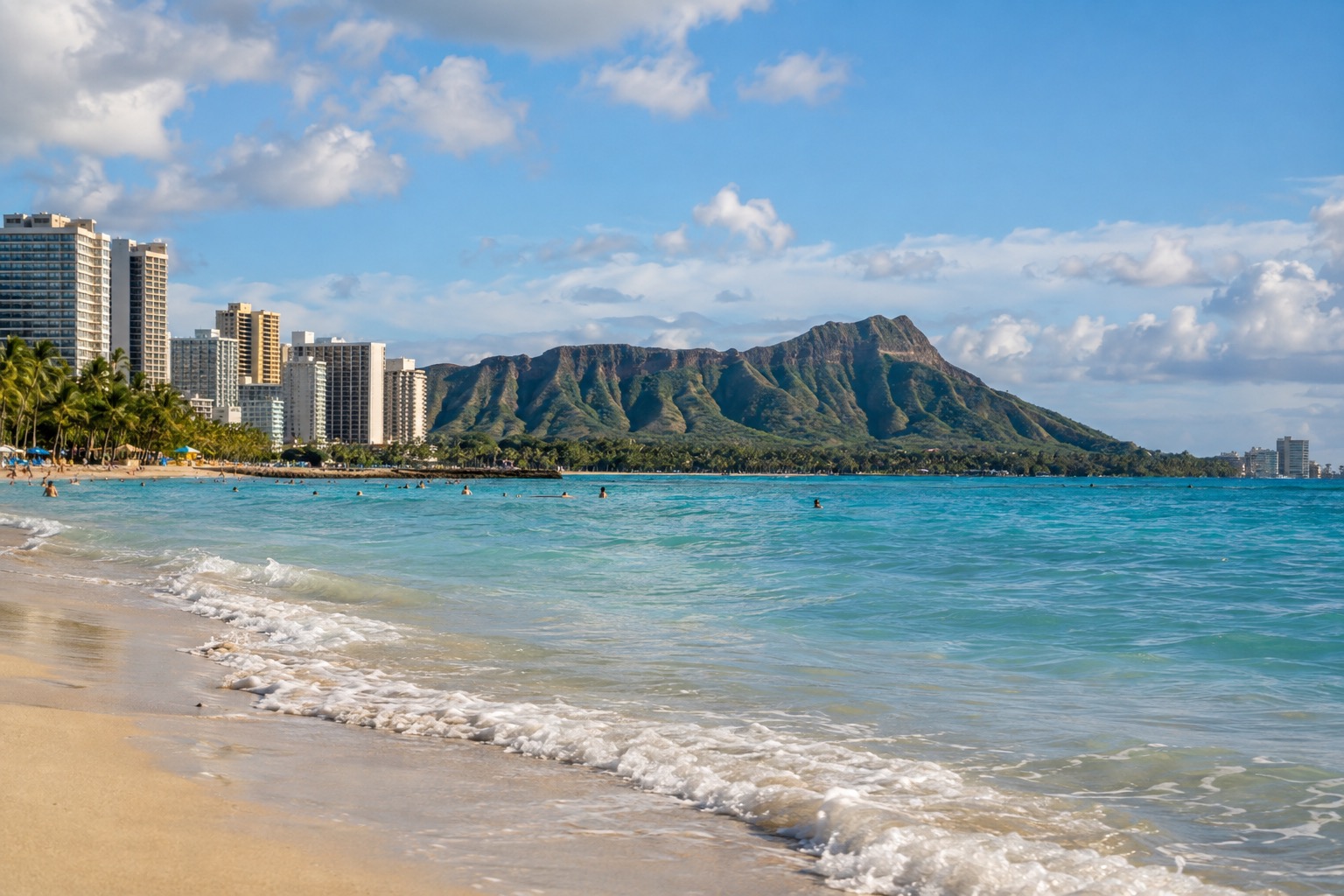
On the first of May, the lawns near Kapiolani Park fill with flower crowns and fresh lei, and ukulele music drifts over the grass while the trade winds rustle the palms. Waikiki in May has the long, bright days of early summer without the full rush of the school-vacation weeks. It suits couples, families with young children and anyone who wants warm water, easy mornings and a lively but not crowded beach.
What is the weather like in Waikiki in May?
Waikiki in May is warm, sunny and mostly dry, with the trade winds keeping the afternoons comfortable instead of sticky. May feels like a gentle handoff from April to June.
| Month | Average high (°F) | Average low (°F) | Rain days | Sea (°F) |
|---|---|---|---|---|
| April | 83.0 | 69.7 | 2.6 | 76.7 |
| May | 84.7 | 71.2 | 2.7 | 77.0 |
| June | 86.5 | 73.4 | 1.0 | 78.4 |
May mornings arrive gentle and full of light, perfect for strolling beside the ocean or sipping coffee on a lanai ahead of the rising sun. By midday the light is strong and the sand is hot underfoot, so this is the time for shade, a long lunch or a dip. Afternoons bring a steady breeze, and the sun sets late enough that you can fit in a full day and still have an evening outdoors.
Rain is rare and brief. Because Waikiki occupies Oahu’s dry, leeward side, most rain arrives as a brief shower blowing in from the Koolau mountains behind the city, frequently overnight or near dawn. You may see a rainbow over the Ala Wai Canal, and the sun is usually back within minutes. The mountains just inland can be gray while the beach stays sunny.
Evenings are warm enough for dinner outside in a T-shirt, perhaps with a light layer once the breeze picks up. Bring sun protection above all: the May sun is high and the reflection off the water adds to it. Days run about thirteen hours, which leaves room for early beach time and a late sunset.
Can you swim in Waikiki in May?
Yes, the sea is comfortable for a long swim in May, warm enough that most people go in without a second thought. Water temperatures sit in the upper 70s, a shade warmer than April and a touch cooler than June, according to marine records for the coast.
Waikiki’s south-facing beaches are usually gentle in late spring, since the big surf of winter shifts to the north shore. Out past the reef breaks, long, rolling waves are where beginners take surf lessons and outrigger canoes ride in, which is a good reason to stay and watch.
The sheltered stretch beside the Duke Kahanamoku lagoon and the walled pool at Kuhio Beach tend to be the easiest spots for small children and nervous swimmers. South swells can build in summer, so look at the flags and ask the lifeguard before you go in.
A calendar of expected dates for when box jellyfish could show up on Oahu’s south shore is published by the Waikiki Aquarium. Because they can appear at any time, obey the warnings that are posted and stay at beaches where lifeguards are on duty. Bring a mask and snorkel if you like looking at fish near the rocks, and wear a rash guard if you burn easily.
What to do in Waikiki in May
The month opens with Lei Day on May 1, Hawaii’s celebration of the flower garland. Schools, hotels and community groups put on lei-making contests, hula and music, and Kapiolani Park is a good place to see them.
Even outside the main events you will notice lei on the necks of visitors and locals, often made from plumeria, orchid or maile leaves. Many shops and cultural centers offer lei-making classes, a simple, fragrant afternoon that suits families.
Late May brings Memorial Day weekend, and Hawaii marks it with solemn ceremonies at the National Memorial Cemetery of the Pacific in Punchbowl, where lei are laid on the graves of service members. It is a moving visit and a reminder that Oahu’s history runs deep. Visitors also see the long weekend in the beaches and restaurants, which feel busier than earlier in the month.
The beach and the water
Waikiki Beach is really a string of beaches, from Kuhio Beach by the Duke statue to the quieter sands near Kapiolani Park. In May the days are long, so plan your beach time around the sun. Mornings are best for swimming and for a first lesson on a longboard, when the water is clear and the breeze is gentle.
Outrigger canoe rides and catamaran sails leave from the beach, and a late-afternoon sail gives you the view of Diamond Head with the city glowing behind. Standup paddleboards work well on days with light wind. Whatever you try, follow lifeguard instructions and the signs on the sand.
Diamond Head and the park
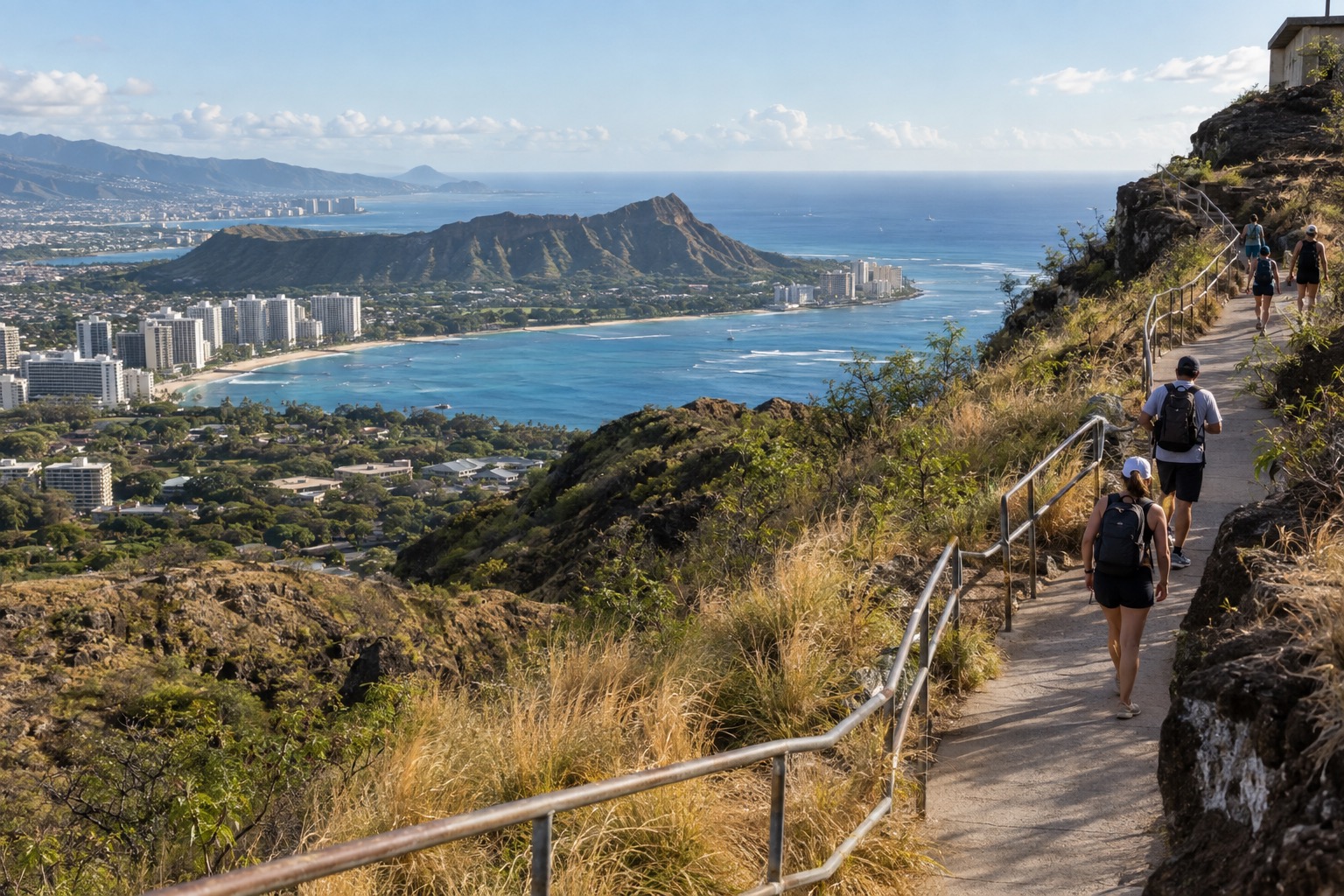
At the far end of the beach stands the crater of Diamond Head, and one of the most popular things to do on Oahu is the hike to its rim. The path climbs through a dry, scrubby crater and ends with a wide view over Waikiki and the sea.
Go early, when the air is cool and the light is soft, and bring water and a hat. Reservations are required for most visitors, so check the state park rules before you plan the day.
Below the crater, Kapiolani Park is the local picnic spot, with banyan trees, a bandstand and families flying kites on breezy afternoons. The Waikiki Aquarium sits on the shore side of the park and shows reef fish and monk seals, a good rainy-day or hot-hour choice.
Food and the evening scene
Eating in Waikiki is a pleasure in May, when the warm evenings suit outdoor tables. Try poke bowls from a shop or market, loco moco for a hearty breakfast, and shave ice flavored with passion fruit or lilikoi on a hot afternoon. Plate lunches, with rice, macaroni salad and grilled meat or fish, are the local standard and a good value in a tourist district.
At sunset the beachfront bars light torches and bring out slack-key guitar and hula. Hotels offer luau with imu-cooked pork, poi and dance, and several of them run most nights. The Friday fireworks near the Hilton Hawaiian Village are a weekly tradition that many visitors catch from the sand, and the Kuhio Beach hula show on selected evenings is free and relaxed. If you want a break from the beach, the Royal Hawaiian Center and the Kalakaua Avenue shops are a short walk, and the Honolulu Museum of Art and Iolani Palace are easy rides away, handy when a passing shower arrives.
A two-day itinerary for Waikiki in May
Day 1. Start at sunrise on the sand, with the light turning pink behind Diamond Head and surfers heading out.
Have a long breakfast of loco moco or fresh papaya at a beachfront café, then swim and take a lesson on a longboard while the water is gentle. By late morning the sun is strong, so move into the shade for a plate lunch near the canal or a stroll through the shops on Kalakaua Avenue.
Later in the day, stop by the Waikiki Aquarium, then stroll through Kapiolani Park, where families meet beneath the banyans. Come back to the beach for the late light and a sunset sail or a seat at a bar with live music. For dinner, you could grab a casual poke bowl or settle in for a sit-down meal with a view. If a shower comes, go to the aquarium or a museum and wait for the sun to return.
Day 2. Climb Diamond Head early, with a reservation, so you are back down before the heat. Reward yourself with shave ice or a smoothie on the way back, then spend midday resting in the shade or taking a short paddleboard session. Lunch can be at a food hall or a plate lunch counter.
In the afternoon, drive or ride to Iolani Palace and downtown Honolulu for a look at the kingdom’s history, or visit the cemetery at Punchbowl if you want a quiet, reflective hour. Return for a swim and an evening at a luau or a stroll along the beach, with the torches lit and the music going.
Is Waikiki busy in May?
Waikiki is moderately busy in May, calmer than the peak winter and summer weeks but livelier than a typical spring weekday. The beaches fill on weekends and around the holiday weekend at the end of the month.
Visitors include couples, families before school lets out, graduation travelers and conference groups, so hotels and restaurants hum on weekends. Mid-month weeks tend to be quieter, with easier beach spots and shorter lines at popular cafés. Rooms and rental cars are easiest to find in the quiet weeks, but book early for Memorial Day weekend and for any week around graduation season.
Dinner tables at the popular beachfront restaurants fill on Friday and Saturday evenings, so reserve ahead for those nights and be flexible on weeknights. Diamond Head requires a reservation for most visitors, so book it as soon as you know your dates. Luau also tend to sell out for the best seats, so plan them early in the trip.
What to pack for Waikiki in May
Bring clothes that are light and made for the sun, plus one extra layer for evenings with a breeze, and a bag that works from the beach straight through dinner.
- Mineral sunscreen and a wide-brimmed hat, because the sun is strong from mid-morning.
- A rash guard, for surf lessons and long snorkeling sessions.
- Reef shoes or sturdy sandals, for rocky entries and the Diamond Head trail.
- A light sweater or wrap, for evenings with a sea breeze.
- A reusable water bottle, for the hike and hot afternoons.
- A small rain jacket, for the occasional passing shower.
Good to know before you go
May falls before the Central Pacific hurricane season, which runs from June 1 to November 30, so the month sits outside the official season. Memorial Day weekend is the holiday to plan around, with busy roads and crowded beaches. In Waikiki, you can walk almost everywhere, and buses plus ride services handle the rest. Book Diamond Head and any luau first.
| Fee | Amount | Who pays |
|---|---|---|
| State transient accommodations tax | 11% | Hotel guests |
| Oahu county tax | 3% | Hotel guests |
Waikiki in May vs April and June
Moving the trip to April gives you slightly cooler air and water, with a touch more rain and a calmer feel once the spring break rush has passed. The sea is a little less inviting for long swims, but still pleasant. Lei Day and the early May events would fall at the start of your trip or just after it.
Moving to June brings the warmest sea and air of the three months and almost no rain, but also the start of summer family vacations and a busier beach. It is also the month when the hurricane season opens, on June 1, and Kamehameha Day on June 11 adds parades and festivities for those who want them.
Choose May if you want warm water, long days and a lively but not packed beach. Choose April for the quietest rooms, and June if you want the hottest, driest weather and do not mind the crowds.
Is May a good time to visit Waikiki?
May is a wonderful month to be in Waikiki, above all for those who swim, for families, and for anyone fond of bright days with a soft wind.
It suits beach lovers, first-time visitors and travelers who want a mix of hiking, culture and evenings out. Those who want big winter surf or the quietest hotel weeks may prefer another month. On arrival, reserve Diamond Head and any luau first, then spend the first morning on the sand to settle into the island pace. What makes May special is the combination of Lei Day flowers, warm water and long evenings, when the torches light along Kalakaua Avenue and the music carries across the beach.
Sources
- NOAA NCEI, monthly normals 1991-2020, station USC00519397, checked September 8, 2026
- Open-Meteo Marine API, average 2015-2024, checked September 8, 2026
- sunrise-sunset.org, sunrise and sunset calculated for the 15th of the month, checked September 8, 2026
- Hawaii Department of Taxation, Announcement 2025-03 ; City and County of Honolulu, OTAT FAQ, checked September 25, 2026
- Waikiki Aquarium, Box Jellyfish Calendar, checked September 25, 2026
- NWS Honolulu / Central Pacific Hurricane Center, « 2026 Central Pacific Hurricane Season Outlook », weather.gov/hfo/hurricaneOutlook2026, checked September 24, 2026