
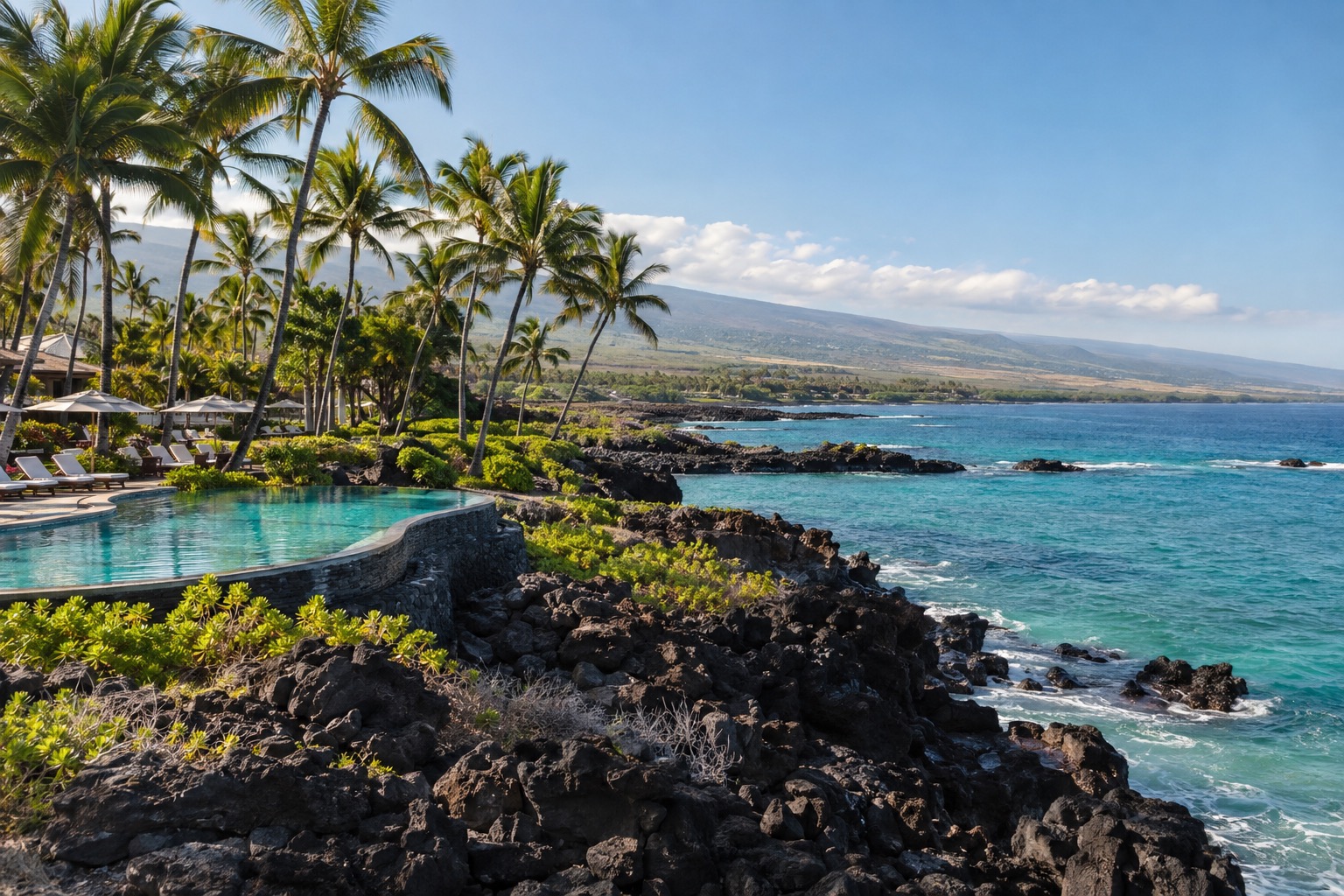
Along the Kohala coast on a March morning, the early light gives the lava fields an almost silver shine, and beyond the resort lagoons a humpback now and then strikes its tail on the blue. Golf carts hum along the paths, the smell of sunscreen and plumeria drifts over the pool decks, and the trade winds keep the air soft. On the Big Island’s leeward coast, March brings Waikoloa dry, sunny days, and the whale season’s final weeks are still visible from shore.
What is the weather like in Waikoloa in March?
Waikoloa in March brings warmth, sunshine, and largely dry days, just the odd brief shower here and there. Waikoloa sits between its neighbors on the sunny Kohala Coast.
| Month | Average high (°F) | Average low (°F) | Rain days | Sea (°F) |
|---|---|---|---|---|
| February | 82.5 | 68.1 | 1.5 | 77.7 |
| March | 83.5 | 69.7 | 1.8 | 77.6 |
| April | 85.0 | 70.8 | 0.8 | 78.0 |
Mornings start soft and clear, and by midday the sun is strong on the black lava and white sand, so a hat matters more than a jacket. This is the dry leeward side of the island, shielded by the volcanoes from most of the rain that soaks the east coast around Hilo. What rain does come is usually a short, light shower that passes before you have finished your coffee.
Evenings are mild enough for dinner outdoors in a T-shirt, though a light layer feels good when the trade winds pick up near the water. Daylight lasts a little over twelve hours in mid-March, so the sun sets in the early evening and the golden hour over the lava is a good time for a walk.
The mountain is another story. If you drive up toward Mauna Kea or into the cooler uplands around Waimea, expect real chill and cloud, and bring warm layers. Down at the coast, shorts and sandals are the uniform.
Can you swim in Waikoloa in March?
Yes, the sea is comfortably warm for swimming, the kind of water you can stay in for a good while without shivering. It sits in the upper 70s, a little cooler than in the late summer months but still easy to enter.
The Kohala coast has some of the island’s best-known beaches, including the long crescent of Hapuna, the calm cove at Kauna’oa (Mauna Kea Beach) and the small sandy bays around the Anaehoomalu (A-Bay) lagoon near the resorts. In winter and early spring, the west side is usually gentler than the north and east shores, but swells can still arrive, and Hapuna in particular sometimes has real shore break. On most days the sea at these beaches is calm and clear, but conditions can change quickly.
Snorkelers do well along the rocky edges of the bays when the surface is flat, and you may see turtles grazing close to shore. Keep your distance from them, as they are protected. Always look at the beach signs and flags and follow the lifeguards, because conditions change from day to day. Bring a rash guard or sun shirt, since the March sun is stronger than it feels.
What to do in Waikoloa in March
The big natural event of the season is the tail end of humpback whale time. Between roughly December and spring, the humpbacks come to Hawaiian waters to calve and breed, and March is still a good month to look for them.
From the shoreline you may spot spouts, breaches or a flash of fluke, and boat trips out of nearby harbors often get close views. Sightings are never guaranteed, but morning, when the sea is flattest, is the best time to scan the horizon.
March also falls in the weeks after Easter or just before it in some years, and Hilo’s Merrie Monarch hula festival, held the week after Easter, can pull some visitors across the island in spring. When Easter lands in late March or April, it sometimes shapes who fills the resorts, so keep an eye on the calendar.
Petroglyphs and the lava-field walks
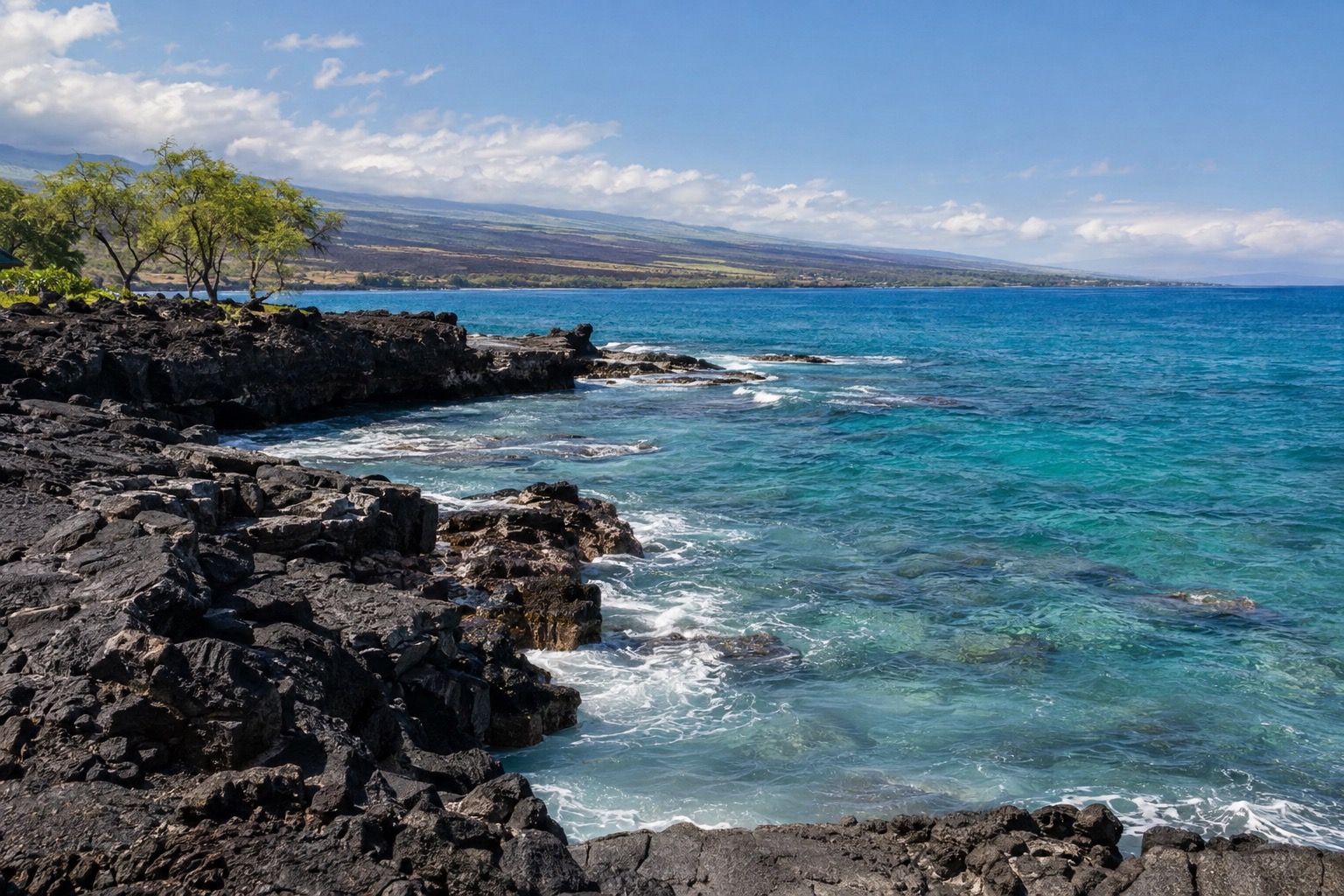
Waikoloa’s most distinctive sight is the field of ancient petroglyphs carved into the black lava, an easy walk from the resort area. You follow a path across the rough rock and find carved figures, circles and dots left by Hawaiians long ago. Do not step on or touch the carvings, and stay on the marked trail, since this is a culturally important place.
Go in the morning, when the lava is cooler underfoot and the light rakes across the stone so the figures show clearly. The walk suits most visitors who can handle uneven ground, and sturdy shoes make a difference. Bring water, since there is little shade on the lava.
If you want more of the same landscape, the shoreline trails near the resorts pass fishponds and old coastal paths. They are flat, open and best done before the sun climbs high.
Beaches, snorkeling and the resort lagoons
A beach day is the default plan here, and March gives you plenty of sun for it. Hapuna Beach is wide and good for walking, bodyboarding and watching the sunset crowd, while Kauna’oa is a quieter arc of white sand that appeals to families. The A-Bay lagoon is lined with palms and has a more relaxed feel.
Resort pools, lagoons and a few kid-friendly water features fill the afternoons for those who prefer a lounge chair to the open sea. In the evening, many people drift toward the shops and restaurants for a sunset drink, and some resorts hold torch-lighting or music nights. If a swell arrives and the flags go up, switch to the lagoon, the pool or a coastal walk instead, and save the open beaches for the next flat morning.
Stargazing and the mountain day trip
The dry, clear skies of the Big Island are famous for stargazing, and March nights are often good for it. The resorts’ open, dark stretches can be enough for a look at the Milky Way, while a trip up Mauna Kea’s slopes is a longer outing for those who want a bigger sky.
If you head up, dress for real cold, because the summit is far cooler than the beach and the air is thin. Plan it as a separate evening, not an add-on after a long beach day.
Food is part of the season too. Poke bowls, fresh fish plates, shave ice and plate lunches with macaroni salad are everyday pleasures on the island, and a stop at a farmers market in the uplands brings in local fruit and coffee.
A two-day itinerary for Waikoloa in March
Day 1 starts early with the petroglyph walk, before the sun is high and while the lava is still cool. Back at the resort by mid-morning, have a late breakfast at a casual café, then spend the middle of the day in the shade or the pool, when the light is strongest.
In the afternoon, head to the beach at Anaehoomalu for a swim and a gentle snorkel if the water is flat. Stay for the golden hour, since the sun sets in the early evening, then have dinner at a seafood place or a resort restaurant with an open-air terrace.
Day 2 begins with whale watching, either from a shoreline lookout at dawn or on a morning boat trip, when the sea is calmest. By late morning you will want shade and a plate lunch or fish tacos from a casual spot.
Spend the afternoon at Hapuna or Kauna’oa for a long beach session, checking the flags first. In the evening, wander the shopping village for a shave ice and a sunset. If a rare shower or heavy swell hits, switch to the resort spa, a cultural demonstration or a drive up to the cooler uplands for coffee and a market stroll.
Is Waikoloa busy in March?
Yes, March is a lively month here, though it rarely feels packed outside the holiday weeks. Mainland spring breaks bring families and couples to the resorts, and the end of the whale season still draws visitors who want a winter escape.
The resort pools and the main beaches fill up around midday, while early mornings and late afternoons are calmer. Weekend dinners at restaurants close to the resorts tend to fill, so for the crowded weeks make your reservation early and for the calmer ones wait a bit longer. Rental cars also tighten during spring break, so lock one in well ahead if you plan to explore beyond the resorts.
Rooms are easiest to find in the weeks that sit between school breaks, and holiday weeks, especially around Easter when it falls in the month, are the ones to book earliest. Check the official state parks pages for any reservation rules on parks or trails you plan to visit, and look for boat tours a few days ahead.
What to pack for Waikoloa in March
Pack light for sun and sand, with one warm layer for the evenings and the mountain.
- Mineral sunscreen and a wide-brim hat, since the March sun on the lava coast is strong.
- A rash guard or sun shirt for long snorkeling sessions.
- Sturdy sandals or light shoes for the petroglyph walk across rough lava.
- A light sweater or windbreaker for breezy evenings by the water.
- A warm jacket if you plan a Mauna Kea outing.
- A refillable water bottle for the open, shadeless trails.
Good to know before you go
March falls outside the official hurricane season, which runs from June 1 to November 30. Getting around is easiest with a rental car, since the resorts sit a distance from the island’s other sights, and a car lets you reach the beaches and the uplands on your own schedule. On top of the room rate, lodging bills include state and county taxes.
| Fee | Amount | Who pays |
|---|---|---|
| State Transient Accommodations Tax | 11.00% | Guests, on lodging |
| County of Hawaii transient accommodations tax | 3% | Guests, on lodging |
Waikoloa in March vs February and April
Moving earlier to February keeps you deeper in whale season, with more chances of a sighting and generally a bit more rain and slightly cooler air. The sea is almost the same temperature, so the swimming does not change much, but the winter swells may feel a touch more present on some beaches.
Moving later to April brings warmer, drier days and the sun feels a notch stronger. The whales thin out as the season ends, and the crowds tend to shift around Easter and the week after, when the Merrie Monarch festival draws visitors to the island.
If whales matter most, lean toward February or early March. If you want the driest, hottest beach days, aim for April. March sits happily in the middle, with a bit of both.
Is March a good time to visit Waikoloa?
Yes, March is a very good time for anyone who wants warm, dry beach days with a chance of whales still in the water. It suits couples, families on spring break and travelers who like long mornings on the sand and relaxed evenings outdoors.
It is less ideal for anyone who wants an empty resort or a deep tropical rain-forest feel, since this coast is dry and can be busy around school breaks. On arrival, start with the petroglyph walk or a morning at the beach to settle into the pace, and check the flags before you swim. What stays with you from March here is the pairing of black lava and bright blue water, with the chance that a humpback rises out of it just as the evening light turns gold.
Sources
- NOAA NCEI, monthly normals 1991-2020, station USC00518422, checked September 8, 2026
- Open-Meteo Marine API, average 2015-2024, checked September 8, 2026
- sunrise-sunset.org, sunrise and sunset calculated for the 15th of the month, checked September 8, 2026
- Hawaii Department of Taxation, Tax Announcement No. 2025-03 (Transient Accommodations Tax Law Changes from 2025 Legislative Session), files.hawaii.gov/tax/news/announce/ann25-03.pdf, checked September 24, 2026
- County of Hawaii, Department of Finance, Transient Accommodations Tax (TAT) page, hawaiicounty.gov/departments/finance/transient-accommodations-tax-tat (live returned HTTP 403 on request, read via Internet Archive Wayback Machine snapshot dated August 14, 2026, same official content), checked September 25, 2026
- Hawaii Department of Taxation, County Surcharge on General Excise and Use Tax page, tax.hawaii.gov/geninfo/countysurcharge/, checked September 25, 2026
- NOAA NCEI, monthly normals 1991-2020, station USW00021510
- NOAA NCEI, monthly normals 1991-2020, station USW00021504
- NWS Honolulu / Central Pacific Hurricane Center, « 2026 Central Pacific Hurricane Season Outlook », weather.gov/hfo/hurricaneOutlook2026, checked September 24, 2026