
In July, the North Shore of Oahu smells of sunscreen, shave ice syrup and warm asphalt, and the line at the Haleiwa roadside shrimp trucks stretches into the shade of the monkeypod trees. The big winter waves are a memory, and the bays that thundered in January now lie bright and flat enough for people to paddle out on boards, kayaks and snorkel fins. This is the month to see the country-side of Oahu in its summer mood, slow, sunny and barefoot.
What is the weather like in the North Shore in July?
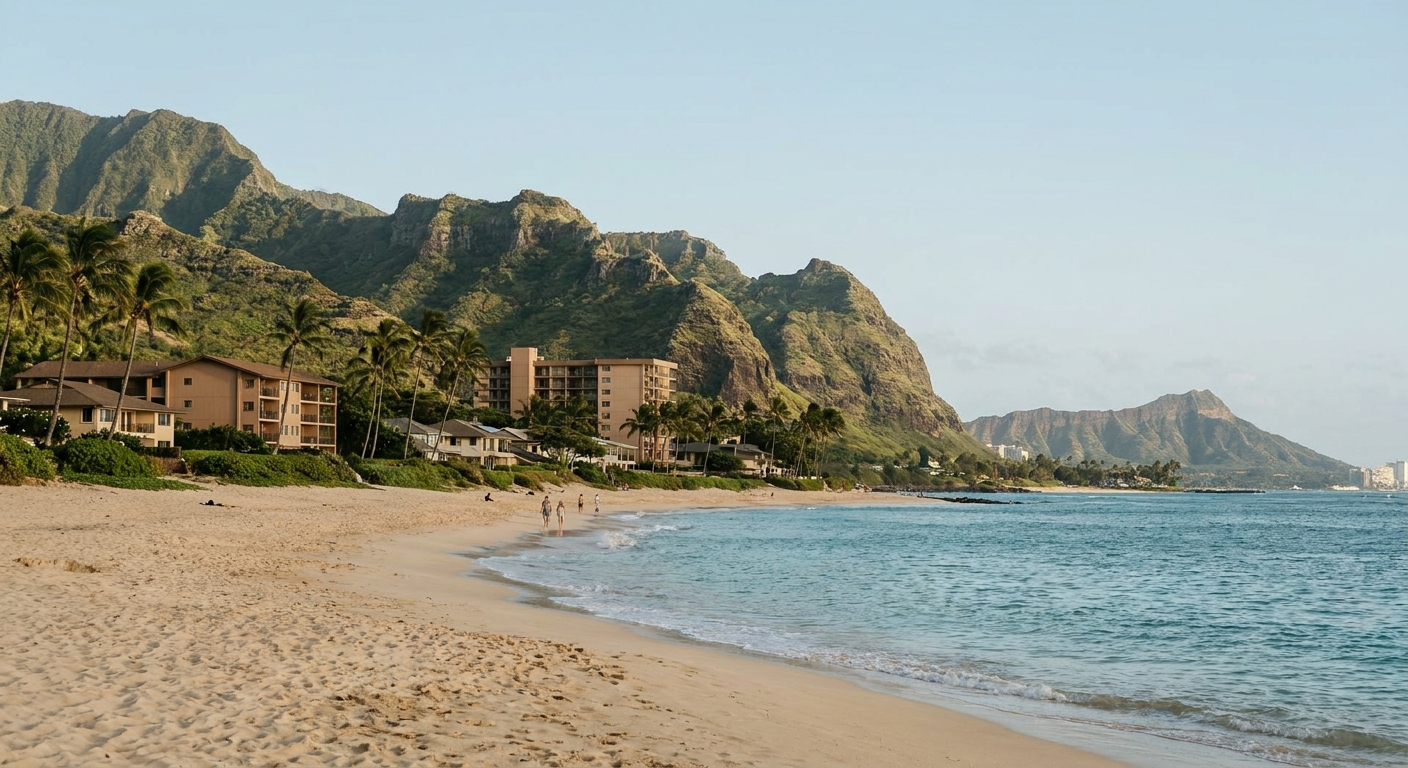
July is warm and sunny, with trade winds keeping the afternoons comfortable and short showers passing through now and then.
| Month | Average high (°F) | Average low (°F) | Rain days | Sea (°F) |
|---|---|---|---|---|
| June | 84.4 | 68.9 | 11.2 | 77.6 |
| July | 85.1 | 70.0 | 11.9 | 78.8 |
| August | 86.4 | 70.4 | 9.1 | 79.4 |
Mornings start soft and clear, and they are the best hours for walking a beach or a trail before the sun climbs. By midday the light turns white and strong, the sand gets hot enough to make you hop, and shade becomes something you plan around. Evenings remain gentle, and you can dine outdoors in a T-shirt, so a light layer matters only when the breeze strengthens.
Rain here comes as brief showers, often drifting in from the mountains behind the coast and gone within minutes, sometimes leaving a rainbow over the cane fields. Real downpours are rare, and a full gray day is unusual. The North Shore is not as dry as the leeward side of Oahu, so a shower or two is part of an ordinary day, and a thin rain jacket stays in the bag more often than it comes out.
July brings long days with over thirteen hours of daylight, so there is time for a morning swim, a late lunch and a sunset on the sand. The sun is strong enough that a hat and a long-sleeved sun shirt are as useful as any swimsuit.
Can you swim in the North Shore in July?
You can indeed take a long, easy dip since the water has warmed up nicely, and the North Shore’s renowned beaches reach their calmest point during the summer months.
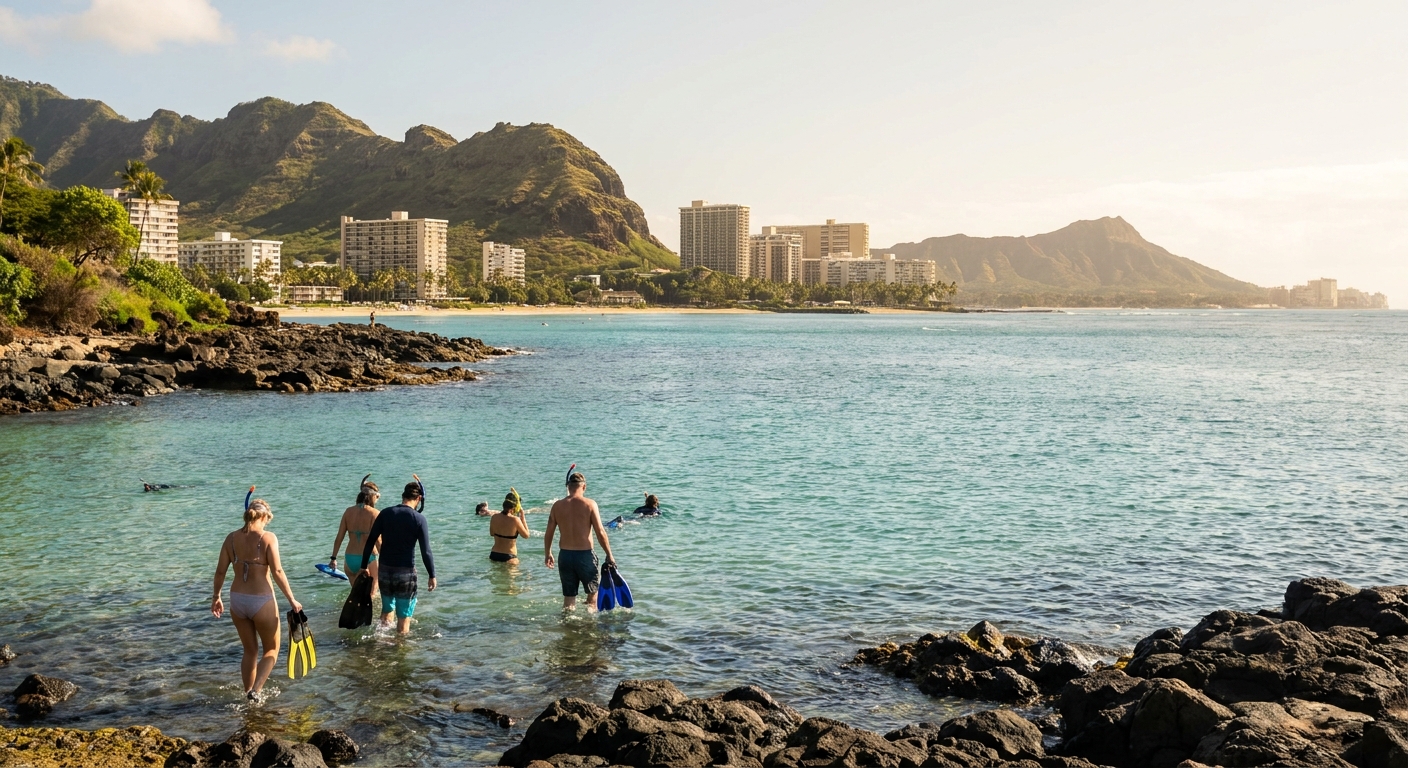
In July the swells that make winter legendary usually shrink, and bays such as Waimea Bay and Sharks Cove often turn calm enough for swimming and snorkeling. Shark’s Cove is known for its rocky pools and underwater lava formations, while Waimea has a deep, sandy bowl that fills with families on weekends.
Haleiwa Beach Park and Laniakea are more mixed. Laniakea is where sea turtles often rest on the sand, and you keep your distance because they are protected.
None of this is a promise. Summer south swells can still send surprising waves to some stretches, and rocky bottoms and currents are real. Check the flags and the signs, talk to the lifeguards at the tower before you go in, and stay out if they say so.
Bring a rash guard, reef-friendly habits (stay off the coral and the reef) and water shoes for the rocky entries. Nervous swimmers do best at the beaches with a lifeguard tower, and surfers can still find small, friendly waves for beginners at Haleiwa.
What to do in the North Shore in July
July on the North Shore is about the water and the slow country road. With the big surf gone, the days revolve around beaches, food trucks, farm stands and lazy stops in Haleiwa town. Local families fill the parks for summer weekends, with coolers, tents and ukulele music drifting from the sand.
Kamehameha Day on June 11 has passed by July, but the summer is still full of community life, with beach barbecues, canoe paddling and school-break camps in the bays. The mood is relaxed and local, a good month to watch how people actually live here.
Beach hopping along Kamehameha Highway
The two-lane highway links the beaches in a string, and July is the month to drive it slowly. Start at the western end near Mokuleia, a quiet stretch of sand and grass, then work east to Haleiwa, Waimea Bay, Sharks Cove and Sunset Beach. Each looks different in summer, with Sunset Beach wide and flat, a surprise if you have only seen it in winter surf videos.
Go early to find parking, bring plenty of water and leave a few hours at each stop rather than rushing. The heat builds by midday, so the best plan is two beaches in the morning, lunch in the shade, and a final swim in the late afternoon when the light turns gold and the crowds thin.
Haleiwa town, shave ice and food trucks
Haleiwa is the heart of the coast, with surf shops, art galleries, old plantation-style storefronts and a small harbor. In July it is the place for shave ice, piled with tropical syrups and often topped with a scoop of ice cream or sweet beans, and for plate lunches and garlic shrimp from the roadside trucks. Acai bowls and fresh fruit stands add a lighter option for hot afternoons.
Walk the main street, duck into a gallery when the sun is too much, and watch the harbor, where paddleboarders and fishing boats come and go. It suits everyone, children and grandparents included, and it is the natural stop when the beach gets too hot.
Waimea Valley and the surrounding trails
Across from Waimea Bay, the valley is a shaded garden and cultural site with a paved path leading toward a waterfall. It is a cool alternative to the beach in the hottest hours, with tropical plants, birdsong and the quiet weight of a place sacred to Native Hawaiians. Walk with respect and stay on the paths.
A shower can pass while you are there, and the canopy softens it. Wear walking shoes or sandals with grip, bring a hat, and plan on a slow hour or two rather than a quick look.
Beyond these, farm stands along the highway sell fresh fruit, coconuts and corn, and small shops offer local crafts. Kayaking and stand-up paddling are popular in the calmer bays, and sunset is a daily gathering on the sand, with people sitting along the shore as the sky turns orange.
A two-day itinerary for the North Shore in July
Day 1 is for the beaches. Start early, before the sun gets strong, with a swim and a walk at Waimea Bay or Sharks Cove, when the water is usually at its stillest and parking is easy. Have a second swim or snorkel nearby, then drive to Haleiwa for a late lunch from a food truck, followed by a shave ice in the shade.
In the afternoon, when the heat peaks, wander the Haleiwa galleries and shops, or rest. Return to the sand around five for the long light and stay for sunset at Sunset Beach or another west-facing stretch. Dinner is a casual plate lunch spot or a picnic on the sand.
Day 2 begins in the valley. Go to Waimea Valley in the morning, when it is cool and green, and walk the path slowly. If a shower rolls in, it comes as a short gentle one, and the trees give you some cover.
At midday, drive west toward Mokuleia for a quieter beach and a picnic, or toward the farm stands for fresh fruit. Spend the afternoon paddling or kayaking if the water is calm. Finish with an early dinner in town. If the weather turns gray, the rain card is the Haleiwa galleries, a long lunch and the covered shops and cafes.
Is the North Shore busy in July?
Yes, July is one of the busier months here, because school is out and families from the mainland and from Oahu itself fill the beaches.
The busiest places are Haleiwa, Waimea Bay and Sharks Cove, where parking fills early and food truck lines grow around midday. Quieter stretches, such as Mokuleia or the far ends of Sunset Beach, stay more relaxed, and mornings are calmer everywhere. Weekends are the most crowded, so weekdays are easier for beaches and meals.
Rooms and vacation rentals along the coast are in demand, and rental cars across Oahu get tight in summer, so book early, especially around the holiday weeks. Restaurant tables for dinner are easier with a reservation, while casual trucks and counters work on a walk-up basis. Planning a few weeks ahead for the quieter, non-holiday weeks is usually enough.
Sunscreen, a hat and patience in the parking lots go a long way. Arriving before the morning heat gives you the best of the beaches and the best chance at a good spot.
What to pack for the North Shore in July
The days are hot and bright, so pack for sun, salt water and the occasional short shower.
- Mineral sunscreen and a hat, because the midday sun is strong.
- A rash guard, for hours in the water without a burn.
- Water shoes, for rocky entries and hot sand.
- A light rain jacket, for passing showers.
- A reusable water bottle, since the heat builds fast.
- A snorkel and mask, for the calmer bays.
Good to know before you go
July falls inside the Central Pacific hurricane season, which runs from June 1 to November 30. Storms rarely interrupt daily life, yet keep them in mind as you book flights and lodging. A car makes the North Shore far easier, since the beaches sit along one road and parking fills early. Lodging carries the usual taxes.
| Fee | Amount | Who pays |
|---|---|---|
| State transient accommodations tax | 11% | Guests staying in lodging |
| Oahu county tax | 3% | Guests staying in lodging |
The North Shore in July vs June and August
Moving the trip to June gives a slightly cooler sea and air, and a little more rain, with the school year only just ending. Beaches are somewhat quieter in the first weeks, and Kamehameha Day on June 11 brings parades and celebrations across the islands.
August is a little hotter and the sea warmer, with fewer rainy days. Family travel stays strong until school starts, and crowds begin to thin toward the end of the month. It suits travelers who want the driest and warmest stretch of the summer.
Families tied to school calendars will find July easiest, while those who prefer fewer people can lean toward early June or late August. Beach lovers who want the warmest water should look at August.
Is July a good time to visit the North Shore?
If you are hoping for mild surf, plenty of daylight and a getaway built around the beach and food trucks, then July works beautifully, particularly for families and those on a first visit.
Those who come hoping for giant winter waves will be disappointed, since the surf is usually gentle, and anyone who dislikes crowds and heat may prefer another month. Surfers looking for small, easy waves will be happy, as will swimmers and snorkelers.
On arrival, head to the water early, find a lifeguarded beach and let the first day be slow. What makes July here special is the contrast with winter, the same bays that roar in January lying open and bright, with sea turtles on the sand and shave ice melting in your hand.
Sources
- NOAA NCEI, monthly normals 1991-2020, station USC00519603, checked September 8, 2026
- Open-Meteo Marine API, average 2015-2024, checked September 8, 2026
- sunrise-sunset.org, sunrise and sunset calculated for the 15th of the month, checked September 8, 2026
- Hawaii Department of Taxation, Announcement 2025-03 ; City and County of Honolulu, OTAT FAQ, checked September 25, 2026
- NWS Honolulu / Central Pacific Hurricane Center, « 2026 Central Pacific Hurricane Season Outlook », weather.gov/hfo/hurricaneOutlook2026, checked September 24, 2026