
On a winter morning along Kamehameha Highway, surfers stand on the sand at Ehukai with their boards under their arms, watching the sets roll in while a food truck down the road starts up its garlic. Turtles doze on the beach, shave ice melts in the sun, and the rhythm of the day follows the ocean. The North Shore is Oahu’s country side, a stretch of surf beaches, small towns and open land for travelers who would rather watch a wave than ride an elevator.
Where is the North Shore and what is it like?
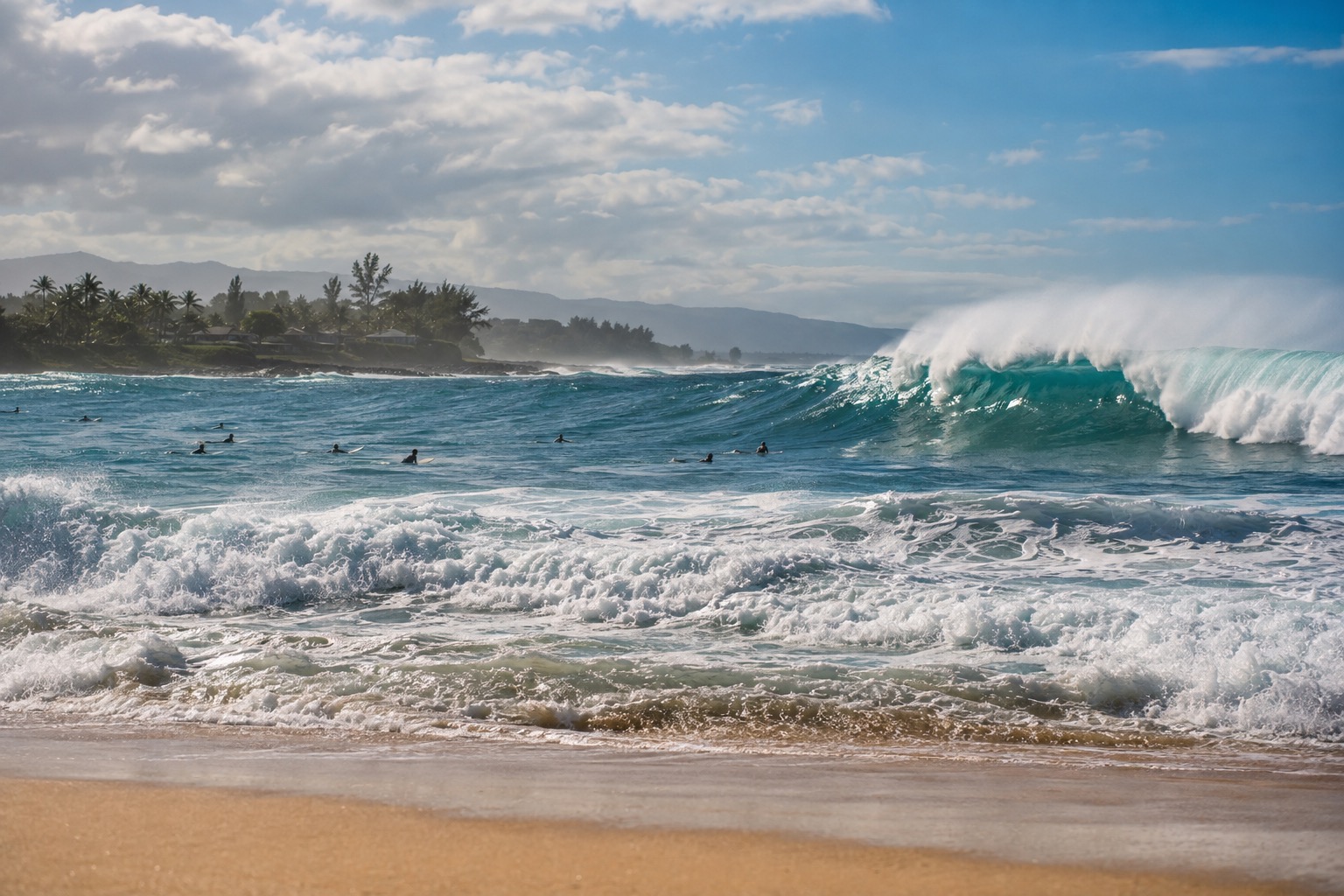
The North Shore is the northern coast of Oahu, a string of beaches and small communities running from Haleiwa past Waimea Bay, Pupukea and Sunset Beach toward Kahuku. It feels a world away from Waikiki: low buildings, roadside stands, rusty pickups with surfboards on the rack, and farmland rolling up toward the mountains.
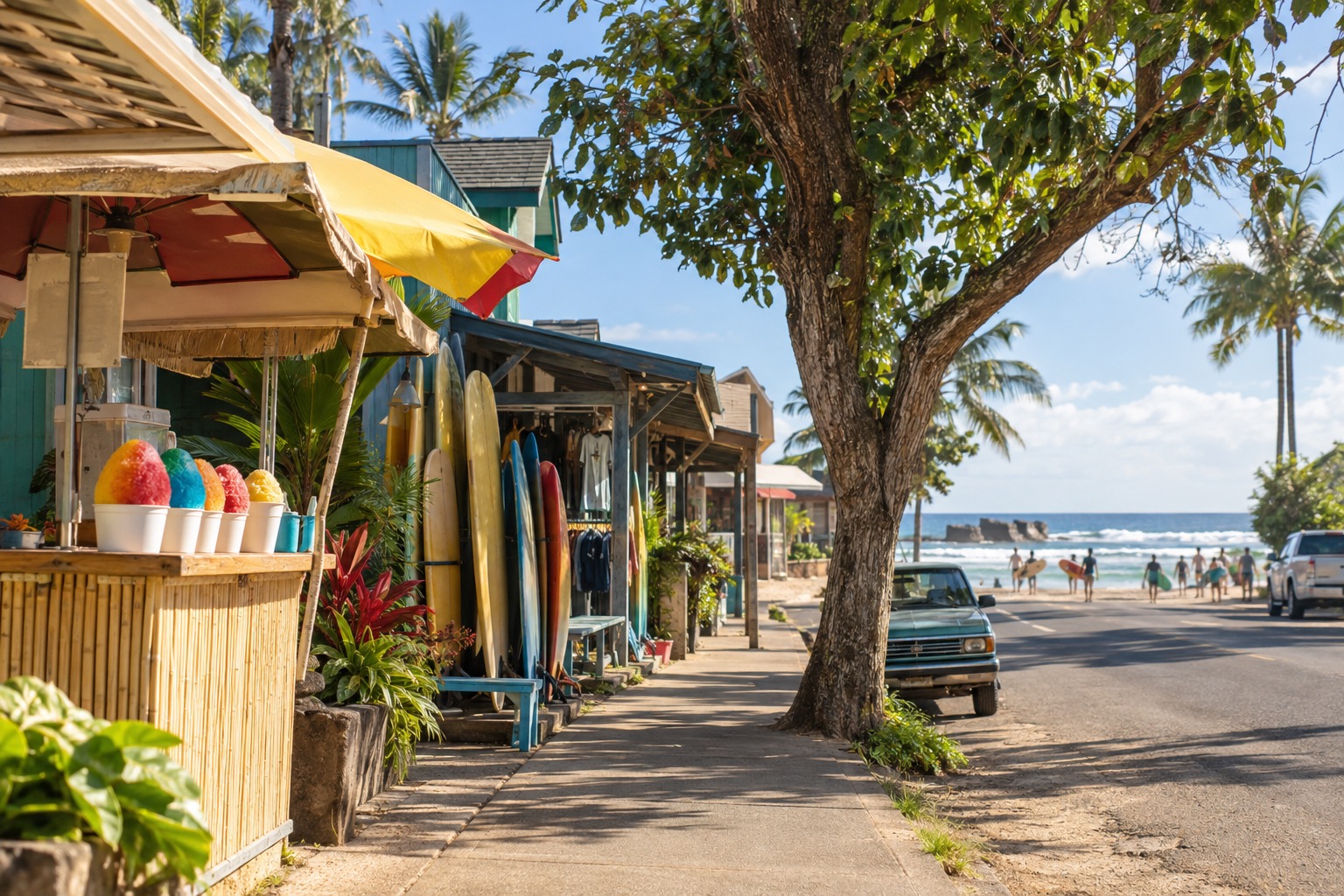
Haleiwa is the hub, a surf town of restaurants, food trucks, surf shops and shave ice stands. Beyond it the pace slows even more. People who love it come for the ocean, the unhurried afternoons and the sense of a real community. Travelers who want nightlife, big hotels or a long list of shopping malls may find it too quiet, and the one main road can fill with cars on a sunny weekend.
What is there to do in the North Shore?
The big reasons to come are the surf, the snorkeling, the valley walk at Waimea and the food. What sets the North Shore apart from the rest of Oahu is that the ocean here is a show in its own right, and it changes completely from one season to the next.
Watching the big waves
Waimea Bay, Ehukai Beach (home of the Banzai Pipeline) and Sunset Beach are the famous big-wave breaks. From November to February, waves here can reach thirty feet or more, and watching them from the sand is an event: crowds gather, read the posted warnings and the day’s surf and currents before you go in, swim near a lifeguard only where one is on duty, and the sound of the shore break carries up the road.
The Vans Triple Crown of Surfing is held on these beaches in November and December, which makes those weeks the liveliest of the year. The sea sets the terms here, so read the posted warnings and the day’s surf and currents before you go in, swim near a lifeguard only where one is on duty, and treat the water in winter as something to admire rather than enter. In summer the same beaches turn gentler, and beginners can take lessons from May to September.
Snorkeling at Pupukea
Pupukea Marine Life Conservation District covers the water off Waimea Bay and Pupukea beach parks, and it is the North Shore’s best-known snorkeling area. Sharks Cove is a shallow site, up to 20 feet deep at its mouth, with lava rock shelves and fish moving between them. Three Tables, a little farther along, has water averaging about 15 feet.
The state says the water here is generally calm from about May through October, though surges are possible, and that in winter currents and waves become extremely dangerous. Go in the summer half of the year, look at the conditions before you step in, and leave every shell, rock and piece of coral where it is: nothing may be taken from the district, and no fishing is allowed.
Waimea Valley
Across the road from Waimea Bay, Waimea Valley is a shaded botanical garden and cultural site, and a walk up its paved path leads to Waimea Falls. It suits families, plant lovers and anyone who wants a few hours out of the sun. Water and surf conditions at the falls are posted each day at 9 a.m., so read the warnings and check the day’s surf and currents before you go in, swim near a lifeguard only where one is on duty, and life jackets are required.
| Site | Open | Admission |
|---|---|---|
| Waimea Valley | Tuesday to Sunday, 9 a.m. to 4 p.m. (closed Monday, hours vary by season) | $26 adults, $18 children 4 to 12 |
Lockers near the falls cost $10 for a small one and $15 for a large one, which is handy if you plan to swim.
Turtles, seals and garlic shrimp
Green sea turtles haul out on North Shore beaches to rest, and watching one on the sand is a quiet highlight. NOAA asks visitors to stay at least 10 feet from a turtle, on land and in the water, and at least 50 feet from a Hawaiian monk seal. The James Campbell National Wildlife Refuge near Kahuku protects both species.
Lunch is its own ritual. Garlic shrimp plates sold from trucks around Kahuku and Haleiwa are the signature roadside meal: buttery, loud with garlic, served with rice. Eat it at a picnic table, then walk into Haleiwa for shave ice.
How many days do you need in the North Shore?
A full day is enough for a taste, and two or three days let you settle into the rhythm of the coast. In a single day you can stroll Haleiwa, eat shrimp from a truck, stop at a beach for the waves or the turtles, and walk Waimea Valley.
With more time, you can spend a morning snorkeling at Pupukea in summer, linger at Sunset Beach for the afternoon light, and head to Kahuku for a refuge visit. The North Shore also makes an easy day trip from Waikiki, so it can sit alongside a longer stay on the south side of the island.
Where to stay in the North Shore
The North Shore has few hotels. Most visitors choose condo or house rentals near the beaches, which suit families and groups who want a kitchen and a base close to the surf. The other main option is the beachside Turtle Bay Resort, at the northeastern end of the coast, for travelers who prefer a full resort.
Haleiwa is handy for restaurants and shops, while the beach stretches farther along feel quieter and more residential. Stays here carry Hawaii’s 11% state transient accommodations tax plus Oahu’s 3% county tax.
How do you get to the North Shore and get around?
Most people arrive by road from Waikiki, a drive of about 1 hour to Haleiwa and about 1 hour 15 minutes to Waimea Bay and to Turtle Bay Resort, traffic permitting. Flights from the mainland land in Honolulu, and the North Shore lies across the island from there.
Once there, the coast is spread out along a single highway, so a car makes the day easy, with stops wherever a beach or a truck catches your eye. In Haleiwa itself, you can park and walk between the shops, stands and restaurants.
When is the best time to visit the North Shore?
It depends on what you want from the sea. November to February is the big-wave season, and the Vans Triple Crown of Surfing in November and December brings the most energy. Those months are also wetter, with November the rainiest of the year at about twelve rain days, and highs around 79 to 81°F.
For snorkeling, lessons and gentler water, May through September is the pick, with highs from the low 80s to the mid-80s and the sea at its calmest. July is the month with the most rain days, but showers tend to be short. October stays warm and a little less busy as the swells begin to return. The Central Pacific hurricane season runs from June 1 to November 30, so it covers most of the summer and fall months.
Good to know before you go
The North Shore is a place for slowing down: bring sunscreen, read the posted warnings and the day’s surf and currents before going in the water, which can change from morning to afternoon, swim near a lifeguard only where one is on duty, and keep your distance from turtles and seals. Much of the land is precious to Native Hawaiians, so treat beaches, valleys and shorelines with care and keep off the reef.
Sources
- Hawaii Tourism Authority, Go Hawaii, North Shore Oahu (gohawaii.com/islands/oahu/regions/north-shore), checked September 25, 2026
- Hawaii Tourism Authority, Go Hawaii ; HVCB, map Driving Times from Waikiki (edition 2010), checked September 25, 2026
- Hawaii DLNR, Division of Aquatic Resources, Oahu – Pupukea MLCD (dlnr.hawaii.gov/dar/marine-managed-areas), checked September 25, 2026
- Waimea Valley, Tickets & Hours (waimeavalley.net/admission), checked September 25, 2026
- Waimea Valley, pages Waterfall and FAQ (waimeavalley.net), checked September 25, 2026
- NOAA Fisheries, Viewing Marine Wildlife in Hawaii, checked September 25, 2026
- Hawaii Department of Taxation, Announcement 2025-03 ; City and County of Honolulu, OTAT FAQ, checked September 25, 2026
- NWS Honolulu / Central Pacific Hurricane Center, « 2026 Central Pacific Hurricane Season Outlook », weather.gov/hfo/hurricaneOutlook2026, checked September 24, 2026
- NOAA NCEI, monthly normals 1991-2020, station USC00519603, checked September 8, 2026
All our pages
When to go
- Best Time to Visit the North Shore: Winter Surf, Summer Swimming and Weather by Month
- The North Shore in January: Big Waves, Garlic Shrimp and Winter Weather
- The North Shore in February: Big Surf, Garlic Shrimp, Haleiwa and Weather
- The North Shore in March: Winter Surf, Weather and What to Do
- The North Shore in April: Weather, Swimming and What to Do
- The North Shore in May: Calm Seas, Turtles, Surf Towns and a Two-Day Plan
- The North Shore in June: Calm Seas, Summer Surf Breaks and Shave Ice Afternoons
- The North Shore in July: Weather, Swimming, Things to Do and a Two-Day Plan
- The North Shore in August: Weather, Summer Seas and What to Do
- The North Shore in September: Weather, Summer Swells and What to Do
- The North Shore in October: Early Surf, Warm Water and Slow Beach Days
- The North Shore in November: Big Waves, Garlic Shrimp and Winter Surf Season
- The North Shore in December: Big-Wave Surf, Weather and What to Do