
On a June morning at Haleiwa, the line outside the shave ice shop starts forming before the heat does, and the ocean past the harbor is a flat, glassy blue. The big winter waves that made this coast famous have gone quiet, and the beaches feel like a different place altogether. June on the North Shore of Oahu is a month for swimming, snorkeling, slow drives along Kamehameha Highway and long afternoons under the ironwood trees.
What is the weather like in the North Shore in June?
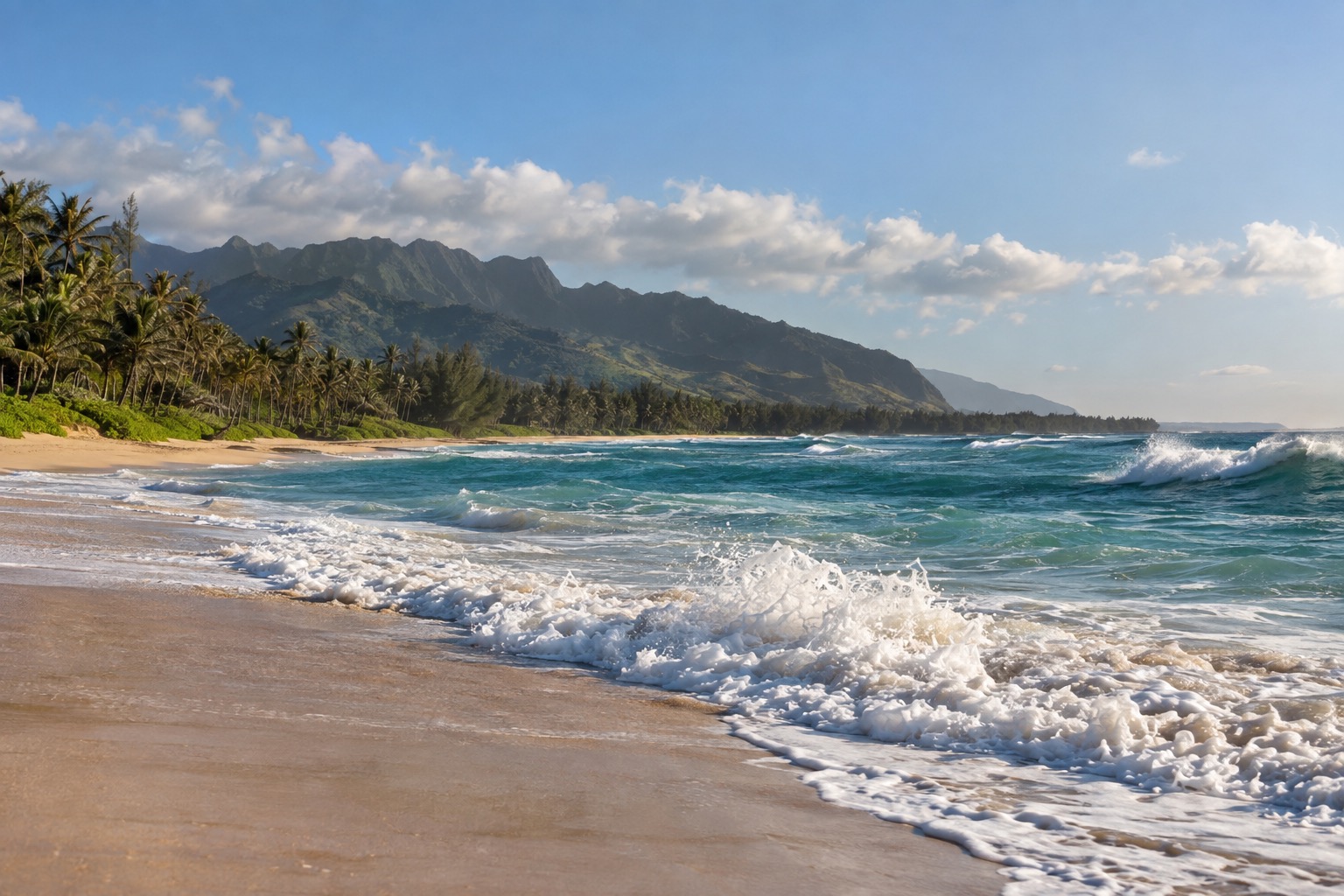
June is warm, bright and mostly sunny, with brief passing showers that rarely spoil a day. The trade winds keep the air from feeling heavy, even in the afternoon.
| Month | Average high (°F) | Average low (°F) | Rain days | Sea (°F) |
|---|---|---|---|---|
| May | 83.1 | 66.5 | 8.6 | 76.6 |
| June | 84.4 | 68.9 | 11.2 | 77.6 |
| July | 85.1 | 70.0 | 11.9 | 78.8 |
Mornings are the best hours for anything active. The light is soft, the air is still cool enough for a walk along the shore, and the sand has not yet turned hot underfoot. By early afternoon the sun is strong and the shade of a tree or a beach umbrella becomes very welcome.
Rain here usually comes as a short shower that blows in from the mountains behind the coast, soaks the road for a few minutes and moves on. Plenty of days in June see a little of it, so a shower is more likely than a washed-out day. The sun often returns within the hour, and a rainbow over the fields is common.
Evenings stay warm enough for a T-shirt and sandals, and dinner outside is easy. Daylight lasts well into the evening, which gives you a long window for sunset on the beach. Bring a light layer for the breeze after dark and a hat for the middle of the day.
Can you swim in the North Shore in June?
Yes, the water is warm enough for a long, comfortable swim, and June is the season when the North Shore’s beaches are most inviting for it.
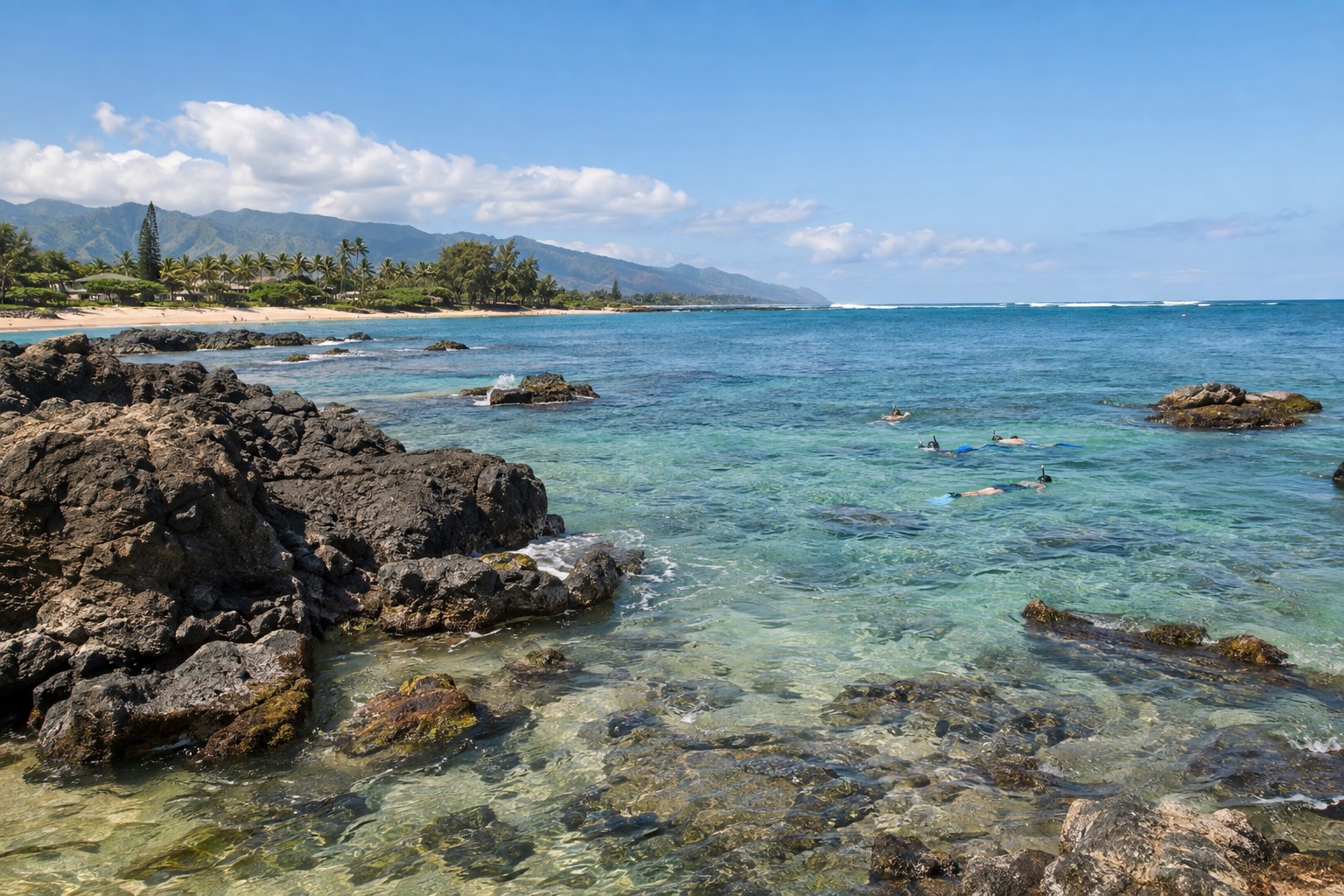
Summer swells are usually small here, so the bays that thunder in winter often lie flat. Shark’s Cove and nearby Three Tables are favorites for snorkeling, where the lava rock shelters fish and the water is often clear.
Waimea Bay, famous for giant winter surf, is often a gentle place for swimming and for jumping off the big rock, though the shorebreak can still surprise you. Haleiwa Beach Park suits families who want a protected corner and shade.
Even in summer, conditions change from one day to the next, and a south swell can send surprise waves to some beaches. Look at the flags and signs, ask the lifeguard before you go in, and keep an eye on children near the rocks. Bring a mask, a rash guard and water shoes for the rocky entries. If you use sunscreen, choose a mineral one, which is kinder to the reef.
What to do in the North Shore in June
June is the month to enjoy the North Shore as a beach and food coast. The surf contests have moved on, the highway moves at an easy pace, and the town of Haleiwa feels relaxed. Kamehameha Day on June 11 is a state holiday, and you may see lei draped on statues and local celebrations around the island.
Food is half the fun. Garlic shrimp trucks near Kahuku, fresh poke, fruit stands along the road and the famous shave ice in Haleiwa all taste better after a morning in the water. Many stands sell fresh coconut and local fruit too, which makes a good picnic by the sea.
Snorkeling at Shark’s Cove and Three Tables
These two spots sit side by side along the rocky shore north of Haleiwa and Waimea, and they are among the most popular places to snorkel on Oahu in summer. Lava shelves form pools and small caves that shelter reef fish, and in calm water you can drift over them for an hour or more.
Go early, when the water is clearest and the small parking lot along the highway has room. The entry is over sharp rock, so wear water shoes and take your time getting in and out. Ocean conditions change, so look at the surf and the lifeguard signs and skip the water if it looks rough. It suits confident swimmers and older children best.
Haleiwa town
Haleiwa is the heart of the coast, a little plantation-era town of wooden storefronts, surf shops, art galleries and food stands. Walk the main street in the late morning, browse the shops, and then settle in for shave ice or a plate lunch. The small harbor is a good place to watch boats and paddleboarders.
Afternoons here fill up with visitors, so mornings and evenings are calmer. The town is flat and easy to walk, which makes it a good stop for any age. Plan on an hour or two, longer if you like to browse.
Waimea Valley and the beaches beyond
Across from Waimea Bay, Waimea Valley is a botanical garden with a paved path that follows a stream toward a waterfall. It is shady and green, a good choice for the hottest hours. Peacocks wander the lawns and the plants include many native Hawaiian species.
Afterward, cross to Waimea Bay for a swim, or drive on to quieter beaches such as Pupukea and Ehukai, famous for winter surf and calmer in summer. Respect the sacred places in the valley, stay on the paths and keep off the old stone walls.
Other easy pleasures include paddleboarding at the harbor, a drive past the Kahuku farms and a stop at the roadside stands for fresh pineapple. Sea turtles often rest on the sand near Laniakea, and the rule is to give them room and never touch them. On a wet day, the shops and galleries of Haleiwa are a good fallback.
A two-day itinerary for the North Shore in June
Day 1 starts early at Haleiwa, when the town is quiet and the light is gentle. Have breakfast at a café, walk the harbor, and then drive north to Shark’s Cove and Three Tables for snorkeling while the water is clear. By midday the heat builds, so move to Waimea Valley for the shade of the garden path and a picnic lunch.
In the afternoon, rest at Waimea Bay for a swim, then head back toward Haleiwa for shave ice. Dinner at a casual spot in town, then walk to the shore for the sunset, which comes late in June. If a shower rolls in, the shops and galleries are an easy indoor choice.
Day 2 heads east along the coast. Start with a slow breakfast, then drive toward Kahuku for a plate of garlic shrimp from one of the roadside trucks and a look at the farm stands. Stop at the quieter beaches near Sunset Beach and Velzyland, where you can swim and walk the sand.
Spend the afternoon at a beach that appeals to you, then watch for turtles near Laniakea on the way back. Plan an early evening paddle or a walk along the shore, and finish with dinner in Haleiwa. If rain sets in, a long lunch, a visit to a gallery or a quiet coffee stop fills the hours.
Is the North Shore busy in June?
Moderately, yes. June brings summer vacation families, and the coast is lively but less packed than in winter or in the peak holiday weeks.
Haleiwa and the most popular snorkeling spots fill up by late morning, and parking along the highway becomes tight. Early starts solve most of it. The beaches themselves are rarely crowded in the way of Waikiki, and quieter stretches are easy to find if you walk a little.
Rooms, rental cars and restaurant tables are easier to find than in the winter holidays, but still worth booking ahead for the weeks when schools are out. A good habit is to book early for late June and the Fourth of July week, and a little later for the first weeks of the month. Food trucks and casual spots usually do not take reservations, so go a little before the usual meal hours.
This coast needs no special park reservation in June, so the main planning is the car and the room. Kamehameha Day on June 11 may bring a busier feel on the roads and the beaches, so plan accordingly.
What to pack for the North Shore in June
The days are warm and sunny with the occasional shower, so pack light and practical clothing for the beach and the road.
- Swimsuits and a rash guard, for long hours in the sun and the water
- Mask and snorkel, for Shark’s Cove and the clear bays
- Water shoes, for the rocky entries and lava shelves
- A mineral sunscreen and a wide-brimmed hat, for the strong midday sun
- For those fast mountain showers, pack a lightweight rain jacket.
- A light sweater, for breezy evenings by the shore
Good to know before you go
The Central Pacific hurricane season begins on June 1 and runs to November 30, so June is its first month. Storms are not a daily concern, but it is worth keeping an eye on forecasts as the trip nears. Since the shoreline stretches along a single main road, the simplest way to get from beach to beach is with a rental car, and filling up in Haleiwa is smart before you continue farther up the coast.
| Fee | Amount | Who pays |
|---|---|---|
| State transient accommodations tax | 11% | Guests staying in hotels and rentals |
| Oahu county tax | 3% | Guests staying in hotels and rentals |
The North Shore in June vs May and July
Moving the trip to May brings slightly cooler air, a touch less rain and a sea that is a degree cooler. The coast is a little quieter, and the roads and beaches feel more relaxed before the summer vacation weeks begin.
July is warmer, with the sea at its warmest and a bit more rain. Families fill the beaches and the highway, and the Fourth of July brings crowds and fireworks. Rooms and cars are harder to find, so book earlier.
Choose May if you want fewer people and cooler mornings. Choose June for the balance of warm water, long days and a coast that has not yet reached its busiest weeks. Choose July if the warmest sea and a lively holiday mood matter most.
Is June a good time to visit the North Shore?
Absolutely, above all for families, snorkelers, swimmers and anyone hoping to see the North Shore when it is calmest. The water is warm, the days are long and the beaches are open for play.
It is less suited to surf watchers, since the giant winter waves are far away and the famous breaks are often flat. If that is your goal, plan for winter instead.
On arrival, head straight for the water. Pick a morning at Shark’s Cove or Waimea Bay, check the lifeguard signs, and get in early before the sun is high. After that the rest of the coast falls into place. What makes June special here is the contrast: the same shore that roars in January is a clear, quiet swimming hole, and the pace of Haleiwa matches it, with shave ice in hand and nowhere to be.
Sources
- NOAA NCEI, monthly normals 1991-2020, station USC00519603, checked September 8, 2026
- Open-Meteo Marine API, average 2015-2024, checked September 8, 2026
- sunrise-sunset.org, sunrise and sunset calculated for the 15th of the month, checked September 8, 2026
- Hawaii Department of Taxation, Announcement 2025-03 ; City and County of Honolulu, OTAT FAQ, checked September 25, 2026
- NWS Honolulu / Central Pacific Hurricane Center, « 2026 Central Pacific Hurricane Season Outlook », weather.gov/hfo/hurricaneOutlook2026, checked September 24, 2026