
One winter morning, surfers crowd the shoulder of Kamehameha Highway at Ehukai Beach to watch sets arrive from the open Pacific, as a garlic shrimp truck close to Kahuku fires up its first batch of the day. By summer the same coast has gone quiet and blue, with kids paddling at the beach parks and the shave ice line growing in Haleiwa. The North Shore of Oahu has two moods, and each one suits a different kind of vacation.
When is the best time to visit the North Shore?
May through September is the best time for most visitors, especially for swimming, snorkeling and easy beach days, while November through February is the time to come for the giant surf and the contest atmosphere.
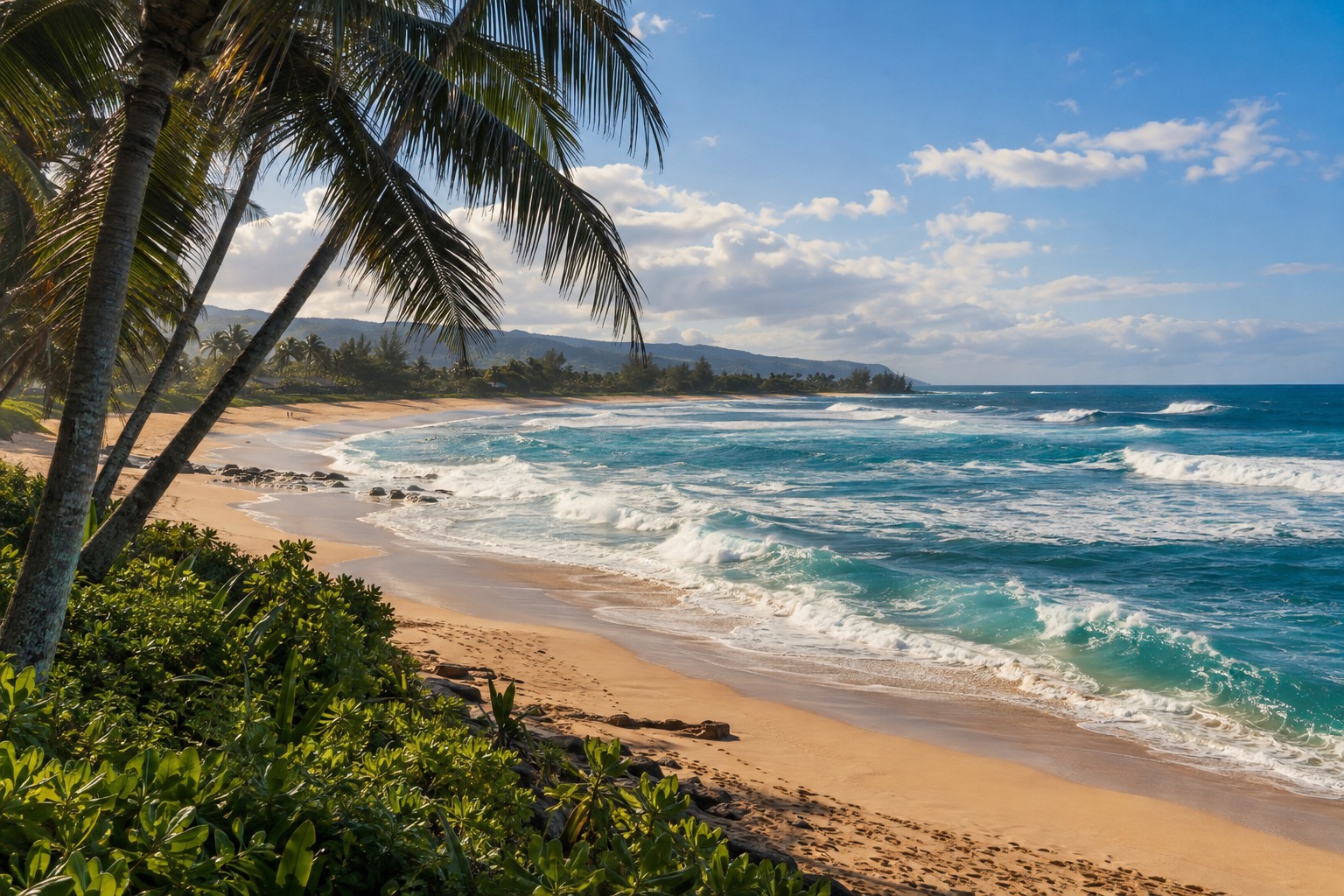
For beach and sea, summer wins. The big swells go to sleep, the water warms up, and beginners can take a first surf lesson. Snorkelers get their best chances at Sharks Cove and Three Tables in these months. Winter is for watching, not wading: crowds gather on the sand and the highway shoulder to see waves that can reach thirty feet or more at Waimea Bay, Pipeline and Sunset Beach.
For sightseeing, the shoulder months of April, May, September and October are hard to beat. Days are warm, the roads to Haleiwa move more easily, and you can wander the surf shops, food trucks and roadside stands without the holiday rush. The drive from Waikiki takes about an hour, and many visitors make a day of it, though staying overnight in a condo or at Turtle Bay Resort lets you catch the early and late light.
Families should know that March brings mainland spring break, and the beach parks and the lunch trucks get loud and busy. Summer family weeks are busy too, but the calmer sea makes them easier with children. Winter families can still enjoy the coast, as long as the day is spent on the sand and in the shops rather than in the water.
The North Shore weather by month
Temperatures stay in a narrow, comfortable band all year, and the sea barely changes.
| Month | Average high (°F) | Average low (°F) | Rain (in) | Rain days | Sea (°F) |
|---|---|---|---|---|---|
| January | 78.1 | 62.4 | 4.68 | 8.5 | 77.0 |
| February | 78.6 | 62.2 | 4.03 | 8.3 | 75.5 |
| March | 79.4 | 63.7 | 5.58 | 11.1 | 75.4 |
| April | 81.1 | 65.4 | 4.15 | 10.4 | 75.9 |
| May | 83.1 | 66.5 | 3.63 | 8.6 | 76.6 |
| June | 84.4 | 68.9 | 3.50 | 11.2 | 77.6 |
| July | 85.1 | 70.0 | 3.94 | 11.9 | 78.8 |
| August | 86.4 | 70.4 | 3.24 | 9.1 | 79.4 |
| September | 86.2 | 69.7 | 3.32 | 9.2 | 80.3 |
| October | 84.3 | 68.7 | 4.39 | 10.4 | 80.6 |
| November | 81.4 | 66.8 | 6.09 | 12.1 | 78.8 |
| December | 78.8 | 64.7 | 5.47 | 11.3 | 77.8 |
Winter is the wetter half of the year, with November and December bringing the heaviest rain, often in passing showers that roll in off the mountains and clear within the hour. Some days turn gray and breezy.
Summer is hotter and brighter, yet rain days are still common in June and July, usually brief and warm. Evenings in January and February feel pleasantly cool, a light layer is enough, and from June to October nights stay warm enough to eat outside comfortably.
When is the North Shore cheapest and least crowded?
The quietest stretches come in late April and May, and again from September to early November, when the school calendar leaves the coast to locals and a few travelers.
The busiest weeks are the winter holidays, when Christmas and New Year fill the few rentals and the highway slows to a crawl on big-surf days. Spring break in March and the stretch around Easter bring another wave of mainland families. Summer vacation weeks keep the beach parks lively from June through July, though parking is easier than in winter.
Because the North Shore has few hotels, just condos, house rentals and the beachside Turtle Bay Resort, rooms tighten quickly in peak weeks and ease noticeably in the quiet months. In those calm weeks, you often get Waimea Bay or a Haleiwa lunch spot nearly to yourself on a weekday.
Which months should you avoid in the North Shore?
No month is a bad one, but the choice depends on what you want from the water: avoid December through February if you hope to swim, and keep storm season in mind from June through November.
The Central Pacific hurricane season runs from June 1 to November 30. Hawaii is rarely hit, yet it is the stretch when a tropical system could affect flights or beach plans, so flexible bookings make sense. November also tends to be the wettest month, with longer gray spells.
Winter brings the opposite problem: the surf. From November through February, the famous breaks produce waves that are thrilling to watch and unsuitable for ordinary swimming. If your plan is a quiet beach day, the summer months suit it far better. Late summer can also be hot, with the highest temperatures of the year in August and September.
When can you swim in the North Shore?
Summer, roughly May through September, is the season for swimming, with the sea warm all year but far gentler on the shore in those months.
Water temperatures hover in the mid-to-upper 70s in winter and climb toward 80 by early autumn, so cold is never the issue. What changes is the swell. In summer, the bays at Waimea and Pupukea often turn flat enough for snorkeling, and Sharks Cove and Three Tables draw people to see reef fish. The marine life district there protects everything in the water, so you look and do not take.
In winter, treat the ocean as a show to watch from the sand. On a bright day, too, strong currents and heavy sets may show up with no warning at all, so before entering the water locals study the beach signs and look up that day’s surf and currents, and they swim near a lifeguard only at spots where one is stationed. Green sea turtles rest on the sand at some beaches year-round, and you should give them plenty of room, at least 10 feet, and far more for a monk seal.
Festivals and events in the North Shore through the year
Winter surf contests
The Vans Triple Crown of Surfing runs in November and December at Haleiwa, Sunset Beach and the Banzai Pipeline, and it turns the coast into a pilgrimage site for surf fans. Waimea Bay, Ehukai Beach and Sunset Beach are the big-wave breaks, and the best views are from the sand, where fans spread out towels and coolers.
Expect crowds, slow traffic on the highway and a festive mood in town. Haleiwa fills with surfers, photographers and families, and food trucks do brisk business. The days when the contest actually runs depend on the swell, so the schedule shifts, and a flexible plan works best.
A good tip is to arrive early in the morning, grab a spot on the beach and then lunch on garlic shrimp from a Kahuku truck once the sun is high. Come back later for the afternoon sets, when the light turns golden on the water.
Summer on the beach parks
From late spring into September, the mood is easy and local. Families spread out under the ironwood trees, kids learn to surf at Haleiwa, and weekends bring barbecues and music to the parks. Kamehameha Day on June 11 is a state holiday and usually draws gatherings and celebrations across Oahu.
Summer is also the time for the quieter pleasures: a snorkel at Sharks Cove in the morning, shave ice in Haleiwa after, and an afternoon in Waimea Valley, where the swimming at the falls depends on conditions each day. It suits families, beginners and anyone who prefers a slower coast.
Nature seasons: turtles, seals and whales
All year long, green sea turtles come ashore on North Shore beaches, and seeing one doze on the sand ranks among the coast’s most cherished sights. At the James Campbell National Wildlife Refuge close to Kahuku, turtles and endangered monk seals both receive protection, making this a wonderful place to watch wildlife while keeping a respectful distance.
In winter, humpback whales pass offshore, and a clear day on the bluffs can bring spouts and tail slaps on the horizon. Bring binoculars, stay on the shore and keep your distance from any animal resting on the beach. Mornings are generally the most rewarding time for watching.
Sources
- NOAA NCEI, monthly normals 1991-2020, station USC00519603, checked September 8, 2026
- Open-Meteo Marine API, average 2015-2024, checked September 8, 2026
- sunrise-sunset.org, sunrise and sunset calculated for the 15th of the month, checked September 8, 2026
- Hawaii Tourism Authority, Go Hawaii, North Shore Oahu (gohawaii.com/islands/oahu/regions/north-shore), checked September 25, 2026
- Hawaii Tourism Authority, Go Hawaii ; HVCB, map Driving Times from Waikiki (edition 2010), checked September 25, 2026
- Hawaii DLNR, Division of Aquatic Resources, Oahu – Pupukea MLCD (dlnr.hawaii.gov/dar/marine-managed-areas), checked September 25, 2026
- Waimea Valley, Tickets & Hours (waimeavalley.net/admission), checked September 25, 2026
- Waimea Valley, pages Waterfall and FAQ (waimeavalley.net), checked September 25, 2026
- NOAA Fisheries, Viewing Marine Wildlife in Hawaii, checked September 25, 2026
- Hawaii Department of Taxation, Announcement 2025-03 ; City and County of Honolulu, OTAT FAQ, checked September 25, 2026
- NWS Honolulu / Central Pacific Hurricane Center, « 2026 Central Pacific Hurricane Season Outlook », weather.gov/hfo/hurricaneOutlook2026, checked September 24, 2026