
On a May morning in Haleiwa, the line at the shave ice stand starts early, surfboards ride on roof racks, and the old plantation storefronts open to a soft, bright light. The winter swells that made this coast famous have mostly gone, and the water along Oahu’s northern shore turns friendlier. May is a month for the North Shore at an easier pace, for beach days, turtle spotting, food trucks and long drives with the windows down.
What is the weather like in the North Shore in May?
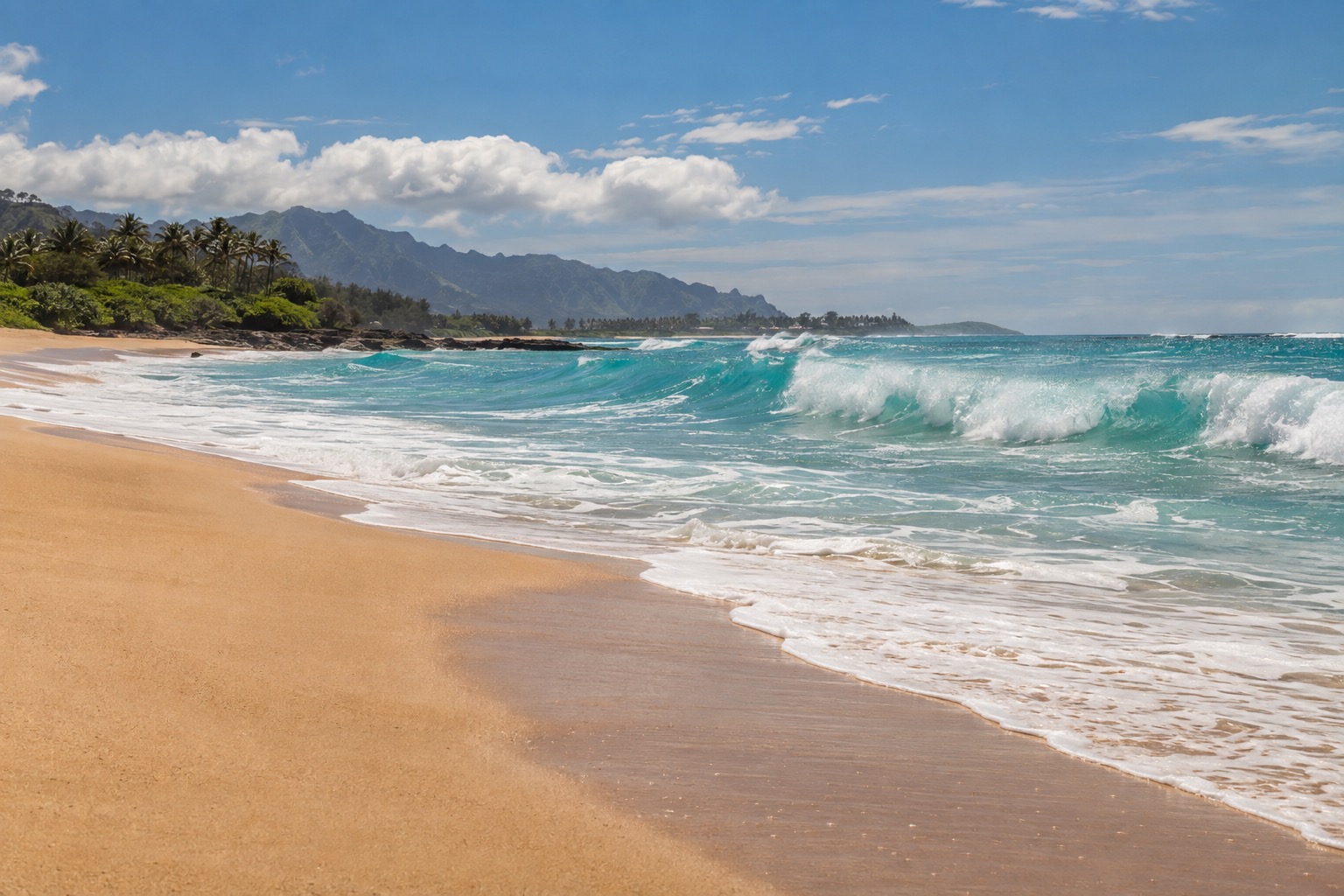
Warm, bright and mostly easy: May on the North Shore is shorts-and-sandals weather with a few passing showers, the kind that wet the road and move on.
| Month | Average high (°F) | Average low (°F) | Rain days | Sea (°F) |
|---|---|---|---|---|
| April | 81.1 | 65.4 | 10.4 | 75.9 |
| May | 83.1 | 66.5 | 8.6 | 76.6 |
| June | 84.4 | 68.9 | 11.2 | 77.6 |
Mornings are soft and a little cool, pleasant for a walk on the sand or a coffee on a Haleiwa porch. Around noon the sunshine beats down hard, while the trade winds handle the job of making the shade feel nice. Evenings stay mild enough to eat outside in a T-shirt, though a light layer is welcome once the breeze picks up after sunset.
Rain here comes in brief showers, often drifting down from the Koolau mountains behind the coast, and a rainbow over the fields is a common reward. Most days have long dry stretches, and a shower rarely cancels a plan for more than an hour. The North Shore sits on the drier side of the wet-dry split between the mountains and the coast, so skies are often sunnier than they are in the hills.
Midway through the month, daylight lasts over thirteen hours, so you can fit in a morning at the beach and still catch the sun going down late. The sun is strong at this latitude, so sunscreen and a hat matter even when clouds drift across.
Can you swim in the North Shore in May?
Yes, the sea is comfortable for swimming in May, pleasantly warm for a long dip without a wetsuit, though conditions change from beach to beach and from day to day.
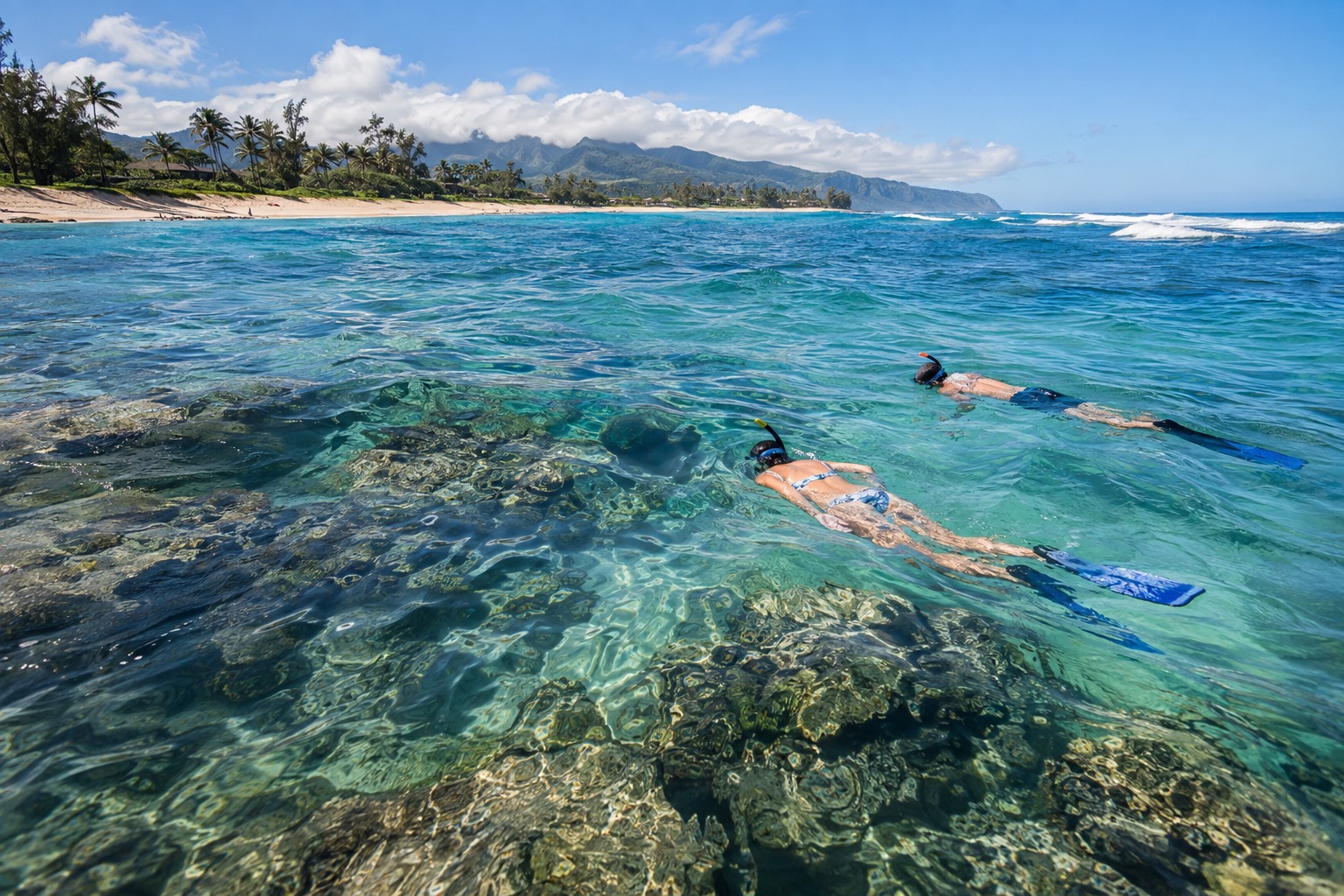
The giant winter surf generally fades by spring, and many North Shore beaches become gentler. Waimea Bay, famous for towering winter waves, often turns into a broad, calm cove in late spring, and Shark’s Cove and Three Tables draw snorkelers when the water is quiet. Even so, a late swell can still arrive, and the ocean here can change fast, so look at the posted signs and flags and talk to the lifeguards before you go in.
Families often favor the calmer, sandier stretches such as Haleiwa Beach Park, while confident swimmers and snorkelers head for the rocky coves on quiet days. Nervous swimmers do best staying in shallow water near a lifeguard tower. Bring a mask and snorkel, a rash guard for the sun, and water shoes for rocky entries. Keep off the reef, and give any sea turtle or monk seal on the sand plenty of room.
What to do in the North Shore in May
May is a month of beach hopping and slow roadside eating, with the surf competitions of winter behind you and the summer crowds not yet here. Lei Day on May 1 opens the month across the islands, with lei contests, hula and music, and you will see flower garlands on shoulders and in shop windows around the first of the month.
The drive itself is part of the pleasure. Kamehameha Highway links the beaches, shrimp trucks, fruit stands and surf shops, and the pace is easy once you leave the Haleiwa traffic. Stop where something looks good: a fruit stand with fresh pineapple, a banana bread stall, a plate of garlic shrimp from a truck near Kahuku.
Haleiwa town and its food
Haleiwa is the North Shore’s hub, a town of weathered wooden buildings, art galleries, surf shops and food stands. Shave ice, often with azuki beans or a scoop of ice cream at the bottom, is the local ritual, and poke bowls, fish tacos and acai bowls fill the lunch hour. Street parking fills quickly late in the morning, so arriving early makes the whole visit easier.
Browse the small shops for local art and handmade jewelry, then walk to the harbor, where fishing boats and paddleboarders share the water. It suits a slow half day, and it pairs well with a beach stop either before or after. In a shower, the covered porches and shops are good places to wait it out.
Turtles and beaches along the coast
Green sea turtles often rest on the sand or feed along the rocks near Laniakea Beach, and you may see them there in the morning. Keep a respectful distance, never touch them, and keep your voice low. They are protected, and the beach is their space before it is a photo stop.
Farther along, Sunset Beach and Pipeline are the great surf names, and in May they are often much quieter than in winter, good for a long beach walk and a look at the empty lineups. Ehukai Beach Park gives a close view of the famous break. Keep an eye on the water, since a lingering swell can still make the shore break strong.
Waimea Valley and the northern end
Waimea Valley is a botanical garden and cultural site with a shaded path through the trees, flowering gardens and a waterfall at the end. It is a good wet-weather and midday option, cooler under the canopy than the beach. Sacred to Native Hawaiians, it asks for quiet and care: stay on the path and leave stones and plants where they are.
Heading north toward Kahuku, you pass the shrimp trucks, fish farms and open fields that give the end of the coast its rural feel. Kahuku is the place for a plate of garlic shrimp eaten at a picnic table, and the drive keeps the sea in view for much of the way. It suits travelers who like their sightseeing with a plate in hand.
Late afternoon is when the coast turns golden, and a stop at a west-facing beach for sunset is a simple pleasure. Pack a towel, buy a cold drink from a roadside stand, and let the day end slowly.
A two-day itinerary for the North Shore in May
Day 1 is for the coast and the town. Start early at Laniakea Beach, when the light is soft, the road is quiet and turtles may be resting on the sand.
Continue to Haleiwa for breakfast and a walk through the shops, then take a late-morning swim or snorkel at a beach that looks calm when you arrive. Midday heat is the time for shade and lunch: a poke bowl or fish tacos at a food stand.
In the afternoon, drive on to Sunset Beach and Ehukai for a long walk along the sand and a look at the famous surf breaks without the winter crowds. Return to Haleiwa for shave ice, then settle in for a sunset at the beach, followed by dinner at a casual restaurant in town. If rain sets in, the galleries and covered shops of Haleiwa make an easy fallback.
Day 2 heads to the valley and the north end. Begin at Waimea Valley in the cool of the morning, walking the garden path to the waterfall under the trees and spending time among the flowers and cultural sites. The shade makes this the right place for the warmer hours, and it works well if showers drift in from the mountains.
After lunch, drive north toward Kahuku for garlic shrimp from a roadside truck, then stop at a fruit stand for something sweet. Spend the late afternoon at Waimea Bay or Shark’s Cove if the water is calm, checking flags with the lifeguards first. End with a slow drive back along the highway as the light turns gold, with the sun setting a little after sunrise has long passed on the long days of May.
Is the North Shore busy in May?
Moderately: May is calmer than the winter surf season and the summer family weeks, with a steady flow of visitors but rarely the crush of peak months.
Spring break travelers thin out as the month begins, and the long Memorial Day weekend near its end brings a short rush of visitors and locals to the beaches. Weekends are busier than weekdays, especially in Haleiwa, where parking and lunch lines build around midday. Popular food trucks and shave ice stands move quickly but can have a wait.
For rooms and rental cars, booking early makes sense for the holiday weekend, while the quieter weeks give more room to decide later. Restaurant tables at the more popular sit-down spots are easier on weekday evenings than on weekends. Starting the day early, at the beach before the tour buses, is the simplest way to enjoy the coast with space around you.
What to pack for the North Shore in May
Think beach first, with a layer for the breeze and sturdy shoes for the roadside walks.
- A hat and mineral sunscreen, because even when it is hazy the sun stays strong
- A rash guard and swimsuit for beach hopping and snorkeling
- Water shoes for rocky coves and tide pools
- A light rain jacket for brief showers from the mountains
- A light sweater for breezy evenings
- A dry bag for phones and cameras at the beach
Good to know before you go
May falls before the Central Pacific hurricane season, which runs from June 1 to November 30, so the month is outside the official season. The coast road can slow to a crawl near Haleiwa and the popular beaches on weekends, so build in time for the drive and park early. Stays carry Hawaii’s state accommodations tax and the Oahu county tax.
| Fee | Amount | Who pays |
|---|---|---|
| State transient accommodations tax | 11% | Guests staying in hotels and rentals |
| Oahu county transient accommodations tax | 3% | Guests staying in hotels and rentals |
The North Shore in May vs April and June
Going four weeks earlier brings a slightly cooler air and sea, with a few more showery days and a greater chance of leftover winter swell on the big beaches. April can still feel like the tail end of the surf season, which suits people who want to watch big waves, but it is a little less settled for snorkeling and swimming.
Going four weeks later brings warmer air and water, but also more rain days and the start of the summer family season, with busier beaches and fuller roads. June is also the month the official hurricane season begins. The sea is at its gentlest for swimming, which families with younger children may prefer.
May sits between the two: warm enough for the water, quieter than summer, and with the best share of dry days. Choose April for the last of the big surf, June for the warmest swims, and May for the balance of ease, sun and space.
Is May a good time to visit the North Shore?
Yes, especially for beach lovers, snorkelers, families and anyone who wants the North Shore at a relaxed pace, with warm water and fewer crowds than winter or midsummer.
It is a poorer match for travelers who come mainly to watch giant winter waves, since the big surf has mostly passed. Those who prefer a guaranteed dry week anywhere on the island should know that short showers can still pass through, though they are usually brief.
On arrival, head to the water early, check the beach flags, and save the town for the middle of the day when the sun is high. Eat shrimp from a roadside truck, watch for turtles on the sand, and keep the evenings free for sunset. May is the month when the North Shore is simply a seaside place, with the surf legends resting and the beaches open.
Sources
- NOAA NCEI, monthly normals 1991-2020, station USC00519603, checked September 8, 2026
- Open-Meteo Marine API, average 2015-2024, checked September 8, 2026
- sunrise-sunset.org, sunrise and sunset calculated for the 15th of the month, checked September 8, 2026
- Hawaii Department of Taxation, Announcement 2025-03 ; City and County of Honolulu, OTAT FAQ, checked September 25, 2026
- NWS Honolulu / Central Pacific Hurricane Center, « 2026 Central Pacific Hurricane Season Outlook », weather.gov/hfo/hurricaneOutlook2026, checked September 24, 2026