
Late in the afternoon at Ko Olina, families wade out into a sheltered lagoon while the sun drops toward the horizon and the sky turns orange over the Waianae coast. Walkers drift along the seaside path, and the first torches flicker on at the edge of the lawns. This is Oahu’s resort corner on the dry west side, a place built for easy beach days, calm water for little ones and sunsets that need no planning.
Where is Ko Olina and what is it like?
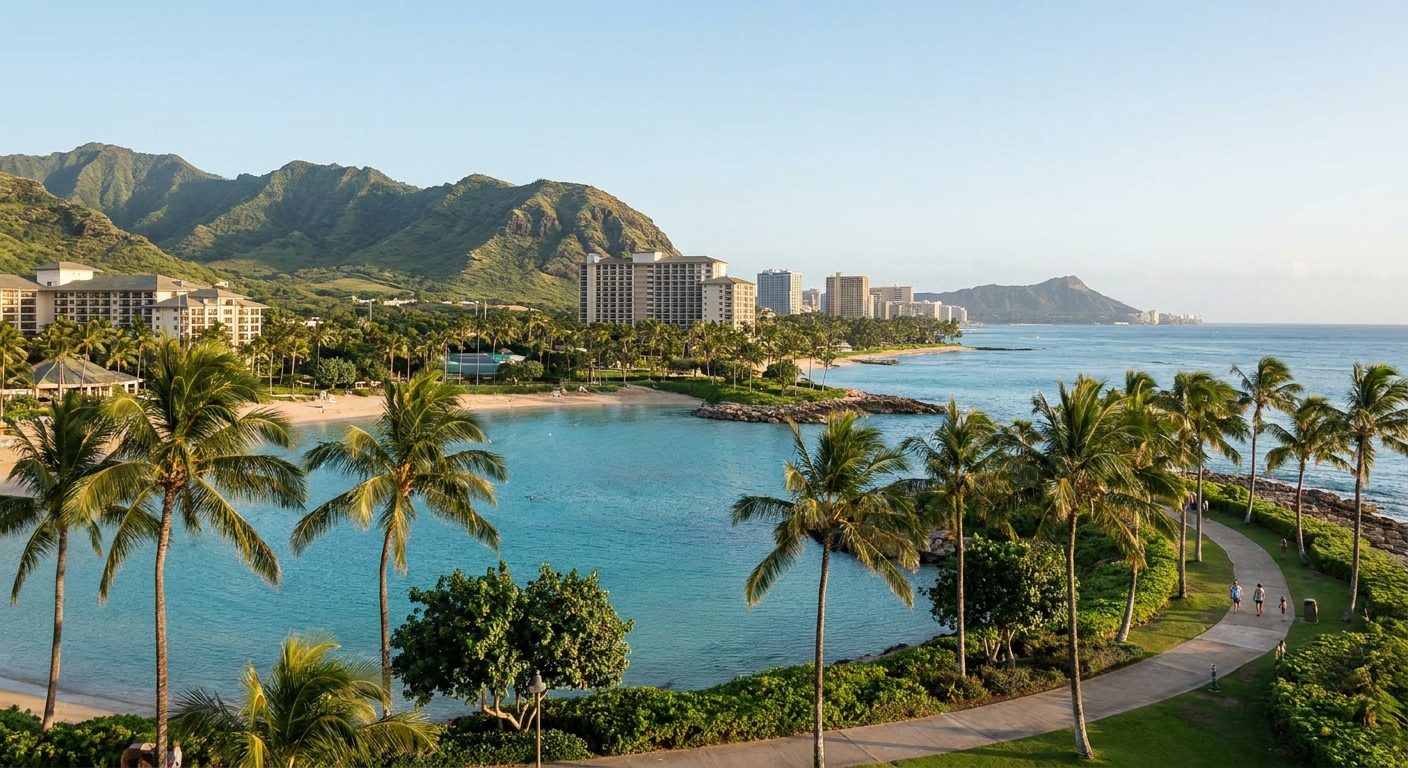
Ko Olina sits on Oahu’s leeward west coast, on the same freeway corridor that runs from Honolulu past Pearl Harbor, and it is a planned resort of 642 acres built around four man-made lagoons. A paved path of more than a mile and a half links them, so the whole place feels like one long, landscaped waterfront.
The pace is slow and tidy. Rock breakwaters shelter each lagoon, which is why the water stays gentler than on the open coast beyond. Parents of young children love it, as do couples who want sun, a pool and a short walk to dinner. Travelers who like a lively town with local shops and street life on their doorstep may find it quiet and a bit self-contained, since the rhythm here is resort rather than village.
What is there to do in Ko Olina?
The four lagoons
The lagoons are the reason most people come, and each has its own Hawaiian name: Kohola (Lagoon 1), Honu (Lagoon 2), Naia (Lagoon 3) and Ulua (Lagoon 4). Because breakwaters shelter them, the water is usually calmer than elsewhere on this coast, with small sandy beaches, shallow edges and room to float or paddle.
Visitors who do not stay at the resort can still come. Public parking at the lagoons runs from sunrise to sunset and is first come, first served, so arriving early is the way to get a spot on a busy weekend. Lagoon 4 has the largest public lot, and the others fill quickly. Even so, the signs at the beach entrance tell you how the water is on the day, so read the posted warnings and the day’s surf and currents before anyone swims, and swim near a lifeguard only where one is on duty.
The shoreline path and the sunsets
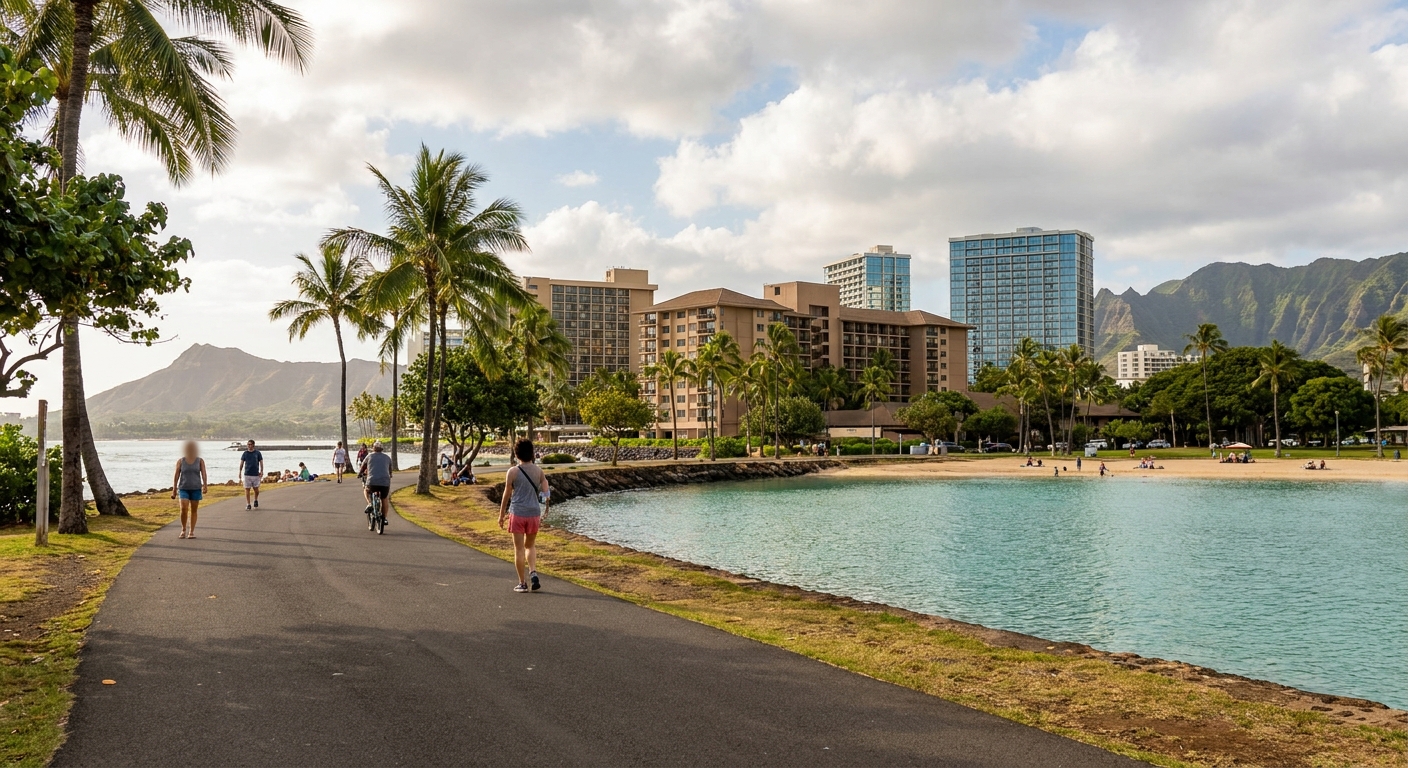
The seaside path ties the lagoons together and makes for an easy walk at any hour, best in the cooler early morning or at dusk. You pass lawns, small coves and the backs of the resorts, with views out to open ocean that turn gold as the sun goes down. Sunset is the daily event here, and the west-facing shore gives it a clear stage.
It is an unhurried outing that suits grandparents and strollers as easily as joggers. Bring a light layer for after dark, when the trade winds can cool the shore, and linger a while after the sky fades.
Whale season and the day trips
From November through April, humpback whales pass along Hawaii’s coasts, with the busiest weeks from January through March. Ko Olina is a pleasant base for watching, from a boat or simply from the shore with binoculars. Boats and swimmers must stay no closer than 100 yards.
Beyond the resort, Pearl Harbor lies between Ko Olina and Honolulu on the same freeway, and Waikiki is a drive of about 45 minutes. What sets Ko Olina apart from those neighbors is its calm: it is a place to settle in rather than a hub, with the busier sights an easy outing away.
How many days do you need in Ko Olina?
A long weekend is enough to enjoy the lagoons, and a week lets you slow down properly and still see more of the island.
In three or four days you can split your time between the lagoons, a few walks along the shore path and one or two sunsets, with a morning set aside for whale watching in season. A week suits families who want long beach days without rushing, and leaves room for a drive east.
With more time, add Pearl Harbor, which sits on the road back toward Honolulu, and a day or two in Waikiki for its shops, restaurants and the busier beach scene. Ko Olina then becomes the quiet end of the trip.
Where to stay in Ko Olina
Most visitors stay inside the resort itself, where the lodging clusters around the four lagoons. Rooms near the first lagoons put you close to the main stretch of beach and path, while the far end suits those who prefer a calmer corner and are happy to walk a little. The choice mostly comes down to which lagoon you want at your doorstep.
Staying in Waikiki instead trades the resort calm for a livelier setting, with the lagoons reachable as a day outing. Resort stays at Ko Olina carry Hawaii’s state transient accommodations tax plus Oahu’s county tax, which is worth remembering when comparing totals.
How do you get to Ko Olina and get around?
Ko Olina is about 26 miles from Waikiki, roughly a 45-minute drive when traffic cooperates, along the freeway that also passes Pearl Harbor. Most travelers arrive by car from Honolulu.
Once inside the resort, walking is the natural way to get around, since the shore path links all four lagoons. A car is useful for leaving the resort, and visitors who drive in for the day should plan for the sunrise-to-sunset public parking at the lagoons, which fills early.
When is the best time to visit Ko Olina?
The leeward corner is the driest resort coast on the island, so almost any month brings sun. April and May are especially pleasant, with highs in the mid-80s and only a day or two of rain, and October and November keep that warmth with a bit more breeze. Winter is the whale season, with the biggest numbers from January through March, and daytime highs stay around 81°F.
Summer runs hotter, with highs near 89°F in August and September and very little rain, which suits long days at the lagoons. The Central Pacific hurricane season runs from June 1 to November 30, so those months fall inside it.
The winter holidays and mainland school breaks bring the biggest crowds to the lagoons and the lots, so weekends fill early. Late spring and early fall are calmer, with the weather still reliably good.
Good to know before you go
Pack reef-friendly sunscreen, a hat and a light layer for breezy evenings, and even at the sheltered lagoons read the posted warnings and check the day’s surf and currents before you go in, and swim near a lifeguard only where one is on duty. Sea turtles and monk seals are protected, so give them space on the sand.
| Fee | Amount | Who pays |
|---|---|---|
| State transient accommodations tax | 11% | Resort guests |
| Oahu county tax | 3% | Resort guests |
Sources
- Ko Olina Resort, Lagoons (koolina.com/destination/lagoons), checked September 25, 2026
- Ko Olina Resort, press release « City and Ko Olina Partner To Launch New Public Access Plan for Lagoons », October 15, 2020, checked September 25, 2026
- Hawaii Tourism Authority, Go Hawaii, itineraire « 4 Days in Waikiki and 3 Days on the Leeward Coast » ; HVCB, map Driving Times from Waikiki (2010), checked September 25, 2026
- NOAA NCEI, normals 1991-2020, stations USW00022551 (Kalaeloa) and USC00519397 (Waikiki), via PLAN-HAWAII.md §1, checked September 24, 2026
- NOAA, Hawaiian Islands Humpback Whale National Marine Sanctuary, Responsible Recreation, checked September 25, 2026
- Hawaii Department of Taxation, Announcement 2025-03 ; City and County of Honolulu, OTAT FAQ, checked September 25, 2026
- NWS Honolulu / Central Pacific Hurricane Center, « 2026 Central Pacific Hurricane Season Outlook », weather.gov/hfo/hurricaneOutlook2026, checked September 24, 2026
- NOAA NCEI, monthly normals 1991-2020, station USW00022551, checked September 8, 2026
All our pages
When to go
- Best Time to Visit Ko Olina: Weather by Month, Crowds, Swimming and Events
- Ko Olina in January: Weather, Humpback Whales, Lagoon Swimming and a Two-Day Plan
- Ko Olina in February: Humpback Whales, Weather and Lagoon Days
- Ko Olina in March: Weather, Humpback Whales, Lagoon Swimming and a Two-Day Plan
- Ko Olina in April: Weather, Calm Lagoons and Late-Season Whales
- Ko Olina in May: Weather, Lagoon Swimming and What to Do
- Ko Olina in June: Weather, Lagoon Swimming and What to Do
- Ko Olina in July: Weather, Lagoon Swimming and What to Do
- Ko Olina in August: Weather, Lagoon Swimming and What to Do
- Ko Olina in September: Weather, Lagoon Swimming and What to Do
- Ko Olina in October: Weather, Lagoon Swimming and What to Do
- Ko Olina in November: Weather, Lagoon Swimming, Whales and a Two-Day Plan
- Ko Olina in December: Weather, Lagoon Swimming, Whale Season and Things to Do