
Early on a July morning, the four lagoons at Ko Olina are still and pale, and the only sounds are sprinklers on the lawns and the first paddleboards sliding across the water. By afternoon the beach mats fill with families, shave ice melts faster than it can be eaten, and the sun drops behind the horizon in a long orange wash. July here is the Leeward Coast of Oahu in its sunniest, driest rhythm, made for lagoon days, easy snorkeling and slow sunset dinners.
What is the weather like in Ko Olina in July?
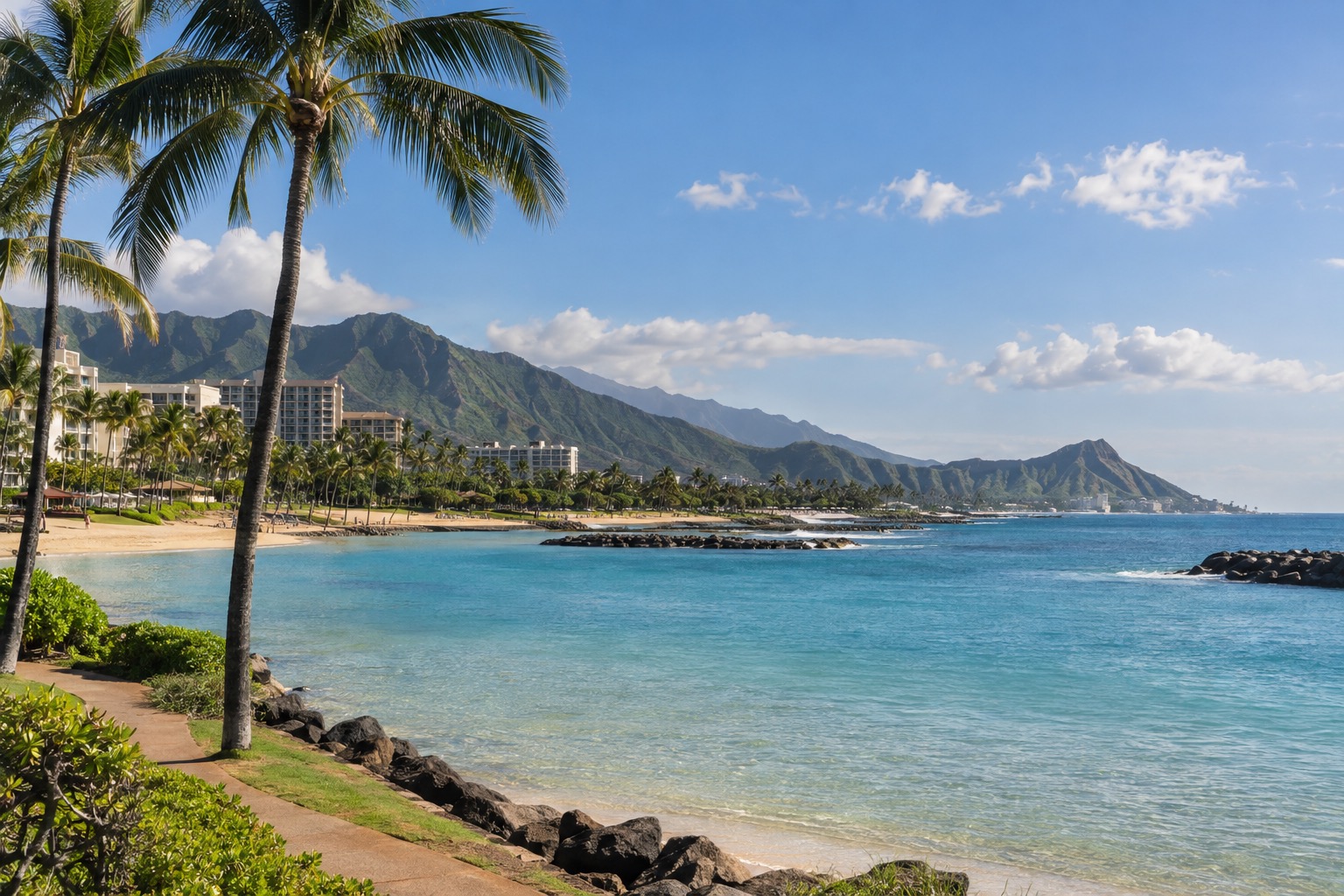
July in Ko Olina is hot, bright and almost completely dry, with a steady trade-wind breeze that keeps the heat comfortable in the shade.
| Month | Average high (°F) | Average low (°F) | Rain days | Sea (°F) |
|---|---|---|---|---|
| June | 87.3 | 71.3 | 0.6 | 78.7 |
| July | 88.0 | 72.5 | 0.8 | 79.6 |
| August | 89.1 | 73.1 | 1.1 | 80.2 |
On Oahu’s leeward side, Ko Olina occupies the island’s driest resort corner. The mountains catch the trade-wind showers before they get here, so the rain that soaks Kaneohe or the windward coast mostly never arrives. Most July days are blue from morning to night, and a passing shower, if one comes, is brief and usually over before you have found your towel.
Mornings are the soft part of the day, warm enough for a swimsuit by breakfast and bright by early hours. Midday sun is strong, so the best plan is shade, a long lunch or time in the water, then back to the sand when the light turns golden. Evenings stay warm enough to eat outside in a T-shirt or a light sundress, and a breeze off the water makes the terraces pleasant.
Pack for sun rather than rain: a hat, sunglasses and a light layer for air-conditioned restaurants. The days are long, with more than thirteen hours of daylight in mid-July, so there is time for a morning outing and a late beach hour in the same day.
Can you swim in Ko Olina in July?
It is true that you can swim for a long, easy stretch in sea that is warm enough, and the lagoons are what draw most visitors to Ko Olina to begin with.
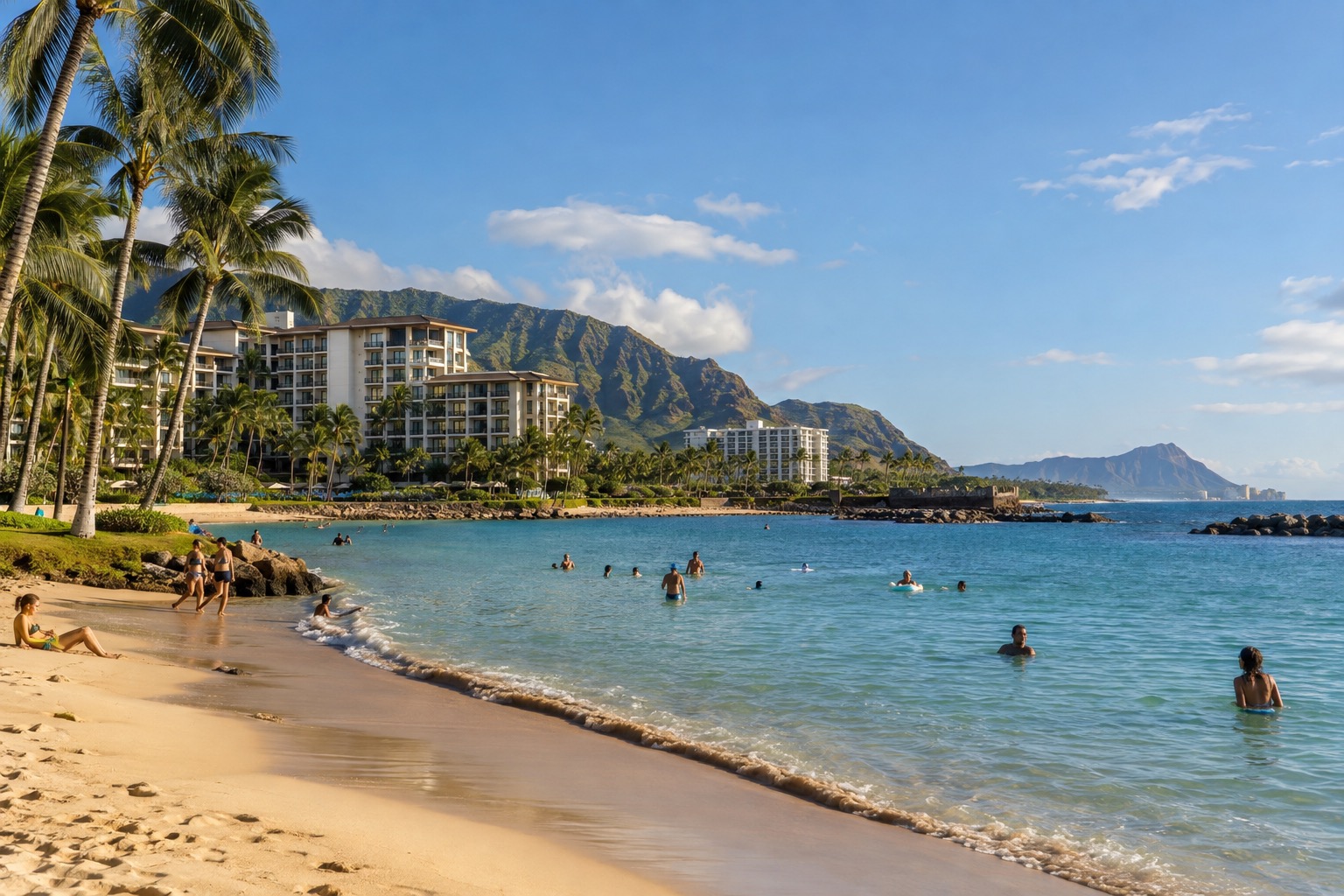
The four man-made lagoons are ringed by rock walls that break the open ocean’s waves, so the water inside is usually gentle in summer, and summer is also the season when south and west-facing shores tend to be calmer than the winter-surf coasts of the north. Small children paddle in the shallows, snorkelers drift along the rock edges looking for reef fish, and stand-up paddlers glide across the middle. The open ocean outside the lagoons is a different matter, with currents and swell that can change, so keep to the lagoons unless you know the water.
Even in a sheltered lagoon, follow the signs and any lifeguard instructions, and keep your distance from turtles and other marine life, which are protected. Pack a snorkel and mask, a rash guard to cover up during long sunny stretches and mineral sunscreen. Afternoon tends to be busiest at the beach, so earlier hours give the clearest water and the most room to float.
What to do in Ko Olina in July
July in Hawaii has its own calendar. Kamehameha Day on June 11 has just passed, and the Fourth of July brings fireworks over the water and family cookouts at the beach parks along the coast. The warm months also bring a chance to enjoy island plate lunches, shave ice served over a scoop of ice cream and a chilled fruit drink at a bar by the pool.
There are no humpback whales this time of year, since they are a winter story, so July is for the lagoons, the sunset and the easy outings that dry, calm weather allows. The mood in Ko Olina is relaxed and family-oriented, with resort pools full by midmorning and the walking path along the shoreline busy at dawn and dusk.
The lagoons and the shoreline path
Each of the four lagoons has its own character. The first is the liveliest, with families and rental stands. The others are quieter and more tucked away, with small crescents of white sand and calmer corners for snorkeling along the rocks.
A paved path links the lagoons and runs past the resorts, so a morning walk before the heat is easy to make. Go early for the softest light and the fewest people, and carry a water bottle. Families with small children often spend the whole day at one lagoon, since the shallow water is easy to watch and shade is close by.
Rent a paddleboard or kayak if you want something more active, and keep a bag with towels and snacks close by. Beach access is public even though resorts surround the shoreline, so you can set up at any of the lagoons.
Sunsets and a luau evening
Ko Olina faces west, so sunset is the daily event. With drinks in hand, people come together on the grass and the sand while the sky shifts from copper to pink and finally to deep blue. In July the sun sets late, so dinner on a terrace with a view can start comfortably after the light has softened.
A luau is the classic way to spend an evening here. Expect a buffet of kalua pork, poke, poi and haupia, hula and Polynesian dance, and a fire-knife finale. It suits families, first-time visitors and anyone who wants music, food and storytelling in one night. Reserve ahead in busy summer weeks.
Nearby outings
Dry weather makes July a good month for outings beyond the resort. Pearl Harbor and the USS Arizona Memorial are a short drive east, and a visit there needs a reservation, so plan it before you arrive. Waikiki, Diamond Head and the North Shore are all day trips, though the North Shore in summer is typically gentler than the big-wave winter season, so beaches there are for swimming and sunning rather than watching surf.
Back at the resort, a snorkel cruise or a sunset sail from the nearby marina offers a different view of the coast. Dolphins sometimes appear off the leeward shore, though no one can promise it. Evenings often end with shave ice or a cold drink and a slow walk along the lagoon path.
A two-day itinerary for Ko Olina in July
Day 1 is for settling in and staying close. Walk the shoreline path soon after sunrise, when the lagoons are glassy and the air is cool, then eat breakfast at a café or a resort terrace. Spend the late morning snorkeling along the rocks of one lagoon, then shift into the shade for lunch, since the sun is strongest in the middle of the day.
Take the afternoon at a quieter lagoon with a paddleboard or a book, and stay until the light turns golden. Sunset arrives late in July, so dinner at a beachfront restaurant works well, followed by a luau or a slow walk on the sand. If the weather turns, which is rare, a spa visit or an indoor lunch fills the time.
Day 2 is for the wider coast. Start early and drive east to Pearl Harbor for the USS Arizona Memorial, arriving with your reservation in hand and finishing before the heat builds. Grabbing lunch from a neighborhood plate-lunch place or a food truck lets you taste the island nicely.
In the afternoon, return to Ko Olina for a last swim, or detour to a beach park along the leeward coast on the way back. End with a sunset drink on the lawn. If a shower does appear, the aquarium-style indoor options and shopping near Kapolei are close, and the rain rarely lasts.
Is Ko Olina busy in July?
Yes, July is one of the livelier months, because school is out across the mainland and families fill the resorts.
The lagoons, pools and luau tables are busiest from midmorning through late afternoon, and the Fourth of July week is the peak of the peak. Early mornings and the hour just before sunset are noticeably quieter, so those are the times to claim a spot on the sand. Restaurants fill at the usual dinner hour, so a table is easier to find if you eat a little earlier or later than the crowd.
Book rooms and rental cars early, especially for the holiday week, and reserve luaus and popular dinner spots as soon as your dates are set. Weeks outside the Fourth of July stretch are easier, and you can often arrange restaurants and activities a little closer to the trip. The USS Arizona Memorial requires a reservation, so make that one first.
Even on busy days, the resort feels spacious, because the beach is long and the lagoons are separate. Families dominate, so expect splashing, sandcastles and lively pools rather than hush. If you want a calmer atmosphere, choose a lagoon farther from the first one and keep your plans loose.
What to pack for Ko Olina in July
Picture sunshine, ocean spray and balmy nights, plus just a thin cover-up for the AC.
- Mineral sunscreen and a rash guard, since the sun is strong and you will spend hours in the water.
- A mask and snorkel, because the lagoon edges are easy places to see reef fish.
- A wide-brimmed hat and sunglasses for the bright midday glare.
- Water shoes for rocky entries and walks along the lagoon edges.
- A light sweater or wrap for cool, air-conditioned restaurants.
- A reusable water bottle for the shoreline path and day trips.
Good to know before you go
July falls inside the Central Pacific hurricane season, which runs from June 1 to November 30, though the days here are usually dry and sunny. A rental car makes the Pearl Harbor outing and other trips easier, and reserving the memorial before you leave is the first thing to settle. Resort stays carry the taxes below.
| Fee | Amount | Who pays |
|---|---|---|
| State transient accommodations tax | 11% | Guests at resorts and hotels |
| Oahu county tax | 3% | Guests at resorts and hotels |
Ko Olina in July vs June and August
Moving the trip to June gives you slightly cooler air and water, with the same dry leeward weather. The school-break crowds have not fully arrived, and Kamehameha Day on June 11 adds a local note of celebration. It is a good choice if you want fewer families and a little more room on the sand.
August is a touch hotter and the sea is a shade warmer, which suits long snorkeling days. Rain remains scarce, though a little more likely than in July. Crowds stay lively into the month, and late August begins to ease as schools on the mainland reopen.
Choose June if you prefer a calmer pace, and August if you want the warmest water. Stay with July if you want the full summer atmosphere, with the Fourth of July fireworks, long evenings and a lively family mood.
Is July a good time to visit Ko Olina?
Yes, July is an excellent time for anyone who wants warm water, dry weather and long sunny days on a sheltered coast.
Families, snorkelers and sunset lovers will be happiest, since the lagoons suit children and the evenings suit slow dinners. Travelers who prefer quiet beaches, or who want to see whales or big winter surf, should choose another season. Anyone who dislikes crowds at holiday time may prefer a quieter week.
On arrival, settle the reservation for the USS Arizona Memorial, then claim a lagoon morning while the water is still. What makes July special here is the combination of a dry coast, a warm sea and a late sunset, so that a single day can hold a swim, an outing and a long dinner by the water.
Sources
- NOAA NCEI, monthly normals 1991-2020, station USW00022551, checked September 8, 2026
- Open-Meteo Marine API, average 2015-2024, checked September 8, 2026
- sunrise-sunset.org, sunrise and sunset calculated for the 15th of the month, checked September 8, 2026
- NOAA NCEI, normals 1991-2020, stations USW00022551 (Kalaeloa) and USC00519397 (Waikiki), via PLAN-HAWAII.md §1, checked September 24, 2026
- Hawaii Department of Taxation, Announcement 2025-03 ; City and County of Honolulu, OTAT FAQ, checked September 25, 2026
- NWS Honolulu / Central Pacific Hurricane Center, « 2026 Central Pacific Hurricane Season Outlook », weather.gov/hfo/hurricaneOutlook2026, checked September 24, 2026