
On a February morning at Ko Olina, the trade winds are soft, the lagoons are glassy and somewhere out past the reef a humpback whale slaps its tail against the water. Families drift toward the sand with coffee and beach chairs while the sun climbs over the Waianae Mountains. This is the sunny leeward corner of Oahu in the middle of winter, a month for lagoon mornings, whale-watching and long golden evenings.
What is the weather like in Ko Olina in February?
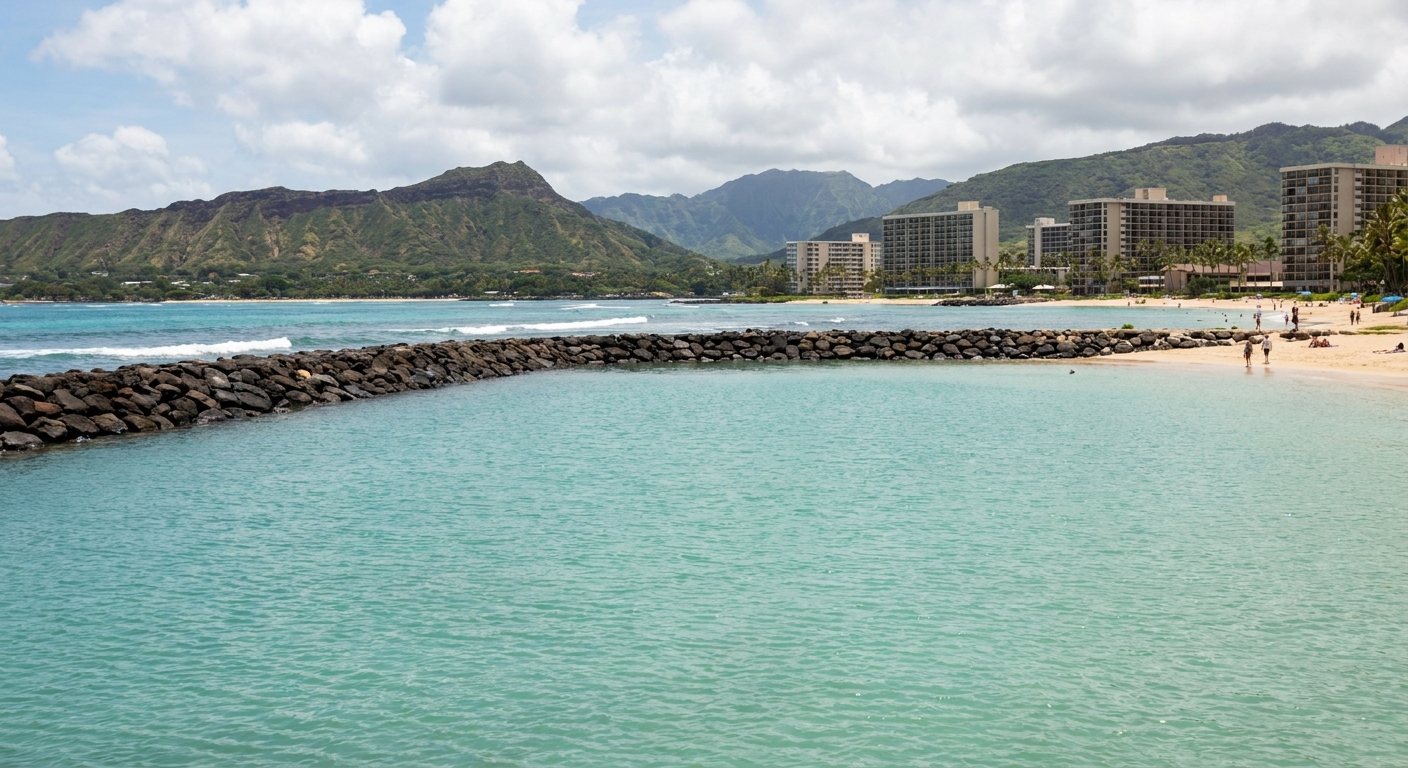
February is warm, bright and mostly dry in Ko Olina, with the occasional short shower passing through and a sea breeze that keeps afternoons comfortable.
| Month | Average high (°F) | Average low (°F) | Rain days | Sea (°F) |
|---|---|---|---|---|
| January | 80.9 | 64.7 | 2.8 | 77.6 |
| February | 80.9 | 65.1 | 2.5 | 76.3 |
| March | 81.6 | 66.0 | 2.4 | 76.4 |
On Oahu, Ko Olina occupies the leeward coast, the island’s driest resort shoreline. While Honolulu and the windward towns see clouds banking against the mountains, this corner often stays sunny. When rain does come, it is usually a quick passing shower, sometimes with a rainbow over the Waianae range, and the sun is back within the hour.
Mornings feel fresh enough for a walk along the shoreline path in a T-shirt, and by midday the sand is properly warm. Afternoons are pleasant rather than scorching, which makes February easier on fair skin than summer, though the sun is still strong and sunscreen matters. After sunset the air cools enough that a light layer feels good at an outdoor dinner.
Days are a little over eleven hours long, so the light fades earlier than in summer. The evening glow over the Pacific is a daily event at the resort, and with fewer clouds on this coast, it often lasts well past the moment the sun touches the horizon.
Can you swim in Ko Olina in February?
Yes, the sea is comfortable for a long swim, though it is a touch cooler than in January and most people will want a few seconds to get used to it.
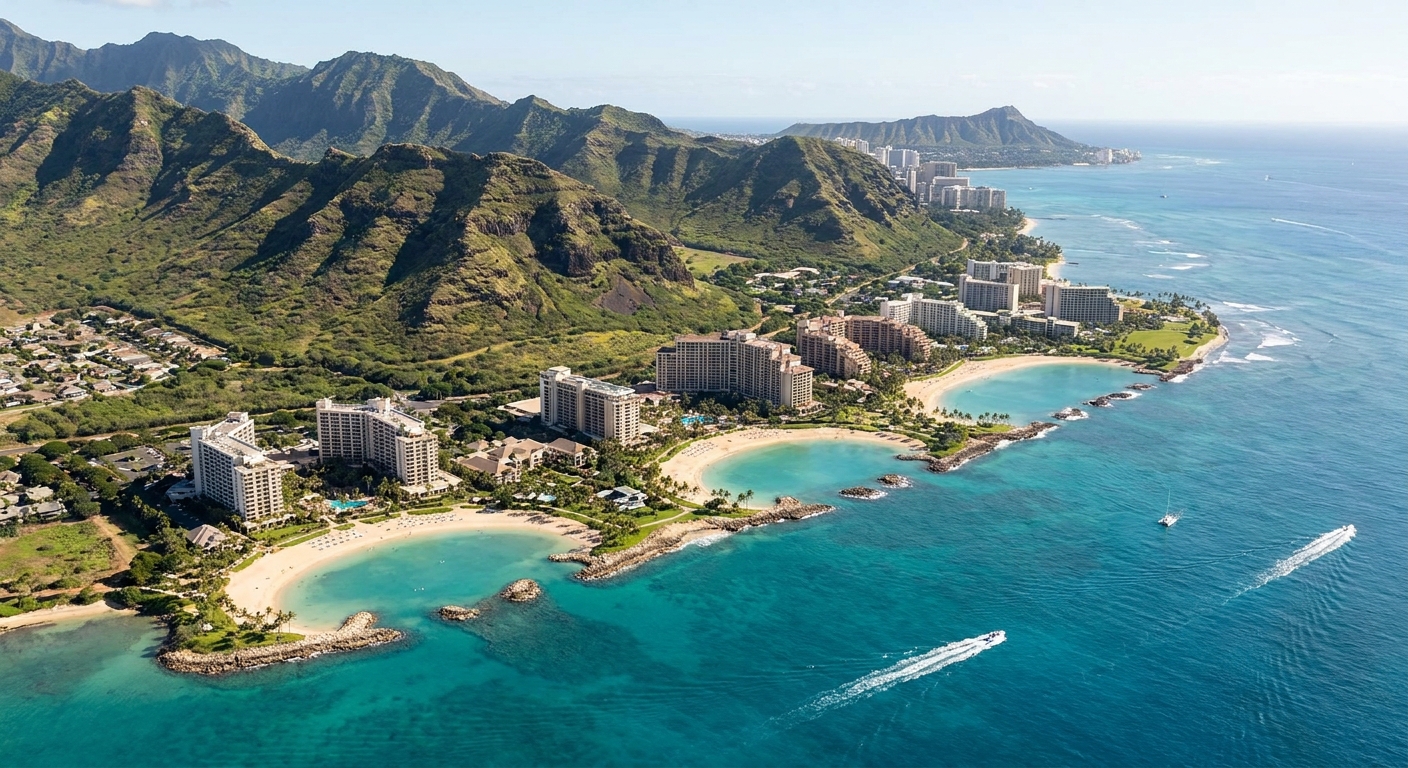
The four man-made lagoons are the reason families choose Ko Olina. Their rock walls break up the open ocean, so the water inside is usually gentle, shallow near the sand and easy for children to splash in. Snorkelers often drift along the edges looking for small reef fish, and paddleboards and kayaks are a common sight on quiet mornings.
On Oahu’s north and west shores, winter brings the season of big surf, and at times swells make their way to the open coast beyond the lagoons. Inside the lagoons conditions are usually mellow, but beyond the rocks it is a different story.
Follow the beach signs and the lifeguards, and stay inside the lagoon if you are not an confident ocean swimmer. Bring a rash guard if you tend to feel cold, and mineral sunscreen for the long days.
What to do in Ko Olina in February
The big natural event of the month is the humpback whale season. Whales are generally seen in Hawaii from November through April, and January through March is the peak, so February is right in the middle. From the shoreline path or a resort balcony you may spot a spout, a breaching body or a tail slapping the surface, especially in the morning when the water is flat.
Stay well back if you are on a boat or paddling: the rule is to approach no closer than 100 yards. Binoculars make a big difference from shore, and a patient half hour with coffee and a good view is often rewarded.
Lagoon days and the shoreline path
Spend at least one full day moving between the lagoons. Each has its own small beach, and a paved path links them along the shore, perfect for a slow walk at either end of the day. The smaller lagoons are good for toddlers and first-time snorkelers, while the larger beach areas have room to spread out with a picnic.
Go early for the quietest water and the best light, then retreat to shade at midday when the sun is highest. Late afternoon brings families back out for a final swim before sunset. Bring your own towels and a cooler, and plan to eat lunch at a casual beachside spot or pack sandwiches from a nearby grocery.
Whale-watching and ocean outings
Boat tours leave from the nearby harbor and head out to look for humpbacks, which are in their winter waters to breed and calve. Mornings tend to be calmer, and the water in February often has a deep blue that makes spotting spouts easier. Many outings also look for spinner dolphins, which are common along this coast, and sometimes sea turtles.
Whales are wild animals, so sightings are chances rather than promises. Dress in layers, since the wind on the water can feel cool, and take a hat that ties on. These trips suit older children and adults who enjoy time on the water, and they pair well with an easy afternoon on the sand.
Sunsets, luaus and the evening mood
Evenings are the social part of the day. Couples and families gather on the lawns and the rocky points to watch the sun slide into the Pacific, and in winter the sky can turn orange, pink and deep violet. Resort restaurants set tables on the edge of the lagoons, and a few host Hawaiian music, hula and a luau with kalua pork, poke, lomi salmon and haupia.
Beyond the resort, the day-trip list is short but rewarding: a drive east toward Pearl Harbor and Honolulu for museums and shopping, or north toward Kapolei for casual dining. The USS Arizona Memorial needs a reservation, so plan ahead if it is on your list. On a gray day, shopping, spas and an indoor museum are easy substitutes for the sand.
Keep a little time for simple pleasures too: shave ice after a swim, a plate lunch from a local counter, a Hawaiian coffee on the balcony. February in Ko Olina rewards slow days more than packed schedules.
A two-day itinerary for Ko Olina in February
Day 1 starts early on the shoreline path, when the lagoons are still and the air is cool. Walk from one end of the resort to the other, scanning the horizon for whale spouts, then settle on a lagoon beach for the morning swim and snorkel. Breakfast can be a simple pastry and coffee from a resort café eaten on the sand.
At midday retreat to shade for a casual lunch, perhaps a poke bowl or fish tacos at a beachside counter. In the afternoon take a boat trip out for whales and dolphins, then return for a short rest. Finish with dinner at a restaurant along the water, timed so you catch the sunset, which comes a bit earlier in February than in summer.
Day 2 trades the lagoons for a bit of the wider island. After a slow breakfast, drive toward Pearl Harbor for a visit to the memorials and museums, which suits the cooler hours of the morning. The USS Arizona Memorial needs a reservation, so book before you go.
Have lunch in Kapolei or on the way back, then return for a lazy afternoon at the pool or a quiet paddle. If a shower rolls in, a spa treatment, a shopping stop or a long lunch is an easy fallback. Close the trip at a luau or a quiet table with live Hawaiian music.
Is Ko Olina busy in February?
Moderately busy, with a steady flow of winter visitors escaping the mainland cold, though it rarely feels as packed as the winter holiday weeks or summer.
Presidents Day weekend brings a bump of mainland families, and school breaks around then fill lagoon beaches and restaurant tables. Outside those days, weekdays can feel pleasantly relaxed, especially in the early morning. Couples and older travelers make up a good share of guests, along with whale-watchers who come specifically for the season.
If you book early, rooms and rental cars are simplest to secure, particularly when a long weekend falls within your dates. Restaurant tables at the popular waterfront spots fill at sunset, so reserve for dinner on the evenings that matter. Boat tours in whale season also fill, and booking a few days ahead is a good habit.
Anything with a reservation system, like the USS Arizona Memorial, is worth securing before you arrive. Resort stays carry Hawaii’s usual taxes, so budget accordingly when comparing rooms.
What to pack for Ko Olina in February
Think summer clothes with one or two warmer layers for the evening and the boat.
- Pack mineral sunscreen and a hat, since at midday the winter sun remains intense.
- A rash guard, for cooler swims and extra sun protection.
- A light sweater or windbreaker for the breeze on a whale-watching boat.
- Binoculars, to spot spouts from the shoreline path.
- Sandals and a pair of walking shoes for Pearl Harbor and short strolls.
- A light rain jacket for the occasional passing shower.
Good to know before you go
February falls outside the official hurricane season, which runs from June 1 to November 30. Winter swells can still make the open ocean rough, so keep to the lagoons unless you are experienced and heed the lifeguards. A rental car helps for Pearl Harbor and Honolulu, while the resort itself is easy to explore on foot. Reserve the USS Arizona Memorial and whale tours first.
| Fee | Amount | Who pays |
|---|---|---|
| State transient accommodations tax | 11% | Guests at resort stays |
| Oahu county tax | 3% | Guests at resort stays |
Ko Olina in February vs January and March
Moving a month earlier gives you a slightly warmer sea and the tail end of the winter holiday rush. January is also in the heart of whale season, so you lose nothing on wildlife, but the early weeks can feel busier and rooms tighter.
Moving a month later brings a touch more warmth in the air and a little less rain, with spring break crowds starting to build toward the end of the month. Whales are still around through March, though they begin to thin out as April approaches, and the big winter surf tends to ease.
If whales and quieter beaches are your priority, February sits right in the middle and is hard to beat. Travelers who want the warmest water should lean toward January, while those who want the warmest air and a livelier spring mood can look at March.
Is February a good time to visit Ko Olina?
Yes, especially for families, couples and whale lovers who want sunny days without summer heat.
People who enjoy calm lagoons, slow mornings and sunsets will feel at home. Surfers chasing big waves should look to the North Shore instead, and anyone hoping for a truly hot, tropical swim may find the sea a little brisk at first. If you want a quiet beach, aim for weekdays and early hours.
On arrival, book your whale outing and any memorial visit first, then spend the first evening on the lawn by the water. Humpbacks arriving each winter to breed are the thing no other month can match here, and the best view is often from a lagoon beach with a coffee in your hand.
Sources
- NOAA NCEI, monthly normals 1991-2020, station USW00022551, checked September 8, 2026
- Open-Meteo Marine API, average 2015-2024, checked September 8, 2026
- sunrise-sunset.org, sunrise and sunset calculated for the 15th of the month, checked September 8, 2026
- NOAA NCEI, normals 1991-2020, stations USW00022551 (Kalaeloa) and USC00519397 (Waikiki), via PLAN-HAWAII.md §1, checked September 24, 2026
- NOAA, Hawaiian Islands Humpback Whale National Marine Sanctuary, Responsible Recreation, checked September 25, 2026
- Hawaii Department of Taxation, Announcement 2025-03 ; City and County of Honolulu, OTAT FAQ, checked September 25, 2026
- NWS Honolulu / Central Pacific Hurricane Center, « 2026 Central Pacific Hurricane Season Outlook », weather.gov/hfo/hurricaneOutlook2026, checked September 24, 2026