
In March, the first thing you may notice at Kaanapali is a plume of mist rising from the channel, then a dark back rolling out of the water a few hundred yards off the sand. Humpbacks are still in the Maui Nui waters, and the whole beach seems to keep one eye on the horizon over its morning coffee.
The mornings are bright, the afternoons warm, and the evenings belong to the sunset. This is a month for travelers who want whales, a long beach and a resort stretch that is lively without being packed.
What is the weather like in Kaanapali in March?
March in Kaanapali is warm, mostly sunny and a little showery, with the dry leeward side of West Maui keeping most of the clouds up on the mountains.
| Month | Average high (°F) | Average low (°F) | Rain days | Sea (°F) |
|---|---|---|---|---|
| February | 79.0 | 65.8 | 5.3 | 76.2 |
| March | 79.4 | 66.1 | 7.3 | 75.8 |
| April | 81.0 | 67.5 | 5.7 | 76.5 |
Mornings start soft and comfortable, cool enough for a light layer over breakfast on a lanai and warm by the time the beach chairs are set out. By midday the sun is strong, and the afternoons are the part of the day for shade, a pool or a swim. Evenings stay mild, so dinner outdoors usually works in a short-sleeved shirt, though a thin wrap helps when the trade winds pick up.
Rain comes as brief passing showers rather than gray days. March is a touch wetter than the months on either side, and the showers tend to drift down from the West Maui mountains in the morning or late afternoon, then clear within the hour. The resort coast itself stays far drier than the green valleys behind it, and a shower often leaves a rainbow over the water.
In mid-March, daylight lasts roughly twelve hours and the light stays bright and drawn out, which leaves room for a beach morning plus a whole evening. Sunscreen matters even on hazy days, since the sun here is strong whatever the sky looks like.
Can you swim in Kaanapali in March?
Yes, the water is comfortable for a long swim, with a sea temperature in the mid-70s that feels refreshing at first and easy after a minute.
Kaanapali Beach is a long strip of golden sand, and the water off it is usually gentler than on the north shores of the islands, where winter swells hit hardest. March can still bring a bigger swell, especially in the first part of the month, so waves at the shore break can be stronger some days than others. Families often stay near the resort end, while confident swimmers go further along the beach.
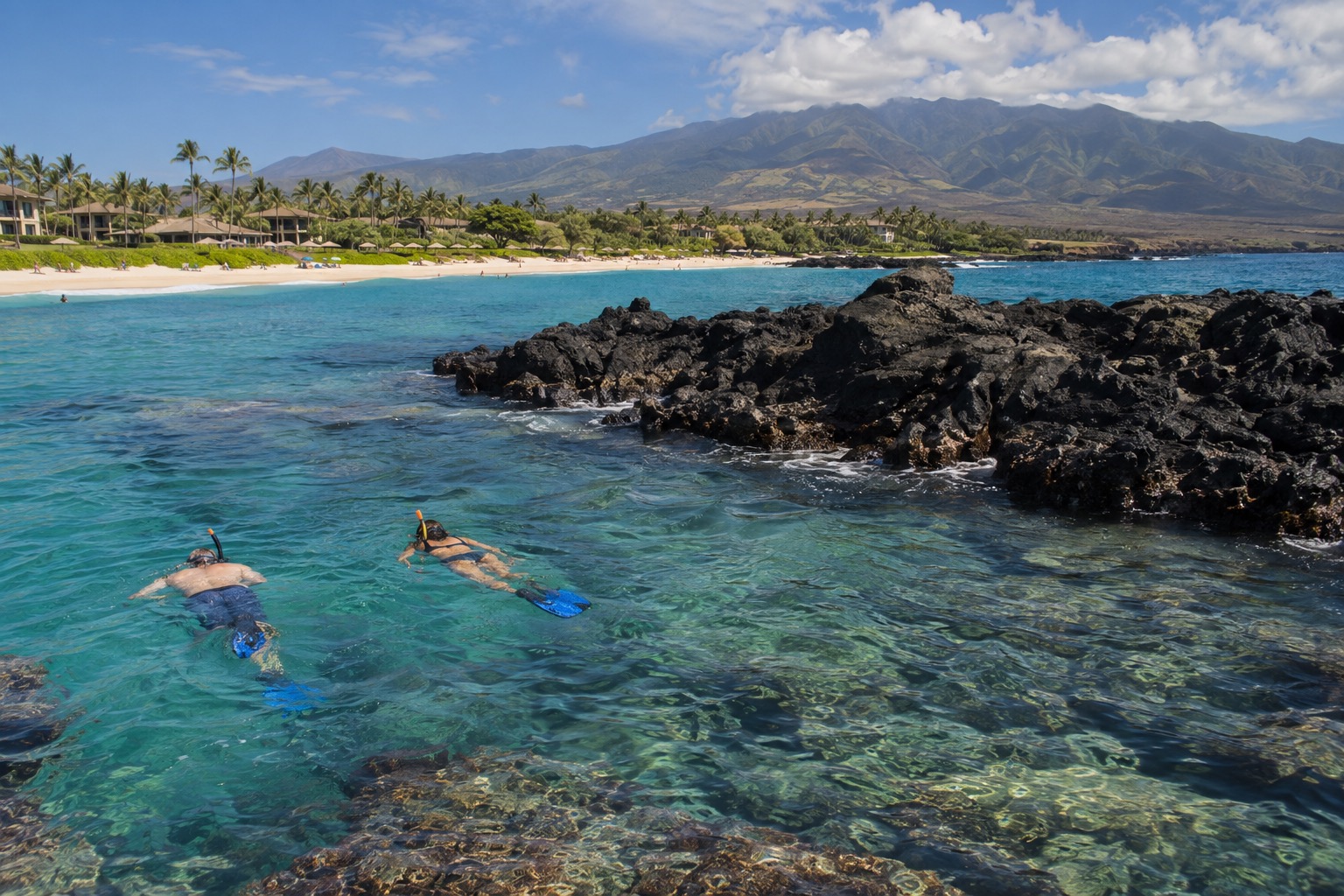
Snorkelers head to the rocky point at the north end, Black Rock, where fish gather around the lava ledge. Day to day, the clarity of the water and the strength of the current shift, so check the flags and the beach signs, and check with the lifeguards, before entering.
Bring a mask, a rash guard for the sun and a towel, and keep your distance from any turtle that rests on the sand. Whales are often visible while you swim, but stay well back from them in the water, since the rule is to keep more than 100 yards away.
What to do in Kaanapali in March
Whale watching is the signature activity of the month. Hawaii’s humpback sightings typically span November to April, and since the peak falls between January and March, March remains an excellent window. You can spot them from the beach walk, from a lanai or from a boat, and the spouts, tail slaps and breaches come at any hour, often in the calm of the morning.
The whales share the channel off West Maui, which lies in the sanctuary’s Maui Nui waters, so boats and swimmers must keep more than 100 yards away. That rule shapes the day for anyone on the water: a good tour is one where the captain lets the animals decide how close the encounter becomes. If you are on shore, binoculars and patience do the work, and a sunrise coffee on the sand is often the best seat.
The beach walk and Black Rock
The paved oceanfront path runs the length of the resort strip, past hotels, open-air restaurants and small shops. It is flat and shaded in patches, and it suits a slow morning walk before the sun climbs. Along the way you pass the gathering places of the beach: volleyball nets, outrigger canoes pulled up on the sand and kids building sand castles.
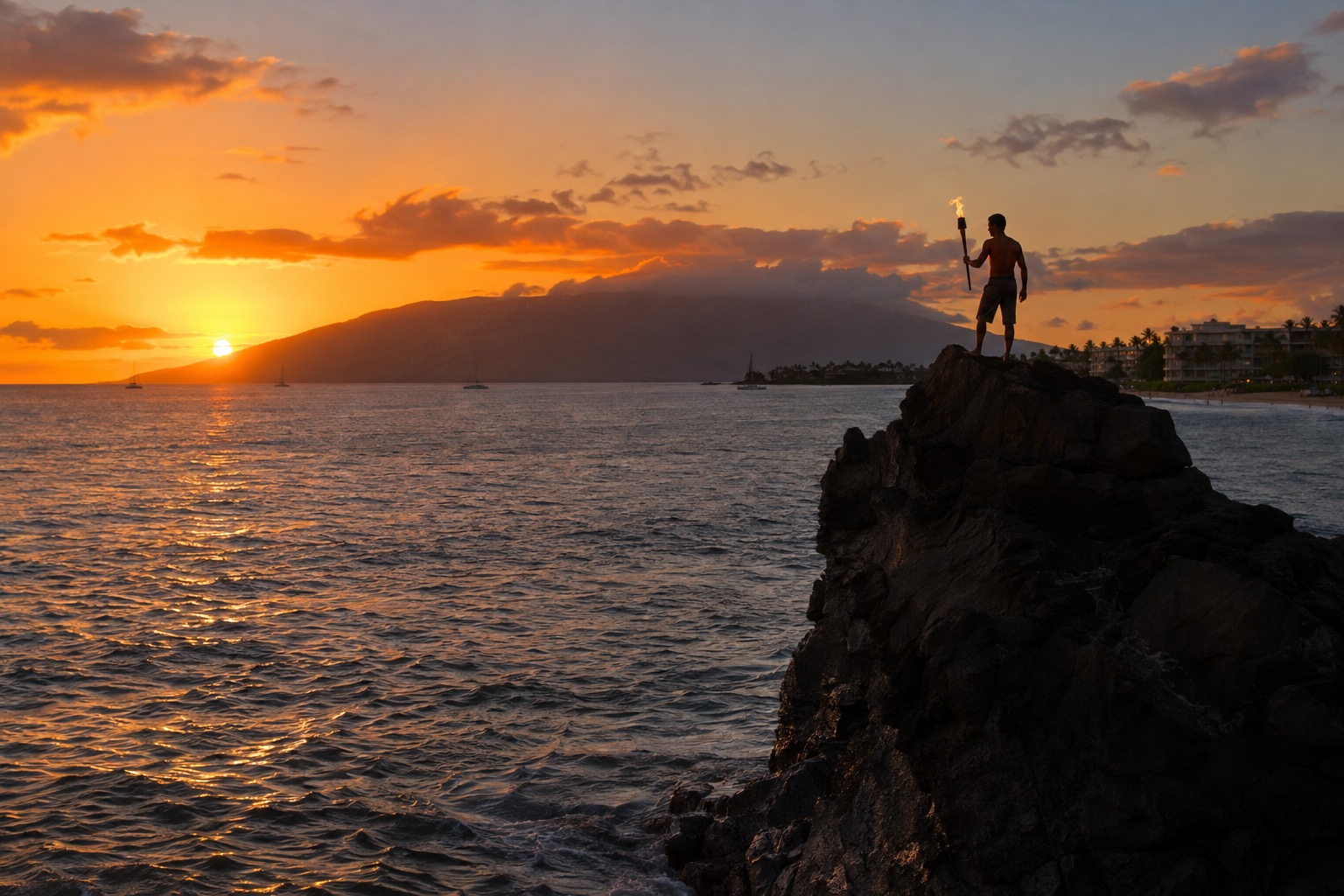
At the north end, Black Rock is the landmark. In the evening a torch lighting and a cliff dive ceremony are a local tradition, a nod to the Hawaiian story of a chief who leapt from the rock. Go around sunset, when the light turns the cliff dark against the water, and then walk back as the lanterns come on along the path.
Whalers Village and the shops
Midway along the beach, Whalers Village mixes open-air shops, restaurants and a small museum about the whaling past. It is a useful place when a shower passes through or the midday sun gets heavy, and in March it fits the season, since you can look from the terraces for spouts while you eat.
Expect island clothing, local art, shell jewelry and shaved ice stands. For food, think of fresh fish, poke bowls, fish tacos and tropical drinks served with a view. A mai tai at sunset on the water is the standard ritual, though many travelers prefer a fresh pineapple or coconut drink at midday.
Sunset sails and ocean outings
Boats leave from the beach and nearby harbors for whale watching, snorkel trips and sunset sails. March mornings are often the calmest hours on the water, and late afternoons bring warm golden light. Ask the operator how they follow the distance rule around the whales, and bring a light jacket, since the wind picks up once the boat leaves shore.
If you prefer to stay dry, the beach has stand-up paddleboards, outrigger rides and kayaks for rent from the resort huts. Sunset is the favorite hour on the sand, with families, couples and solo walkers lining the shore. Between those outings, the pools, spas and open-air lounges fill the afternoon gaps.
A short drive south, the old whaling town of Lahaina is a day trip many visitors make, with its harbor, banyan tree history and seaside dining. Check current local information before going, as recovery from the recent fire continues to shape what is open. Back at the resort, the food scene is a mix of casual beachfront grills, upscale dining rooms and luaus with hula, drums and an earth-oven feast.
A two-day itinerary for Kaanapali in March
Day 1 begins with a walk along the beach path in the early hours, when the air is cool, the sand is quiet, and the flat water often makes whales easiest to spot. Have breakfast at a lanai café, then spend the late morning swimming and snorkeling near Black Rock before the sun is at its strongest.
At midday, retreat to the shade at Whalers Village for lunch and a look through the shops, which is also the right plan if a passing shower arrives. In the afternoon, rest by the pool or on the sand, then head back to the north end for sunset and the cliff dive ceremony at Black Rock. Dinner at a beachfront restaurant closes the day.
Day 2 is for the water. Book a morning whale watching cruise, when the sea is often at its calmest, and stay out until midday. Lunch can be a plate lunch or fish tacos from a casual counter near the harbor, followed by a slow afternoon of paddleboarding or a spa treatment.
For the late afternoon, drive to Lahaina for a stroll by the waterfront and a look at what has reopened, then return for a luau or an open-air dinner. On a rainy day, swap the water for museum time at the village, a long spa session or a cooking class, and wait for the clouds to break before sunset, since showers move fast here.
Is Kaanapali busy in March?
Yes, March is a busy month, though in a steadier way than the winter holidays, with spring break families and whale watchers filling the resorts.
Mainland school breaks scatter across the month, so some weeks feel crowded at the pools, the beach walk and the restaurants, while others are calm. Whale season keeps boat tours busy, and sunset tables along the beach fill early. Rooms are easier to find in the quieter weeks, but rental cars and popular dinner spots can run short around spring break dates.
As a habit, book early for the weeks that match school breaks and Easter, and later for the weeks in between. Reserve whale watching tours and luaus a little ahead, since the best departure times go first. Dinner at a beachfront restaurant is smoother with a reservation at sunset.
On the beach itself, the crowd spreads out along the long sand, and a walk away from the central hotels usually brings more space. Mornings are the quietest hours, and afternoons are the busiest around the pools. If you want a calm week, aim for the stretch between spring break periods.
What to pack for Kaanapali in March
Pack for warm days, cooler breezy evenings and the occasional shower, with the sun as the main thing to plan around.
- Mineral sunscreen and a hat, since the sun is strong even on hazy days
- A rash guard, for snorkeling and long hours in the water
- A light rain jacket, for brief passing showers
- For windy nights and outings on the water, pack a light sweater or wrap.
- Binoculars, for spotting whales from the beach or a lanai
- Sandals and water shoes, for the beach path and the rocky entry at Black Rock
Good to know before you go
March falls well outside the official hurricane season, which runs from June 1 to November 30 in the Central Pacific. The main planning points are whale distance rules on the water, spring break crowds and booking boats and dinners ahead. A rental car helps for Lahaina and the coast, though many visitors stay on foot along the beach path.
| Fee | Amount | Who pays |
|---|---|---|
| State transient accommodations tax | 11% | Guests at resort stays |
| Maui County accommodations tax | 3% | Guests at resort stays |
Kaanapali in March vs February and April
Moving earlier to February keeps you in the heart of whale season, with a slightly drier month and a touch fewer showers. The sea is a hair warmer, and the winter swell can still be larger on some days, so the mood is similar but a bit more winter-like and shower-free.
Moving later to April brings warmer air, a slightly warmer sea and fewer rain days, and the whale season is winding down. Humpbacks are still around early in the month, but sightings thin out as they head north. Easter weeks can fill the resorts and the beach path, so rooms and tables tighten around those dates.
Choose February if whales are the main goal and you want the best odds of seeing them. Stay with March for a balance of whales, warm days and a swimmable sea. Pick April if you want the warmest air and a lighter chance of showers and can accept fewer whales.
Is March a good time to visit Kaanapali?
Yes, March suits travelers who want whales, warm days and a swimmable sea, especially couples, families on spring break and anyone who likes a lively beach at sunset.
It is less ideal for anyone who wants an empty beach, since spring break weeks fill the resorts, or for travelers who want a guaranteed dry week, as brief showers pass through more often than in the months around it. Surfers looking for big waves will do better on the north shores in winter.
Once you get there, take a stroll along the beach path to orient yourself, and reserve a whale watching trip plus a sunset dinner spot for your initial days. After that, the rhythm is easy: a swim in the morning, shade at midday and the cliff dive at Black Rock when the light turns gold. March here is the month when a humpback can rise beside the sunset sail, and the whole beach stops to watch.
Sources
- NOAA NCEI, monthly normals 1991-2020, station USC00513317, checked September 8, 2026
- Open-Meteo Marine API, average 2015-2024, checked September 8, 2026
- sunrise-sunset.org, sunrise and sunset calculated for the 15th of the month, checked September 8, 2026
- NOAA, Hawaiian Islands Humpback Whale National Marine Sanctuary, checked September 25, 2026
- Hawaii Department of Taxation, Announcement 2025-03 ; County of Maui, TAT Announcement 2021-01, checked September 25, 2026
- NWS Honolulu / Central Pacific Hurricane Center, « 2026 Central Pacific Hurricane Season Outlook », weather.gov/hfo/hurricaneOutlook2026, checked September 24, 2026