
On a February morning in Kaanapali, a dark shape rolls offshore and a spout of mist hangs for a second over the channel, while the first joggers pad along the beach walk toward Black Rock. The sand is still cool underfoot, the coffee on the hotel lanai is hot, and someone at the next table is already pointing at the horizon. This is whale month on the Maui coast, a time of dry, sunny leeward days that suit long beach hours, snorkeling and lazy sunsets.
What is the weather like in Kaanapali in February?
February in Kaanapali is warm, bright and mostly dry, with comfortable afternoons on the beach and cool, pleasant evenings. On West Maui’s leeward side, the resort strip takes shelter from the dampest trade-wind conditions, which leaves the sunshine to handle most of the job.
| Month | Average high (°F) | Average low (°F) | Rain days | Sea (°F) |
|---|---|---|---|---|
| January | 79.0 | 65.7 | 5.6 | 77.7 |
| February | 79.0 | 65.8 | 5.3 | 76.2 |
| March | 79.4 | 66.1 | 7.3 | 75.8 |
Mornings start soft and slightly cool, ideal for a walk on the beach path or a swim before the sun climbs. By midday the sand is hot and the light is strong, and afternoons stay pleasant in a swimsuit and a sun hat. After sunset you will want a light layer for dinner outside, since the air cools enough that bare shoulders feel it.
Rain, when it comes, arrives as short passing showers, often drifting down from the West Maui mountains behind the resorts or sweeping in on a breeze, and then the sun returns, sometimes with a rainbow over the slopes. Gray, wetter spells do happen in winter, but they rarely settle in for a whole day. The mountains can look heavy with cloud while the beach stays bright.
Days are a little shorter than in summer, with about eleven and a half hours of daylight in the middle of the month. That gives a golden late afternoon and a sunset that arrives in time for a relaxed dinner. Bring a light rain shell for the odd shower and sunscreen for every day.
Can you swim in Kaanapali in February?
Yes, the sea is comfortable for swimming, warm enough for a long dip without a wetsuit, though a touch cooler than in the late-summer months. Many visitors stay in for an hour or more at a time.
Winter brings bigger swells to north and west-facing shores of the islands, and Kaanapali Beach can pick up surf on some days, especially at the shore break. Mornings are often gentler than afternoons. The area around Black Rock at the north end is the favorite spot for snorkeling, where fish gather along the lava, but conditions change from day to day, so look at the beach signs and flags and ask the lifeguards before you go in.
Families with small children and nervous swimmers do best on the quieter days and near a lifeguard tower, staying in shallow water when the waves build. Bring a rash guard, a mask and snorkel, and mineral sunscreen. In the water, you may hear humpback whales singing, a faint, eerie sound that carries underwater. Keep your distance from any whale, more than 100 yards, and give turtles space too.
What to do in Kaanapali in February
The big event of the month is the whales. In Hawaii, humpbacks usually appear between November and April, with the peak running from January through March, which makes February an ideal time. The channel off West Maui lies within the sanctuary waters, and the animals come to mate, calve and nurse their young in the warm shallows.
You can watch from the beach, from a hotel balcony or from the sand at the resort, scanning for spouts, tail slaps and the occasional full breach. Binoculars help, and the early morning hours often bring calmer water and easier spotting. Whales are wild animals and sightings are a chance, not a promise.
A whale-watching cruise from the coast
Boat tours leave from the harbors along the West Maui coast and head into the channel, where captains and naturalists look for pods. Seeing a whale from the water, at eye level with the surface, is a very different experience from watching from the shore, and the trips suit families, couples and anyone who likes a morning at sea.
Morning departures often have the calmest conditions, while afternoon trips can feel breezier. The boats keep the required distance of more than 100 yards, and the whales sometimes approach on their own terms. Bring a windbreaker, sunscreen and a hat, and a camera with a zoom lens if you have one.
Kaanapali Beach and Black Rock
The long crescent of Kaanapali Beach is the heart of the resort, a wide stretch of golden sand backed by hotels, with a paved beach walk running its length. It is the place for a slow morning, a paddle, a swim or a sunset stroll, and it fills your day without any plan.
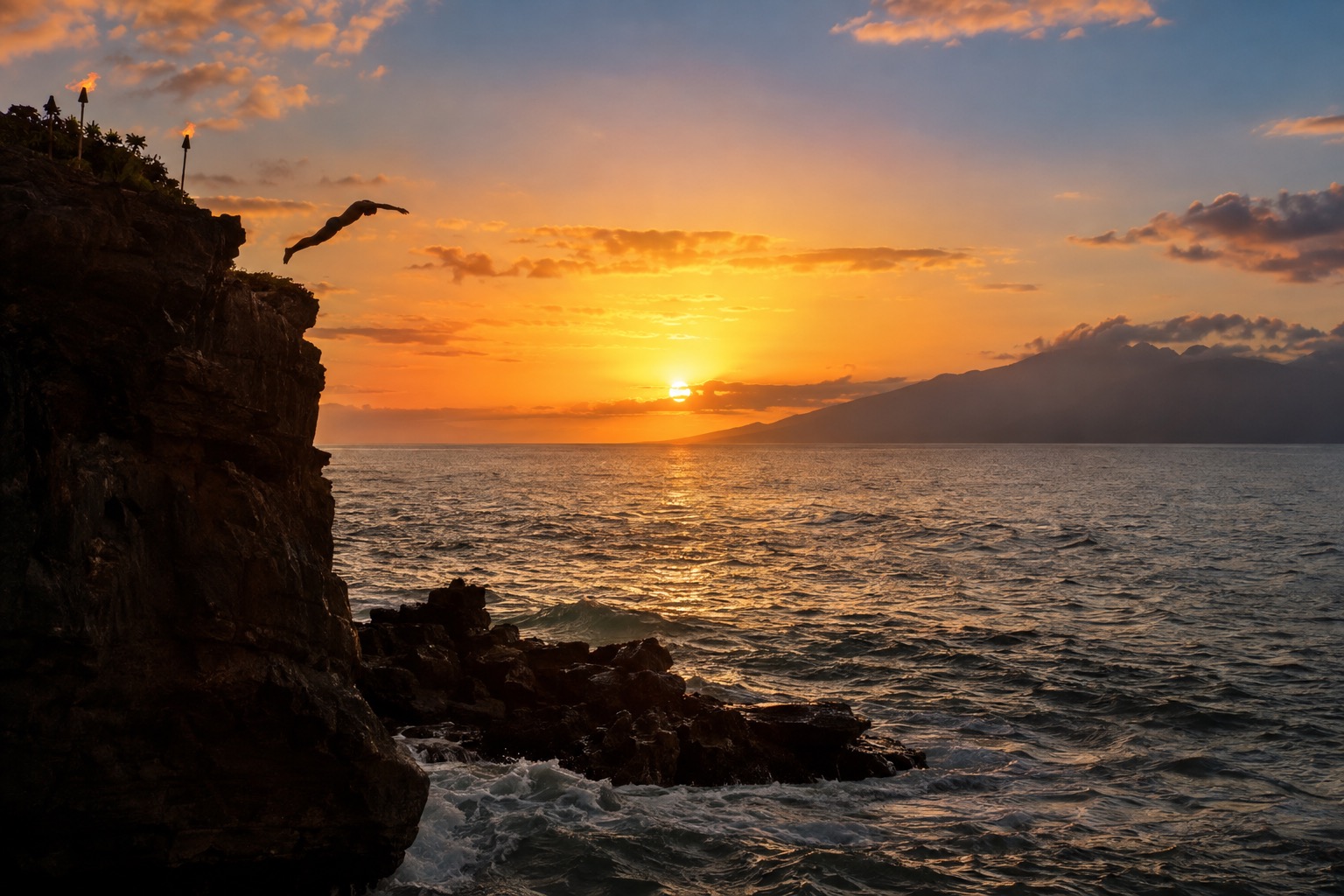
At the north end rises Black Rock, a lava headland that holds a nightly cliff-diving ceremony at sunset, when a torch lighter walks the rock and a diver leaps into the sea. It is a quiet, graceful tradition, and the crowd gathers on the sand to watch the light fade. Snorkelers visit the rock earlier in the day, when the water is clearer.
Whalers Village and the old town of Lahaina
At the south end of the beach, Whalers Village is an open-air shopping center with restaurants, a small museum about the whaling era and views out to the channel, a handy place to spot spouts over lunch. It makes a good stop in the heat of the day.
A short drive south is Lahaina, once the royal capital and a whaling port, and a town whose waterfront and streets carry heavy memories after the recent fire. Visit with respect, support local businesses that have reopened and keep to public areas, since recovery is still under way. Stay on marked roads and follow the signs.
Food in Kaanapali leans on the sea and the islands. Order fresh fish such as mahi-mahi or ahi, poke bowls, shave ice on a hot afternoon, and a mai tai at sunset. Luau evenings with hula, music and a kalua pig dinner are a favorite, and many resorts host them through the winter.
If a shower rolls in, shift to the shops, a spa session, a museum or a long lunch, and then return to the sand when the sun reappears. The rain seldom lasts long.
A two-day itinerary for Kaanapali in February
Day 1 begins on the sand. Walk the beach path at sunrise, when the air is cool and the water often at its gentlest, then have breakfast at a casual café with a view of the channel. Spend the late morning snorkeling around Black Rock while visibility is good, then take a break in the shade before the afternoon sun peaks.
After a poke bowl lunch, walk to Whalers Village for the museum and the shops, and keep an eye on the water for spouts. As the light softens, stake out a spot on the sand for the Black Rock sunset ceremony, then have dinner at an oceanfront restaurant. If rain arrives, the museum, a spa and a covered dinner spot keep the day moving.
Day 2 is for the whales. Take a morning cruise into the channel, when conditions are usually calmer, and dress in layers since the wind on deck can be cool. Back on shore, eat a relaxed lunch at a harborside spot, then have a lazy afternoon of paddling, reading or a swim.
In the late afternoon, drive south to Lahaina for a respectful walk along the waterfront and a stop at a local shop or café. Return for dinner, perhaps at a luau with music and hula, and finish with a last look at the stars over the water. If the day turns gray, swap the drive for a spa or a long meal.
Is Kaanapali busy in February?
Yes, February is a busy winter month here, since it falls in the peak whale season and draws visitors escaping the mainland cold. Beaches and restaurants are lively, but the long sand keeps crowds from feeling packed.
The holiday weeks, especially around Presidents Day weekend, are the fullest, with families on school break filling rooms and rental cars. Outside those stretches, the pace eases a little, and weekdays can feel calmer. Sunset spots at Black Rock and dinner tables near the water fill up first.
Book rooms and rental cars early for the holiday weeks, and a bit later for the quieter ones. Reserve whale-watching cruises and luau evenings ahead, and make dinner reservations for sunset hours. Resort stays carry the Hawaii state transient accommodations tax plus Maui County’s share, which shows up on the bill.
Mornings are the quiet window for the beach, snorkeling and the walking path. Afternoons draw the crowds, so plan lunch and shopping then.
What to pack for Kaanapali in February
Pack for sunny beach days with cool evenings and the odd shower, and keep it light.
- Swimsuits and a rash guard, for long hours in the water and strong sun.
- Mineral sunscreen and a hat, since the light is bright even on cloudy days.
- A light sweater or wrap, for breezy evenings and boat decks.
- A packable rain shell, for short passing showers.
- Binoculars and a camera with a zoom, for whale spotting.
- Water shoes and a snorkel set, for the lava rocks near Black Rock.
Good to know before you go
February falls outside the Central Pacific hurricane season, which runs from June 1 to November 30. Winter does bring bigger surf to some shores, so follow the beach signs. Rental cars and rooms go fast around holiday weeks, so book those first, then the whale cruises.
| Fee | Amount | Who pays |
|---|---|---|
| State transient accommodations tax | 11% | Resort guests in Kaanapali |
| Maui County transient accommodations tax | 3% | Resort guests in Kaanapali |
Kaanapali in February vs January and March
Going four weeks earlier puts you in January, with a slightly warmer sea and a little more rain. The whales are already around, and the holiday crowds have thinned after the new year, so it is a good pick for those who want winter sun with fewer people.
Moving to March brings a bit more rain, a slightly cooler sea and a spring-break wave of families toward the end of the month. The whale season is still strong but begins to wind down toward April, so sightings become a little less certain.
Choose February if you want the whale peak with mostly dry, bright days. Shift earlier for quieter beaches after the holidays, and later if you prefer a longer, warmer evening light and do not mind a few more showers.
Is February a good time to visit Kaanapali?
Yes, February is an excellent time for beach lovers, whale watchers and anyone who wants warm, sunny days in the middle of winter. Couples, families and snorkelers will all find plenty to do.
It suits those who like an active but easy vacation, with swims in the morning and sunsets at night. Travelers who want guaranteed flat water on every beach, or who dislike a busy resort feel, may prefer a quieter month.
On arrival, book a whale cruise and a sunset table first, then stroll the beach path to get your bearings. What makes February special here is the chance of a spout on the horizon while you sip coffee, the sound of a song under the water, and a Black Rock sunset that arrives right on time.
Sources
- NOAA NCEI, monthly normals 1991-2020, station USC00513317, checked September 8, 2026
- Open-Meteo Marine API, average 2015-2024, checked September 8, 2026
- sunrise-sunset.org, sunrise and sunset calculated for the 15th of the month, checked September 8, 2026
- NOAA, Hawaiian Islands Humpback Whale National Marine Sanctuary, checked September 25, 2026
- Hawaii Department of Taxation, Announcement 2025-03 ; County of Maui, TAT Announcement 2021-01, checked September 25, 2026
- NWS Honolulu / Central Pacific Hurricane Center, « 2026 Central Pacific Hurricane Season Outlook », weather.gov/hfo/hurricaneOutlook2026, checked September 24, 2026