
On a January morning in Kaanapali, the first thing you notice is the sea itself: a dark line offshore breaks, and a humpback tail slaps the water off the point at Black Rock. Coffee cups come out on the lanai, and the beach walkers stop to watch. This is Maui’s west side in its easy winter mode, a month for whale watching, long beach days and unhurried dinners by the water.
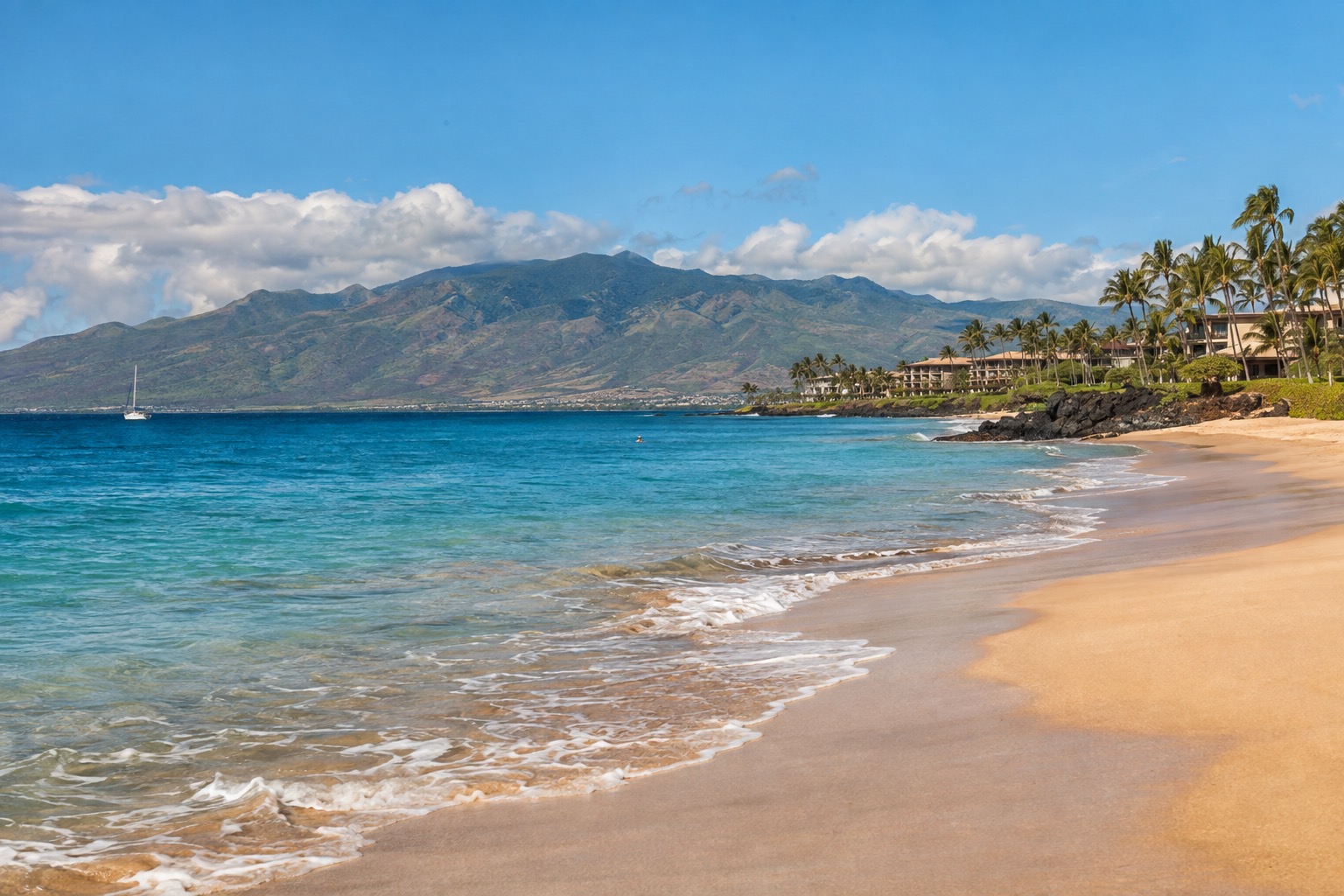
What is the weather like in Kaanapali in January?
January in Kaanapali is warm, mostly sunny and gentle, with only a few brief showers to interrupt the beach days.
| Month | Average high (°F) | Average low (°F) | Rain days | Sea (°F) |
|---|---|---|---|---|
| December | 79.8 | 67.6 | 7.5 | 78.2 |
| January | 79.0 | 65.7 | 5.6 | 77.7 |
| February | 79.0 | 65.8 | 5.3 | 76.2 |
Kaanapali sits on the leeward side of West Maui, in the shelter of the mountains, so the rain that soaks the windward coast and the upland valleys mostly passes overhead. When it does fall here, it comes as a short shower, often in the early morning or at night, and the sun is usually back within the hour. A day with a real downpour is rare.
Mornings are fresh enough for a light layer on a walk along the beach path, and by midmorning shorts and a swimsuit are all you need. Afternoons are warm without the sticky heat of summer, which makes this a good month for the long stroll to the end of the beach. Evenings cool down enough that you will want a thin sweater or a light jacket for dinner outside, especially if the trade winds are blowing.
Daylight lasts about eleven hours, so the sun sets early in the evening, and the light turns golden and soft over Lanai and Molokai across the channel. The sea stays pleasantly mild, though it is cooler than in the late summer months.
Can you swim in Kaanapali in January?
Yes, the water is warm enough for a comfortable swim, though you may want a rash guard if you plan to snorkel for a long time.
Winter swell mostly hits the north and west shores of the islands, so Kaanapali Beach can have more shore break and stronger currents than in summer. On many days it stays fairly gentle, but conditions change from morning to afternoon. The lifeguard towers and the flags decide: read the signs on the sand and ask the guards before you go in, especially if you have children or are a nervous swimmer.
Snorkelers head to the lava rocks at Black Rock (Puu Kekaa) at the north end of the beach, where fish often gather near the base. Visibility and surge vary with the swell.
The whales are the real swimming companion of the season: humpbacks are in the channel from November through April, and the rule is to stay more than 100 yards away, in the water and from a boat. Bring a hat, a towel and mineral sunscreen.
What to do in Kaanapali in January
The big event of the month is not on any calendar. Humpback whales are generally seen in Hawaii from November through April, and January through March is the peak, so the channel off West Maui is busy. From the beach path, the Black Rock lookout or a hotel terrace, you often see spouts, breaches and the slap of a fluke, and sometimes a mother with her calf. Binoculars and a bit of patience help.
Walking the beach path and Black Rock
The beach path runs the length of Kaanapali, past the resorts, open-air restaurants and shops at Whalers Village. It is the easiest way to spend a morning: coffee in hand, a slow walk, and a stop at the sand whenever a spout appears offshore.
The path ends at Black Rock, the dark lava point that is a place of cultural importance in Hawaiian tradition. Treat it with respect and do not climb on it for photos.
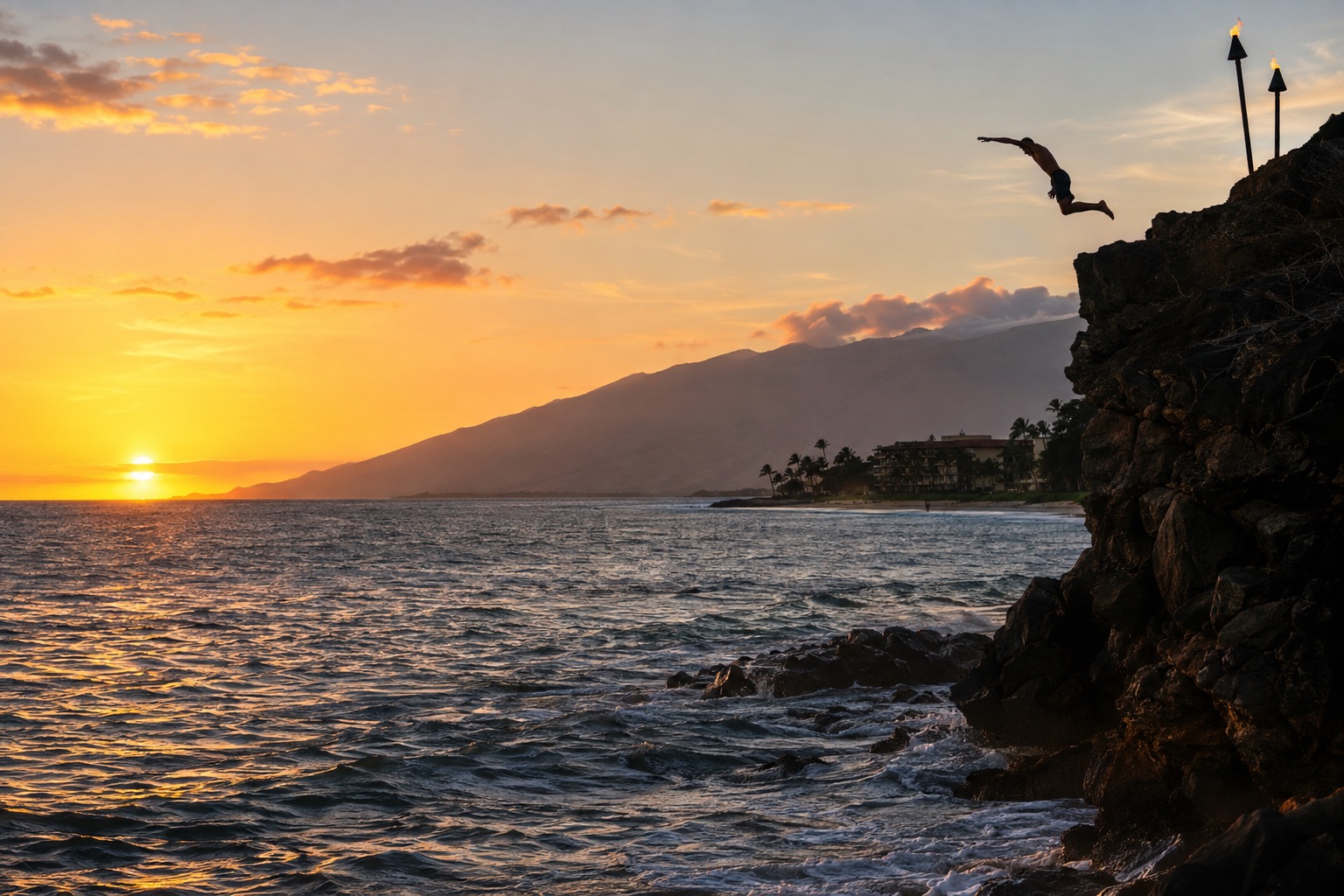
In the evening, a cliff-diving ceremony at sunset is a long-standing tradition at the point, performed by a torch lighter who runs along the rocks. It suits families and couples alike, and the crowd gathers on the sand and the walkway. Go early for a good spot and stay for the afterglow over the water.
Whale watching by boat
Boat trips leave from nearby harbors, and January is the best time to join one because the whales are most numerous. You glide out into the channel, often with a naturalist on board, listening for the moment a whale surfaces nearby. Boats must keep their distance from the animals, so the best encounters are often the ones where a whale decides to approach on its own.
Morning departures tend to have calmer water, while the afternoons can bring more wind. The trips suit most visitors, though anyone prone to seasickness should take precautions. Dress in layers, because the wind on the water is cooler than on the beach.
Whalers Village and the old towns
Whalers Village is the shopping and dining center on the beachfront, and it also has a small museum on the whaling history of the islands, a fitting stop in a month when living whales are everywhere. For something with more character, Lahaina and its waterfront past are close by, though the town is still recovering from the fire, so go with respect for those who live there.
Over the winter, the dining scene leans into fresh fish: ahi poke, grilled mahi-mahi, fish tacos and shave ice for the afternoon. Local bakeries and farm stands sell banana bread and tropical fruit for the beach. Sunset mai tais on a terrace overlooking the water are a ritual of the evening.
If a rare rainy day arrives, it is a good moment for a spa treatment, a hula or lei-making class at a resort, or a slow lunch at one of the beachfront restaurants. The weather rarely lasts, and the afternoon often brightens again.
A two-day itinerary for Kaanapali in January
Day 1 starts early on the beach path, when the air is cool, the water is still and whale spouts are easiest to spot. Walk north toward Black Rock with coffee and a pastry from a resort café, and snorkel near the rocks if the water looks calm and the lifeguards agree. Midday is for shade and lunch: poke bowls, fish tacos or a salad at one of the open-air restaurants.
In the afternoon, browse Whalers Village, stop at its whaling museum and have a shave ice. Then claim a spot on the sand before sunset, which comes early in January, for the torch lighting and the cliff dive at Black Rock. Dinner is a beachfront table with grilled fish and a view of the last light over the channel.
Day 2 belongs to the whales. Take a morning boat trip into the channel, when the water is usually calmest, and keep your camera ready for a breach. Back on shore, rest at the pool or beach, and have a late lunch at a casual spot away from the main resort strip.
In the late afternoon, take a drive or a ride to Lahaina’s edge for a quiet, respectful look at the coast, then return for sunset drinks on a terrace. If rain shows up, switch to a spa, a hula class or a slow lunch indoors, and plan the whale watching from a covered lanai.
Is Kaanapali busy in January?
Yes, particularly in the first days of the month, when winter holiday visitors are still on the islands, and again whenever the whale season draws extra crowds.
The holiday weeks around New Year’s fill the resorts, restaurants and boat trips, and rental cars can be hard to find. After the first couple of weeks the pace eases, and the second half of the month feels calmer, with rooms easier to find and tables less contested. Whale-watching boats stay popular all month because the peak runs from January through March.
As a habit, book rooms, rental cars and whale trips early for the holiday weeks, and a little later for the quieter weeks of late January. Sunset dinners with a view are worth reserving in advance in any week. No park or trail reservation applies to Kaanapali’s beachfront, so the planning is mostly about rooms, cars and boats.
What to pack for Kaanapali in January
Pack for warm days, cool evenings and the occasional short shower, with a few items for the water.
- A light jacket or sweater, for breezy evenings and boat rides.
- Mineral sunscreen and a hat, because the sun is strong even in winter.
- A rash guard, for longer snorkeling sessions in slightly cooler water.
- Binoculars, for the spouts and breaches offshore.
- A compact rain shell, for short passing showers.
- Sandals and a pair of walking shoes, for the beach path and town.
Good to know before you go
January falls outside the official hurricane season, which runs from June 1 to November 30. The main planning points this month are the holiday-week crowds, the need for a rental car or shuttle to explore beyond the resort strip, and booking whale-watching trips early. Resort stays carry state and county lodging taxes.
| Fee | Amount | Who pays |
|---|---|---|
| State transient accommodations tax | 11% | Guests staying at resorts in Kaanapali |
| Maui County transient accommodations tax | 3% | Guests staying at resorts in Kaanapali |
Kaanapali in January vs December and February
Moving the trip to December gives you a slightly warmer sea and a bit more rain, but it also means the busiest holiday crowds and the start of the whale season, when sightings are fewer than in midwinter. The days are a touch warmer, and the festive lights and events of the holidays are part of the mood.
February keeps the same mild air with a little less rain and a slightly cooler sea. The whales are still at their peak, and the crowds are usually thinner after the holiday rush, though school breaks and long weekends can bring a busy week. March extends the whale season, but the best sightings are concentrated in the midwinter months.
Choose December if you want the festive atmosphere and warmest water, January for a balance of whales and calmer days after the holidays, and February for a quiet stretch with strong whale watching. If you are sensitive to cooler water, December is the gentlest choice.
Is January a good time to visit Kaanapali?
Yes, especially for travelers who want warm, mostly sunny days, a mild sea and the chance to watch humpback whales from the sand, the lanai or a boat.
It suits couples, families and anyone who likes a slow beach rhythm with a view. Those who want the calmest swimming water of the year, or who dislike a cool breeze at night, may prefer another season, since winter swell can make the shore break livelier and the evenings are cooler.
On arrival, start with a walk along the beach path to get your bearings, then book a whale-watching trip and a sunset dinner. Keep an eye on the lifeguard flags and the signs before you swim. In January, the channel off Kaanapali is full of whales, and the evening torch lighting at Black Rock closes each day with the sun going down behind Lanai.
Sources
- NOAA NCEI, monthly normals 1991-2020, station USC00513317, checked September 8, 2026
- Open-Meteo Marine API, average 2015-2024, checked September 8, 2026
- sunrise-sunset.org, sunrise and sunset calculated for the 15th of the month, checked September 8, 2026
- NOAA, Hawaiian Islands Humpback Whale National Marine Sanctuary, checked September 25, 2026
- Hawaii Department of Taxation, Announcement 2025-03 ; County of Maui, TAT Announcement 2021-01, checked September 25, 2026
- NWS Honolulu / Central Pacific Hurricane Center, « 2026 Central Pacific Hurricane Season Outlook », weather.gov/hfo/hurricaneOutlook2026, checked September 24, 2026