
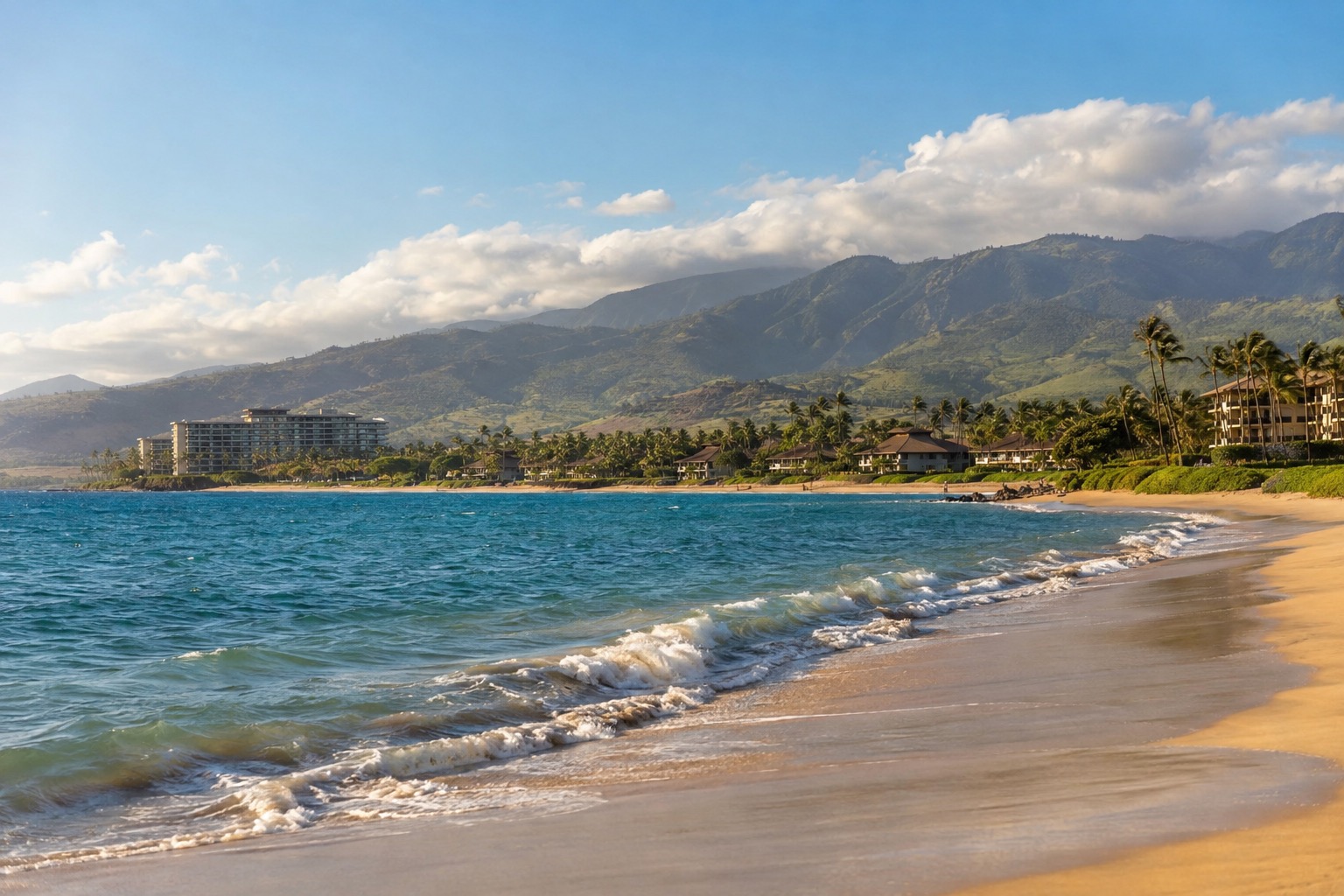
On a late afternoon in Kaanapali, the beachwalk fills with people drifting toward Black Rock, towels over their shoulders, waiting for the torches to be lit at sunset. The west shore of Maui stays sunny and dry while other corners of the islands sit under cloud. Summer is hot and bright, winter brings humpback season and the holiday crowds, and the three miles of white sand are good company all year.
When is the best time to visit Kaanapali?
The best months are April, May, September and October for most travelers, with the sun reliable, the rooms easier to find and the crowds thinner than at the turn of the year.
For beach and sea, late spring through early fall is the sweet spot. The shore is dry, the water is at its warmest in late summer and early fall, and mornings are made for floating over the reef. Winter is the season for whale watching, so those who come mainly for the whales will happily trade a few showers for it.
For sightseeing, the cooler months from November to April are more comfortable on the road to Hana or the summit of Haleakala, and long days outdoors feel easier. Budget travelers and anyone who likes a quiet beach do well in May, early June, September and October, when the resort settles into a slower rhythm.
Families should know that March is loud: spring break fills the pools, the beachwalk and the restaurants at Whalers Village. Summer is also family season, with school vacation lively but sunny and warm. If children are in tow, early May or September keep the fun and lose much of the bustle.
Kaanapali weather by month
Kaanapali sits on the dry, leeward side of Maui, so every month is warm and the differences are gentle.
| Month | Average high (°F) | Average low (°F) | Rain (in) | Rain days | Sea (°F) |
|---|---|---|---|---|---|
| January | 79.0 | 65.7 | 3.51 | 5.6 | 77.7 |
| February | 79.0 | 65.8 | 2.43 | 5.3 | 76.2 |
| March | 79.4 | 66.1 | 3.92 | 7.3 | 75.8 |
| April | 81.0 | 67.5 | 2.22 | 5.7 | 76.5 |
| May | 83.0 | 68.8 | 1.49 | 4.2 | 77.1 |
| June | 85.0 | 70.4 | 1.07 | 3.7 | 78.3 |
| July | 85.8 | 71.5 | 1.58 | 4.5 | 79.5 |
| August | 86.2 | 72.1 | 1.37 | 3.5 | 79.8 |
| September | 86.6 | 72.0 | 1.22 | 2.9 | 80.2 |
| October | 85.1 | 71.4 | 2.23 | 3.9 | 79.8 |
| November | 82.0 | 69.7 | 2.88 | 6.1 | 79.0 |
| December | 79.8 | 67.6 | 3.85 | 7.5 | 78.2 |
The year has two moods. From May to October the days are hot, the rain is rare and mostly a passing sprinkle. From November to April there are more rainy days, December and March the most, and they come as short showers or a gray spell as a front passes, usually with sunshine returning the same day. Evenings in winter call for a light layer.
When is Kaanapali cheapest and least crowded?
The quietest stretches are late April through May, then September to mid-November, when the resort has room to breathe and rooms are easier to find.
The busiest weeks are Christmas and New Year, when the whole west shore is full and peak-season rates apply. Mid-February long weekends, March spring break and the weeks around Easter bring families in numbers, and summer vacation from June through August keeps the beach lively. Thanksgiving week is another peak.
In the calm months the beachwalk is easy to stroll, restaurant tables open up without a long wait, and the sand near Black Rock leaves space for a towel at sunset. Winter whale season pulls visitors in January and February, so those are busy even without a holiday attached.
Which months should you avoid in Kaanapali?
No month is truly bad here, but a few come with trade-offs: the holiday crush from late December, the rainier days of December and March, and the stretch of hurricane season that runs from June 1 to November 30.
Hawaii is rarely hit by a hurricane, yet the official season covers the hottest months, so a flexible booking is wise if you travel then. Rain is the lesser worry on this dry coast, and even the wettest months bring mostly short showers.
Winter also means big surf on north-facing shores of the island, which can keep some beaches rough for swimming. Late summer is the hottest time, with afternoons that suit the shade, the pool and an early start for any hike.
When can you swim in Kaanapali?
You can get in the water all year, since the sea stays in the upper 70s to around 80 degrees in every month.
The warmest water arrives from late summer into early fall, while late winter and early spring are the coolest, though still comfortable for most people. The beach is usually gentler in summer, and winter swells can make the shore break stronger. Before you step into the water, look over the warnings that are posted along with that day’s surf and currents, and only swim near a lifeguard in places where one is on duty.
Snorkelers head for the rocks at the north end, where fish dart among the coral. Morning tends to be the calmer hour. Sea turtles may glide by, and NOAA asks that you keep at least 10 feet between yourself and any turtle, in the water or on the sand.
Festivals and events in Kaanapali through the year
Winter: whales, holidays and Lei Day’s run-up
Winter is the whale season, and the channel off West Maui is one of the great places to watch it. Many visitors spot spouts and tail slaps from the beach or from a hotel balcony, and the sanctuary asks boats and swimmers to keep more than 100 yards back. January through March is the peak.
Christmas and New Year feel festive but relaxed, with lights strung around the resorts and fireworks over the water. Mainland families fill the hotels, so plan early if that is your week. Whalers Village adds seasonal touches along the beachwalk.
Spring and summer: Lei Day, Kamehameha Day and long evenings
May 1 is Lei Day, celebrated across the islands with flower garlands, hula and music. It is a gentle way to see Hawaiian culture, and resorts often join in with demonstrations on their lawns or at Whalers Village.
Kamehameha Day on June 11 honors the king who united the islands and is marked with parades, floral lei draped on statues and a long weekend feel. Summer evenings are long and warm, perfect for a sunset walk to Black Rock.
Fall: quiet beaches and the nightly cliff dive
Autumn has no big festival, and that is its charm. The beach quiets, the sea is at its warmest and the sunset ritual is the main event: a diver lights the torches along Black Rock and leaps, recalling King Kahekili. It happens every evening, in every season, but is easiest to enjoy when crowds are small.
Early in October, Kona hosts the Ironman on the Big Island, and the athletic buzz can be felt across the islands. Thanksgiving week brings families back and ends the quiet stretch.
Sources
- NOAA NCEI, monthly normals 1991-2020, station USC00513317, checked September 8, 2026
- Open-Meteo Marine API, average 2015-2024, checked September 8, 2026
- sunrise-sunset.org, sunrise and sunset calculated for the 15th of the month, checked September 8, 2026
- Hawaii Tourism Authority, Go Hawaii, Kaanapali Beach (gohawaii.com/islands/maui/regions/west-maui/kaanapali-beach), checked September 25, 2026
- HVCB, map Driving Times from Kahului Airport (gohawaii.com, edition 2010), checked September 25, 2026
- County of Maui, Office of Recovery, « Lahaina's Front Street scheduled to reopen on Aug. 1, 2026 », checked September 25, 2026
- NOAA, Hawaiian Islands Humpback Whale National Marine Sanctuary, checked September 25, 2026
- County of Maui, Mineral Only Sunscreen, relayed by Maui Now, checked September 25, 2026
- Hawaii Department of Taxation, Announcement 2025-03 ; County of Maui, TAT Announcement 2021-01, checked September 25, 2026
- NOAA Fisheries, Viewing Marine Wildlife in Hawaii, checked September 25, 2026
- NWS Honolulu / Central Pacific Hurricane Center, « 2026 Central Pacific Hurricane Season Outlook », weather.gov/hfo/hurricaneOutlook2026, checked September 24, 2026