
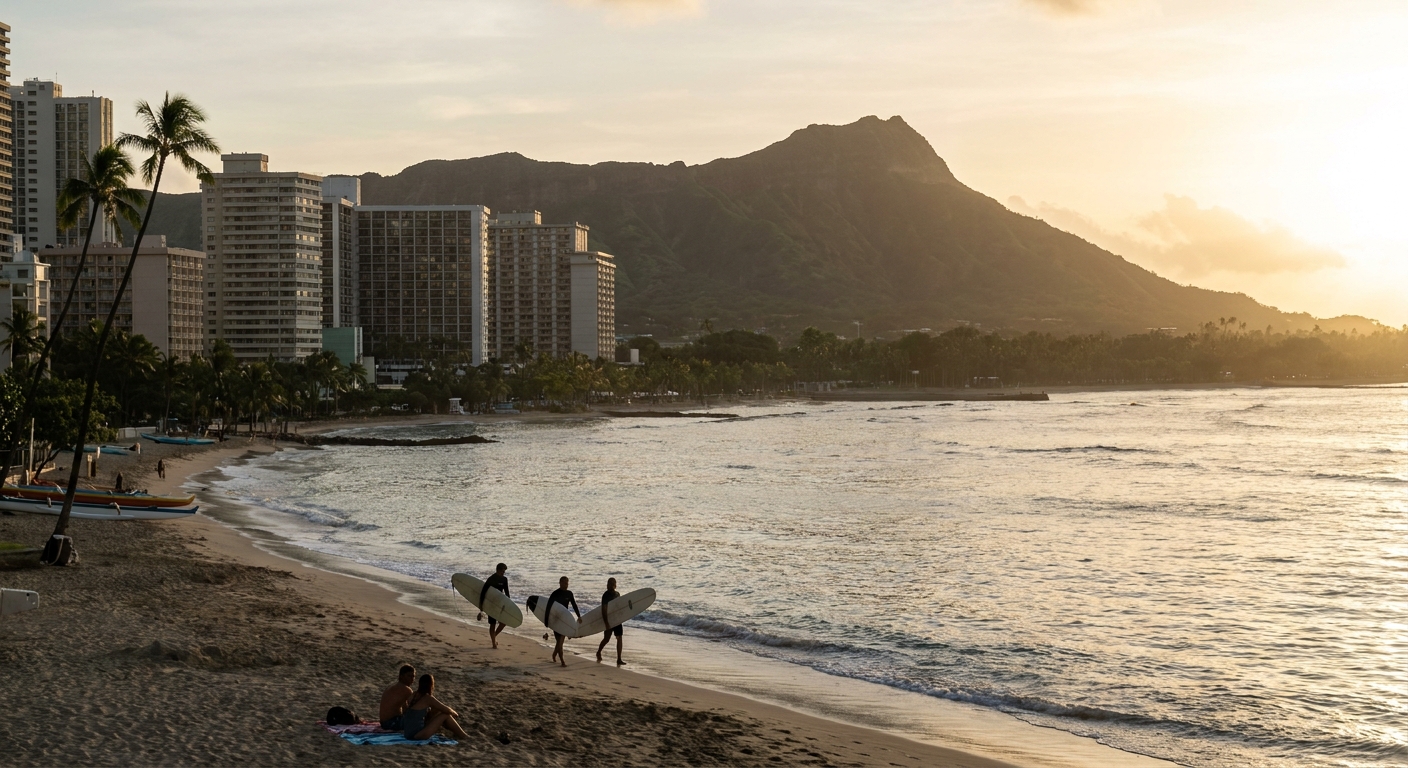
In April, the first surf lessons of the morning paddle out over the gentle breaks off Queens Beach while the smell of coconut sunscreen drifts down Kalakaua Avenue. Ukulele music floats from the open-air bars at sunset, and the trade winds keep the evenings soft.
The week after Easter, hula fans across Oahu turn their attention to the Merrie Monarch festival on the Big Island. April in Waikiki is a month of warm water, long light and a beach town that has settled between the spring break rush and the summer crowds.
What is the weather like in Waikiki in April?
April in Waikiki is warm, sunny and mostly dry, with only a few short showers and a steady breeze off the ocean.
| Month | Average high (°F) | Average low (°F) | Rain days | Sea (°F) |
|---|---|---|---|---|
| March | 81.2 | 67.8 | 4.6 | 76.0 |
| April | 83.0 | 69.7 | 2.6 | 76.7 |
| May | 84.7 | 71.2 | 2.7 | 77.0 |
Waikiki sits on the leeward, sunny side of Oahu, so it stays far drier than the mountains behind it. Mornings are the softest part of the day, bright and not yet hot, ideal for a walk along the beach or a swim before the sand warms up. By early afternoon the sun is strong and the shade of a palm or a hotel lanai starts to feel welcome.
When rain comes, it is usually a brief passing shower carried in by the trade winds, often over the green Koolau ridge first and then drifting down to the shore for a few minutes. A shower can leave a rainbow over the Ala Wai canal. Days of gray, steady rain are not what April usually brings here.
Evenings stay comfortable in a T-shirt and shorts, though a light layer is nice for dinner by the water when the breeze picks up. Daylight lasts well into the evening, around twelve and a half hours in mid-April, so there is time for a late swim and a long sunset. The sun is strong at this latitude, so sunscreen matters even on hazy days.
Can you swim in Waikiki in April?
Yes, the sea is warm enough for a long swim, in the mid-70s, which feels pleasantly cool when you first walk in and comfortable after that.
Waikiki faces south, and April is a time when its beaches usually see small to moderate waves, the kind that suit beginner surfers and longboards. Queens and Canoes are the classic surf breaks, with lines of learners and outrigger canoes riding the swells.
Closer to the Hilton Hawaiian Village, the sheltered lagoon at Duke Kahanamoku Beach is a favorite for families who like quieter water. Conditions change by the day, so the lifeguard towers and the flags and signs on the sand are your guide.
Snorkelers often drift along the rock wall near Kuhio Beach, where small reef fish gather, and a mask and fins are easy to bring along. Each month, the Waikiki Aquarium releases a schedule showing likely days for box jellyfish to reach the south shore of Oahu. Since they may show up at any time, follow posted warnings and stick to beaches with lifeguards. If sunburn is a concern for you, pack a rash guard, plus mineral sunscreen for everyone else.
What to do in Waikiki in April
April has no single blockbuster event in Waikiki, which is part of its charm. The mood is relaxed, the days are long, and the weeks after Easter bring hula fever.
The Merrie Monarch Festival in Hilo, the great hula competition, usually falls the week after Easter, and across Oahu you will see halau (hula schools) and cultural shows that draw on the same pride. Free hula and music performances at the Kuhio Beach hula mound are a gentle way to catch some of it.
The ocean itself is the main attraction. Morning is the time for a surf lesson, an outrigger canoe ride or a stand-up paddleboard session, when the water is glassy and the beach is quiet. In the afternoon, many travelers retreat to the shade, a pool, or a long lunch of poke bowls, shave ice or a plate lunch with kalua pork.
Diamond Head at sunrise or early morning
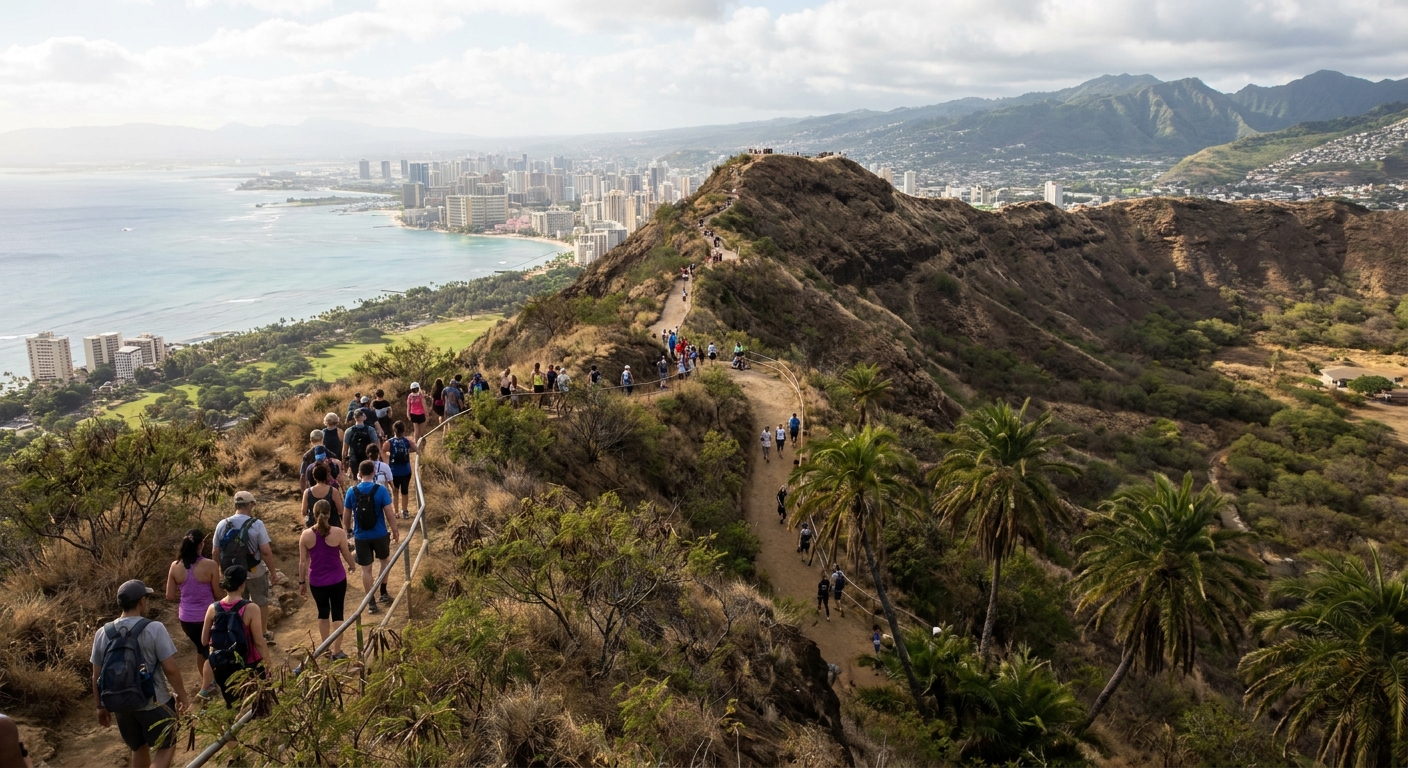
The crater that rises at the eastern end of Waikiki is the signature hike of the area, a trail that climbs through tunnels and stairways to a lookout over the coast. Views run from the high-rises of Waikiki around to the blue sweep of the Pacific. Going early keeps you out of the afternoon sun, which is strong in April, and the light on the city is soft and golden.
Diamond Head State Monument requires a reservation for visitors, one of the reservation systems that matter on Oahu, so plan it before you arrive. Bring water, a hat and shoes with a grip. It suits anyone who is comfortable with stairs and a steady uphill walk, and it pairs well with a breakfast of acai bowls or malasadas in Kaimuki afterward.
Kalakaua Avenue and the beach walk
Waikiki is a place for strolling, and the stretch from the Duke Kahanamoku statue to the Royal Hawaiian Hotel is its main promenade. You pass surfboard racks, street musicians, boutiques and open-air restaurants, with the pink walls of the Royal Hawaiian standing among the palms. The evening is the best moment, when the heat has eased and the tiki torches are lit along the beach.
Sunset is a daily show. Many people settle on the sand at Kuhio Beach or find a seat at a beachfront bar, drinks in hand, to watch the sky turn orange behind the Waianae range. It suits couples and families alike, and costs nothing if you bring your own towel and a snack.
Waikiki Aquarium and the zoo
At the quieter southeastern end of the beach, the Waikiki Aquarium shows the reef life of the Hawaiian islands, from small colorful fish to Hawaiian monk seals. It is an easy rainy-day outing or a break from the sun, and gives useful context before you go snorkeling.
Next to it, Kapiolani Park is where locals picnic, fly kites and play ball on weekends. Under the big trees, it is cooler than the beach and a good place to spread a blanket with fruit stand finds and sandwiches.
A two-day itinerary for Waikiki in April
Day 1 starts early, with a walk on the beach before the sand is crowded and the light is soft. Have breakfast at a casual café near the shore, then take a morning surf lesson at Queens or Canoes, when the water is usually gentle. By midday the sun is high, so move to the shade for a plate lunch or a poke bowl.
In the afternoon, visit the Waikiki Aquarium and stroll through Kapiolani Park to cool down and learn about the reef you swam over. Return to the beach in late afternoon for a swim as the light warms, then settle in for sunset at Kuhio Beach, with the hula and music that often play there. Dinner can be a seafood place along Kalakaua or a casual spot in a side street.
Day 2 begins even earlier with the Diamond Head hike, since the reserved entry and the cooler morning air both reward an early start. Afterward, head back for brunch, perhaps acai bowls or a Hawaiian-style breakfast with eggs and Spam. Spend the middle of the day by the pool or on a paddleboard in the sheltered lagoon at Duke Kahanamoku Beach.
Late afternoon is for shopping and wandering along the Royal Hawaiian Center, where a free hula show or lei-making demonstration is often on. If rain rolls in, a shower usually passes in minutes, so wait it out under an awning with shave ice. Finish with a long dinner on a rooftop or beachfront terrace as the sun goes down.
Is Waikiki busy in April?
Waikiki is moderately busy in April, lively but easier than spring break in March or the summer family weeks.
Early April can still carry some of the spring break crowd, and Easter week brings families from the mainland. After that, the pace relaxes, with a mix of couples, honeymooners, surf students and visitors from across the Pacific. Beaches fill by late morning near the big hotels, but a few steps toward Kapiolani Park leaves more room. Restaurants with sunset views fill up at dinner, so a reservation for those tables is a good habit.
Reserve rooms and rental cars well ahead when Easter week or school breaks fall during your stay, and wait a bit longer for the calmer weeks after. A car is not essential in Waikiki itself, where most of what you want is on foot, but if you plan island day trips, reserving ahead keeps options open.
The one reservation that matters for a typical Waikiki stay is Diamond Head State Monument, which asks visitors to book. Hanauma Bay and the USS Arizona Memorial also ask for advance booking if you add them.
What to pack for Waikiki in April
Pack light, for sun, sand and a few cooler evenings by the water.
- Swimsuits and a rash guard, since you will be in the water most days.
- Mineral sunscreen and a hat, because the sun is strong even through haze.
- Sturdy sandals or shoes with grip for the Diamond Head trail.
- A light layer or sweater for breezy evenings on the beachfront.
- A small rain jacket for passing showers, easy to tuck in a daypack.
- Bring a refillable canteen for trail time and extended hours on the sand.
Good to know before you go
April falls before the Central Pacific hurricane season, which runs from June 1 to November 30, so the trip sits outside the official season. Most things in Waikiki are within walking distance, and the beach, shops and restaurants make a car optional for a stay focused on the shoreline. Reserve Diamond Head and any other timed sites first, then fill in the rest. Hotel bills carry two taxes.
| Fee | Amount | Who pays |
|---|---|---|
| State transient accommodations tax | 11% | Hotel guests |
| Oahu county tax | 3% | Hotel guests |
Waikiki in April vs March and May
Moving the trip earlier to March brings a slightly cooler sea and more rain, with several more showery days. The spring break crowds are thicker, rooms are busier, and the winter surf season is just winding down on the island’s north side. Humpback whales are still around in the early part of the season, which makes March appealing if you want to look for them offshore.
Moving later to May gives a bit more heat, a warmer sea and long, sunny days that point toward summer. Lei Day on May 1 brings a festival feel with flower crowns and music across Oahu, and the school year winds down so hotels begin to fill with families. The rain is similar to April, still light and brief.
Choose March if you want whales and do not mind showers. Choose May if you want the warmest water and Lei Day. Stay with April if you want a middle ground, with steady sun, easier crowds than March and a calm, unhurried feel.
Is April a good time to visit Waikiki?
Yes, April is a very good time to visit Waikiki, especially for beach lovers, first-time visitors and anyone who wants warm weather without peak crowds.
Swimmers, beginner surfers and families will find easy days in the water, and hikers can start early on Diamond Head. People who dislike crowds will still want to avoid Easter week and book early for it. Those who dream of big surf are better off in winter on the North Shore, and travelers set on whale watching may prefer an earlier month.
On arrival, reserve your Diamond Head slot and take an easy first walk down Kalakaua to get your bearings. April in Waikiki is the sound of ukulele at sunset, a warm sea at your feet and a few brief showers that leave a rainbow over the ridge.
Sources
- NOAA NCEI, monthly normals 1991-2020, station USC00519397, checked September 8, 2026
- Open-Meteo Marine API, average 2015-2024, checked September 8, 2026
- sunrise-sunset.org, sunrise and sunset calculated for the 15th of the month, checked September 8, 2026
- Hawaii Department of Taxation, Announcement 2025-03 ; City and County of Honolulu, OTAT FAQ, checked September 25, 2026
- Waikiki Aquarium, Box Jellyfish Calendar, checked September 25, 2026
- NWS Honolulu / Central Pacific Hurricane Center, « 2026 Central Pacific Hurricane Season Outlook », weather.gov/hfo/hurricaneOutlook2026, checked September 24, 2026