
By the time a May morning arrives in Hilo, the Mamo Street farmers market has already filled with noise, vendors shouting above tables piled with papayas, apple bananas, orchids and anthuriums. The air is soft and damp, Mauna Kea sits clear against the sky if you are lucky, and the bay is flat enough to hold the early light. This is the Big Island’s wet, green, unhurried side, and May is a comfortable month to spend time on it.
What is the weather like in Hilo in May?
May in Hilo brings warmth, lush greenery and frequent wetness, mild enough that a T-shirt works all day, while showers drift in and out instead of hanging around.
| Month | Average high (°F) | Average low (°F) | Rain days | Sea (°F) |
|---|---|---|---|---|
| April | 79.0 | 66.1 | 17.2 | 75.6 |
| May | 80.7 | 67.3 | 14.2 | 77.1 |
| June | 81.8 | 68.7 | 16.7 | 78.5 |
Most of it falls as passing showers, often overnight or in the early morning, and a downpour that lasts the whole day is the exception. Plenty of days stay warm and bright, with sun breaking through between short showers.
Mornings are fresh and bright, which makes them the best hours for waterfalls, gardens and the bay. Afternoons are warm and humid, and clouds often build over the mountain. Evenings stay mild enough to eat outside in a light shirt. Days are long, with a little over thirteen hours of daylight in the middle of the month.
Dress in layers that dry fast and carry a light rain jacket rather than an umbrella, since the wind makes umbrellas awkward. If you plan to drive up toward the volcano, bring a warm layer, because the air at the crater rim is much cooler and wetter than in town. For dry, hot beach days, many visitors head over to the Kona side, which gets a fraction of Hilo’s rain.
Can you swim in Hilo in May?
In May the ocean is warm enough for a pleasant swim, but the beaches near Hilo suit quick dips and snorkeling in protected coves better than long hours of lounging on sand.
Hilo’s shoreline is mostly black lava rock, with few broad sandy beaches. The best-known spots for getting in the water are the sheltered lava pools and bays along the coast, including the area around Richardson Ocean Park, where black sand meets calm-looking water, and the protected pockets near Leleiwi. Conditions change with the swell and the tide, and the open coast can be rough, so how it looks on the day matters more than the season.
Look for the beach signs and talk to the lifeguards where there are any, and follow the flags rather than trusting a calm first impression. Bring reef shoes for the rocky entries, a mask if you like snorkeling, and a rash guard for sun on your back. Sea turtles sometimes rest or feed along this coast. Keep a respectful distance and leave them alone, since they are protected.
What to do in Hilo in May
May is a good month for the things Hilo does best: waterfalls with plenty of water, tropical gardens in bloom, a market town with real character, and a food scene built on local ingredients. It also falls in the weeks when the Merrie Monarch Festival is behind you, so the town has returned to its easygoing rhythm, and May 1 brings Lei Day, celebrated with lei-making, music and hula in parks and schools across the islands.
Hilo is a walking town in its older core. Wander the downtown streets with their old wooden storefronts, galleries, bookshops and small cafés, then walk along the bayfront to see the water and, on a clear day, the long profile of Mauna Kea. Locals tend to start early, so morning is when the town feels most like itself.
Farmers market and downtown
The Hilo Farmers Market is the heart of the town, with its biggest crowds on Wednesday and Saturday mornings. You will find tropical fruit, fresh flowers, baked goods, coffee, local honey, hand-made crafts and plate lunches. Buy a lei or a bunch of flowers for the hotel room, and try whatever fruit looks best that day, since the vendors are glad to give advice.
From there, downtown is a few minutes on foot. Browse the small shops, stop for a bakery pastry or a shave ice, and try loco moco or a bowl of saimin at one of the local diners. This is a place for slow browsing, and the mix of Hawaiian, Japanese, Filipino and Portuguese influences shows up in the food and the shopfronts alike.
Waterfalls and gardens
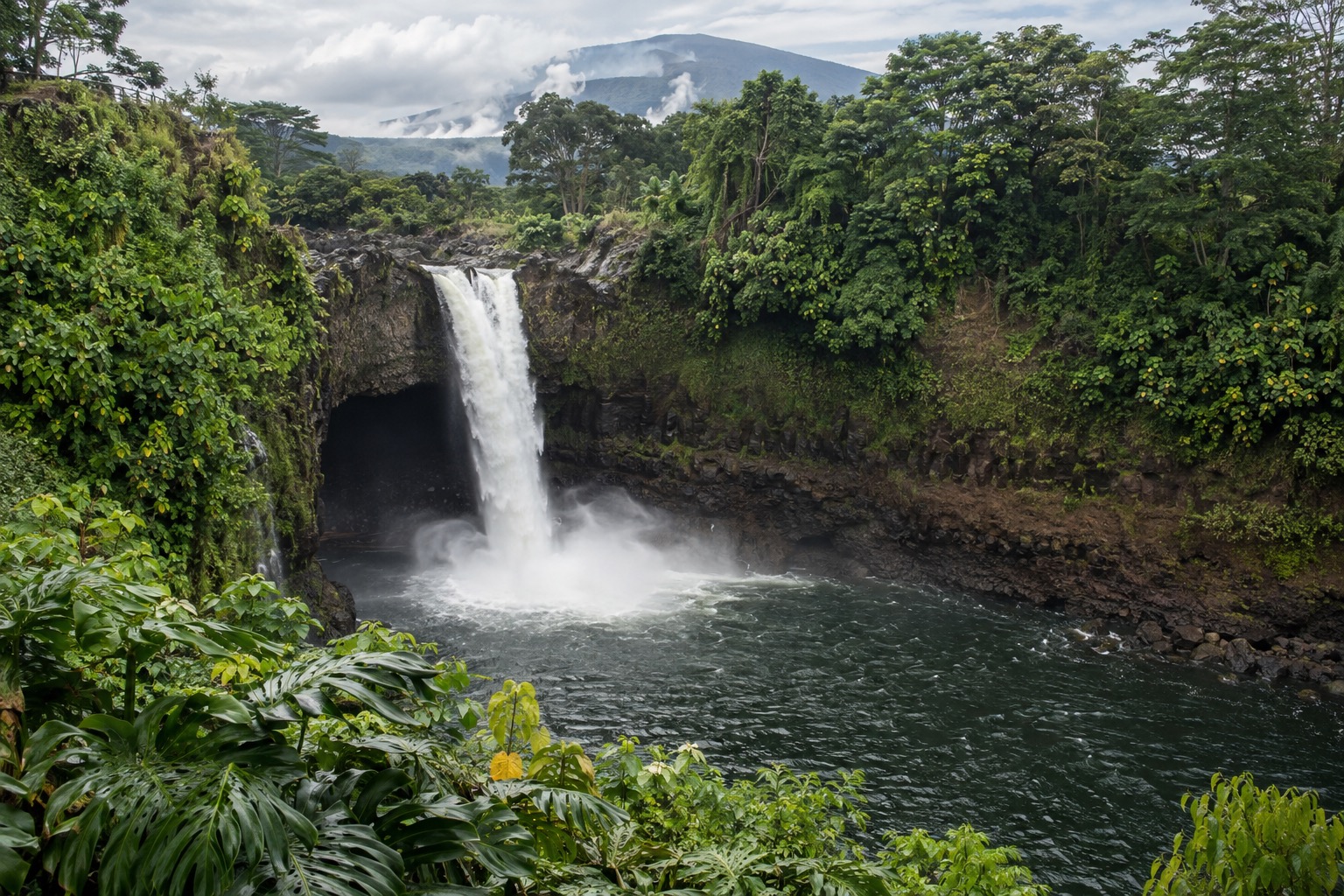
A fast, simple stop, Rainbow Falls lies right above town. In the morning, sunlight sometimes catches the mist and throws a rainbow across the pool. Not far away, Boiling Pots is another set of falls and churning pools on the Wailuku River. Both are for looking and photographing, so stay behind the railings and out of the water, which can rise fast after rain upstream.
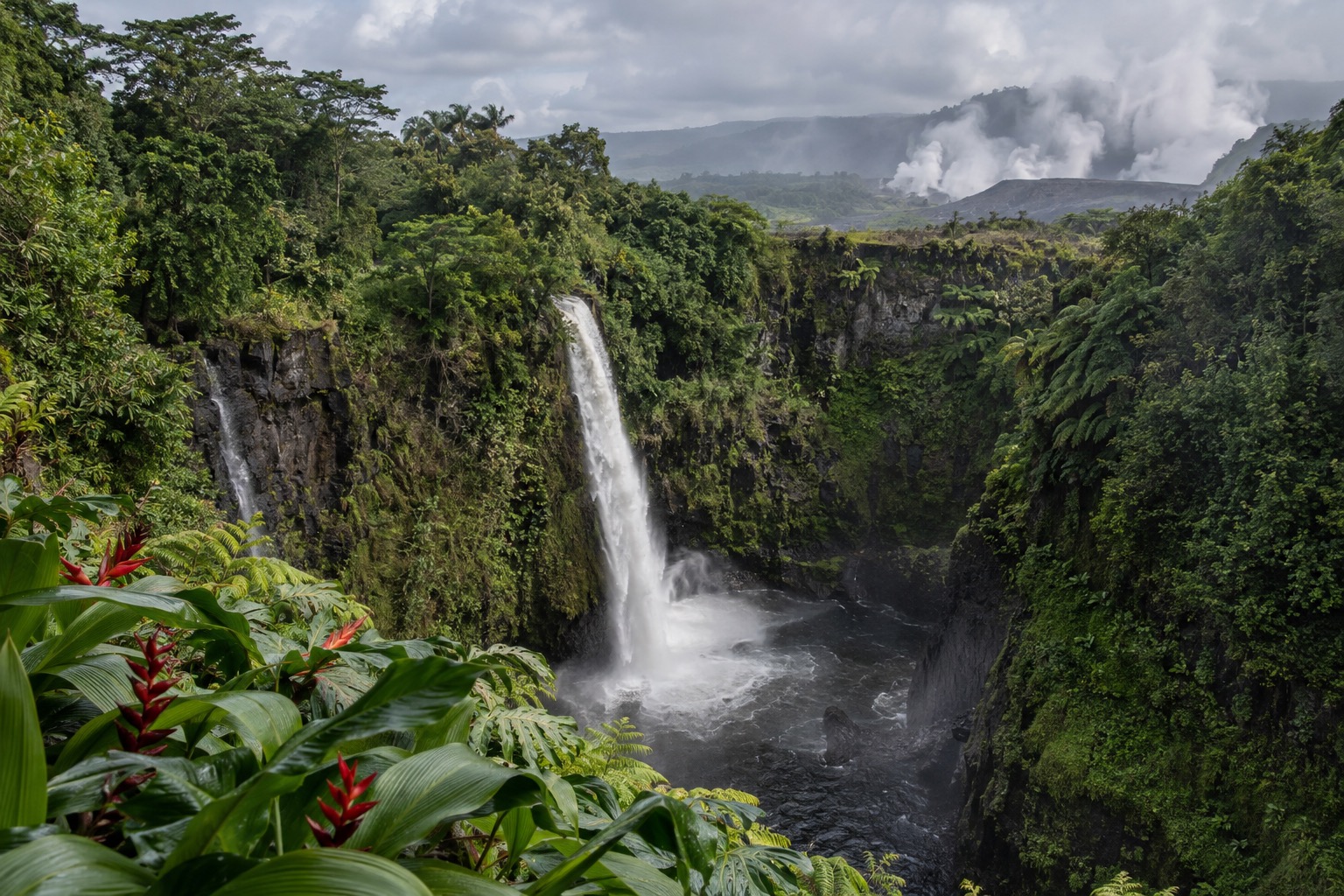
North of town, the scenic coastal drive leads to botanical gardens, small valleys and lookouts, where May rains keep the ferns, ginger, orchids and giant trees looking their best. Plan this as a half-day outing with a slow pace and no strict schedule, and bring a rain jacket because showers can arrive suddenly.
Volcano and mountain day trips
If you want a day trip from Hilo that you will not forget, make your way to Hawaii Volcanoes National Park. The drive climbs through rainforest to the crater rim, where it is noticeably cooler and often misty, so wear a warm layer. You can look out over Kilauea’s caldera, walk through lava tubes and follow trails across old lava fields. What the volcano is doing varies, so check the park’s current notices before you go.
If the clouds are stubborn in Hilo, the volcano is not always a better bet, because the rim is wet too. Pick the day by the forecast, and keep a flexible plan with a stop at a local bakery or a coffee farm on the way back. Rainy hours are well spent in the Lyman Museum, the Pacific Tsunami Museum or one of the local galleries, and an easy lunch at a neighborhood restaurant is rarely a bad plan.
A two-day itinerary for Hilo in May
Day 1 is for the town. Start at the farmers market early, when the stalls are full and the air is cool, and have a coffee and a pastry there. Walk the bayfront and downtown streets while the light is clear, then drive up to Rainbow Falls before the clouds build. Lunch can be a plate lunch or a bowl of noodles at a local spot.
When rain tends to arrive later in the day, head inside to the Lyman Museum or the Pacific Tsunami Museum, or wander through bookshops and galleries. As the weather clears, return to the bay for the evening light, then have dinner at a downtown restaurant serving local fish or a neighborhood place with Asian-influenced dishes.
Day 2 is for the volcano. Head out early in the day to Hawaii Volcanoes National Park, and bring along a snack and a jacket. Take in the crater overlook, walk a short trail or a lava tube, and eat lunch at a cafe near the park entrance or pack a picnic. Plan to start back by mid-afternoon so you are not driving in the dark.
Back in town, a late dinner and a quiet walk close the day. If the weather turns on either day, swap the outdoor stops for museums, bakeries and a long lunch, then try again for the falls or the bay the next morning.
Is Hilo busy in May?
Hilo is moderately busy in May, quieter than the winter holidays and the height of summer, but with a steady flow of visitors, especially on the weekends and around Memorial Day.
School is still in session on much of the mainland until later in the month, so family travel is lighter at the start and picks up toward the end. Hilo is also a working town, with the university, hospitals and a local community that fills the market and restaurants regardless of the tourist calendar. Cruise ships and conferences can add crowds on some days, so the downtown can feel busier than you would expect.
Rooms and rental cars are generally easier to find than in peak weeks, but booking early is still a good habit, especially for the Memorial Day weekend. Dinner tables fill up at the popular spots on Friday and Saturday nights, so a reservation helps. For quieter weeks, a booking a bit closer to your trip is usually fine. Check the national park’s current notices before you go, because conditions and access can change.
What to pack for Hilo in May
Pack for warm, humid days with passing showers, and for a much cooler excursion up to the volcano.
- A light, quick-drying rain jacket, for the showers that come with little warning.
- Sturdy sandals or shoes with good grip, for wet rocks near the waterfalls.
- A fleece or warm layer, for the cool air at the volcano.
- Reef shoes and a mask, for rocky entries and snorkeling.
- Pack mineral sunscreen and a hat, because between the clouds the sun beats down hard.
- A small dry bag, to protect your phone and camera.
Good to know before you go
May falls just before the Central Pacific hurricane season, which runs from June 1 to November 30. A rental car makes the waterfalls, gardens and the volcano much easier, and the drive to the park is a morning’s outing. Lodging taxes add to the final bill, so factor them in.
| Fee | Amount | Who pays |
|---|---|---|
| State Transient Accommodations Tax | 11.00% | Guests of hotels and short-term rentals |
| County of Hawaii Transient Accommodations Tax | 3% | Guests of hotels and short-term rentals on the island |
Hilo in May vs April and June
Moving the trip to April means a little more rain, slightly cooler air and a sea that is a touch cooler too. The town is quieter, and the weeks around Easter and the Merrie Monarch Festival are the exception, when hula fans fill the rooms. If you want the festival atmosphere, April is the month to choose, as long as you book well ahead.
Moving to June brings warmer air and sea, a bit more sunshine and the start of the summer family season, so rooms and cars tend to get tighter. June also marks the beginning of the official hurricane season, and Kamehameha Day on June 11 brings parades and celebrations across the islands.
Choose May if you want a balance of fewer crowds, warm water and plenty of green. Pick April for the festival or June for slightly warmer swims and summer energy.
Is May a good time to visit Hilo?
Yes, May is a good time to visit Hilo, especially for travelers who like lush landscapes, markets and a relaxed pace more than a classic beach vacation.
It suits waterfall chasers, gardeners, food lovers and anyone building a trip around the volcano. If your priority is long days on a dry, sandy beach, the Kona side will serve you better, and Hilo works well as a one- or two-night base for the east side.
On arrival, start with the farmers market, then pick your volcano day by the forecast. What is special about May here is the combination of Lei Day flowers, full waterfalls, warm seawater and a town that is neither empty nor crowded.
Sources
- NOAA NCEI, monthly normals 1991-2020, station USW00021504, checked September 8, 2026
- Open-Meteo Marine API, average 2015-2024, checked September 8, 2026
- sunrise-sunset.org, sunrise and sunset calculated for the 15th of the month, checked September 8, 2026
- Hawaii Department of Taxation, Tax Announcement No. 2025-03 (Transient Accommodations Tax Law Changes from 2025 Legislative Session), files.hawaii.gov/tax/news/announce/ann25-03.pdf, checked September 24, 2026
- County of Hawaii, Department of Finance, Transient Accommodations Tax (TAT) page, hawaiicounty.gov/departments/finance/transient-accommodations-tax-tat (live returned HTTP 403 on request, read via Internet Archive Wayback Machine snapshot dated August 14, 2026, same official content), checked September 25, 2026
- Hawaii Department of Taxation, County Surcharge on General Excise and Use Tax page, tax.hawaii.gov/geninfo/countysurcharge/, checked September 25, 2026
- NOAA NCEI, monthly normals 1991-2020, station USW00021510
- NOAA NCEI, monthly normals 1991-2020, station USC00511303
- NWS Honolulu / Central Pacific Hurricane Center, « 2026 Central Pacific Hurricane Season Outlook », weather.gov/hfo/hurricaneOutlook2026, checked September 24, 2026
To plan your stay
- Things to Do in Hilo: Waterfalls, Farmers Market, Volcano Day Trips and Local Food
- Best Time to Visit Hilo: Weather by Month, Crowds, Swimming and Festivals
- Hilo in April: Weather, Swimming, Things to Do and a Two-Day Plan
- Hilo in June: Rainy-Side Weather, Waterfalls, Farmers Markets and Two Days of Plans