
Come March, the scent of wet earth and ginger blossoms hangs over Hilo, and a gentle rain drums on the tin roofs along Kamehameha Avenue as papayas, apple bananas and orchids pile up at the farmers market stalls. Hula halau practice late into the evening, the mountain flashes between cloud and clear sky, and the town feels like it is gathering itself for the biggest week of its year. This is a page for travelers who want the green, waterfall side of the Big Island, with its culture, its food and its showers.
What is the weather like in Hilo in March?
March in Hilo brings warmth, lush greenery and moisture, with mild temperatures throughout the day and showers that pass through instead of staying put.
| Month | Average high (°F) | Average low (°F) | Rain days | Sea (°F) |
|---|---|---|---|---|
| February | 78.4 | 64.1 | 10.9 | 76.3 |
| March | 78.5 | 65.2 | 14.9 | 75.7 |
| April | 79.0 | 66.1 | 17.2 | 75.6 |
Mornings are often the best part of the day, with soft light on Hilo Bay and Mauna Kea sometimes standing clear above the town before clouds gather. Afternoons are warm enough for shorts and a T-shirt, and evenings stay mild enough that you rarely need more than a thin layer.
Hilo sits on the wet windward east coast, and March shows it. Rain arrives in passing showers, sometimes a heavy downpour for an hour, sometimes a gray drizzle that lingers into the evening.
Over the month, more than a foot of rain falls, and on a few days it comes in earnest. Kona, on the dry side of the island, gets a small fraction of that, so a sunny day is often a short drive away across the island.
Dress in light layers and bring a rain jacket you can stuff in a daypack. Quick-drying fabrics beat cotton, and shoes that can get wet will serve you better than fresh white sneakers. The days run about twelve hours, so you have a full stretch of light for outings even when the sky is mixed.
Can you swim in Hilo in March?
Yes, you can swim in comfort since the ocean is warm, but Hilo is a place defined more by river mouths and rocky shore than by classic beaches.
The water off Hilo is pleasantly warm in March, according to marine records. Winter swells can still reach the coast, and the open shoreline east of town is often rough, with waves breaking over lava rock. Heavy rain also sends runoff into the bays, which can leave the water cloudy near river mouths.
Families and nervous swimmers usually do best at the sheltered spots on the bay side of town, such as the calmer pools and protected coves along Keaukaha, where the shape of the coast takes some of the force out of the waves. Snorkelers often find clearer water on the Kona side, a drive away.
Wherever you go, read the beach signs, follow the flags and lifeguards, and keep off sharp lava edges. Bring water shoes, a rash guard and a towel for the damp air.
What to do in Hilo in March
March is Merrie Monarch season, and the whole town feels it. The hula festival is held in Hilo the week after Easter, so its dates move with the calendar. Halau from across the islands and beyond arrive to compete in kahiko, the ancient style, and auana, the modern one. When Easter comes early, the festival can fall in March or very early April, and when it comes late it slips into April.
Even if the festival is not on during your dates, you will see its spirit in the weeks before: dancers carrying ti leaves and lei material, shops selling hula supplies, and community events around town. Public performances and a craft fair are traditional features of the festival week, and the main competition is famous for selling out far in advance.
Hilo Farmers Market and downtown
The farmers market on Mamo Street is the best place to understand Hilo. Stalls packed with people are brimming with island fruit, containers of lilikoi, newly cut blooms, banana bread loaves, honey from the area, and plate lunch combos. Wednesday and Saturday are the big days, when the market spills across several blocks, and mornings are livelier than afternoons.
Walk on into the old downtown, where historic storefronts hold bookshops, galleries, bakeries and small cafés. In March rain, you duck from one doorway to the next, which suits the town well. Try shave ice, a Big Island coffee, or a bowl of saimin at a local diner. It suits everyone, but it is especially good for slow mornings and rainy afternoons.
Waterfalls and gardens
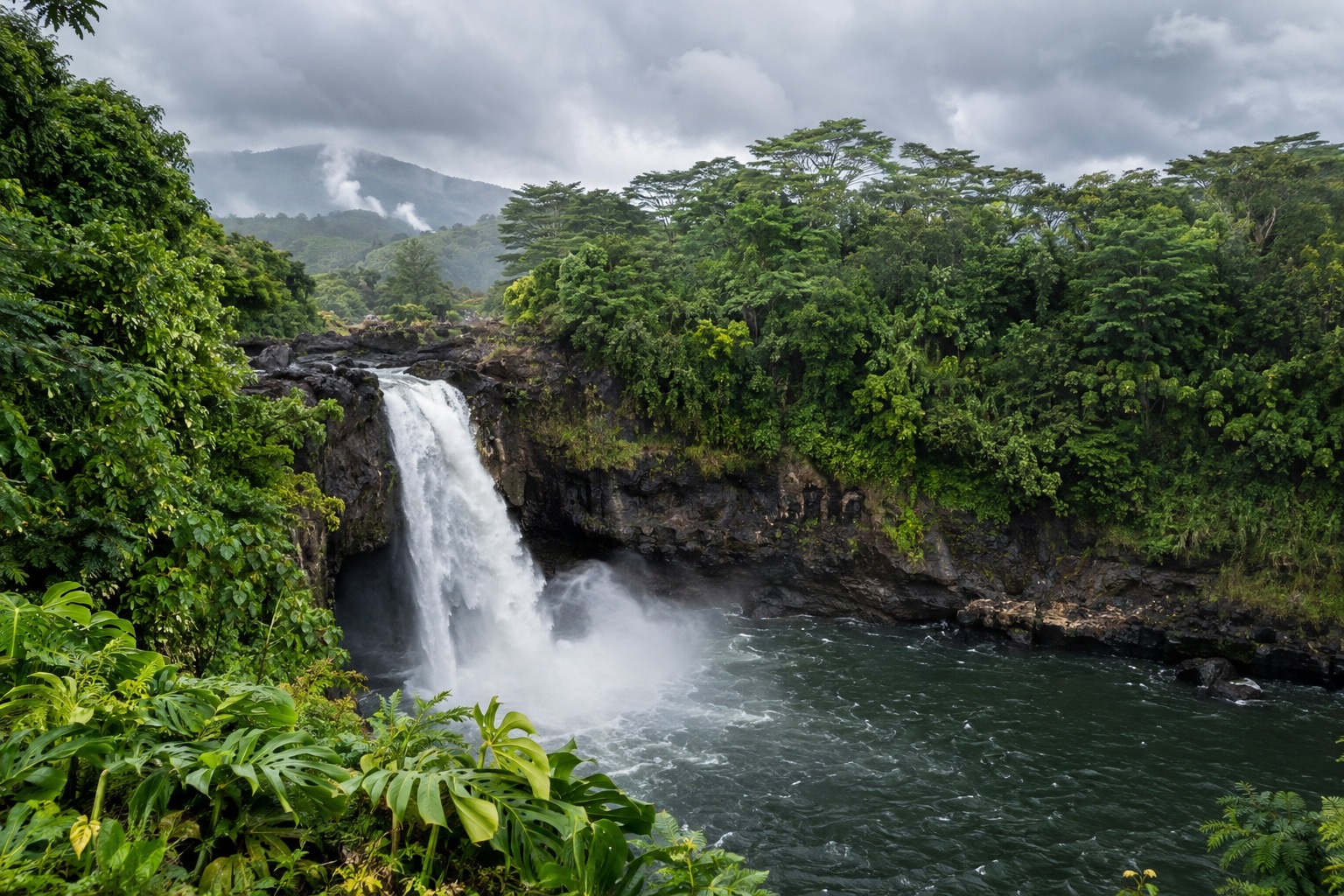
Rainfall is what makes Hilo’s waterfalls worth the trip. Rainbow Falls sits just above town and is easy to reach by car, and the water often runs full after a wet spell. Boiling Pots lies upstream along the same river, with a series of cascades. Wet weather makes the rocks slick, so stay on the paths and behind any railings.
Along the Hamakua side, north of town, a scenic coastal drive passes gulches, banyan trees and more falls, and tropical gardens along the route are lush in this season. Plan a half day, bring a rain jacket, and stop for fruit at a roadside stand. It suits travelers who like to drive slowly and stop often.
Volcano and the summit road
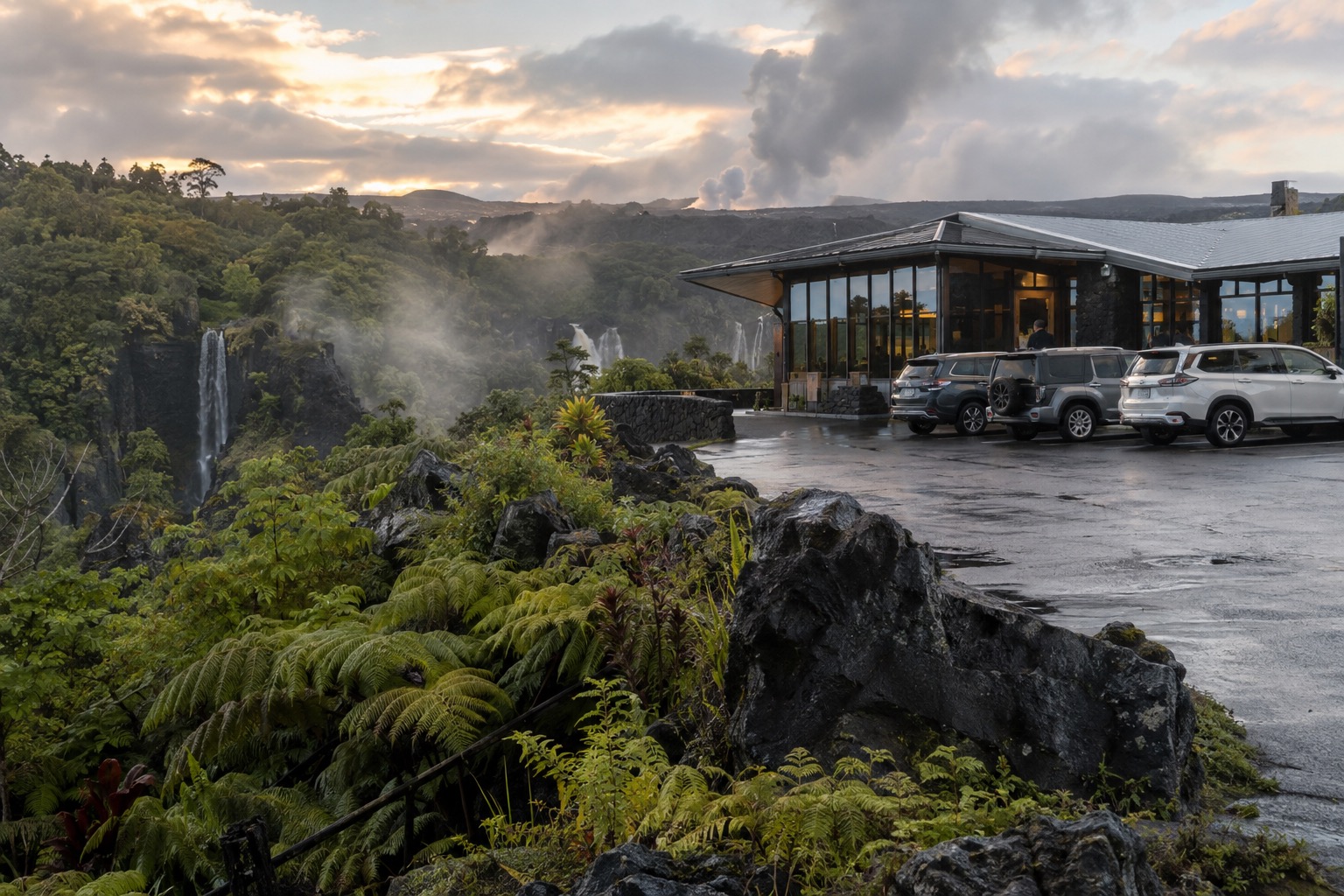
Hawaii Volcanoes National Park is the day trip nearly everyone makes from Hilo. Park headquarters sits high above the coast, where it is cool and often misty, with a cold wind at times. Kilauea’s crater rim is a landscape of steam vents, lava fields and fern forest. The weather can change quickly, so dress warmer than you do in town.
Hilo is the natural base for the park, and the drive up takes you from palms to tree ferns. Walk a short trail along the rim, visit a lava tube and stop at the visitor center for the latest on what is open. For recent conditions, check the park’s own notices before you go.
Other easy stops include Lili’uokalani Gardens on the bay, the Pacific Tsunami Museum downtown, and the quiet shoreline parks of Keaukaha. On wet days, the museum and the cafés make a good indoor plan.
A two-day itinerary for Hilo in March
Day 1 begins early at the farmers market, when the stalls are freshest and the air is coolest. Eat a breakfast of fruit and coffee, then walk the downtown streets before the day warms up. Late morning is the time for Rainbow Falls, when the sun can sometimes catch the mist, and Boiling Pots follows a short drive upstream.
After a plate lunch in town, spend the afternoon at Lili’uokalani Gardens and the bay shore, with views back toward Mauna Kea if the clouds allow. Sunset comes a little after six, so finish with dinner at a local restaurant. If the rain turns steady, move indoors to the Tsunami Museum and downtown shops.
Day 2 is for the volcano. Leave in the morning, drive up through the fern forest, and spend the day around the crater rim, with a short walk, a lava tube and a stop at the visitor center. Bring layers, since it is cool and damp up there. Eat lunch at a casual spot in Volcano village and keep the afternoon loose in case the mist rolls in.
Return to Hilo in the late afternoon. If the sky is clear, linger on the road back for sunset light on the coast. Dinner can be a simple local meal near the bay, a good end to a day that went from rain forest to lava.
Is Hilo busy in March?
Hilo is moderately busy in March, quieter than the resort areas of the island but with a distinct bump during Merrie Monarch week.
Because Hilo is not a resort town, it stays calmer than Kona for most of the year. Mainland spring breaks bring some families through, but the number of visitors is modest compared with the Kona side. During the festival week, rooms and rental cars can be hard to find, and restaurants fill with dancers and their families.
If your trip overlaps the festival, book lodging and a car well ahead, and make dinner reservations early. For the quieter weeks of March, planning a few weeks ahead is usually enough, though the car is worth settling first. Visitors planning for the volcano or other national park outings should look at the park’s own notices for any entry rules before leaving.
What to pack for Hilo in March
Pack for rain and for a cool upland, with light clothing that dries fast.
- A light rain jacket, since showers come at any hour.
- Water shoes for waterfalls and rocky shoreline.
- A fleece or sweater for the volcano rim, where it is cooler.
- Quick-drying shorts and shirts for the humid air.
- Mineral sunscreen and a hat for the breaks in the cloud.
- A dry bag for your phone and camera.
Good to know before you go
March falls outside the official hurricane season, which runs from June 1 to November 30. A car rental gives you the simplest route to the volcano, the Hamakua coast and the waterfalls, so give yourself lots of time since rain can make the roads slick. Expect a bit more on your lodging bill when you settle up.
| Fee | Amount | Who pays |
|---|---|---|
| State Transient Accommodations Tax | 11.00% | Guests of hotels and rentals |
| County of Hawaii Transient Accommodations Tax | 3% | Guests of hotels and rentals |
Hilo in March vs February and April
Moving the trip earlier to February means a little less rain and a few more dry spells, with the sea about the same. The winter whale season is still on along the coast then, and the festival season is still ahead. February is a good choice if you want the driest of the three months, though the difference is modest.
Moving later to April brings more rain days and slightly warmer air, with the sea about the same. Merrie Monarch often falls in April, so the festival week may shift out of your dates. The rooms can be tighter in that week, but other April days are calm.
Choose February if you want the fewest showers. Choose March for a balance of green waterfalls and a lively cultural calendar. Choose April if the festival is your reason to come.
Is March a good time to visit Hilo?
Sure, for visitors drawn to lush scenery, cascades and local traditions rather than bronzed skin.
If you want to browse a farmers market in the morning, hike to a waterfall, and spend a day in the volcano mist, March suits you well. Families who like a slow pace and curious travelers will enjoy it. Beach seekers who want guaranteed sun are better placed on the Kona side or another island.
Once you get there, get oriented by visiting the farmers market and strolling downtown, then save the volcano day for whichever morning looks clearest. Keep your plans flexible, since the weather decides much of the rest. March in Hilo is the month of hula practice drifting from open doors, rain on the bay, and a town getting ready to dance.
Sources
- NOAA NCEI, monthly normals 1991-2020, station USW00021504, checked September 8, 2026
- Open-Meteo Marine API, average 2015-2024, checked September 8, 2026
- sunrise-sunset.org, sunrise and sunset calculated for the 15th of the month, checked September 8, 2026
- Hawaii Department of Taxation, Tax Announcement No. 2025-03 (Transient Accommodations Tax Law Changes from 2025 Legislative Session), files.hawaii.gov/tax/news/announce/ann25-03.pdf, checked September 24, 2026
- County of Hawaii, Department of Finance, Transient Accommodations Tax (TAT) page, hawaiicounty.gov/departments/finance/transient-accommodations-tax-tat (live returned HTTP 403 on request, read via Internet Archive Wayback Machine snapshot dated August 14, 2026, same official content), checked September 25, 2026
- Hawaii Department of Taxation, County Surcharge on General Excise and Use Tax page, tax.hawaii.gov/geninfo/countysurcharge/, checked September 25, 2026
- NOAA NCEI, monthly normals 1991-2020, station USW00021510
- NOAA NCEI, monthly normals 1991-2020, station USC00511303
- NWS Honolulu / Central Pacific Hurricane Center, « 2026 Central Pacific Hurricane Season Outlook », weather.gov/hfo/hurricaneOutlook2026, checked September 24, 2026