
Come February, the scent of damp soil and ginger greets Hilo at dawn, while a nighttime rain leaves the Bayfront shining. Farmers market stalls fill with papayas, apple bananas and orchids, and Mauna Kea sometimes shows a dusting of snow above the clouds. It is a green, unhurried month on the Big Island’s windward coast, made for waterfalls, gardens and slow mornings.
What is the weather like in Hilo in February?
Hilo in February is warm, green and wet: shirt-sleeve afternoons, mild nights and showers that can come at any hour.
| Month | Average high (°F) | Average low (°F) | Rain days | Sea (°F) |
|---|---|---|---|---|
| January | 78.7 | 64.1 | 9.6 | 77.4 |
| February | 78.4 | 64.1 | 10.9 | 76.3 |
| March | 78.5 | 65.2 | 14.9 | 75.7 |
Hilo sits on the windward side of the island, where the trade winds push moisture against the slopes of Mauna Kea and Mauna Loa. That is why the town stays lush and why its rainfall is so different from the dry Kona coast on the other side. Rain here usually arrives as passing showers, often at night or in the early morning, with bright gaps between them. A few days bring a steadier, grayer downpour.
Days are comfortable without being hot, so walking around town, gardens and waterfall trails is easy. Mornings tend to be the clearest, and Mauna Kea often shows itself before clouds gather. Evenings are mild enough for dinner outside, though a light layer helps when the breeze picks up.
Dress for rain more than for cold: a light rain jacket, quick-drying shirts and shoes that can get wet. The light in February is soft, with about eleven and a half hours of daylight, and rainbows are common when sun and showers share the sky. If you want guaranteed dry sunshine, the Kona side is the place for that, not Hilo.
Can you swim in Hilo in February?
Yes, the sea is comfortable for a swim, since the water sits in the mid-70s, though the rain, runoff and surf decide whether a particular beach is inviting.
Hilo is not a resort beach town. The shoreline is mostly black lava rock, and winter swells from the north can reach the bay and the coast beyond.
The beach parks along Kalanianaole Avenue, such as Richardson Ocean Park with its black sand and tide-pool shallows, are the usual choices for a dip or for snorkeling when the water is clear. After heavy rain the water can turn murky as streams empty into the bay, so it pays to wait a day.
Families and nervous swimmers do best at sheltered spots and on days when the surf is small. Strong swimmers and surfers will find waves in winter. Bring water shoes for the rocks, and let the posted signs, flags and any lifeguard on duty decide whether to get in. Sea turtles sometimes rest along this coast, and they are protected, so give them room.
What to do in Hilo in February
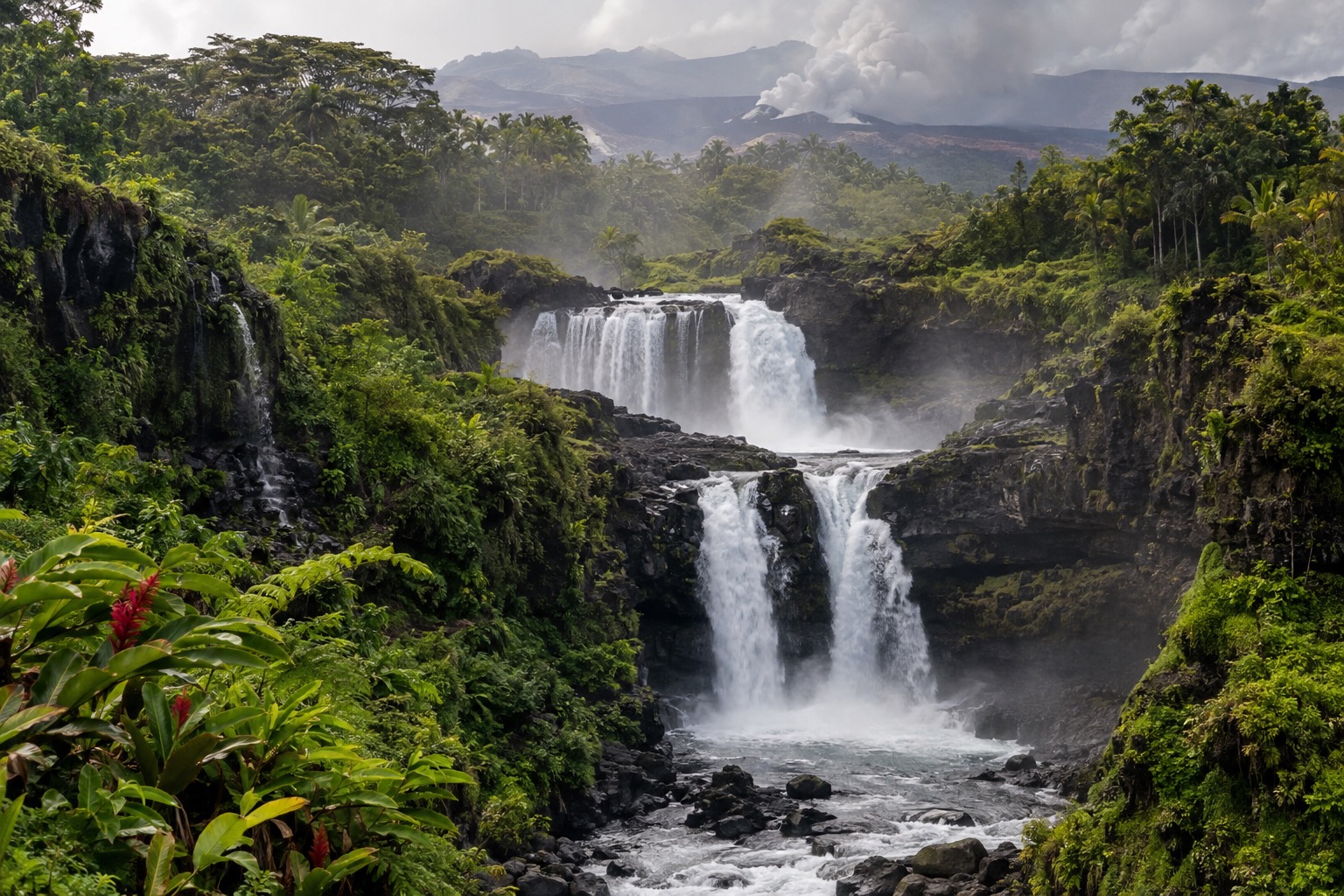
February in Hilo is a month for waterfalls at full volume, tropical gardens and a town that moves at its own speed. The rain that makes the island green is also what makes the cascades thunder, so this is a good time for them.
Winter is humpback whale season around the islands, and whales are sometimes spotted from the coast north of town or from a boat. The Merrie Monarch hula festival is usually held the week after Easter, so it is not part of February, but hula halau practice through the winter, and the cultural life of the town feels busy beneath the surface.
Waterfalls near town
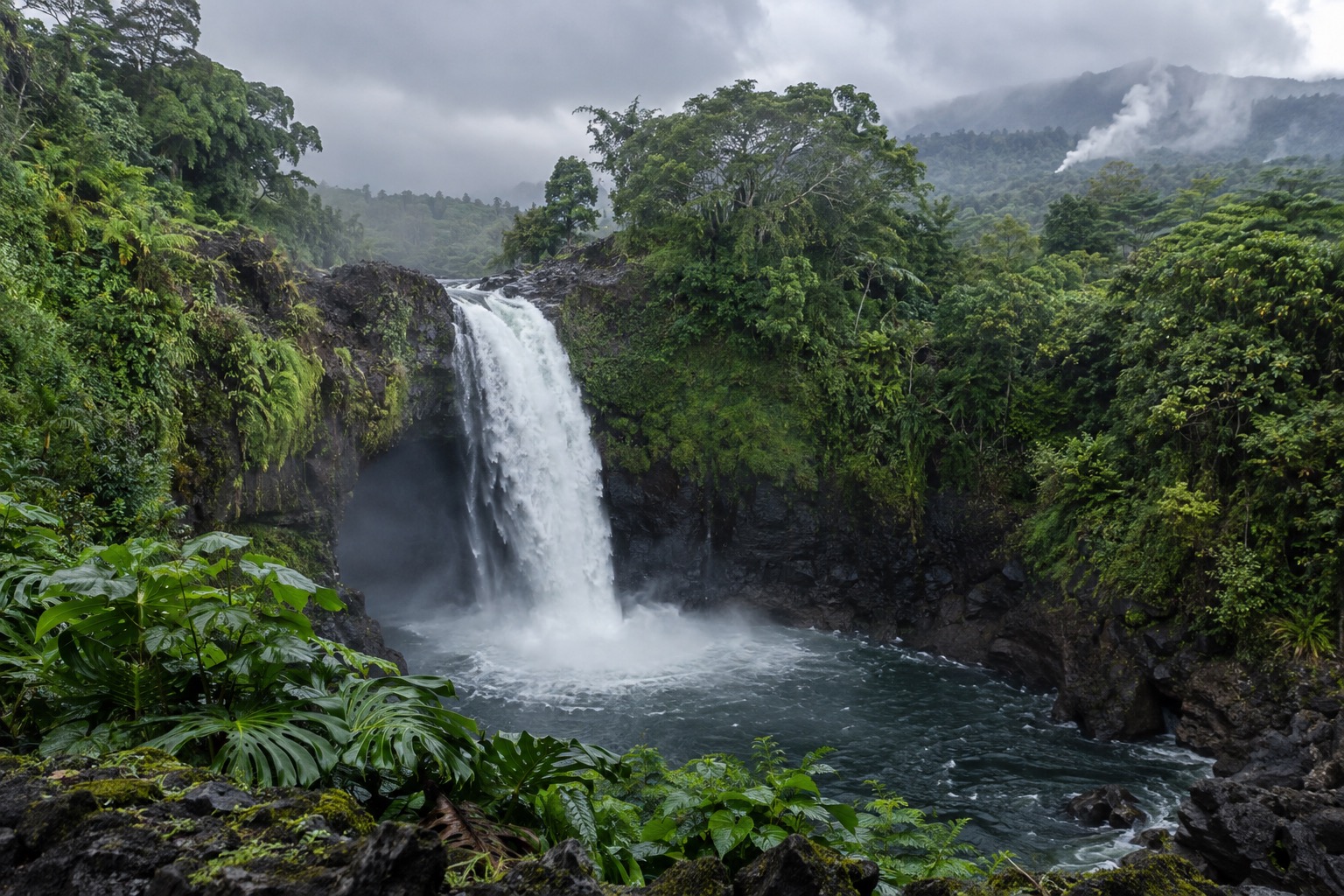
Rainbow Falls and Akaka Falls are the classics. Rainbow Falls is on the edge of town and drops into a pool beneath a lava cave, best in the morning when the sun can make a rainbow in the mist. Akaka Falls is a short drive up the Hamakua Coast and is reached by a paved loop through ferns, bamboo and wild orchids.
Both are short stops, so combine them with a garden or a coastal drive. Because rain leaves the paths slippery, put on footwear that has traction. Rain also tends to be lighter in the morning, which makes the earlier hours the better time.
Downtown Hilo and the farmers market
Old wooden storefronts, bookshops, galleries and small cafés line a walkable downtown grid that faces Hilo Bay. The Saturday and Wednesday farmers market is the heart of it, with tropical fruit, flowers, baked goods, plate lunches and local crafts. Try poke, a slice of fresh papaya, or a bag of apple bananas.
Showers are easy to wait out under market awnings or in a café. Locals treat the market as a place to see neighbors, so linger. Pua Pua and mochi, saimin and malasadas are all typical local bites around town.
Gardens, lava and the volcano
Lili’uokalani Gardens and the Banyan Drive area along the bay are good for an easy walk with views toward Mauna Kea. Further out, the botanical gardens along the Onomea coast are lush in the rainy season. The Pana’ewa Rainforest Zoo suits families with small children.
For a memorable day trip from Hilo, head to Hawaii Volcanoes National Park. At the crater rim the air is cool and often rainy, so bring layers. The park is a world apart from the warm coast, with steam vents, lava tubes and wide views across the caldera.
A two-day itinerary for Hilo in February
Day 1 stays in and around town. Start early at Rainbow Falls, when the light and the rainbow chances are best, then drive up the coast to Akaka Falls and stop at a bakery or roadside stand on the way back. Return to Hilo for a late lunch downtown at a plate-lunch counter or a café.
In the afternoon walk the Bayfront and Lili’uokalani Gardens, and browse the shops and galleries on Kamehameha Avenue. Sunset is a little after six, so plan an early dinner at a local restaurant. If rain sets in, switch to a museum, a bookstore or a long coffee stop.
Day 2 heads for the volcano. Leave in the morning for Hawaii Volcanoes National Park and walk along the crater rim with a rain jacket and a warm layer. Have lunch in the village near the park, then spend the afternoon at a lava tube or an overlook.
Come back to Hilo as the light fades and finish with a relaxed dinner and a warm shower. Back in town, a stroll through the evening quiet is enough. If the weather is grim, trade some outdoor stops for the visitor center exhibits.
Is Hilo busy in February?
Hilo is generally quiet in February, since most visitors to the island head for the sunny resorts on the Kona side.
The winter holiday rush has passed, and Presidents’ Day weekend can bring a small bump of mainland visitors. Downtown restaurants and small inns rarely feel crowded, and rental cars are usually easier to find than during the peak weeks around the holidays. Waterfall parking lots and the national park fill most around midmorning.
Book rooms and a car a few weeks ahead for the holiday weekend, and a little less in advance for ordinary weeks. Small bed-and-breakfasts and vacation rentals in the rainforest can fill for weekends, so reserve those earlier. Popular tables downtown are easier to get on weeknights.
If you plan to visit sites that need a reservation, such as a timed entry somewhere on another island, arrange it before you travel. On the Big Island around Hilo, most outings are flexible and can be planned a day at a time, depending on the weather.
What to pack for Hilo in February
Pack for warm showers and cooler volcano air, and keep everything light and quick to dry.
- A light rain jacket, because showers come and go all day
- Shoes with good grip for wet waterfall paths and lava rock
- A warm layer for the national park, where the crater rim is cool and often rainy
- Water shoes for rocky shorelines and tide pools
- For the sunny breaks in the clouds, bring mineral sunscreen and a hat
- A dry bag or plastic pouch to protect phones and cameras
Good to know before you go
February falls outside the official hurricane season, which runs from June 1 to November 30. Roads along the Hamakua Coast and to the volcano can be slick in heavy rain, so allow extra time. A rental car is the easiest way to reach the waterfalls, gardens and the park. Lodging taxes add to the nightly rate.
| Fee | Amount | Who pays |
|---|---|---|
| State Transient Accommodations Tax | 11.00% | Guests, on lodging |
| County of Hawaii Transient Accommodations Tax | 3% | Guests, on lodging in the county |
Hilo in February vs January and March
January is almost identical in temperature and a bit drier, with a slightly warmer sea. It is also closer to the winter holidays, so the island can feel busier and rooms tighter early in the month. Humpback whales are around in both months, so you lose little by shifting earlier.
March brings noticeably more rain, with many more wet days, and a slightly cooler sea. The Merrie Monarch festival draws crowds to Hilo in the week after Easter, which can fall in March or April, and rooms for that week fill early. Spring break also brings more families to the island.
Choose February if you want green scenery and strong waterfalls without the holiday crowds. Pick January for a slightly drier stretch, or if you want to combine the trip with the holiday season. Stay away from March if you want the driest days, unless the festival is the reason you are coming.
Is February a good time to visit Hilo?
Yes, February is a good fit for travelers drawn to lush scenery, falling water and a gentler rhythm, and who won’t be bothered by a little rain now and then.
It is a good month for gardens, farmers markets, volcano days and quiet evenings in a small town. It is a poor choice for anyone set on dry beach days, who would be happier on the Kona side. Families with flexible plans do well here, as do couples looking for a calm base.
On arrival, start with the farmers market and a walk along the Bayfront to get the feel of the town, then plan your waterfall and volcano days around the morning forecast. Keep the rain jacket in the car. In February, Hilo is a place of wet leaves, bright orchids and rainbows over the bay.
Sources
- NOAA NCEI, monthly normals 1991-2020, station USW00021504, checked September 8, 2026
- Open-Meteo Marine API, average 2015-2024, checked September 8, 2026
- sunrise-sunset.org, sunrise and sunset calculated for the 15th of the month, checked September 8, 2026
- Hawaii Department of Taxation, Tax Announcement No. 2025-03 (Transient Accommodations Tax Law Changes from 2025 Legislative Session), files.hawaii.gov/tax/news/announce/ann25-03.pdf, checked September 24, 2026
- County of Hawaii, Department of Finance, Transient Accommodations Tax (TAT) page, hawaiicounty.gov/departments/finance/transient-accommodations-tax-tat (live returned HTTP 403 on request, read via Internet Archive Wayback Machine snapshot dated August 14, 2026, same official content), checked September 25, 2026
- Hawaii Department of Taxation, County Surcharge on General Excise and Use Tax page, tax.hawaii.gov/geninfo/countysurcharge/, checked September 25, 2026
- NOAA NCEI, monthly normals 1991-2020, station USW00021510
- NOAA NCEI, monthly normals 1991-2020, station USC00511303
- NWS Honolulu / Central Pacific Hurricane Center, « 2026 Central Pacific Hurricane Season Outlook », weather.gov/hfo/hurricaneOutlook2026, checked September 24, 2026
To plan your stay
- Things to Do in Hilo: Waterfalls, Farmers Market, Volcano Day Trips and Local Food
- Best Time to Visit Hilo: Weather by Month, Crowds, Swimming and Festivals
- Hilo in January: Weather, Sea Conditions, Rainforest Outings and a Two-Day Plan
- Hilo in March: Rain, Waterfalls, Merrie Monarch Season and What to Do