
On a February morning in Kona, the light comes up soft over Hualalai while fishing boats idle out of the harbor and the smell of coffee drifts along Alii Drive. Humpback whales blow offshore, sometimes close enough to watch from a seawall bench. The west side of the Big Island is dry, sunny and easy in this month, a good choice for travelers who want warm water, slow mornings and a season of whales.
What is the weather like in Kona in February?
February in Kona is warm, dry and bright, with sunny days that suit the beach and cool nights that need nothing more than a light layer.
| Month | Average high (°F) | Average low (°F) | Rain days | Sea (°F) |
|---|---|---|---|---|
| January | 81.4 | 68.6 | 1.8 | 78.1 |
| February | 81.5 | 68.4 | 1.5 | 77.9 |
| March | 82.2 | 69.7 | 1.9 | 77.6 |
Mornings start mild and clear, ideal for a walk on the waterfront or a coffee on a lanai. By midday the sun is strong and the shade of a palm or a café awning becomes welcome. Afternoons stay comfortable enough for the beach, and clouds sometimes build over the slopes of the volcano while the coast stays sunny.
Rain is rare on this side of the island. The airport sits on the dry leeward coast, and a shower, when it comes, is usually brief and passes before you finish your lunch. The wet side is Hilo, across the island, where February days are gray and drizzly far more often. If the sky turns on the coast, the green slopes above town are where clouds gather.
Evenings are soft enough for dinner outside in a T-shirt, though a light sweater feels good by the water after dark. With just over eleven hours of light, the sun goes down early in the evening, and the sky above the water frequently glows orange. The sea itself is warm and inviting, only slightly cooler than in the heart of summer.
Can you swim in Kona in February?
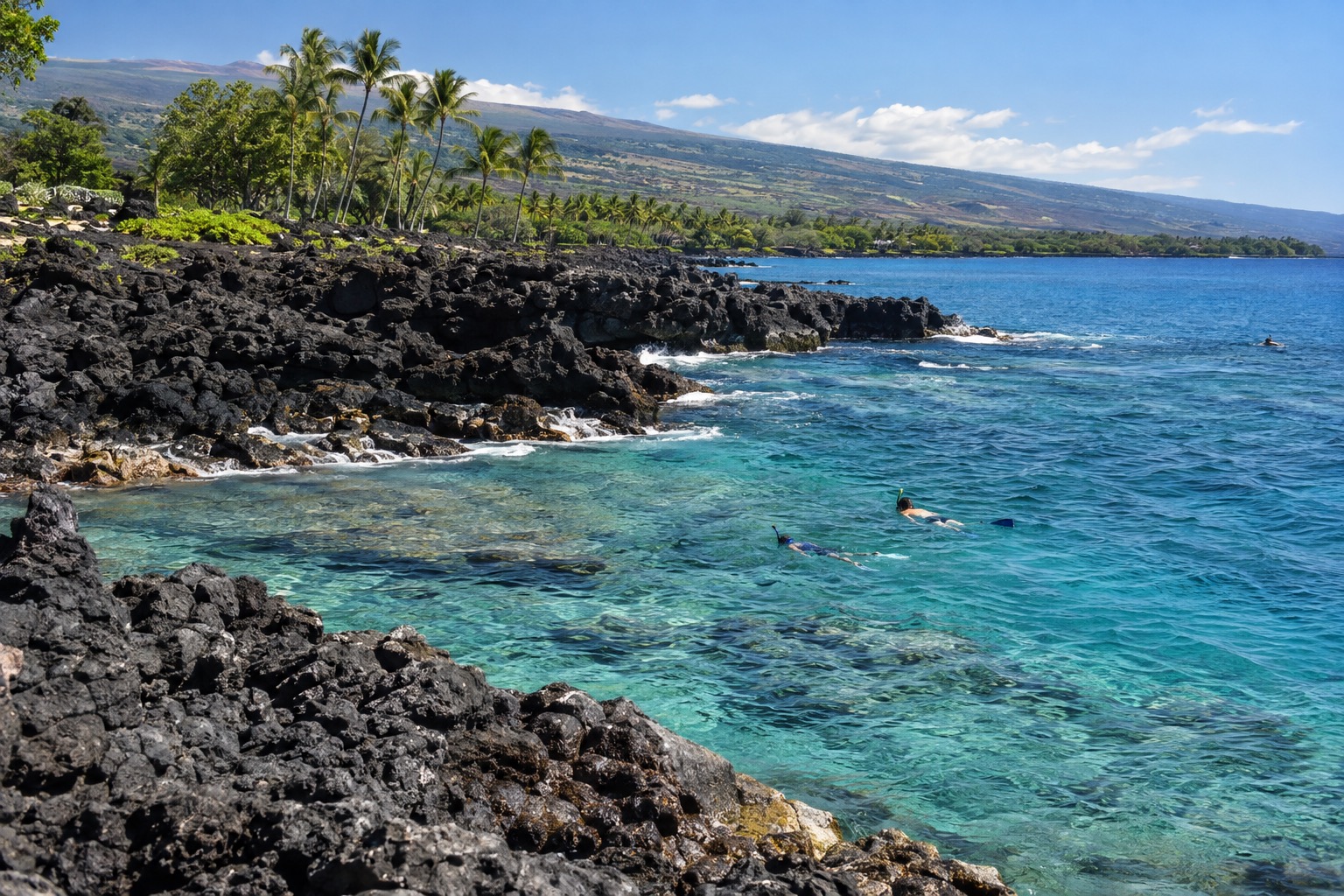
Yes, the water is warm enough for a long swim and for snorkeling without a wetsuit, since the sea stays in the high 70s.
The Kona coast faces west and is sheltered from the winter swells that pound the north shores of the islands, so the water is often calmer here than elsewhere in Hawaii in winter. Bays such as Kahaluu, Magic Sands and the small coves south of town are popular for a swim or a snorkel among reef fish. Surf can still rise on some days, especially on beaches that open to the open ocean, and a beach that was calm yesterday can be rough today.
Families usually do best at the shallow, protected corners of the bigger bays, and nervous swimmers are happier staying near a lifeguard tower. Since the swell alters the way currents and shorebreak act, be sure to check the signs and flags posted on the sand and do what the lifeguards tell you. Bring a snorkel mask, a rash guard for sun, and mineral sunscreen. Keep a respectful distance from turtles resting on the sand and never touch the reef.
What to do in Kona in February
The big story of the month is the humpback whales. They spend the winter in Hawaiian waters, and from the shore or from a boat you may see spouts, tail slaps and sometimes a full breach. Mornings on the water tend to be the calmest, and many tours leave from Kailua-Kona harbor or Keauhou. Sightings are a chance, never a promise, but February is a favorite month to look.
The mood in town is relaxed. Alii Drive fills with strollers at sunset, shave ice stands do steady business and the old pier by the seawall is a place to watch outrigger canoe paddlers glide in. Restaurants serve fresh ahi, mahimahi and poke, and Kona coffee is the drink of the month, sipped on a farm veranda or in a roadside café.
Whale watching by boat or from shore
Boats leave from the harbor at Kailua-Kona and from Keauhou, and the outing usually takes a few hours. Calm morning water makes it easier to spot blows in the distance. Some trips add snorkeling or a sail along the coast, and you can hear the whales sing through hydrophones on certain boats.
If you prefer to stay dry, the lava rock lookouts along the coast road and the seawall in town are good places to scan the horizon. Bring binoculars, watch for a puff of mist, and give it a patient ten minutes. Hotel lanais with a sea view are also a quiet way to spot whales over breakfast.
Kona coffee country
A short drive up the slopes brings you into the coffee belt, where small farms sit among banana trees and green hills. Lots of them welcome you for tastings and a stroll among the trees, and you find out how the cherries get picked, dried and roasted. The air is cooler and often cloudier up here, so the contrast with the coast is a pleasure.
Go in the morning, when the sun is gentle and the drive is easy. A farm visit suits anyone, including children, and it pairs well with lunch in a village on the way back down. Bring a bag for the beans you will want to take home.
History at Kailua-Kona and Kealakekua Bay
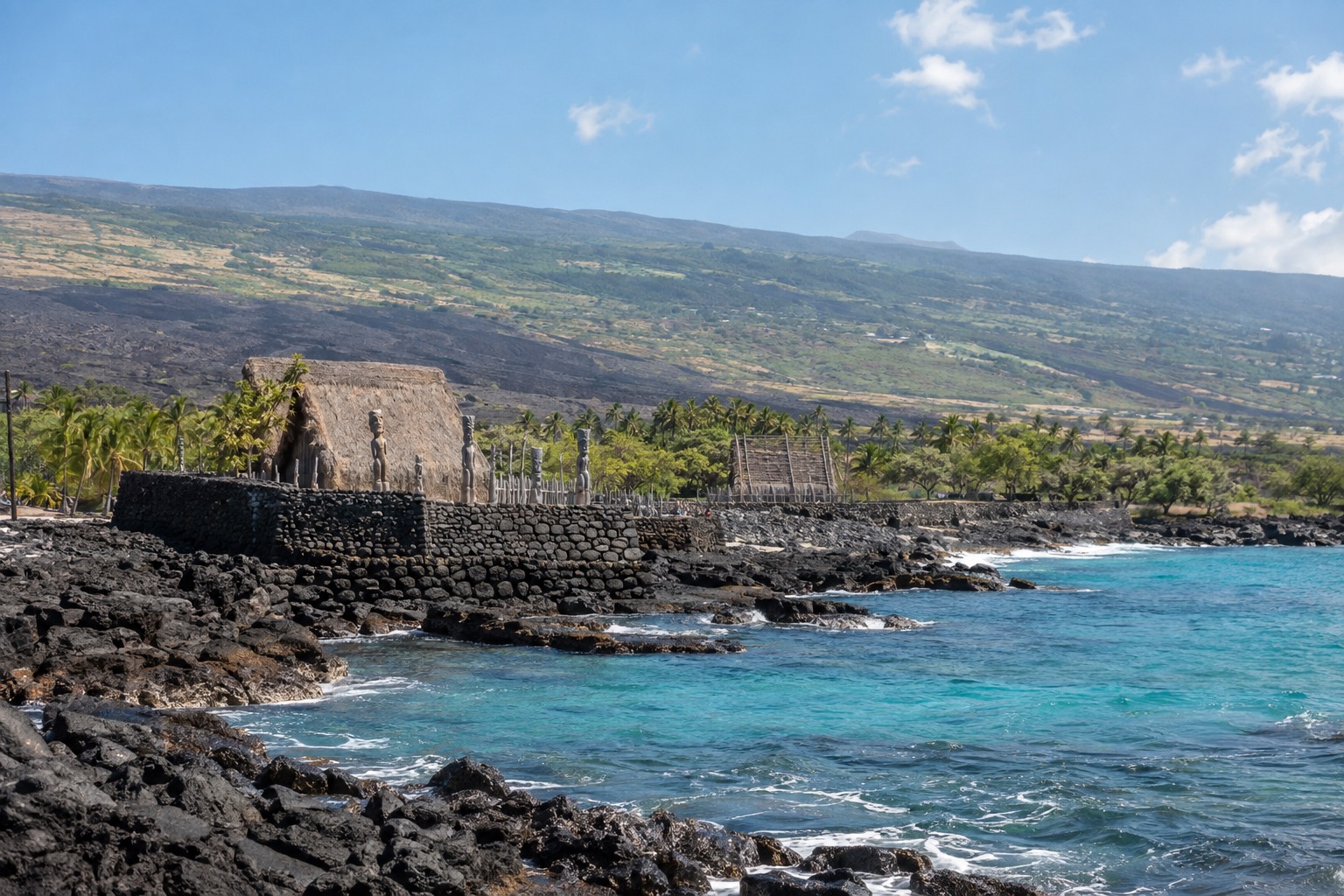
In town, Hulihee Palace and the stone church of Mokuaikaua recall the days of Hawaiian royalty and the first missionaries. A stroll takes in both along Alii Drive, with the sea at your side. Keep to the paths and treat old stone walls and temple platforms with respect, since they are sacred to many Native Hawaiians.
South of town, Kealakekua Bay is known for its clear water, spinner dolphins and the white monument on its far shore. Most visitors see it from a boat or kayak tour, and it is best early in the day. The bay is a marine reserve, so keep your distance from wildlife and leave the reef untouched.
For a stargazing evening, the high mountain slopes offer clear night skies, though it is cold up there and you should dress for it. Back at sea level, a night snorkel or a manta ray outing is a popular way to end the day, and the water is warm enough to enjoy it.
A two-day itinerary for Kona in February
Day 1. Start early on the water with a whale watching cruise from the harbor, when the sea is often at its calmest. Return around midday for fish tacos or poke at a casual spot near the pier, then take a lazy afternoon at a bay for swimming and snorkeling. Sun is strong at this hour, so rest in the shade between swims.
As the light softens, walk Alii Drive past Hulihee Palace and the stone church, and pick up a shave ice. Sunset comes in the early evening, so settle on a seawall or restaurant terrace facing west. Dinner can be fresh fish in a harbor-side restaurant, followed by a stroll under the string lights.
Day 2. Drive up into coffee country for a morning tasting and a farm walk, while the air is cool and the hills are green. Stop in a village for lunch, with a plate lunch or a bakery treat, and browse the small galleries. Then head south toward Kealakekua Bay for an afternoon paddle or a lookout over the water.
If clouds roll in, the rain card is simple: stay inside with a coffee farm tasting, a museum stop or a long lunch, then return to the coast where the sun usually breaks through. Finish with a quiet dinner and a night walk by the water.
Is Kona busy in February?
Kona is moderately busy in February, with winter visitors and whale watchers filling the better hotels, but it does not have the crush of the summer weeks or the biggest holiday periods.
Visitors come from the mainland to escape the cold, and the weeks around Presidents Day tend to be the fullest as school breaks line up. Whale tours, popular restaurants and sunset tables fill first, while the beaches themselves rarely feel crowded. Rental cars and rooms are easier to find in the quieter weeks of the month than in the holiday stretch.
The habit that works is to book early for the long weekend and the holiday week, and a little later for the rest of the month. Tours with limited seats, such as boat trips to Kealakekua or manta outings, are worth reserving ahead whatever the week. Hotels charge the usual taxes on top of the rate, so factor that into the budget.
What to pack for Kona in February
Pack for sun and sea by day and a light layer at night, with one warm piece for the mountains.
- Swimsuits and a rash guard, for the warm sea and strong sun.
- Pack mineral sunscreen and a hat, because the sun shines bright even during winter.
- A snorkel mask, to use at the bays without renting.
- A light sweater or jacket, for evenings by the water.
- A warm layer, for the cold summit slopes and coffee country.
- Sturdy sandals or shoes, for lava rock paths.
Good to know before you go
February falls outside the official hurricane season, which runs from June 1 to November 30. A rental car makes the coast and the coffee belt much easier to explore, and restaurants and tours are best reserved ahead for the holiday weeks. Lodging bills include these taxes.
| Fee | Amount | Who pays |
|---|---|---|
| State Transient Accommodations Tax | 11.00% | Guests on lodging |
| County of Hawaii accommodations tax | 3% | Guests on lodging |
Kona in February vs January and March
Moving a month earlier changes little in the weather. January is just as dry and warm, with the sea a touch warmer, and the whale season is in full swing. It is also closer to the winter holidays, so rooms and flights can be busier at the start of the month.
A month later, March is slightly warmer and the sea is a shade cooler, with the whales still around early in the month before they begin to head away. The spring break crowds start to arrive, which can mean fuller beaches and tighter bookings.
Choose February if you want whales, sun and a calmer pace. Shift earlier if you want the peak of winter atmosphere, and later if you prefer a touch more warmth and do not mind sharing the coast with spring breakers.
Is February a good time to visit Kona?
Yes, February is a very good time to visit Kona, especially for travelers who want sunshine, warm water and whales without the summer rush.
It will suit couples, families and anyone who likes a slow rhythm of swims, coffee and sunsets. Surfers chasing big winter waves will find better breaks on the north shores of other islands, and travelers who want cool mountain air will need to drive uphill. If you like warm nights and a quiet coast, Kona is the place.
On arrival, book a whale cruise first, then settle into a bay for your first swim. What makes February here special is the sound and sight of humpbacks off a sunny, dry coast, with the smell of fresh coffee in the air.
Sources
- NOAA NCEI, monthly normals 1991-2020, station USW00021510, checked September 8, 2026
- Open-Meteo Marine API, average 2015-2024, checked September 8, 2026
- sunrise-sunset.org, sunrise and sunset calculated for the 15th of the month, checked September 8, 2026
- Hawaii Department of Taxation, Tax Announcement No. 2025-03 (Transient Accommodations Tax Law Changes from 2025 Legislative Session), files.hawaii.gov/tax/news/announce/ann25-03.pdf, checked September 24, 2026
- County of Hawaii, Department of Finance, Transient Accommodations Tax (TAT) page, hawaiicounty.gov/departments/finance/transient-accommodations-tax-tat (live returned HTTP 403 on request, read via Internet Archive Wayback Machine snapshot dated August 14, 2026, same official content), checked September 25, 2026
- Hawaii Department of Taxation, County Surcharge on General Excise and Use Tax page, tax.hawaii.gov/geninfo/countysurcharge/, checked September 25, 2026
- NOAA NCEI, monthly normals 1991-2020, station USW00021504
- NOAA NCEI, monthly normals 1991-2020, station USC00511303
- NWS Honolulu / Central Pacific Hurricane Center, « 2026 Central Pacific Hurricane Season Outlook », weather.gov/hfo/hurricaneOutlook2026, checked September 24, 2026