
In January, Hilo wakes to the smell of wet earth and ginger, and the gray-green bay is often ringed with low clouds that lift by mid-morning. Rain taps on the tin roofs, a rainbow slides over Coconut Island, and the farmers market stalls fill with papaya, apple bananas and orchids. This is Hilo in the cooler half of the year: a soft, green, unhurried town on the windward side of the Big Island, good for waterfalls, gardens and slow days.
What is the weather like in Hilo in January?
Hilo in January is warm, humid and showery, with comfortable afternoons, mild nights and rain that comes and goes rather than settling in for days.
| Month | Average high (°F) | Average low (°F) | Rain days | Sea (°F) |
|---|---|---|---|---|
| December | 78.8 | 65.7 | 16.2 | 78.4 |
| January | 78.7 | 64.1 | 9.6 | 77.4 |
| February | 78.4 | 64.1 | 10.9 | 76.3 |
Hilo sits on the wet windward coast, so showers are part of the day here. They often arrive overnight and in the early morning, then give way to bright, steamy stretches in the late morning and afternoon.
A few days bring a heavier, steadier downpour, but most are a mix of cloud, sun and passing rain. The town is the wettest on the island, while the Kona side to the west stays far drier and sunnier.
Mornings are fresh enough for a light layer, afternoons are warm in a way that never turns harsh, and evenings cool off just enough that you will want a thin sweater on the porch. The light is soft and golden early, and daylight lasts a little over eleven hours, so dinner is usually after dark. Plan outdoor things in the morning when skies are often clearest, and keep a rain shell in your daypack.
Up at Hawaii Volcanoes National Park the air is much cooler and damp at the crater rim, closer to a chilly fall day than a beach morning. If you drive up from Hilo, bring a real jacket, even when the town below is sticky.
Can you swim in Hilo in January?
Yes, the sea is warm enough for a comfortable swim, though the water off Hilo is often cloudy and the winter swell can make some spots rough.
Hilo is a town of rocky shores and river mouths more than long sandy beaches. Winter swells can reach the east side, and after heavy rain the runoff clouds the water near the bay and streams.
Many visitors choose sheltered pocket spots and county beach parks east of town, where lava rock forms protected pools. Conditions change by the day, so look at the beach signs, follow the flags and ask the lifeguard before you get in.
Snorkelers do best in calmer, clearer water, and that may mean choosing another day or driving to a different shore. Families with small children and nervous swimmers often prefer a calm tide pool or a hotel pool over open water.
Bring water shoes for the lava rock, a rash guard for sun between showers, and a towel you do not mind getting muddy. Keep off the reef and give turtles and other wildlife plenty of room.
What to do in Hilo in January
January is a month for green things: waterfalls running full after the winter rains, gardens in bloom and a market where the stalls are loaded. The cool, wet half of the year suits the rainforest side of the island, and the crowds that fill the resort coasts tend to skip Hilo.
The Hilo Farmers Market is the town’s social center, busiest on Wednesday and Saturday mornings. You walk between stalls of tropical fruit, anthurium and orchids, loaves of banana bread, local honey and plate lunches. Pick up lilikoi, apple bananas and fresh poke, and eat them on a bench across the street by the bay. Rain showers are a good excuse to duck under the awnings.
Waterfalls and the rainforest
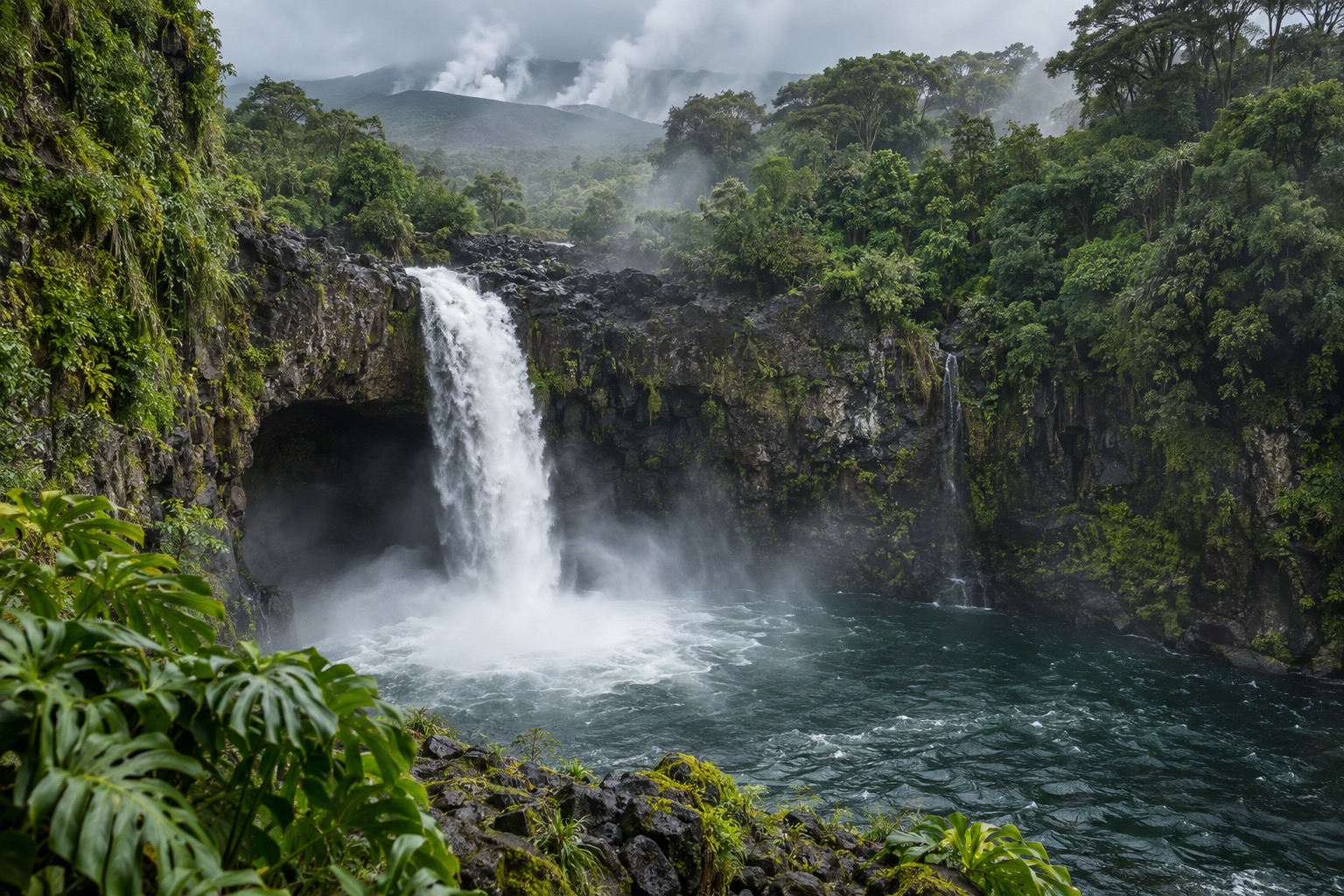
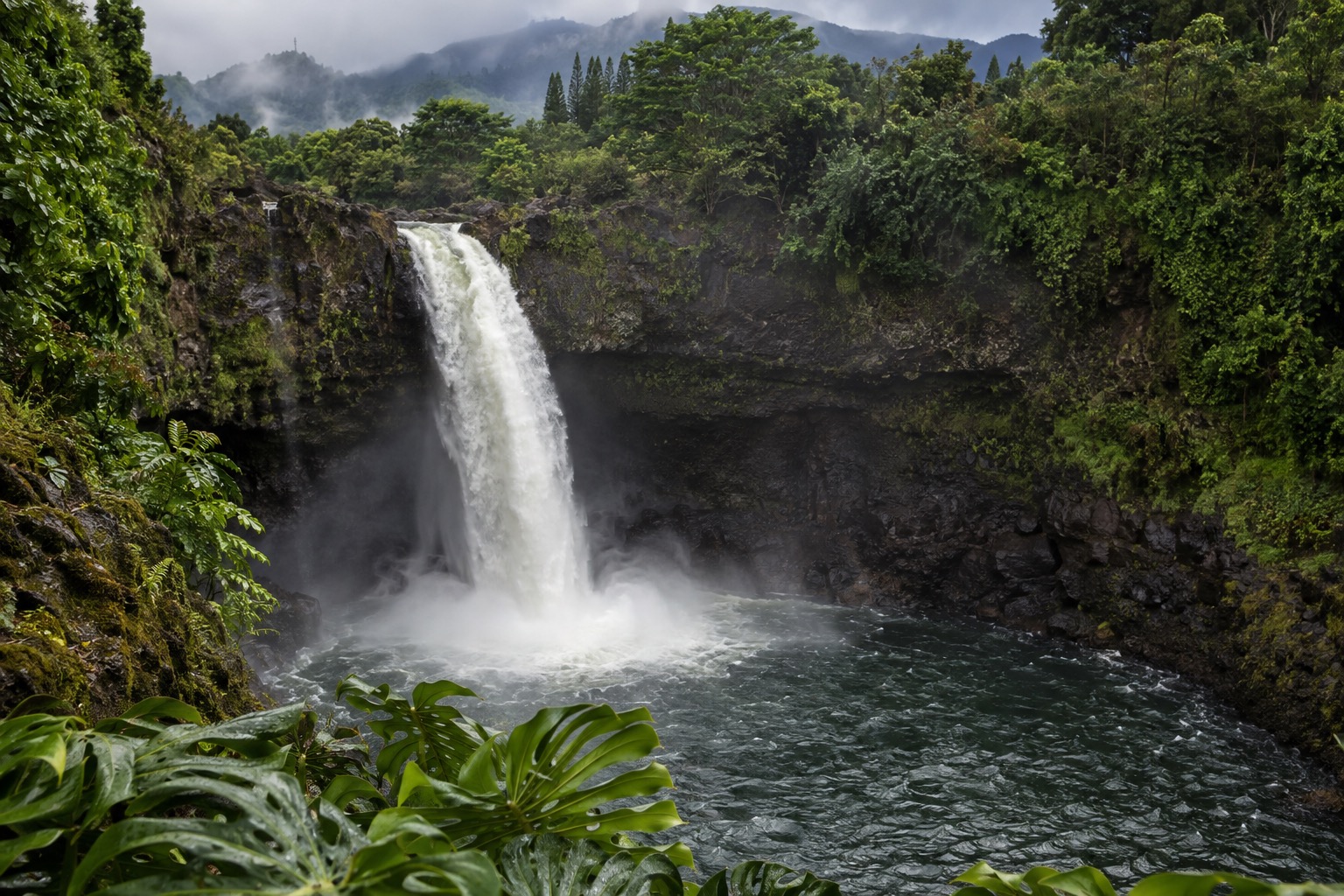
Rainbow Falls and Akaka Falls are the classic stops, and winter rain gives them real force. Rainbow Falls sits right at the edge of town, a short drive from downtown, and is best in the morning when the sun may throw a rainbow into the mist. Akaka Falls lies north along the Hamakua coast, with a loop path through dense ferns, bamboo and wild orchids to a tall plunge of water.
Wear shoes with grip, because paths are slick and muddy. Go early when the clouds are often thinner, and keep to the marked paths and railings. These are easy outings for most ages, and they fit neatly into a rainy-season day because a shower only adds to the scene.
Gardens, the bay and downtown
Downtown Hilo is a walkable grid of old wooden storefronts, bookshops, bakeries, galleries and small cafés, with a calm bay front lined with banyan trees. Wander the shops, stop for malasadas or shave ice, and watch the weather move over the bay. Liliuokalani Gardens and Coconut Island are a gentle stroll, with Japanese-style bridges, lawns and sea views.
The Lyman Museum and the Pacific Tsunami Museum offer indoor choices when the rain sets in. The tsunami museum tells the story of the waves that struck the town, in the words of survivors, and it gives the waterfront a different meaning.
Volcanoes and the whale season
Hawaii Volcanoes National Park is the big day trip from Hilo. You drive up through ohia forest to the crater rim, walk past steam vents and lava fields, and visit the visitor center for current conditions. It is cool and damp at the rim, so dress in layers and bring a rain jacket. If the park has an evening glow, you may see it after dark, but that is a chance, never a promise.
Winter is also humpback whale season in Hawaiian waters. From a headland or a boat you may spot spouts and breaching, though the best whale-watching on the island is usually off the drier Kona and Kohala coasts. Take binoculars and patience.
For food, think plate lunches, loco moco, fresh fish, manju, and strong Big Island coffee from small roasters. Many family-run places close early, so eat lunch at a normal hour and keep dinner simple.
A two-day itinerary for Hilo in January
Day 1. Start with the Hilo Farmers Market in the morning, when the stalls are full and the sky is often at its clearest. Grab a coffee and a pastry, then drive the short hop to Rainbow Falls while the light is soft. Spend late morning in downtown Hilo, browsing bookshops and galleries, then have a plate lunch at a casual local spot.
In the afternoon, stroll Liliuokalani Gardens and Coconut Island, where the bay turns silver under moving clouds. If rain arrives, move to the Pacific Tsunami Museum or the Lyman Museum. Dinner can be fresh fish or Japanese-style noodles in town, and the sun sets early, so plan to be back at your lodging before the roads are fully dark.
Day 2. Head north along the Hamakua coast early for Akaka Falls and its ferny loop, then continue along the coastal road, stopping at lookouts over the sea cliffs and small bakeries in plantation towns. Return for a late lunch in Hilo.
Spend the afternoon at a county beach park east of town if the surf and the signs allow, or visit a local garden or orchid nursery. In the evening, pick up poke and a cold drink and eat somewhere with a view. If the weather is wet all day, shift to a long coffee stop, a bookshop crawl and an early dinner.
Is Hilo busy in January?
Hilo is generally quiet in January, especially compared with the resort coasts on the Kona side.
The first days of the month still carry some holiday travel, and the week around the long holiday weekends is busier at the market and the falls. After that, the pace relaxes.
Most visitors stay on the sunny west side, so Hilo’s guesthouses, small inns and restaurants usually have more space, and rental cars are easier to find than in peak weeks. The exception is when a local event or a university gathering fills rooms for a weekend.
A good habit is to book early for the holiday weeks and a bit later for the quiet stretch of the month. Dinner tables rarely need much notice, although small places with limited seating fill on weekends.
Hawaii Volcanoes National Park gets crowds at the main overlooks around midday, so earlier or later visits feel calmer. Check the park and state parks notice pages for current access before you plan a trail or a timed visit.
What to pack for Hilo in January
Pack for warm, damp days and a cool, wet trip up the mountain.
- A light rain jacket, because showers pass through often.
- Shoes with good grip for muddy waterfall paths.
- A warm layer for the crater rim at the national park.
- Quick-dry clothes that handle humidity.
- Water shoes for lava rock shorelines.
- Mineral sunscreen and a hat for the bright stretches between clouds.
Good to know before you go
January falls outside the official hurricane season, which runs from June 1 to November 30. A car makes the waterfalls, the Hamakua coast and the volcano easy to combine, and the Hilo side is wet, so plan outdoor stops for the morning. Lodging taxes add to the bill, so look at the final total when comparing rooms.
| Fee | Amount | Who pays |
|---|---|---|
| State Transient Accommodations Tax | 11.00% | Guests on lodging stays |
| County of Hawaii Transient Accommodations Tax | 3% | Guests on lodging stays |
Hilo in January vs December and February
Moving earlier to December means a wetter month on the windward side, with many more rainy days, and a sea a touch warmer. The holiday crowds are larger, rooms are tighter and the town has a festive feel, with lights and seasonal events. Anyone who wants a livelier mood does better in December.
February is a little cooler in the sea and has more rain days than January, but the weather is still mild. Humpback whales are still around, and the town is calm. The air feels much the same, and the main difference is a slightly greater chance of gray days.
Choose January if you want the best balance of fewer showers, a quiet town and full waterfalls. Choose December for festive atmosphere, and February if your dates are fixed and you want a similar, easygoing trip.
Is January a good time to visit Hilo?
Yes, for travelers who like green landscapes, waterfalls and a quiet town more than a beach-day routine.
Gardeners, hikers, photographers and food lovers will enjoy it most, along with anyone who wants the volcano and rainforest without resort crowds. Those who want guaranteed sun and calm, clear swimming water should look to the Kona side or another month. On arrival, start at the farmers market, then pick one morning for the volcano while the clouds are thin. What stays with you is the sound of water: rain on the roof at dawn, falls at full voice, and the bay lapping under a sky that keeps changing.
Sources
- NOAA NCEI, monthly normals 1991-2020, station USW00021504, checked September 8, 2026
- Open-Meteo Marine API, average 2015-2024, checked September 8, 2026
- sunrise-sunset.org, sunrise and sunset calculated for the 15th of the month, checked September 8, 2026
- Hawaii Department of Taxation, Tax Announcement No. 2025-03 (Transient Accommodations Tax Law Changes from 2025 Legislative Session), files.hawaii.gov/tax/news/announce/ann25-03.pdf, checked September 24, 2026
- County of Hawaii, Department of Finance, Transient Accommodations Tax (TAT) page, hawaiicounty.gov/departments/finance/transient-accommodations-tax-tat (live returned HTTP 403 on request, read via Internet Archive Wayback Machine snapshot dated August 14, 2026, same official content), checked September 25, 2026
- Hawaii Department of Taxation, County Surcharge on General Excise and Use Tax page, tax.hawaii.gov/geninfo/countysurcharge/, checked September 25, 2026
- NOAA NCEI, monthly normals 1991-2020, station USW00021510
- NOAA NCEI, monthly normals 1991-2020, station USC00511303
- NWS Honolulu / Central Pacific Hurricane Center, « 2026 Central Pacific Hurricane Season Outlook », weather.gov/hfo/hurricaneOutlook2026, checked September 24, 2026