
PORTO · THE CITY GUIDE · NORTH BANK OF THE DOURO
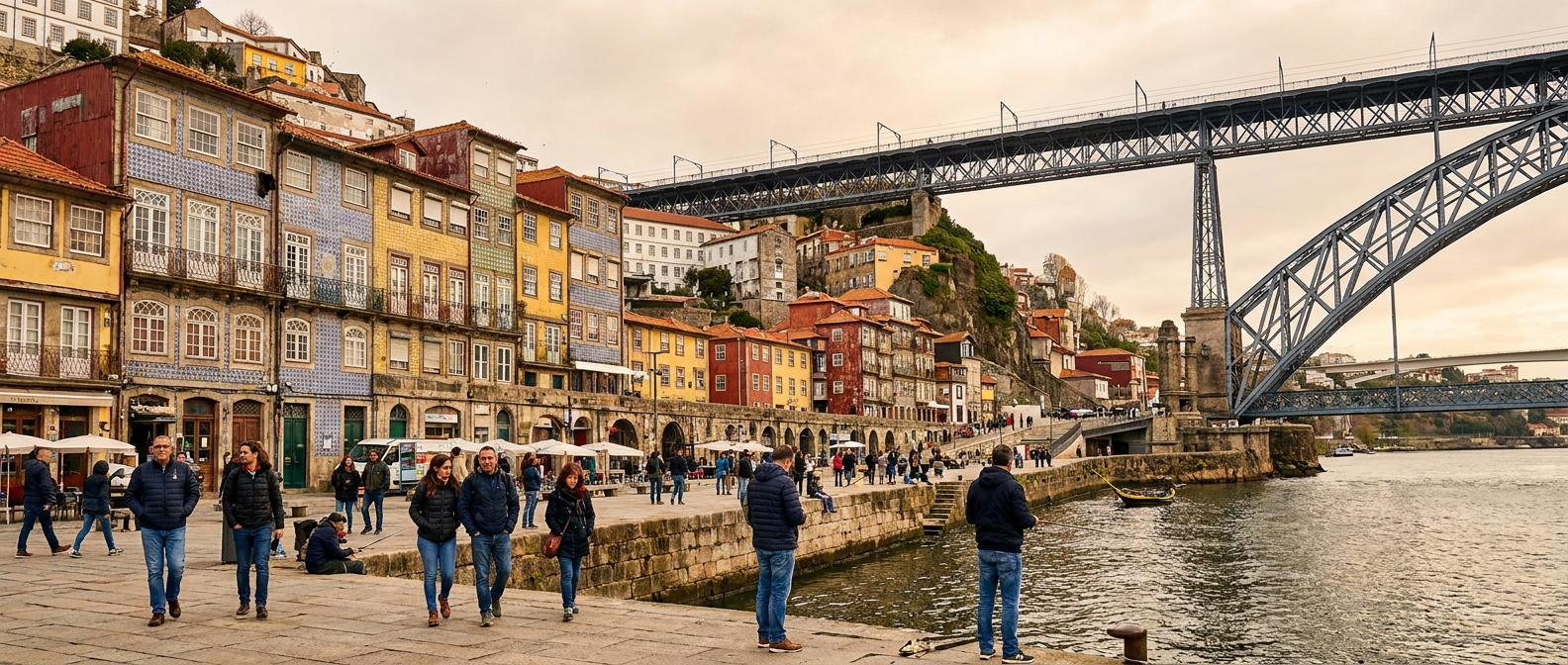
Porto is a granite city with a tiled face, stacked up the north bank of the Douro in tiers that were never designed for comfort. Streets end at parapets, alleys turn into staircases, and the river keeps reappearing three levels below where you last left it. The old center is small enough to cross in half an hour, provided the half hour goes uphill. What it gives back for the effort is surface: blue and white church walls, iron balconies, carved doorframes, wet stone that goes almost black in the rain.
First-timers learn one thing on the first afternoon. The port cellars are not in Porto. They sit in Vila Nova de Gaia, a separate city on the opposite bank, reached across the Dom Luís I bridge on either of its two decks. Porto keeps the shops, the market halls, the students and the shipping past. Gaia keeps the barrels and the view back across the water. Whether this city or the capital deserves your week is argued out in our Lisbon vs Porto comparison.
THE CITY AT A GLANCE · PORTO
Two full days cover the center plus one Gaia afternoon, and a third day is what turns a stopover into a visit (est.).
COMPACT AND STEEP · PORT LODGES ACROSS THE RIVER IN GAIA · 2 TO 3 NIGHTS (EST.)
Go for: both decks of the Dom Luís I, tiled façades on ordinary residential streets, cellar tastings one bridge away, and a food bill that generally lands below the capital’s (est.).
Think twice if: knees or heavy luggage dislike gradients. Between the waterfront and the upper town there is no flat route, only stairs, ramps and the occasional lift.
Orientation: Turismo de Portugal · transport: Metro do Porto and STCP · prices, hours and climate figures delegated to our linked guides · full sources at the end
On this page
- Why the buildings look the way they doGranite and azulejos
- How the city is laid out, river to hilltopPorto neighborhoods
- Which side of the river do I sleep on?How Ribeira, Baixa, Gaia and Foz differ
- Two days of sights, in a workable orderThings to do in Porto
- Vineyards, medieval towns, beachesDay trips from Porto
- Terraced wine country upstreamThe Douro Valley
- The region past the city limitsPorto and the North
- What the weather does in my monthPortugal month by month
Porto neighborhoods: the Ribeira, the bridge and Gaia
Everything here is decided by the drop between the water and the top of the rock. The Ribeira is the bottom: a quay of tall thin houses, restaurants at boat level, and fragments of the medieval wall behind them. A hard climb above sits the Baixa, the shopping and office town, with the Avenida dos Aliados running uphill to the city hall like a public square set on a ramp. The two are perhaps three minutes apart on a map and considerably more in the legs.
The Dom Luís I bridge settles the rest of the geography. Its lower deck carries road traffic and a pedestrian walkway between the Ribeira and Gaia’s quay. Its upper deck carries the metro and a second walkway, leaving from the Batalha side at the level of the upper town. Same bridge, two entirely different arrivals: one puts you among the moored boats, the other puts the whole city below you.
Across the water, Vila Nova de Gaia lines its quay with lodge signs and stacks its own hill behind them, and a cable car runs between the upper deck and the waterfront (check current hours and fares with the operator). Downstream the city runs out at Foz, where the Douro meets the Atlantic, while inland Boavista holds the modern grid. Which of these you sleep in reshapes every evening, and we weigh them up in where to stay in Porto.
What to see in Porto on a first visit
Sightseeing here is less about a queue of headline monuments than about moving through a small dense center on foot.
Much of the pleasure costs nothing: the crossings, the parapets, the tiled walls you meet on the way to somewhere else. Budget the ticketed hours for interiors instead, because Porto keeps its extravagance indoors, in gilded woodwork, painted ceilings and tiled halls that give no warning from the street.
Then there is the wine, which involves leaving town. A Gaia afternoon means walking the quay, choosing one or two lodges, and sitting through a cellar tour before the tasting. Reserve where you can, since slots fill in season, and treat two lodges as a full half-day rather than a warm-up.
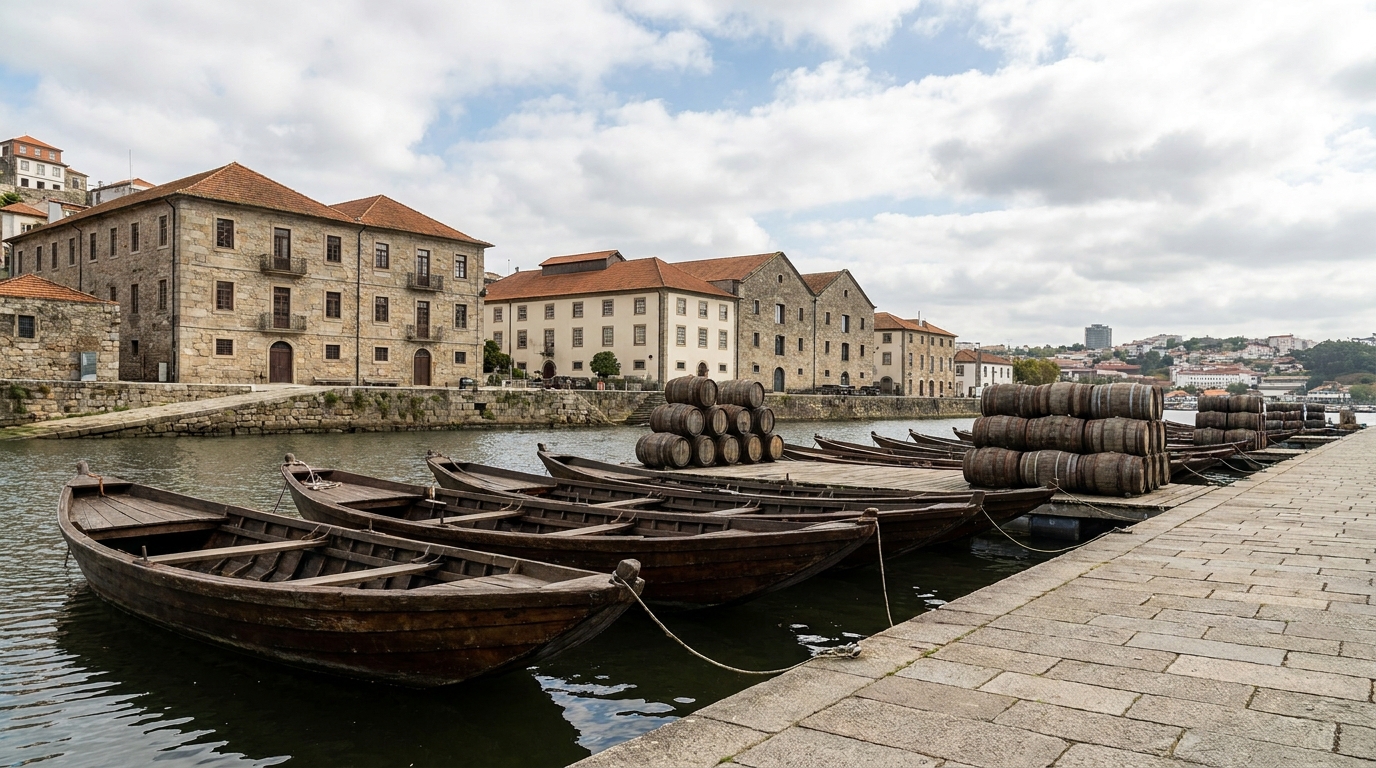
The river deserves an hour of its own. Flat-bottomed rabelo boats sit moored along the Gaia bank as advertising for the houses that own them, short cruises leave from both quays, and the riverside path west of the Ribeira eventually delivers you to the Atlantic at Foz. The full running order, with what merits a ticket and what you can skip without regret, sits in things to do in Porto.
Porto architecture: granite, azulejos and old shopfronts
Start with the stone, because the city is quarried out of it. Granite makes the churches, the quay walls, the kerbs and the window surrounds, and it turns from pale grey to near black within minutes of rain. Over it, from the nineteenth century onward, owners hung tile: whole façades of blue and white panels, or plainer patterned tiles chosen for the practical reason that they shrug off damp better than plaster.
Commerce is the second layer. This was a merchant town long before it was a weekend destination, and the trade left behind wood-and-mirror grocers, haberdashers, canned fish shops, coffee roasters and lunch counters serving one dish a day. British wine families set up along the river and their names still hang over Gaia. The result is a center that keeps working while being photographed.
Living on a slope shapes the small stuff. Deliveries go up by hand, buildings hide lifts that shortcut two streets, and residents take routes that look absurd on a map because they trade distance for gradient. Visitors learn the same trick by the second morning, usually after one wrong turn that ends in ninety steps.
Nights concentrate rather than spread. A short grid of streets behind the Aliados, the galleries quarter, absorbs most of the drinking, and the crowd spills onto the pavement rather than into the bars. A university keeps the age average down and the prices reasonable, which is part of why the city feels less curated after dark than the capital does.
Weather is the last ingredient, and it is Atlantic. Fronts arrive off the ocean, the granite shines, the river takes on fog, and a bright afternoon can follow a soaked morning without apology. Temperatures, rain days and the crowd curve carry sources and dates on our month-by-month guide, and October is the month most people ask us about first.
Day trips from Porto: the Douro Valley by train, boat or overnight
Porto’s belt looks nothing like the capital’s. Upstream, the Douro Valley puts terraced vineyards on schist slopes above the water, and the riverside rail line runs inland from the city: which station you aim for changes the length and the shape of the day. Inland to the north sit the granite towns, and the Atlantic beach line begins a short hop up the coast. The wider region, from the Minho to Trás-os-Montes, has its own guide in Porto and the North.
With three nights in town, take one trip and give it the whole day instead of two half-days that both feel clipped. Whether the valley is better as a train day, a boat day or an overnight is a real decision with real trade-offs, and we work through it, trip by trip, in day trips from Porto. If your visit lands at vintage time, the harvest guide explains what changes.
Getting around Porto: airport metro, trams and walking the hills
Arrival is easy. The metro runs from the airport terminal into the center, tickets load onto the local rechargeable card, and no car is needed for the city portion of a trip. Trains from Lisbon reach Campanhã on the eastern edge, with a short connection down to São Bento, the tiled downtown station where the local lines terminate. Services and ticket types across the country are set out in Getting Around Portugal.
In town you walk, and the walking is vertical. The historic tram cars are a scenic line for visitors rather than transport, pleasant and slow. The Guindais funicular, when it is operating, climbs from near the Ribeira up to Batalha rather than to the bridge deck, so check its status with the operator before you build a route around it. The most reliable free lift remains the upper deck of the bridge, which spares you the climb between the Gaia quay and the top of the city.
Know when to stop being noble about it. At the end of a hill day, with shopping bags or a suitcase, a short taxi or app ride is the standard fix, and fares run on the meter. Keep the rental car for the morning you leave, since central parking is scarce and the streets are narrow, awkward and often one-way uphill. Automatics, tolls and mountain roads are covered in Renting a Car in Portugal.
How many days do you need in Porto?
| Days | What realistically fits |
|---|---|
| 1 | Ribeira, one bridge crossing, a single cellar. A layover, not a visit. |
| 2 | The center on foot plus a full Gaia afternoon. The workable minimum (est.). |
| 3 | Add a market morning, an interior or two, dinner on the far bank |
| 4 | City at walking pace plus one day trip taken slowly |
| 5+ | Porto as a base, with the Douro and the northern towns in reach |
What to eat and drink in Porto: francesinha, tripas, vinho verde, port at the end
The francesinha is the local set piece: layered bread, cured and cooked meats, melted cheese over the top, a hot beer-and-tomato sauce poured around it
Often a fried egg and fries in the pool. it is a lunch that ends the day’s ambitions. then tripas à moda do porto, tripe stewed with white beans, which gave the city’s residents the nickname tripeiros, tripe eaters, in a story the locals will tell you involves giving the good meat to the ships.
Drinks follow a clear order. Vinho verde comes cold, low in alcohol and slightly prickly, and it is a lunch wine rather than a special occasion.
White port served long with tonic turns up before dinner in summer, and the aged stuff closes the meal in small glasses. market halls and counter lunches are where the value sits, and how all of it adds up against the rest of the country is priced, sourced and dated in our portugal trip cost guide.
The last word
Cross the bridge both ways on the same day, low deck out and high deck back. The lower walkway drops you among moored boats and quay noise. The upper one hands you the city as an elevation drawing: water, quay, six storeys of houses, church towers, and the whole thing in granite. Nothing on a ticket in Porto beats that fifteen minutes, and it costs the price of the shoes.
Then get practical. Choose your bank with the neighborhood guide, build the days from things to do, keep one clear morning for a trip out, and pick up the rental car only when the city is behind you and the north starts.
Sources & data for this guide
- Airport metro link, network map and ticketing card · Metro do Porto (official) · checked Sep 14, 2026
- Historic tram lines and funicular service status · STCP Porto (official) · checked Sep 14, 2026
- Rail from Lisbon to Campanhã and São Bento, and lines inland along the Douro · CP Comboios de Portugal · checked Sep 14, 2026
- City orientation, Ribeira and Vila Nova de Gaia · visitportugal.com (Turismo de Portugal) · checked Sep 14, 2026
- Editorial note: this page carries no prices, opening hours, ticket costs or temperature figures on purpose. Attraction hours and cellar timetables change through the year, so confirm them with each operator when you book. Night counts and the food and drink notes here are editorial, marked (est.) where they are recommendations rather than measurements.