
PORTO · KNOW BEFORE YOU GO · TWELVE LESSONS, LEARNED UPHILL
Porto keeps half of itself in another town. The wine you flew for rests across the river, the bridge you cross to reach it has two separate floors that land in two different places, and the granite lanes between the cathedral and the quay fall farther than any map admits. Most visitors learn all three on the first morning, usually while standing at the wrong end of a climb with a cellar reservation ticking down.
Paperwork, the neighborhood-by-neighborhood safety read and the shoe question already have their own pages. Our desks learned the rest the mildly embarrassing way, and one of us paid for it with a full climb back up to the upper deck.
THE LESSONS AT A GLANCE · PORTO
Cross the river for the wine, take the lower deck to get there, plan every day downhill, and eat the francesinha as a main course: four adjustments, and Porto stops feeling like a hill with a line on it.
THE CELLARS SIT IN GAIA · TWO BRIDGE DECKS · THE CITY IS VERTICAL · THE OCEAN IS COLD
The one-line version: Porto is a compact city with a serious vertical drop and its wine industry in a neighboring municipality, and both facts should order your day before walking distance does.
Read the companions too: tour times, fares and tickets move, so the numbers behind these lessons sit on the things-to-do guide and the transport guide.
An experience page: editorial judgment from our desks’ trips through Porto and Gaia, with every checkable number linked to its sourced page
On this page
- Where the port wine cellars areVila Nova de Gaia, across the Douro
- Which deck of the Dom Luís I bridge to walkThe lower deck, and where each one lands
- What a francesinha isA knife-and-fork main course
- When to see the São Bento azulejosMorning, with Lello and the Douro train after
- Porto mistakes to avoidTwelve lessons in one table
Where are the port wine cellars in Porto?
They are not in Porto. Every lodge you have heard of stands in Vila Nova de Gaia, a separate city on the south bank of the Douro, facing the old town across the water. The grapes grow upriver in the valley, the barrels have always aged on that shaded southern quay, and the row of company names painted on the roofs is the view from Porto rather than an address in it.
For a visitor this is a river crossing, not a taxi ride: from the Ribeira you walk the bridge and you are there in minutes, cellar doors opening straight onto the waterfront. It also means your hotel sits on one side and your tastings on the other, which matters when you pick a base with the neighborhood guide. The lodges themselves, with tour formats and tasting tiers, are compared in things to do.
Dom Luis I bridge in Porto: the two decks and which one to walk
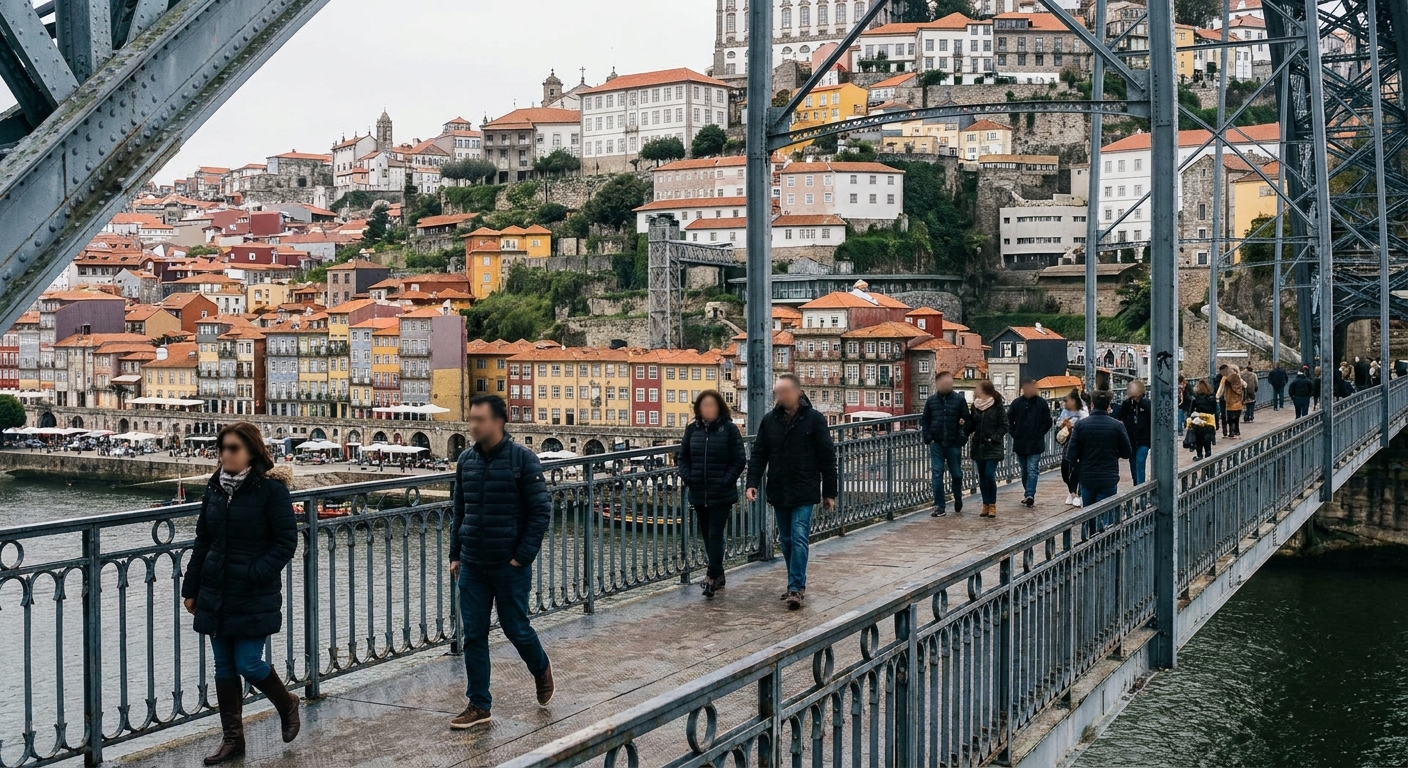
The iron bridge has two decks, and they do not connect once you are on them. The upper deck carries the metro plus a narrow walkway, and it hangs at the height of the cathedral hill: that is the postcard, the sunset, the whole river gorge at your feet. The lower deck carries cars and a pedestrian path at water level, and it is the one that puts you on the Gaia quay among the cellar doors.
Choosing wrong costs altitude, not minutes. Walk out of the Ribeira onto the lower deck and you arrive level with the tasting rooms. Aim for the upper deck from the same spot and you first have to gain the cathedral terrace, on stairs or by the Guindais funicular, before you have crossed anything at all. Coming back from Gaia the trap reverses: the upper deck lands you in the Jardim do Morro, high above the lodges you just left.
Our working habit is to go over low and come back high. Morning tastings need the quay, and the evening earns the climb, because the upper walkway at dusk is one of the few free spectacles in Europe that no ticket improves. If the legs have had enough, the metro shares that deck; how it connects to the rest of the region is laid out in the transport guide.
What is a francesinha, and where to eat one in Porto?
A francesinha is a plated meal: bread, cured meats and steak under melted cheese, flooded with a hot beer-and-tomato sauce, fries swimming in the same lake. Order it as a starter, which the word sandwich invites you to do, and dinner ends before it begins. One per table, as the main, with a knife and fork. The city’s other native plate, tripas à moda do Porto, deserves equal respect and attracts far fewer takers.
Porto sights: São Bento, Lello, Matosinhos and the Douro train, and when to go
São Bento station belongs to the early morning. The atrium is a working commuter hall wrapped in blue tile panels of battles and harvests, and by mid-morning it holds three tour groups and a lecture in two languages. Arrive with the first commuters and the room is yours, tripods and all. It is also, conveniently, where the rest of this section starts.
Livraria Lello sells you the ticket back. Entry is timed and paid, and the amount comes off a book you buy inside, so the money is only a real cost if you leave empty-handed. The line at the door is the part nobody budgets: thirty minutes on an ordinary spring morning (est.), longer in summer, for a staircase you will share with fifty phones. Buy the slot ahead and treat the wait as the entrance fee.
The Atlantic here is cold. Foz sits where the river meets the ocean and Matosinhos runs north of it with the city’s broad surf beach, and both stay bracing in August, when the water off the Algarve feels like a different sea. Locals swim anyway, briefly and loudly. Check what the month brings on the August page or across the year with the best-time verdict, and reach the coast with the day-trips guide.
The Douro goes by train from São Bento. The regional line runs east up the valley and spends its final stretch on the riverbank itself, terraced vineyards rising out of both windows, for the price of a train ticket rather than an excursion package. Do it as a there-and-back day, or use it to reach the valley properly in September, when the harvest takes over.
Porto travel tips: 12 mistakes to avoid
| The lesson | The mistake it prevents |
|---|---|
| Cross the river for the cellars | Searching the Ribeira for lodges that sit in Gaia |
| Walk the lower deck to Gaia | An unplanned climb to cathedral height |
| Save the upper deck for dusk | Spending your one bridge crossing on daylight |
| Book cellar tours for the morning | Reaching the door after the last tour has left |
| Read the day as a descent | Walking the same hill three times |
| Order the francesinha as your main | A starter that finishes the evening |
| Try tripas once, at lunch | Leaving without the dish the locals are named for |
| Be at São Bento with the commuters | Shooting the tile panels over other shoulders |
| Reserve the Lello slot in advance | A queue on the doorstep instead of a staircase |
| Spend the Lello ticket on a book | Paying the entry twice over |
| Pack a jacket for Foz and Matosinhos | August swimwear against a cold Atlantic |
| Take the regional train up the Douro | Excursion prices for the same riverbank |
Most of the table is really one lesson repeated: in Porto, altitude beats distance. Two sights four hundred meters apart can sit sixty vertical meters away from each other, so the order of a day matters more than its length. Start high at Clérigos and the Sé, drift down through the tiled lanes to the Ribeira, and let the river be the reward. The three-day plan is built on exactly that slope.
The other recurring trap is closing time on the south bank. Lodges wind down earlier than restaurants do, several in the late afternoon, and the final tour of the day departs well before the shutters come down, which is why a leisurely lunch in Gaia can quietly cost you the tasting you crossed for. Check the day’s last departure when you book, not when you arrive.
The last word
Sources & data for this guide
- An experience page: these lessons are editorial judgment from our desks’ reporting trips in Porto and Vila Nova de Gaia, deliberately unsourced because they are observations rather than facts · written Sep 8, 2026
- Every checkable number referenced here (cellar tour times and prices, Lello ticket, train fares, monthly sea temperatures) lives on its linked page and is dated there · things to do, getting around, day trips, the month pages · checked Sep 10, 2026
- Opening hours on the Gaia quay change with the season and with each lodge; confirm the last tour when you book
- Re-read in our monthly refresh alongside the rest of the Porto file
One nickname explains more about this city than any of the twelve lines above. People here call themselves tripeiros, tripe eaters, from the story of a port that handed its good meat to the fleet and cooked what was left. The dish stayed on the menus, and the pride stayed in the word.
That is the register to arrive in. Porto is a working river city with granite under the tiles, not a softer version of the capital, and if you are still weighing the two, we have compared them at length.
Practically, three habits carry a first visit: cross low and return high, book the morning tasting, and let gravity write the itinerary.
Build the days with the ranked things to do, pick the bed with the neighborhood guide, then follow the water east into the Douro or out to the ocean with the day trips.
And on the first morning, do this: leave the hotel hungry, walk the lower deck while the river is still gray, and be at a cellar door in Gaia when it opens. The tripe can wait until lunch.