
GUIMARÃES · PORTUGAL · OCTOBER
Guimarães is where Portugal started calling itself Portugal: a town founded in the 10th century that became the country’s first capital in the 12th, with granite lanes that still follow their medieval plan. October hands you that town at 69.3°F in the afternoon, with low light coming in over the castle hill. It also hands you 5.86 inches of rain, more than double September’s 2.69 inches.
The date question is a trade, and the figures are not close. Afternoons cool by 5.0°F from September and wet days nearly double, from 5.8 to 11.1. What you get back is a walkable temperature at noon, a calendar past the Portuguese summer, and evenings that end at a civilized hour. Bring a shell, keep one roofed stop in reserve each half-day, and the month works.
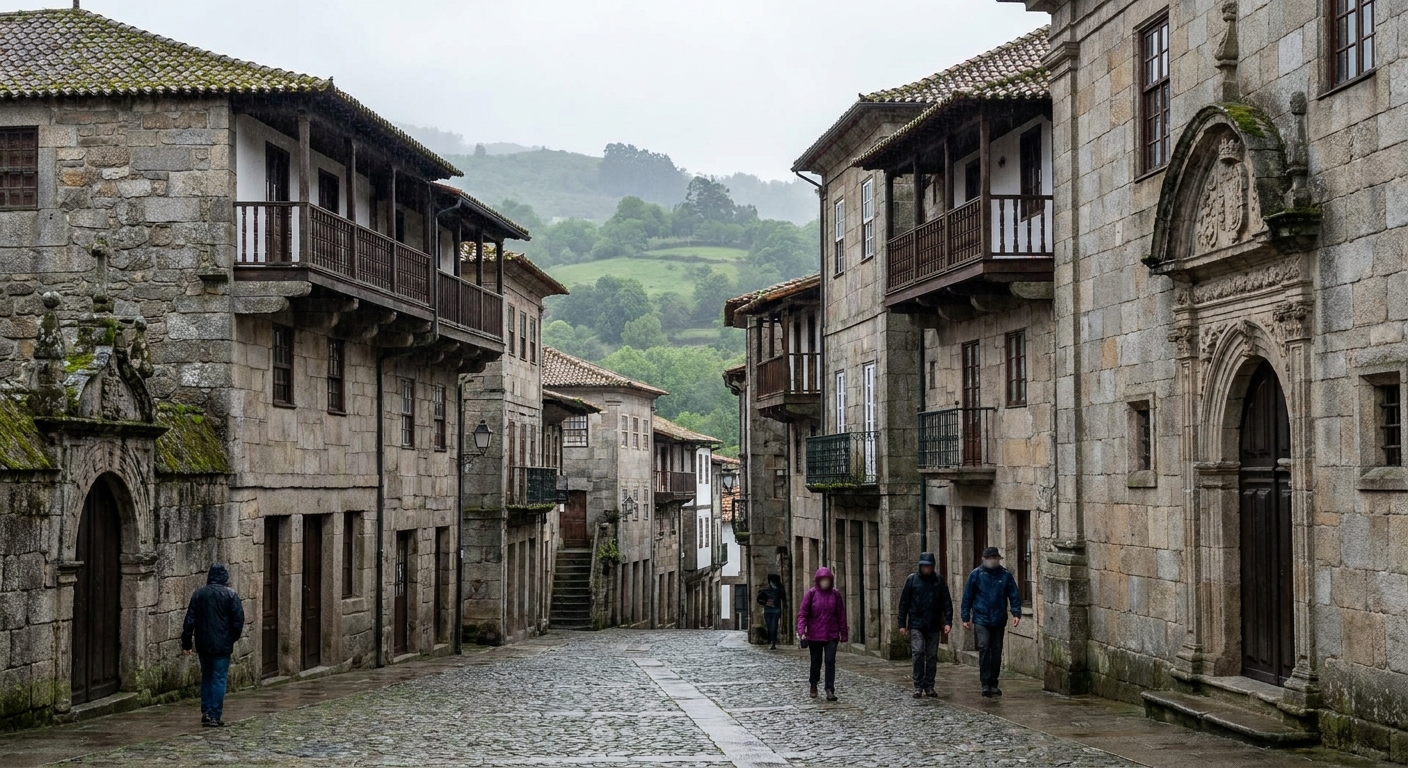
THE MONTH AT A GLANCE · GUIMARÃES · OCTOBER
October gives you 69.3°F walking weather over a heritage town of 38.2 hectares and charges 11.1 wet days for it, which is a fair price if your plan has slack in it.
HIGHS 69.3°F · 11.1 WET DAYS · 11H 09M OF DAYLIGHT ON OCT 15
Go for: walking a granite old town at 69.3°F, low autumn light on the façades, and a weekend that still fits inside 11 hours of daylight.
Think twice before: booking one fixed outdoor day, since an average October records measurable rain on 11.1 days and 0.39 inch or more on 5.0 of them.
Normals: IPMA station 545, 1991–2020 · Heritage: UNESCO file 1031bis · full sources at the end
On this page
- Guimarães weather in October69.3°F days, 5.86 inches, 11.1 wet days
- How warm is it, morning and afternoon?A 14.1°F gap between dawn and 2 p.m.
- Crowds, prices and when to bookWhat we verified, and what we could not
- Things to do in Guimarães in OctoberThe castle pole, the monastic pole and Couros
- Two days in GuimarãesAn hour-by-hour plan for 11 hours of light
- October vs September and NovemberHow the three months compare, line by line
- Is October a good time to go?Our answer, with the conditions attached
Two warnings before the figures. The normals come from a coastal station at Porto’s airport, while Guimarães sits inland, so nights here run colder than the readings suggest. And we could not verify a single admission price or opening hour for the castle, the palace or any monument in town, so we quote none and you should check each operator the week you travel.
Guimarães weather in October: average highs, lows and rain days
| Measure | October normal |
|---|---|
| Average high | 69.3°F (20.7°C) |
| Average low | 55.2°F (12.9°C) |
| Precipitation | 5.86 in |
| Days with 0.04 in or more | 11.1 |
| Days with 0.39 in or more | 5.0 |
| Daylight on October 15 | 11h 09m |
The normals below come from IPMA, the Portuguese national weather service: the 1991–2020 series for station 545, Porto Pedras Rubras, a real thermometer at 67.7 m (222 feet) rather than a model grid cell. October there averages a high of 69.3°F (20.7°C), a low of 55.2°F (12.9°C) and 5.86 inches of precipitation. One caveat travels with every figure here: that station sits at Porto’s airport on the coast, and Guimarães is inland, with warmer summer afternoons and colder winter nights. Higher ground nearby is colder again, and a good deal wetter.
Rain in October is frequent rather than constant. An average month records at least 0.04 inch on 11.1 days, roughly one day in three, and 0.39 inch or more on 5.0 of them, about one day in six. Those are IPMA’s own thresholds, and they do not convert to the 0.10-inch counts that American tables use, so setting this line against a US city will mislead you. Most wet days are a couple of gray hours you sit out over coffee. Five a month are a genuine soaking.
Between dawn and mid-afternoon the thermometer moves 14.1°F. A 55.2°F morning in the shade of a granite lane calls for a jacket, and a 69.3°F afternoon in an open square calls for shirtsleeves, which is why a day bag beats a heavy coat. Waterproof shoes with grip matter more here than any other item: old granite paving turns slick within minutes of a shower, and the old town is built on a slope. Our packing guide runs through the rest.
October 15 gives 11 hours 09 minutes of daylight, with sunrise near 7:45 a.m. and sunset near 6:55 p.m. local. That covers two full sightseeing blocks with a long lunch between them, and it puts golden hour over the castle at a reasonable time instead of at 9 p.m. Plan the last block of daylight for walking, and eat afterward.
How warm is Guimarães in October?
October runs a high of 69.3°F and a low of 55.2°F at the reference station, a spread of 14.1°F across a normal day. Set against September, that is 5.0°F off the afternoons and 3.4°F off the nights. Set against November, it is 7.1°F of daytime warmth still in hand. These are walking numbers: mild afternoons, cool mornings, rain on top.
Dress for two days inside one. Before 10 a.m. you want a light fleece or a jacket over a shirt, especially inland, where nights run colder than the coastal station records. By 2 p.m. in a sunlit square you will be carrying that layer in your hand. A compact rain shell comes out eleven days in thirty-one on the averages, and an umbrella is workable in the old town, where the streets are narrow and the wind is broken.
Frost is not something we can count for you. IPMA’s October figures for station 545 gave us no frost-day total, so we give none, and a normal low of 55.2°F sits far above freezing in any case. Guimarães is inland and has no coast of its own, and we found no water-temperature series for the town, so we publish no swimming temperature at all. Sea mornings belong to the coast west of the city, which our Porto guide covers.
How busy is Guimarães in October? Crowds, prices and when to book
October opens after the Portuguese summer, and the calendar is the part we can hand you with confidence. We found no occupancy series and no monthly room-rate series for Guimarães, so we crown no month cheap and no month expensive. August weekends and the school holidays are behind you by the 1st. For what a night, a meal and a train ticket run across the country, our trip-cost guide does the arithmetic.
How far ahead should you book? We could not verify a lead time for Guimarães, so we will not invent one in weeks. The practical version: take your Friday and Saturday nights first, because UNESCO records most of the building stock inside the 38.2-hectare perimeter as privately owned, and a living town holds fewer hotel rooms than a purpose-built strip. Weeknights leave more room to improvise. Flights are their own calculation, handled in our guide to flying over from the US.
On the tourist tax, we have to stop short: we could not verify whether Guimarães levies a municipal one, or at what rate, so no per-night amount appears anywhere in our figures. Ask at booking, since in Portugal these charges are generally collected at the property rather than folded into the online price.
The one upgrade that changes this month specifically is location. With 11.1 wet days on the averages, a room inside the protected center or at its edge means you are never far from dry clothes, and every break in the weather is usable. A cheaper bed out past the ring road turns the same sky into taxi decisions. Our where-to-stay guide has the national picture, and if you are pairing the trip with Braga, keep the rental car for the day you leave.
Things to do in Guimarães in October: the castle and Couros
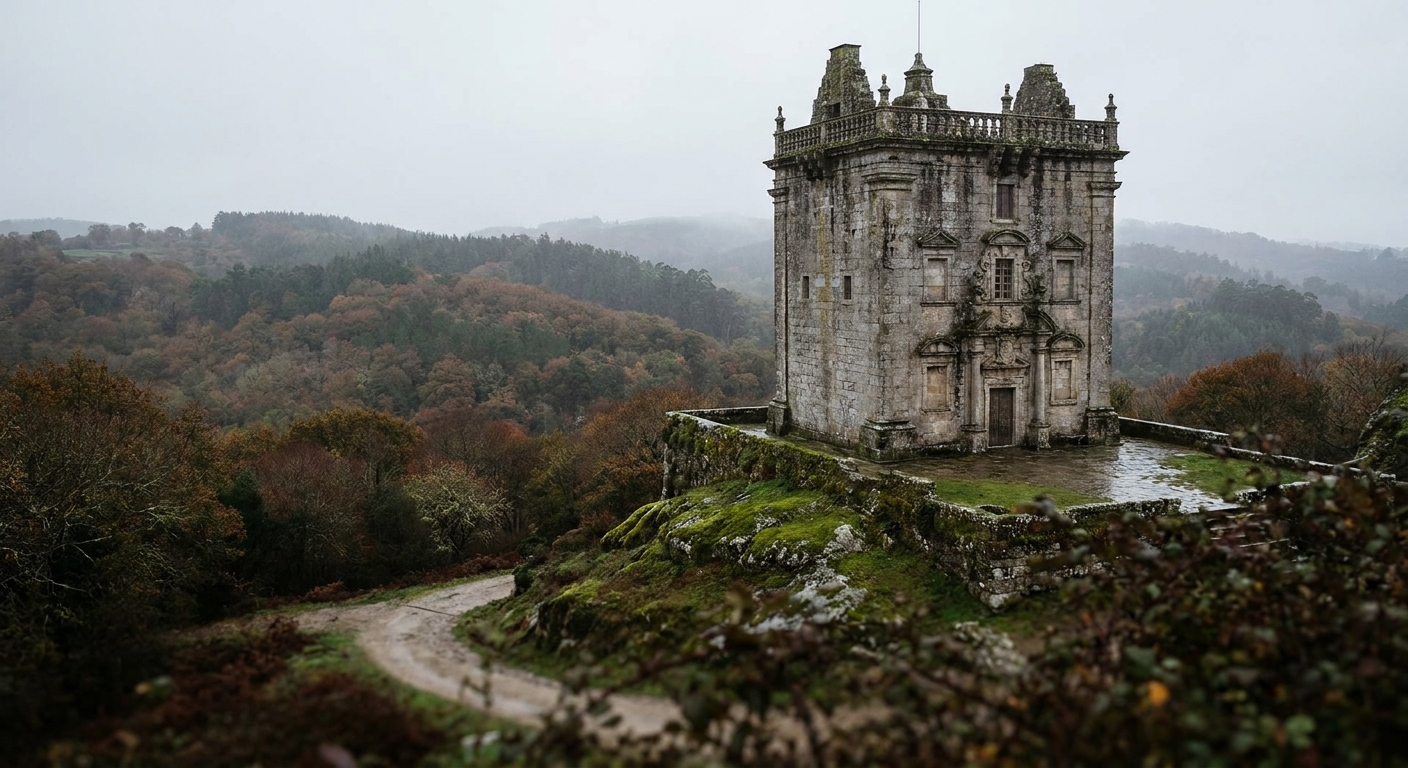
October is the month when a granite town at 69.3°F is a pleasure to cross on foot rather than an exercise in shade-hunting, and when the streets are not yet under November’s 13.0 wet days. Build each day around walking between showers and keep one roofed stop in reserve per half-day, because five days in an average October bring 0.39 inch of rain or more.
The shape of the visit was set between 950 and 1498, when the town grew around two poles that both still stand: the castle at the north end and the monastic complex at the south. It then spread outside the walls around the Franciscan and Dominican houses, and further out to Couros, the tanning quarter named for the leather trade, whose tanneries, workers’ houses and urban spaces date from the 19th and early 20th centuries. The protected property covers 38.2 hectares with a 129.4-hectare buffer, and 19 properties inside it are legally protected, 10 as National Monuments and 9 of Public Interest.
Look up as you walk and the local medieval method is right there: a granite ground floor carrying a half-timbered story above, a technique that went with the Portuguese to Africa and the New World and became a signature of building there. Low October sun rakes those fronts in a way July noon flattens. Underfoot the same month is less generous, and Couros is where that shows, since the old tanning ground is open air. UNESCO flags the zone as needing an urgent conservation strategy and names tourism-driven gentrification as a pressure on the property.
The free layer is large. Public spaces belong to the municipality, so the medieval street plan, the squares laid out during the grand building years of 1498 to 1693, and the walk out to Couros cost nothing at any hour of the day. For interiors we have to stop short again: no opening time and no admission fee for the castle or the palace could be verified, so check each operator’s own page before you travel.
Guimarães in October: a two-day itinerary
Day one runs on the light. Out at 8 a.m., an hour after sunrise, for the climb to the castle end of the old town. Mid-morning for the monastic pole to the south and the squares that link the two. Lunch long and indoors from 1 p.m. Afternoon for the lanes inside the 38.2-hectare perimeter, with one interior held back in case the sky closes. Last daylight around 6:30 p.m., back up the hill for the view, then dinner, which in the north starts late.
Day two heads out to Couros and the streets beyond the walls, loops back through the Franciscan and Dominican side of town, and leaves the afternoon loose for a museum or a long café stop. If the weather turns, invert the order: interiors first, the outdoor loop in the gap after the rain, and a train to Porto or Braga if the gap never comes. With 11 hours 09 minutes of daylight on the 15th, a weekend here holds two full days. Our getting-around guide has the rail detail.
Guimarães in October vs September and November
| Normal, 1991–2020 | September | October | November |
|---|---|---|---|
| Average high | 74.3°F | 69.3°F | 62.2°F |
| Average low | 58.6°F | 55.2°F | 48.9°F |
| Precipitation | 2.69 in | 5.86 in | 6.53 in |
| Days with 0.04 in or more | 5.8 | 11.1 | 13.0 |
September runs 74.3°F by day and 58.6°F at night, with 2.69 inches of rain over 5.8 wet days. October cools to 69.3°F and 55.2°F and takes 5.86 inches across 11.1 wet days. November drops to 62.2°F and 48.9°F with 6.53 inches over 13.0 days. The step in wetness therefore lands between September and October, where precipitation more than doubles, and the step in warmth lands between October and November, a 7.1°F loss in the afternoons.
Move four weeks earlier and you buy five drier days and warm evenings on a terrace, paying for it with the tail end of the summer travel season in the old town. Move four weeks later and you gain quiet and very low light, losing 7.1°F of afternoon and almost two more wet days. The same normals are worked through on our September page and our November page.
Is October a good time to visit Guimarães?
Yes for most travelers, on one condition: you have to accept getting wet. October gives late-spring walking temperatures, the low light photographers come for, and a heritage town you can cross on foot between lunch and dusk. Say no if your trip contains a single fixed outdoor day with no slack in it, if you are traveling with small children who will not tolerate rain gear, or if you were counting on swimming anywhere in the north.
If that describes your trip, September is the move. It keeps 74.3°F afternoons, cuts the rain to 2.69 inches and gives 5.8 wet days in place of 11.1, which is the single biggest difference between the two months. November heads the other way on every line, with 13.0 wet days and 62.2°F highs, and suits travelers who want the north empty above all else.
October’s own combination is 69.3°F afternoons with sunset before 7 p.m., so the walking hours and the dinner hours stop competing for the same part of the day.
The last word
Book the room inside the old center, bring the shell, and let the 11.1 wet days reorder your plan rather than cancel it. One thing worth knowing about the streets you will be walking: the rules that keep them intact sit in a municipal master plan written in 1994 and revised in 2015, and the heritage perimeter itself was significantly modified as recently as 2023. A guidebook printed before that date is describing a smaller protected town than the one you will walk.
Sources & data for this guide
- October normals, rain-day counts and IPMA thresholds · IPMA (Instituto Português do Mar e da Atmosfera), 1991–2020 normals, station 545 Porto Pedras Rubras, altitude 67.7 m · checked Sep 23, 2026
- September and November normals · same IPMA station, same 1991–2020 period · checked Sep 23, 2026
- Sunrise, sunset and 11h 09m of daylight on October 15, converted to local time · sunrise-sunset.org · checked Sep 23, 2026
- Heritage perimeter of 38.2 hectares, 129.4-hectare buffer, 19 protected properties, the two intra-muros poles, the Couros Zone and the 1994/2015 master plan · UNESCO World Heritage Centre, file 1031bis · checked Sep 23, 2026
- We could not verify any admission fee, any opening hour, any municipal tourist-tax rate or any occupancy series for Guimarães, so we publish none of the four. Confirm hours and prices with each operator before you travel.