
LAGOS · MARCH · 37.1° N
March hands Lagos twelve hours of daylight, days that average 64.0°F and a sea sitting at 60.2°F. The air has climbed out of winter and the water has not: the Atlantic runs behind the calendar, and March is the coldest of the three spring months in the water even as it warms up in the air.
So the real question is what you intend to do at noon. Cliff walking, the old town and museum hours all work. Swimming needs a wetsuit or a heated pool. Move four weeks forward to April and you buy 2.4°F of extra daytime warmth, 0.55 inch less rain and 1.6°F more water. The coast beyond this one month is covered in the Algarve overview, and the full year in the twelve-month verdict.
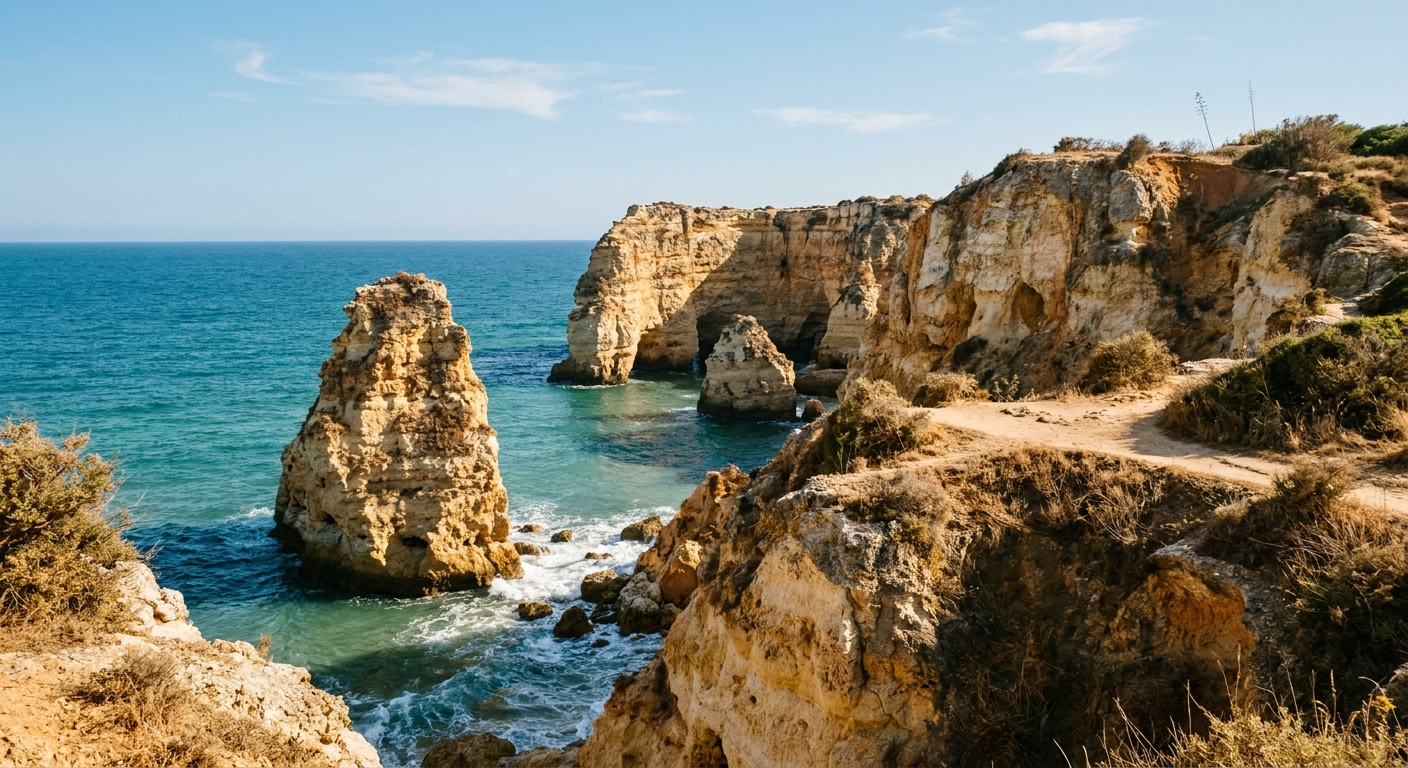
THE MONTH AT A GLANCE · LAGOS · MARCH
March gives Lagos 64.0°F days, twelve hours of light and a 60.2°F sea, which makes it a cliff-path and museum month rather than a swimming one.
HIGH 64.0°F · SEA 60.2°F · 6.3 RAIN DAYS · THE FORT IS CLOSED
Go for: the cliff path at Ponta da Piedade in a fleece, the Rota da Escravatura at its 10:00 opening, and roughly 25 days in the month that record less than 0.04 inch of rain.
Think twice before: planning beach days around swimming. The sea averages 60.2°F, colder than February’s 61.1°F and April’s 61.8°F.
Climate: IPMA station 533, Sagres · Sea: Open-Meteo Marine · Hours: Museu de Lagos · full sources at the end
On this page
- Lagos weather in March64.0°F days, 51.1°F nights, 6.3 rain days
- Sea temperature in March60.2°F, and what that feels like in the water
- Crowds and prices in MarchWhat we can date, and what we could not verify
- Things to do in Lagos in MarchRota da Escravatura, Praia da Luz, Ponta da Piedade
- A two-day plan for LagosHour by hour, from 6:44 a.m. to 6:44 p.m.
- March, February or AprilHow the three months compare, degree by degree
- Is March a good time to visit Lagos?Who should book March, and who should wait
One habit worth keeping as you read: every temperature below is an average of thirty years, not a forecast. A single March week can run four degrees either side of it.
Lagos weather in March: average highs, lows and rain days
| Measure | March | Source |
|---|---|---|
| Average high | 64.0°F | IPMA, 1991–2020, station 533 Sagres |
| Average low | 51.1°F | IPMA, 1991–2020, station 533 Sagres |
| Precipitation | 1.92 in | IPMA, 1991–2020 |
| Days with 0.04 in (1 mm) or more | 6.3 | IPMA, 1991–2020 |
| Days with 0.39 in (10 mm) or more | 1.7 | IPMA, 1991–2020 |
| Sea surface | 60.2°F, mean of daily maxima | Open-Meteo Marine, 2015–2024 |
| Daylight, March 15 | 12 h 00 min, 6:44 a.m. to 6:44 p.m. | sunrise-sunset.org |
Every figure here comes from one thermometer. IPMA, the Portuguese institute for the sea and the atmosphere, publishes 1991–2020 normals for station 533 at Sagres, 22.9 m above sea level, the nearest published station to Lagos: a real instrument, not a model grid cell. March there averages a high of 64.0°F, a low of 51.1°F and 1.92 inches of precipitation. Sagres is also the windiest point of the Algarve, and these are coastal readings. High ground behind the coast runs colder and far wetter, so do not pack for a hill trail on a number taken at 23 meters beside the sea.
An average March records at least 0.04 inch (1 mm) of rain on 6.3 days, and 1.7 of those reach 0.39 inch (10 mm). Those are IPMA’s thresholds, not the 0.10-inch bar most American tables use, so the two counts do not swap. Translated into a trip: about 25 days in the month stay under that 0.04-inch mark, a seven-day stay can expect one damp day, and genuinely heavy rain happens fewer than two days in the whole month.
The gap between 64.0 and 51.1 is 12.9°F, and both ends show up in one day. Mornings before nine and anything after sunset want a warm layer, midday on the cliffs does not. A windproof shell matters more here than a heavy coat, given where the station sits. Long trousers for dinner, one fleece, and swim gear only after you have read the next section.
On March 15 the sun rises at 6:44 a.m. and sets at 6:44 p.m. local time, twelve hours apart to the minute. That is enough light for a full cliff walk after a late lunch, and it puts dinner firmly after dark.
Can you swim in Lagos in March? Sea temperature and what it feels like
Open-Meteo’s marine model puts the sea surface off Lagos at 60.2°F in March, averaged across 2015 to 2024. Read the small print on that number: it is the mean of daily maxima, the warmest reading of each day, so it sits a shade above a true 24-hour average. Whatever the water does at 8 a.m., it is not warmer than 60.2°F on average.
Sixty degrees is cold-water swimming, not beach swimming. Surfers and bodyboarders are in wetsuits, a fit adult gets a bracing few minutes without one, and children last about as long as it takes to shriek. Plenty of people do go in. What they do not do is spend an afternoon in the water, which is the difference between a March beach day and a June one.
We found no wave-height or wind-speed series for March off Lagos, so we quote no swell figure. What we can say is where our climate readings come from: Sagres, described by IPMA’s own station data as the windiest point of the Algarve, on the corner where the coast turns north. Lagos lies east along the same shore, and we have not verified how much of that wind reaches its beaches.
How busy is Lagos in March? Crowds, prices and the demand peak
We found no occupancy series and no monthly room-rate series for Lagos, so we crown no month cheap and no month expensive. What can be dated is the weather itself. March sits between February’s 61.3°F and April’s 66.4°F, carries the same 6.3 rain days as February, and hands April the drier total by 0.55 inch. Country-level budgets are broken out in the Portugal trip cost breakdown, and long-haul timing in flights from the US.
Booking lead times we could not verify either, so no number of weeks appears above. Two March dates are fixed and worth planning around: the Rota da Escravatura opens Tuesday to Sunday, which means Monday is a closed day, and its published closure list includes Easter Sunday, a date that lands in late March in some years. If the trip runs on a rental car, our car guide handles tolls and pickups.
We could not verify a lodging-tax rate for Lagos, so we quote neither a percentage nor a per-night amount. The same gap applies to museum tickets: the Museu de Lagos publishes hours and closure dates, and we could find no stable price list to read from it. Ask at the booking stage and at the desk, and treat any admission figure you see elsewhere as unchecked.
One upgrade genuinely changes March, and it is thermal. With the sea at 60.2°F, a property with a heated pool, or the rental price of a wetsuit for the morning, buys you water time that the month otherwise withholds. A sea view costs more in every month of the year and buys nothing that is specific to this one.
Things to do in Lagos in March
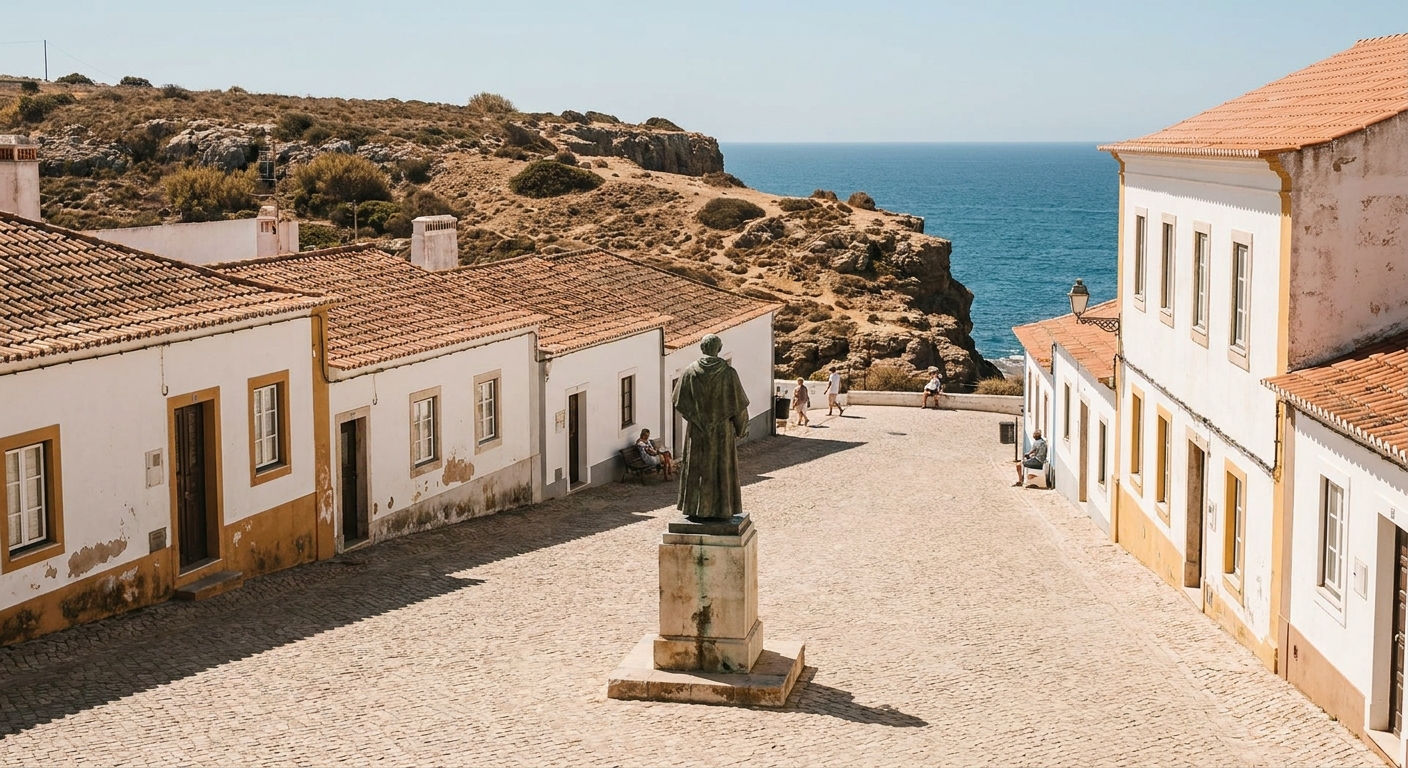
Cool air over cold water is walking weather, and March delivers it better than the months on either side of summer. At 64.0°F you climb the headland paths in a fleece instead of rationing water, and an 8 a.m. start is bracing rather than merciful. The cliff route at Ponta da Piedade and the coastline running east toward Benagil are the obvious beneficiaries. Boat operators set their own season, so confirm sailings before you build a day on one.
Indoors, the town’s museum is not a building but seven sites, among them the Dr. José Formosinho collection, the Centro de Documentação, the Armazém do Espingardeiro and a Roman bath house at Praia da Luz, west of town. The Rota da Escravatura, also called the Mercado de Escravos, stands on Praça do Infante and opens Tuesday to Sunday, 10:00 to 13:00 and 14:00 to 18:00, last admission half an hour before closing. The Forte Ponta da Bandeira, built between 1680 and 1690 with a moat, a drawbridge and an azulejo-lined chapel, is temporarily closed.
A museum’s opening hours do not move with the season, but what those hours are worth does. The Rota’s midday break, 13:00 to 14:00, falls across the warmest hour of a 64.0°F day, the hour you would want to be inside in July. In March, run it the other way: take the 10:00 opening, walk out at one for the cliffs and lunch, then come back before the 17:30 last admission with the light still holding until 6:44.
We could not verify an admission price for any of the seven sites, so none is quoted, and we found no figure attached to Ponta da Piedade or the beaches either. What costs nothing in March as in every month is the ground between them: the walk from Praça do Infante to the waterfront, the seawall below the closed fort, and the headland paths west. Praia da Luz and its Roman baths sit a short drive further along that coast.
Lagos in March: a two-day itinerary
Day one runs inside the 6:44 to 6:44 window. Breakfast at eight while the town is still near its 51.1°F low, old-town streets by nine, and the Rota da Escravatura at its 10:00 opening on Praça do Infante, out by one when it shuts for the hour. Eat, then take the cliff path at Ponta da Piedade between two and five, the warmest slice of the day. Be back on the waterfront by six for a 6:44 sunset, jacket in hand.
Day two goes west to Praia da Luz for the Roman bath house and a long beach walk, with a wetsuit if 60.2°F water is on the agenda. If one of the month’s 1.7 heavy days lands on you, invert the plan: the museum’s indoor sites absorb a morning, the fort is not an option while it stays closed, and the headland keeps. The month averages roughly 25 days under 0.04 inch of rain, so the next dry window is rarely far off.
Lagos in March vs February and April
| Measure | February | March | April |
|---|---|---|---|
| Average high | 61.3°F | 64.0°F | 66.4°F |
| Average low | 47.8°F | 51.1°F | 53.6°F |
| Precipitation | 1.91 in | 1.92 in | 1.37 in |
| Days with 0.04 in or more | 6.3 | 5.7 in April; 6.3 | 5.7 |
| Sea surface, daily maxima | 61.1°F | 60.2°F | 61.8°F |
On air temperature the three months climb steadily: 61.3°F, then 64.0°F, then 66.4°F by day, with nights following at 47.8, 51.1 and 53.6. Rain refuses to follow that line. February and March both total a fraction over 1.9 inches across the same 6.3 wet days, and only April breaks the pattern at 1.37 inches over 5.7 days. The sea does something odder still: at 60.2°F, March is the coldest water of the three, below February’s 61.1°F and April’s 61.8°F.
Shifting four weeks later buys 2.4°F of daytime warmth, half an inch less rain, 1.6°F of extra water and a later sunset. Shifting four weeks earlier costs 2.7°F by day and 3.3°F at night for no rain saving at all, which makes February the weaker swap of the two. What stays identical across all three is the indoor timetable, since the museum hours and the fort’s closure have nothing to do with the season.
Is March a good time to visit Lagos?
For walkers, photographers and anyone who came for the cliffs and the history, yes without hesitation: 64.0°F, twelve hours of light and about 25 dry days make this one of the easiest months to be outside all day. For a family whose vacation is defined by time in the water, no. A 60.2°F sea is a wetsuit proposition, and no amount of sunshine warms it up inside a week.
If that second description fits, April is the month to move to rather than May. It lifts days to 66.4°F, drops precipitation to 1.37 inches over 5.7 wet days, and brings the sea to 61.8°F, still cool but heading the right way. Nights at 53.6°F also mean one less layer in the suitcase, which the packing list works through in detail.
What March alone offers is the balance point: on the 15th, day and night split exactly twelve hours each, and the headland paths are walkable from breakfast to sunset without a single hour when the heat sends you indoors.
The last word
Book March for cliffs, hours and history, and book April if the trip is about getting in the water. Then give the history more time than you planned. In 2009, a dig at Vale da Gafaria outside the walls, run ahead of an underground car park, uncovered a modern-era refuse tip holding more than 150 human skeletons: African people brought to Lagos as merchandise on the slave routes and, sick or dying, thrown out with the town’s waste. The Rota da Escravatura on Praça do Infante tells that story, Tuesday to Sunday, last admission 17:30.
Sources & data, checked September 2026
- March normals (64.0°F high, 51.1°F low, 1.92 in) and rain-day counts (6.3 days at 0.04 in, 1.7 days at 0.39 in) · IPMA, normais climatológicas 1991–2020, station 533 Sagres, 22.9 m · checked Sep 23, 2026
- February and April normals · same IPMA station, same 1991–2020 period, not estimates · checked Sep 23, 2026
- Sea surface 60.2°F in March, 61.1°F in February, 61.8°F in April, all means of daily maxima 2015–2024 · Open-Meteo Marine API · checked Sep 23, 2026
- Daylight of 12 h 00 min on March 15, sunrise 06:44 and sunset 18:44 UTC, converted to local time · sunrise-sunset.org · checked Sep 23, 2026
- Rota da Escravatura hours and closure dates, the Forte Ponta da Bandeira’s 1680–1690 construction and temporary closure, the museum’s seven sites, the Roman bath house at Praia da Luz and the 2009 Vale da Gafaria excavation · Museu de Lagos, Câmara Municipal de Lagos · page updated July 16, 2026, checked Sep 23, 2026
- Editorial reserve: we could not verify an admission price for any Museu de Lagos site, found no occupancy or room-rate series for Lagos, and could not verify a lodging-tax rate, so we quote no ticket price, no percentage and no cheapest-month claim. Sagres is the windiest point of the Algarve and the nearest published station: inland and high ground run colder and wetter than these coastal figures.