
LAGOS · FEBRUARY · 37.1° N
February hands Lagos a small, specific set of numbers. Afternoons top out near 61.3°F, nights fall to 47.8°F, and 1.91 inches of rain arrive across roughly six wet days. The sea reads 61.1°F, so the water and the warmest hour of the air land within a fraction of a degree of each other, and neither reaches what most American visitors call swimming weather.
What the month takes is length: 10 hours 53 minutes of daylight on February 15, with the sun gone by 6:16 p.m. What it gives is a town on winter hours, plus one loss to declare at the top. The Forte Ponta da Bandeira, the squat fort above the quay, is temporarily closed, and the Museu de Lagos said so on its own page in July 2026. The wider calendar sits in when to visit Portugal, the wider coast in the Algarve guide.
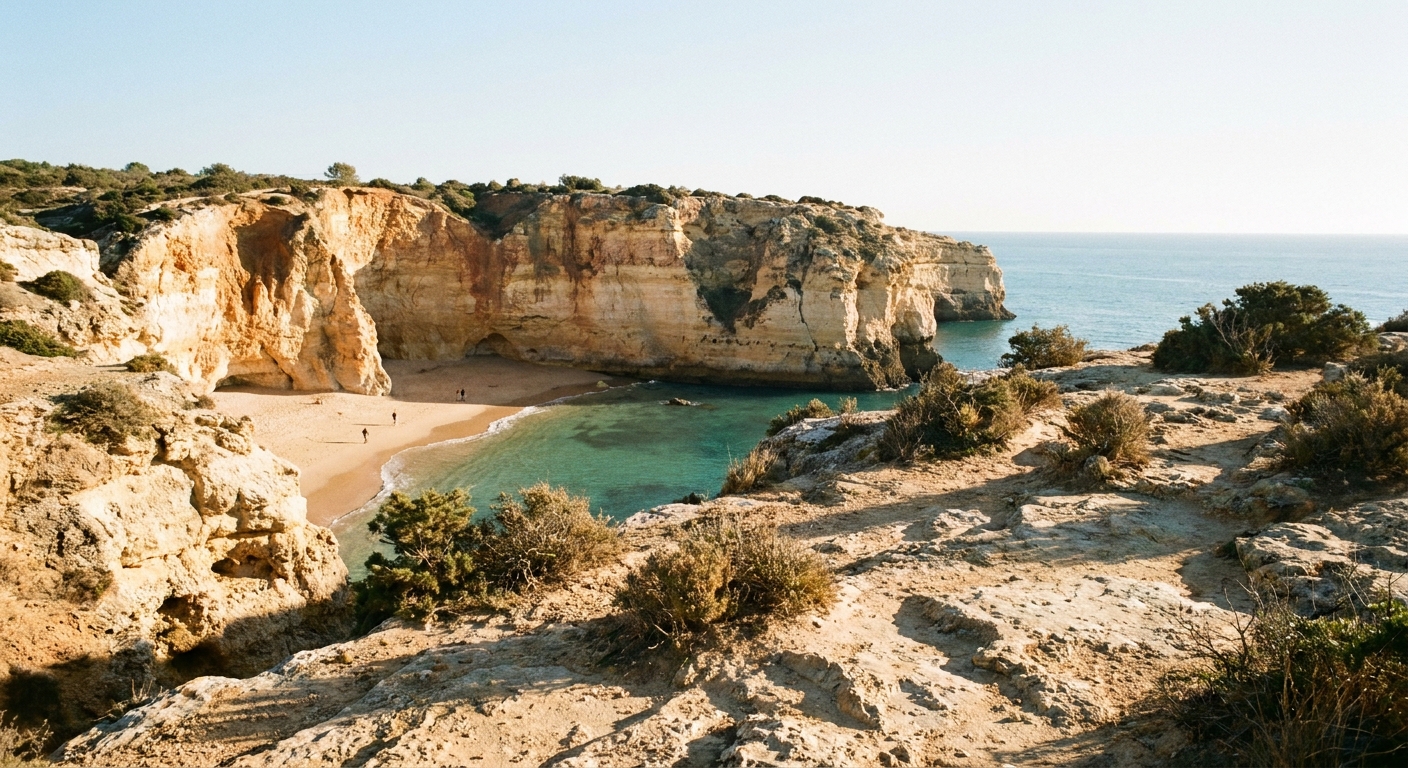
THE MONTH AT A GLANCE · LAGOS IN FEBRUARY
February is a walking-and-museums month in Lagos: 61.3°F afternoons, about six wet days, a 61.1°F sea few Americans will swim in, and the quayside fort temporarily closed.
IPMA STATION 533 SAGRES · 1991-2020 NORMALS · SEA READ AS DAILY MAXIMA
Go for: cliff walking in 61.3°F air, the Rota da Escravatura on Praça do Infante Tuesday to Sunday, and a month whose calendar collides with none of the museum’s seven annual closing dates.
Think twice before: building the trip on swimming or long beach hours: the sea averages 61.1°F as a mean of daily maxima, and sunset comes at 6:16 p.m.
Normals: IPMA station 533 Sagres, 1991-2020 · Sea: Open-Meteo Marine, 2015-2024 · Hours: Museu de Lagos · full sources at the end
On this page
- Lagos weather in February61.3°F highs and 6.3 rain days
- Can you swim in February?A sea at 61.1°F
- Crowds, prices and lodging taxWinter hours, and the figures we could not verify
- Things to do in Lagos in FebruaryThe Rota da Escravatura, open Tuesday to Sunday
- A two-day itineraryHour by hour, ending at 6:16 p.m.
- February vs January and MarchHow the three months compare on air, rain and sea
- Is February a good time to visit Lagos?Our answer, for and against
Every figure here for air temperature and rain comes from one thermometer: IPMA station 533 at Sagres, 22.9 m above sea level, on the 1991-2020 normals. Sagres is the nearest published station to Lagos and also the windiest point of the Algarve, so read these as coastal values. Inland and on high ground the same month runs colder and a good deal wetter, which matters if your plan includes a hill walk rather than a quayside one.
Lagos weather in February: average highs, lows and rain days
| Measure | February | Where it comes from |
|---|---|---|
| Average high | 61.3°F (16.3°C) | IPMA station 533, Sagres, 1991-2020 |
| Average low | 47.8°F (8.8°C) | IPMA station 533, Sagres, 1991-2020 |
| Precipitation | 1.91 in | IPMA station 533, Sagres, 1991-2020 |
| Days with 0.04 in or more | 6.3 | IPMA 1 mm threshold |
| Days with 0.39 in or more | 1.5 | IPMA 10 mm threshold |
| Sea surface | 61.1°F (16.2°C) | Open-Meteo Marine, mean of daily maxima 2015-2024 |
| Daylight, Feb 15 | 10 h 53 min | sunrise-sunset.org |
IPMA’s 1991-2020 normals put the February average high at 61.3°F and the average low at 47.8°F, with 1.91 inches of precipitation for the month. That is a measured station record, not a model grid cell, and the distinction counts: a reanalysis cell and a real thermometer do not always agree, least of all on the overnight figure.
Rain shows up on 6.3 days in an average February at the 0.04-inch threshold, so something measurable falls about one day in four, and 1.5 of those days deliver 0.39 inch or more. Put plainly, expect one or two genuinely wet days in a week-long visit rather than a wet month. One warning on the counts: IPMA measures at 1 mm and 10 mm, while most US tables start at 0.10 inch, so the two sets of rain-day numbers are not interchangeable.
The spread between 61.3°F and 47.8°F is 13.5°F, and it lands on your bag rather than your plans. Anything before 9 a.m. or after sunset wants a real layer, the middle of the afternoon usually does not, and the wind that gives Sagres its reputation is the reason a windbreaker beats a heavy coat on the coast. Our Portugal packing list handles the rest.
On February 15 the sun rises at 7:23 a.m. and sets at 6:16 p.m., giving 10 hours 53 minutes of daylight. Portugal stays on UTC through the winter, so those are the clock times your phone will show. For an itinerary the consequence is blunt: the light is gone before dinner, and one sight booked at 4 p.m. closes out your outdoor day.
Can you swim in Lagos in February? Sea temperature and what it feels like
Sea surface off Lagos averages 61.1°F in February, and the way the figure is built matters. It is the mean of daily maxima over 2015-2024, from Open-Meteo’s marine data, so it sits a shade warmer than a 24-hour mean would. Tables that publish a 24-hour average will show the same month a little cooler, and that gap is arithmetic rather than disagreement.
Sixty-one degrees is cold-water swimming by any American standard. Unprotected, most people get a few minutes of breath-catching and then want out; in a 3 mm wetsuit it reads as an ordinary session. Worth holding onto: with February nights at 47.8°F, the water is warmer than the night air, which is exactly why the sea looks inviting at 8 a.m. and is not.
Wind and swell are the part we cannot put a number on. Our sources carry no February wave height or wind speed for Lagos, and we will not estimate one. What we do know is that the station behind these normals stands at the windiest point of the Algarve, so treat a February coastal reading as a breezy one and check the forecast the morning of, not the week before. For the Atlantic side of the region, see Sagres.
How busy is Lagos in February? Crowds, prices and the demand peak
February is winter in a beach town, and that is a calendar fact rather than a price one. We found no occupancy series and no monthly room-rate series for Lagos, so we crown no month cheapest and quote no nightly rate. What we can read is the town’s published winter pattern: the Museu de Lagos lists one set of hours for the entire year, with no summer extension and, in February, no closing day beyond its weekly Monday.
Advance-booking behavior we cannot chart either, since no lead-time data reached us. Two decisions still shape the trip and neither depends on the month: which airport you fly into, covered in flights from the US, and whether you take a car, weighed in renting a car in Portugal. The one February date to check before you fix a two-night weekend is that Monday closure.
We could not verify a lodging-tax rate for Lagos, so we give no percentage and no per-night amount. Portuguese municipalities set their own tourist tax and revise it, and our reading of the town’s published material turned up no figure we would stand behind. Take any number quoted elsewhere as something to confirm at checkout, and build the budget with our Portugal cost guide.
The one upgrade that changes February rather than any other month is a car. With 10 hours 53 minutes of daylight and one or two soaking days in the average month, a car turns a washed-out afternoon into the Roman bath house at Praia da Luz or a drive inland, while a visitor without one waits out the rain where they stand. February rental rates we could not verify, so treat the car as a plan, not a price.
Things to do in Lagos in February
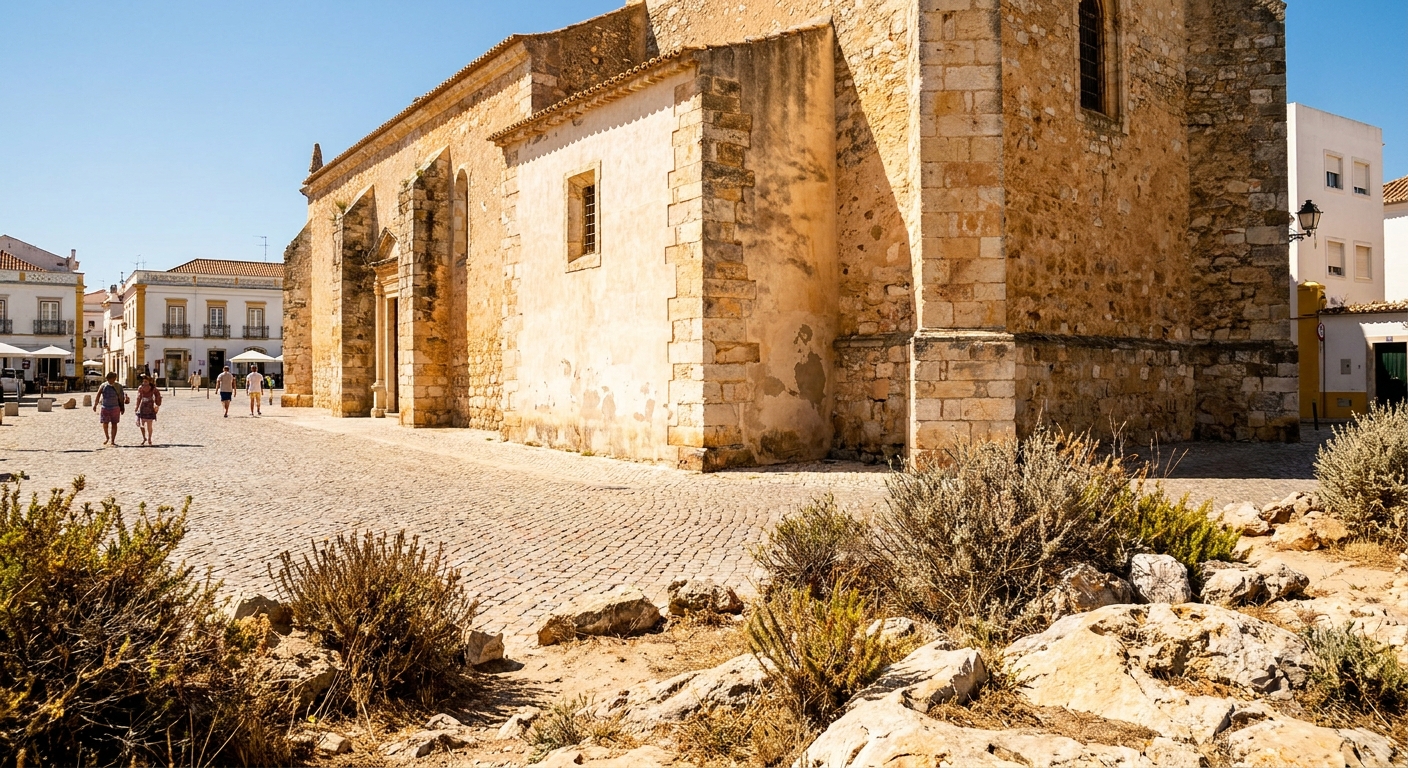
Between January and May, February is the one month that never collides with a closing date on the museum’s list. January loses the 1st, April always loses the 25th and can lose Easter Sunday, May loses the 1st, and Easter Sunday can fall in March. In February the only shut day is Monday, which makes a Tuesday-to-Sunday visit the plainest booking of the first half of the year.
The Rota da Escravatura, also called the Mercado de Escravos, stands on Praça do Infante and opens Tuesday to Sunday, 10:00 to 13:00 and 14:00 to 18:00, with last admission half an hour before closing. It tells the town’s part in the fifteenth-century slave trade, including the 2009 dig at Vale da Gafaria outside the walls, where work on an underground car park uncovered a refuse tip holding more than 150 human skeletons, confirmed as African people trafficked into Lagos and discarded with the urban waste. No admission price for the museum’s sites was readable at our last check.
Indoor hours hold still across the year, and that is what makes the month readable: the 13:00 to 14:00 shutdown falls in the warmest slice of a 61.3°F day, precisely the hour you want to be out on the cliffs instead of inside, whereas in July the same hour is the one worth hiding from. Remember too that Museu de Lagos is seven sites rather than one, and that the Forte Ponta da Bandeira, built between 1680 and 1690 with a moat and a drawbridge, is temporarily closed.
On free admission we promise nothing: we could not verify any price for the museum’s sites, free days included. The cliff path and the quayside cost nothing in any month, and Ponta da Piedade is the walk people come to Lagos for, though our sources carry no figure for its trails or its boat landings.
Lagos in February: a two-day itinerary
Day one runs on the light. Sunrise is 7:23 a.m., but 9 a.m. is soon enough with the overnight low near 47.8°F. Walk the cliffs while the air climbs, be on Praça do Infante at 10:00 for the Rota da Escravatura, eat during the 13:00 to 14:00 closure, then use the 14:00 to 18:00 shift if one pass through the rooms was not enough. Sunset at 6:16 p.m. ends the outdoor half of the day, and dinner starts in the dark.
Day two goes west to Praia da Luz and the Balneário Romano, the Roman bath house that counts as one of the museum’s seven sites, with the beach walk as the reason to stay out in 61.3°F air. If the forecast turns, spend the wet one indoors: an average February brings 1.5 days at 0.39 inch or more, and those are the hours for the main museum, the Dr. José Formosinho collection and the Centro de Documentação. Keep Monday for driving, since the sites are shut.
Lagos in February vs January and March
| Measure | January | February | March |
|---|---|---|---|
| Average high | 61.0°F | 61.3°F | 64.0°F |
| Average low | 47.3°F | 47.8°F | 51.1°F |
| Precipitation | 2.10 in | 1.91 in | 1.92 in |
| Days with 0.04 in or more | 7.4 | 6.3 | 6.3 |
| Sea surface (daily maxima) | 61.4°F | 61.1°F | 60.2°F |
Air barely moves between January and February: 61.0°F against 61.3°F on the high, 47.3 against 47.8 overnight. March is the real step up at 64.0°F and 51.1°F. Rain tilts the other way, with January logging 7.4 wet days and 2.10 inches against February’s 6.3 days and 1.91 inches and March’s 6.3 days and 1.92. The sea runs backwards to all of it, at 61.4°F in January, 61.1 in February and 60.2 in March, because the water lags the air by weeks.
Shift four weeks later and you gain 2.7°F on the afternoon high and 3.3°F on the night for the same 6.3 wet days, while giving up 0.9°F of sea and taking on the chance that Easter Sunday lands in your month and closes the museum sites for a day. Shift four weeks earlier and January charges you an extra wet day, about a fifth of an inch more rain and the 1 January closure, handing back 0.3°F of water. Neither swap buys you a swim.
Is February a good time to visit Lagos?
Yes for walkers, for museum days and for anyone who wants this coast without heat: 61.3°F afternoons and something measurable about one day in four are good walking terms, and the short lunch closure builds the break into your schedule. No if the trip stands on swimming, long beach hours or late outdoor evenings, because 61.1°F water and a 6:16 p.m. sunset do not negotiate.
If that reads as a no, March is the nearer correction than summer: 64.0°F days and 51.1°F nights on the same 6.3 wet days, at a cost of 0.9°F of sea and the Easter risk. Later months belong to the country-wide verdict, which weighs the full calendar rather than one town’s month, and to the Lagos guide for what does not change with the season.
February’s own claim is narrow and real: between January and May it is the only month with a clean museum calendar, and it still holds water 0.9°F above what March will give back.
The last word
Book Tuesday through Sunday, park the swimming for another trip, and treat the 6:16 p.m. sunset as the shape of the day rather than an inconvenience. The one thing February cannot hand you is the inside of the Forte Ponta da Bandeira: the moat and drawbridge are still there, the cylindrical sentry boxes went up in a restoration campaign around 1960, and the small seventeenth-century chapel lined with azulejos sits behind a gate the museum listed as temporarily closed in July 2026.
Sources & data for this guide
- February normals: high 61.3°F, low 47.8°F, 1.91 in, 6.3 days at 0.04 in or more, 1.5 days at 0.39 in or more · IPMA climate normals 1991-2020, station 533 Sagres, altitude 22.9 m · checked Sep 23, 2026
- January and March normals used in the comparison table · IPMA climate normals 1991-2020, station 533 Sagres · checked Sep 23, 2026
- Sea surface 61.1°F (February), 61.4°F (January), 60.2°F (March), as a mean of daily maxima · Open-Meteo Marine, 2015-2024 average · checked Sep 23, 2026
- Daylight 10 h 53 min, sunrise 07:23 and sunset 18:16 UTC on February 15 · sunrise-sunset.org · checked Sep 23, 2026
- Museum sites, hours, closure dates, Vale da Gafaria dig and the fort’s closure · Museu de Lagos, Câmara Municipal de Lagos, page updated Jul 16, 2026 · checked Sep 23, 2026
- Prices: we could not read a stable admission price list for any Lagos museum site, and we found no occupancy or room-rate series for the town, so we quote no figures and crown no month cheapest · noted Sep 22, 2026
- Station scope: the normals are measured at Sagres, the nearest published station to Lagos and the windiest point of the Algarve; inland and higher ground run colder and wetter · noted Sep 8, 2026