
BLUE MOUNTAINS · JAMAICA · THE 12-MONTH VERDICT
The range behind Kingston keeps a climate of its own. High on the ridge, the warmest month of the twelve averages a high of 62.8°F in August, and the coolest averages 56.9°F in January. Nights sit between 49.0°F and 54.3°F all year. Jamaica’s beach arithmetic does not apply up here: the deciding number is rain, and it swings from 1.93 inches in February to 6.73 inches in October.
Most travelers reach the mountains as a two-night detour from the coast or the capital, flying into Kingston or Montego Bay and driving up (the roads are their own subject). So the question is narrow and answerable: which weeks give you dry trails, clear ridgelines and a lodge you can book without competing for it.
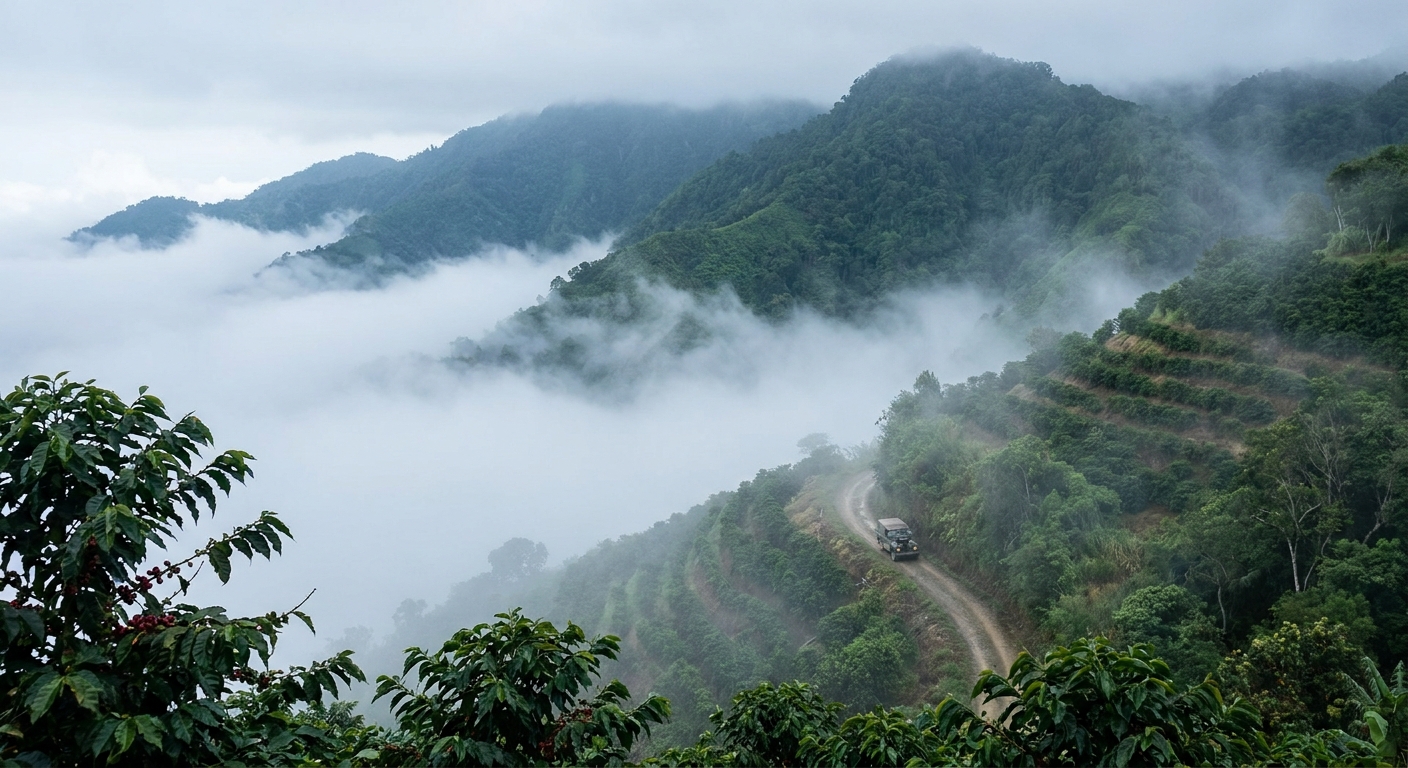
THE YEAR AT A GLANCE · BLUE MOUNTAINS
February is the pick: 1.93 inches of rain across 6.2 wet days, the driest pair of figures in the twelve months, with an average high of 57.2°F that asks for a fleece rather than a swimsuit.
DRIEST: FEBRUARY, 1.93 IN · WETTEST: OCTOBER, 6.73 IN · HIGHS 56.9°F TO 62.8°F · NORMALS FROM THE PEAK CELL AT 2,256 M
Go for: February and March walking weather, cool nights in the high 40s, and a mountain quiet that the north-coast resorts never offer.
Think twice before: booking an October hiking week: 17.0 days of that month record 0.10 inch of rain or more, the highest count of the twelve.
Normals: Open-Meteo / ECMWF ERA5, 1991-2020 reanalysis · Daylight: sunrise-sunset.org · full sources at the end
On this page
- The month-by-month tableHighs, lows and rainfall for all twelve
- Best month to visitFebruary, at 1.93 inches
- How hot it gets in summerAugust highs of 62.8°F
- The quiet monthsSeptember to November on the calendar
- The month to skipOctober and its 17 wet days
- Shoulder seasonMay, June and November against February
- When to visit Jamaica overallThe island’s 12-month verdict
Two nights is the working minimum: one for the drive up and a lodge dinner, one for a full day on the trails. Kingston sits below the range as the usual gateway (transfers from the airport), and travelers coming off a beach week from Ocho Rios or Port Antonio often fold the mountains into a one-week itinerary. Pick the month first, then the base.
The Blue Mountains weather month by month: highs, lows and rainfall
| Month | Avg high | Avg low | Rain | Days ≥ 0.10 in |
|---|---|---|---|---|
| January | 56.9°F | 49.3°F | 2.59 in | 8.7 |
| February | 57.2°F | 49.0°F | 1.93 in | 6.2 |
| March | 58.1°F | 49.2°F | 2.73 in | 7.8 |
| April | 59.8°F | 50.6°F | 2.46 in | 7.7 |
| May | 60.6°F | 52.3°F | 5.73 in | 13.0 |
| June | 61.6°F | 53.8°F | 4.81 in | 12.2 |
| July | 62.6°F | 54.1°F | 3.77 in | 10.1 |
| August | 62.8°F | 54.3°F | 4.75 in | 11.3 |
| September | 62.0°F | 53.9°F | 6.06 in | 14.7 |
| October | 60.6°F | 53.2°F | 6.73 in | 17.0 |
| November | 59.1°F | 52.0°F | 4.58 in | 12.3 |
| December | 57.6°F | 50.6°F | 3.49 in | 9.8 |
Temperature barely moves and rain does all the work. Average highs span 5.9°F across the whole year, from 56.9°F in January to 62.8°F in August, while February, March and April take 7.12 inches of rain between the three of them and September and October take 12.79 inches between two.
Two hinges matter. April to May is the first: rainfall jumps from 2.46 inches over 7.7 wet days to 5.73 inches over 13.0, with no useful change in temperature. August to September is the second: 4.75 inches becomes 6.06, and wet days climb from 11.3 to 14.7. November brings the year back down to 4.58 inches, and December to 3.49.
October is the month that punishes a fixed plan, and it punishes walkers hardest: 17.0 of its days record 0.10 inch of rain or more, the highest count of the twelve months, spread across a total of 6.73 inches. Anyone camping near the summit or timing a pre-dawn climb is budgeting for wet ground. A traveler with a car and a lodge fire loses views, not the trip.
One caveat carries all of the above. Every figure here is model reanalysis from the ERA5 grid cell at 18.05° N, 76.58° W, the cell over Blue Mountain Peak at 2,256 m, not a station reading, and not the coast. A reader packing from a Kingston forecast will arrive cold. A wet day here means 0.10 inch or more, and the rarer inch-plus days are counted separately in the sources below.
When is the best time to visit the Blue Mountains?
Go in February. It records 1.93 inches of rain over 6.2 wet days, the driest month of the twelve, and not one day in an average February reaches an inch of rain. Days average 57.2°F and nights 49.0°F, the coolest of the year. On February 15 the sun is up for 11 hours 36 minutes, rising at 6:32 a.m. and setting at 6:08 p.m. local time, enough for a full trail day and a slow descent.
March is the obvious rival and loses on the only figure that counts: 2.73 inches and 7.8 wet days, so 0.80 inch and 1.6 extra wet days against February for 0.9°F more warmth by day. January costs 0.66 inch and 2.5 wet days more than February, and it is the coolest month by day at 56.9°F. April holds up better than either at 2.46 inches, with 12 hours 36 minutes of daylight on the 15th.
February also falls inside Jamaica’s busy winter stretch, so mountain lodges and guided summit hikes want booking well ahead, and flights price accordingly (routes from the US). For the island-wide calendar, our 12-month verdict for Jamaica sets the coast against the hills, and the packing list covers the fleece a 49°F night makes necessary.
How hot do the Blue Mountains get in summer?
Not hot. August is the warmest month at an average high of 62.8°F, July runs 62.6°F, and September 62.0°F. Nights hold close behind: August averages 54.3°F, only 8.5°F below its own daytime figure, so the cooling after dark is slight and never cold. June gives the longest day of the year at 13 hours 15 minutes, sunrise 5:29 a.m. and sunset 6:44 p.m. Coastal Jamaica in August is a different country in weather terms; these are readings from 2,256 m.
On humidity we have nothing to offer. No dew point, cloud cover or wind series was read for this grid cell, so no number for mugginess or for how often the ridge sits inside cloud appears anywhere here. The only moisture figures we can stand behind are rainfall and wet days: 4.75 inches across 11.3 days in August, with 0.4 day reaching an inch or more.
When are the Blue Mountains quietest?
Late summer and fall, by the calendar rather than by any price list. The Atlantic hurricane season runs June 1 to November 30, and Jamaica’s visitor year is built around it (our storm-season page covers the risk and the insurance question). Winter holidays through April is the island’s busy stretch. September, October and early November are the weeks with the fewest other travelers on the trails.
What a fall visit buys is space. September is within a degree of August on both ends, an average high of 62.0°F and a low of 53.9°F, and still carries 12 hours 16 minutes of daylight on the 15th. Lodges take bookings at short notice, guided summit walks are not shared with a dozen strangers, and a midweek plan can be moved a day when the sky says so. Costs across the island are handled in our trip-cost guide.
What it takes away is dry ground and reliable views. September delivers 6.06 inches across 14.7 wet days and October 6.73 inches across 17.0, so roughly half the fall calendar records measurable rain. Flights and ferries can be disrupted in storm weeks, and refundable bookings stop being optional. Anyone whose trip depends on a clear ridgeline is gambling.
Which month should you avoid in the Blue Mountains?
October, and specifically if you plan to walk. It records 17.0 wet days, the most of the twelve months, out of a total 6.73 inches, and 0.8 of its days bring an inch or more of rain, matching May for the year’s heaviest single days. Campers near the peak and anyone timing the pre-dawn summit climb are the ones who pay. A traveler booking a coffee-estate lodge with a car and a book loses very little.
Its redeeming figures are real enough. October’s average high of 60.6°F matches May’s exactly, nights stay at 53.2°F, and daylight still runs 11 hours 46 minutes on the 15th. Heavy rain is concentrated: under one day in the month reaches an inch, so most of those 17 wet days are showers you walk through, not washouts. Green is also at its most absurd, and you will have the ridge to yourself.
Is the shoulder season worth it in the Blue Mountains?
The shoulder here is May, June and November, and each costs rain against February’s 1.93 inches. May takes 5.73 inches over 13.0 wet days, nearly three times February’s total and 6.8 more wet days. June takes 4.81 inches over 12.2 days, November 4.58 inches over 12.3. None of the three is a dry month by the standard the winter sets.
The compensation is light and warmth. June 15 gives 13 hours 15 minutes of daylight against 11 hours 36 minutes on February 15, an extra 1 hour 39 minutes, with sunset at 6:44 p.m. instead of 6:08. Nights run 53.8°F in June against 49.0°F in February, and at 2,256 m that 4.8°F decides whether a lodge veranda works after dinner. These weeks also sit outside the winter booking crush.
The subtraction is measurable. February records 0.0 days of an inch or more of rain; May records 0.8, June 0.6, November 0.4. Wet days roughly double, from 6.2 in February to between 12.2 and 13.0 across the three. A three-day mountain stay in May can expect rain on more than half its days, against about one day in five in February.
Verdict: if the trip is built on walking, take February and accept the cold nights. If it is built on long evenings and an empty lodge, take June over May, 0.92 inch drier across 0.8 fewer wet days, with the year’s longest daylight. November at 4.58 inches is the compromise for anyone tied to fall dates, and it sits after the storm season’s worst weeks.
The last word
Across the twelve months the peak cell collects about 49.6 inches of rain over roughly 131 wet days, so no month is truly dry and every good trip here is a bet on odds rather than certainty. February gives the best odds by a wide margin. If the holidays are your only window, December is workable at 3.49 inches over 9.8 wet days, with one catch: the sun sets at 5:34 p.m. local on December 15, so the summit walk starts in the dark or not at all. Pack the fleece either way.
Sources & data for this guide
- Monthly normals 1991-2020, highs, lows, precipitation and wet-day counts · Open-Meteo / ECMWF ERA5 reanalysis, grid cell 18.0465° N, 76.5788° W, over Blue Mountain Peak at 2,256 m · checked Sep 12, 2026
- ⚠️ These are MODEL REANALYSIS values for a grid cell, not readings from a weather station, and not representative of Kingston or the coast · checked Sep 12, 2026
- Wet-day thresholds used here: 0.10 inch and 1.00 inch of precipitation, from the same ERA5 series · checked Sep 12, 2026
- Daylight, sunrise and sunset for the 15th of each month, converted from UTC to Jamaica local time · sunrise-sunset.org · checked Sep 12, 2026
- Atlantic hurricane season dates, June 1 to November 30 · NOAA National Hurricane Center · checked Sep 12, 2026
- Editorial admission: no humidity, cloud, wind, crowd or price series was available for this location, so nothing here ranks months by cost or by fog · lodge availability and guided-hike schedules change, check operators when you book.