
ERICEIRA · PORTUGAL · THE 12-MONTH VERDICT
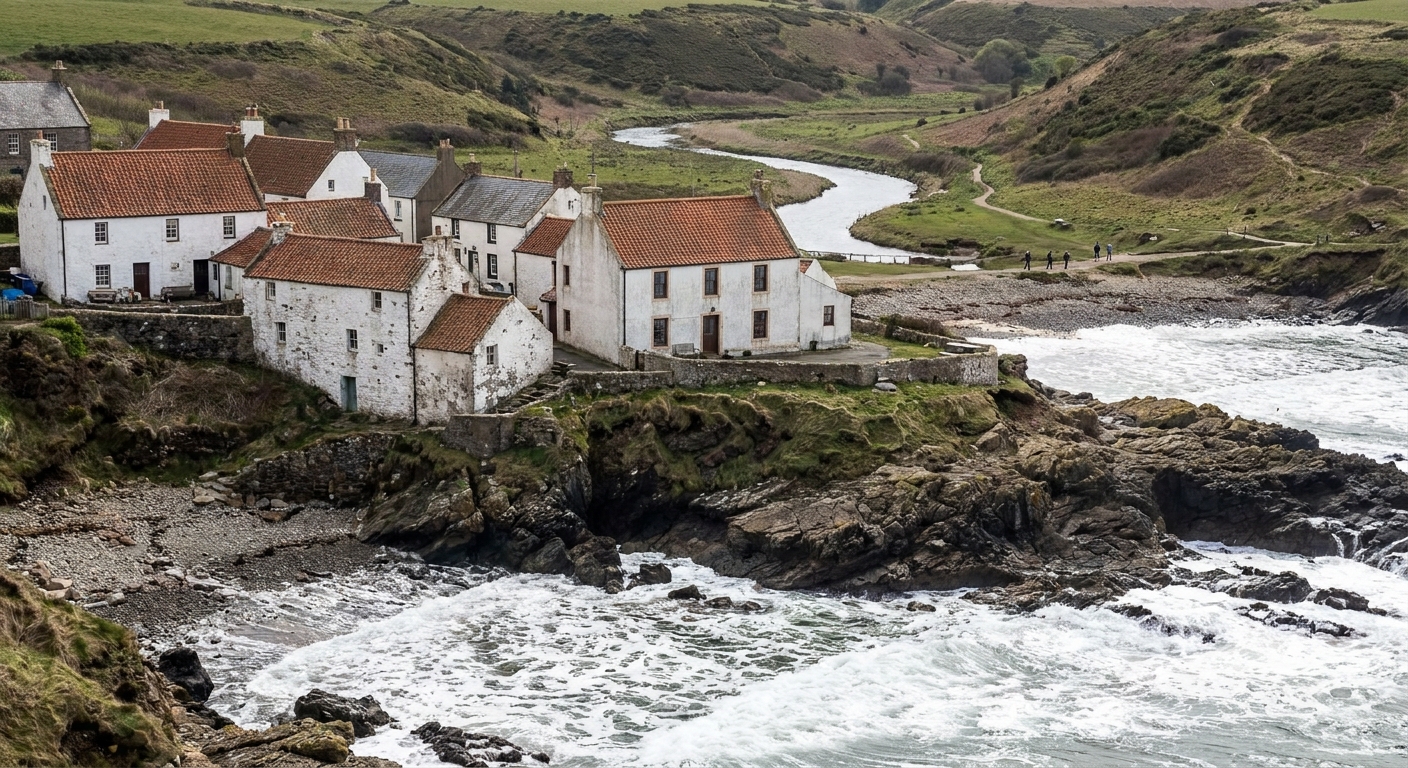
Ericeira is a whitewashed fishing town on an exposed stretch of Atlantic coast north of Lisbon, with a surf break at the end of most streets and a harbor that still lands fish for the restaurants above it. Visitors rarely arrive wondering what to do here. They arrive wondering when to come, because the town in September and the town in November are two different vacations, and the difference shows up in the rainfall long before it shows up on a thermometer.
The short answer is September, then May, then a long quiet winter that suits anyone who would rather have the seafront to themselves. Every figure here comes from the national weather service’s 1991–2020 normals, and where that thermometer actually sits matters more than usual on this coast. Most American travelers pick up their flights into Lisbon and drive north, so Ericeira is usually booked as a coastal chapter of a wider Portugal trip rather than a standalone one.
THE YEAR AT A GLANCE · ERICEIRA
September is the pick: 80.2°F afternoons, 1.41 inches of rain across 3.7 wet days, and the July–August holiday weeks already over.
BEST: SEPTEMBER · WETTEST: NOVEMBER, 4.51 IN · DRIEST: JULY, 0.11 IN · QUIET: NOV–FEB
Go for: September, with 12 hours 29 minutes of daylight on the 15th, 3.7 days of rain in the whole month, and a coast that has emptied out after the European school holidays.
Think twice before: booking November sight unseen: 4.51 inches of rain over 9.3 wet days, 3.9 of them heavy enough to clear 10 mm.
Normals: IPMA 1991–2020, station 579 · Daylight: sunrise-sunset.org · full sources at the end
On this page
- Ericeira weather month by monthThe twelve-month table, highs to rain days
- The single best month to bookSeptember, with its figures
- Summer highs and night temperaturesJuly and August, 82.9°F and 84.2°F
- When the town empties outThe November to February window
- The month to skip in EriceiraNovember, and who it hurts
- Is the shoulder season worth itHow May and October stack up against August
Ericeira’s year is a rain story more than a temperature story. Air swings 26.3°F between the coolest month’s average high (January, 57.9°F) and the warmest (August, 84.2°F), a mild spread by American standards. Rainfall swings from 0.11 inches in July to 4.51 inches in November, forty times over, and that is the number that decides which week of your itinerary works.
Ericeira weather month by month: highs, lows and rainfall
| Month | Avg high | Avg low | Rain | Days ≥1 mm | Daylight (15th) |
|---|---|---|---|---|---|
| January | 57.9°F | 46.0°F | 3.78 in | 9.9 | 9h 48m |
| February | 60.3°F | 47.1°F | 2.80 in | 7.8 | 10h 48m |
| March | 65.1°F | 50.5°F | 2.63 in | 7.2 | 12h 00m |
| April | 67.8°F | 53.2°F | 2.50 in | 7.7 | 13h 17m |
| May | 73.0°F | 57.4°F | 2.00 in | 5.7 | 14h 21m |
| June | 79.0°F | 61.7°F | 0.53 in | 2.0 | 14h 55m |
| July | 82.9°F | 64.4°F | 0.11 in | 0.4 | 14h 39m |
| August | 84.2°F | 65.3°F | 0.20 in | 1.0 | 13h 43m |
| September | 80.2°F | 63.3°F | 1.41 in | 3.7 | 12h 29m |
| October | 72.7°F | 58.8°F | 4.05 in | 8.3 | 11h 14m |
| November | 63.7°F | 52.2°F | 4.51 in | 9.3 | 10h 06m |
| December | 58.8°F | 47.7°F | 3.94 in | 9.7 | 9h 31m |
A dry summer sits wedged inside a wet winter, and the turn happens fast at both ends. May through September share 4.25 inches of rain between the five of them, while November alone brings 4.51 inches.
October is where the year swings hardest: 4.05 inches of rain, nearly triple September’s 1.41, spread over 8.3 days that reach the 1 mm mark against September’s 3.7. May moves the other way, at 2.00 inches and 5.7 wet days, with afternoons 5.2°F warmer than April’s. June is the month that commits, dropping to 0.53 inches and just 2.0 wet days.
November is the hardest month of the twelve for anyone who came to be outdoors, at 4.51 inches of rain with 3.9 days clearing 10 mm, the heaviest such count of the year. Daylight is down to 10 hours 06 minutes on the 15th and the afternoon high sits at 63.7°F. Walkers, cyclists and families with a beach week booked feel that combination. A surfer in a winter suit largely does not.
One caveat changes how you read all of it. These normals come from IPMA’s station 579 at Lisboa/Gago Coutinho, the airport, inland at 103.9 m, not from Ericeira’s seafront. An exposed surf coast runs its own weather, and the higher ground behind the town is colder and wetter again. The rain-day counts also use the Portuguese service’s own thresholds, 1 mm and 10 mm, not the 0.10-inch line American tables draw, so the two sets of counts cannot be laid side by side.
When is the best time to visit Ericeira?
September. Average high 80.2°F, average low 63.3°F, 1.41 inches of rain across 3.7 days at 1 mm or more, and 12 hours 29 minutes of daylight on the 15th. That is enough day for a beach morning, a long seafood lunch and an afternoon drive down to Sintra or north to Nazaré without rushing any of the three.
August is warmer, 84.2°F against 80.2°F, and drier, 0.20 inches against 1.41. It is also the month when Portugal and much of Europe takes its holidays, so you are booking your nights at high-season rates to buy 4.0°F. Push the other way and October hands back 7.5°F of afternoon warmth and charges 4.05 inches of rain for the privilege. September sits between the two with the smallest bill.
Ericeira has no month-by-month page of ours yet, so the detail sits one level up: the twelve-month verdict for Portugal weighs September against May across the whole country, the packing guide covers what an Atlantic evening asks of a suitcase, and the car guide explains the tolls you meet on the drive up from the airport.
How hot does Ericeira get in summer?
The summer ceiling is modest by American standards: 82.9°F in July and 84.2°F in August, the warmest month of the twelve. Nights let go of the heat, with an August average low of 65.3°F and a July low of 64.4°F. Rain effectively stops, at 0.11 inches across 0.4 wet days in July, so a week booked in either month almost never loses a day to weather.
What the normals do not carry is the rest of what summer feels like out here. IPMA publishes highs, lows, precipitation and the two rain-day counts for this station. No humidity, no wind, no sea-surface temperature. We are not going to print a water figure we cannot stand behind, and any sea number you meet elsewhere for this coast is an average of daily maxima, which flatters the morning hour you would actually swim in. The gap between a runway at 103.9 m and a headland taking the full Atlantic is real, and we cannot measure it.
When is Ericeira quietest?
The quiet stretch runs November to February, and that is a calendar fact rather than a price ranking. European school holidays finish in early September, the surf-camp intake thins out after October, and the town spends the winter serving the people who live in it. Christmas and New Year interrupt for a fortnight, then it goes quiet again until Easter week.
You gain room, and the winter is not severe. December’s average high of 58.8°F is fleece weather rather than coat weather, its 9.7 wet days still leave twenty-one that never reach 1 mm, and a table on the seafront is a same-day phone call. Nights sit at off-season rates across the board, which is the line where a Portugal trip budget moves most. Lisbon is close enough that a wet afternoon becomes a museum afternoon.
You lose daylight and dry ground, in countable amounts. January records 9.9 days at 1 mm or more, the highest count of the twelve months, December adds 3.5 days over 10 mm, and the sun gives 9 hours 31 minutes on December 15. Swimming without a wetsuit is not a realistic plan at a 46.0°F January night-time low. Seasonal addresses also close for the winter, so call before you drive up for a specific one.
Which month should you avoid in Ericeira?
November, with the qualifier that matters attached: for whom. It is the wettest month of the twelve at 4.51 inches, with 9.3 days at 1 mm or more and 3.9 days over 10 mm, the year’s heaviest tally of soaking days. For a family flying in for a week of beach and coastal walking, that is a poor bet at the price of the flight. For a surfer with a winter suit and a rental car, the same figures read as an argument in favor.
Temperature keeps it from being a write-off. The November average high of 63.7°F beats plenty of American Novembers, the average low of 52.2°F means nothing freezes, and 9.3 wet days still leave roughly twenty when the gauge stays under 1 mm. Add 10 hours 06 minutes of daylight on the 15th and a weekend here works, provided the itinerary bends indoors when the sky closes.
Is the shoulder season worth it in Ericeira?
The shoulders are May and October, and they sit at very different distances from high summer. May runs 73.0°F by day on 2.00 inches of rain, which is 11.2°F below August’s 84.2°F and ten times August’s 0.20 inches. October holds 72.7°F, within 0.3°F of May’s warmth, but carries 4.05 inches, twice May’s rainfall and more than any month except November.
The shoulder gives you a long day without the August bill. May offers 14 hours 21 minutes of daylight on the 15th, only 34 minutes short of the June peak of 14 hours 55 minutes, so nothing about a May itinerary feels compressed. The seafront takes bookings the same week, the coast road is drivable at a normal pace, and where you sleep stops being a scramble.
It takes back warmth and certainty. May nights average 57.4°F, nearly eight degrees under August’s 65.3°F, and 5.7 wet days against August’s 1.0 works out to about one day in five with rain on it. October’s 8.3 wet days is closer to one in four, with 2.8 of them clearing 10 mm.
Between the two, May takes it by 2.05 inches of rain, and that margin decides most trips built around walking, driving and towns. Book October only when your dates are fixed by something outside the weather, in which case plan a wet-afternoon alternative for every third day and stop worrying about it.
The last word
Book September if the dates are yours to choose. If they are not, the spring side of the calendar is kinder than its reputation suggests: April carries 2.50 inches of rain against May’s 2.00, and already hands you 13 hours 17 minutes of daylight on the 15th, enough for a morning on the sand and an afternoon inland. The one figure to take to the booking page is the rainfall, not the temperature, and the one month to think hard about is November.
Sources & data for this guide
- Monthly normals 1991–2020, highs, lows and precipitation · IPMA, station 579 Lisboa/Gago Coutinho, altitude 103.9 m · checked Sep 12, 2026
- Rain-day counts at the 1 mm and 10 mm thresholds, which are IPMA’s own and are not interchangeable with the 0.10-inch threshold of US tables · checked Sep 12, 2026
- Daylight, sunrise and sunset on the 15th of each month · sunrise-sunset.org · checked Sep 12, 2026
- Station caveat: the thermometer is inland at Lisbon’s airport, not on Ericeira’s coast. We have no coastal station for the town and have not published one.
- No sea-surface temperature series exists in our source, so no water figure appears here. Season, closure and crowd notes are editorial · check operators before you book.