
Early March in Tokyo means tiers of tiny dolls in red-carpeted displays, set out in hotel lobbies and in old wooden houses for the Girls’ Day festival. Out in the parks, plum branches are finishing and the first cherry buds are swelling, and people start glancing at the sky and the trees as if both might announce something.
Winter’s edge is still in the air, but the city is clearly leaning toward spring. March is the month to come for doll festivals, temple fairs and the first days of the blossom season.
What is the weather like in Tokyo in March?
March in Tokyo is cool and turning mild, a month for a light coat and a sweater that still brings a few cold, gray, wet days. Central Tokyo sits between February’s real chill and April’s comfortable warmth.
| Month | Average high (°F) | Average low (°F) | Precipitation (in) | Days with 1 mm or more of precipitation | Hours of sunshine | Daylight on the 15th |
|---|---|---|---|---|---|---|
| February | 51.6 | 35.8 | 2.22 | 5.2 | 170 | 10 h 52 min |
| March | 57.6 | 41.0 | 4.57 | 9.2 | 175 | 11 h 54 min |
| April | 66.9 | 49.6 | 5.26 | 9.5 | 179 | 13 h 04 min |
Afternoons in the upper 50s are fine for walking from one neighborhood to the next in a jacket, but the low 40s overnight mean you will want a scarf or a warmer layer when you head out for dinner. Rain arrives on roughly one day in three. Some of those days are drizzly and gray, others are proper downpours, so a compact umbrella earns its place in the bag.
Snow or sleet is not out of the question, with 1.4 days of it in an average March, though it tends to be a passing curiosity in the city rather than something that shapes a trip. Sunshine is generous for a month with this much rain, and the days have stretched well past February.
Dress in layers you can add and shed: a base shirt, a sweater, a light waterproof shell. Shoes that cope with wet pavement matter more than anything fancy, because much of Tokyo is covered on foot, from temple gravel to station stairs.
What to do in Tokyo in March
The month opens with a festival built around dolls and ends with a city looking up at cherry branches. In between, Tokyo is a good place for people who like to wander with a purpose: a temple fair one day, a hotel display the next, a garden walk when the weather allows. The big sights are there as always, and in March they sit inside a calendar that gives each week its own small event.
Hina Matsuri and the Daruma fair
Hina Matsuri, the Japanese Doll Festival, takes place on March 3. Families display sets of hina dolls, imperial court figures in layered robes, on stepped platforms, and the festival is a celebration of girls and their health and happiness. You do not need a Japanese household to see one: Keio Plaza Hotel in Tokyo puts on a spectacular Hina Matsuri doll display, and the hotel lobby becomes a small museum for the occasion.
For a more domestic setting, Komorebi Village in Showa Kinen Park has its own Hina Matsuri display in a traditional house. Seeing the dolls under old timber beams and across tatami (woven straw flooring) gives the festival the feel it was made for.
On March 3 and 4, Jindaiji Temple holds its Daruma Doll Fair, Jindaiji Daruma-ichi. Daruma are round, red, wish-granting dolls that start out with blank eyes. At the fair you can have a priest inscribe an eye in Sanskrit on a doll you have bought, which turns a souvenir into a ritual object. The stalls and the crowd of doll buyers make it a good reason to spend a day outside the center.
Cherry blossoms begin
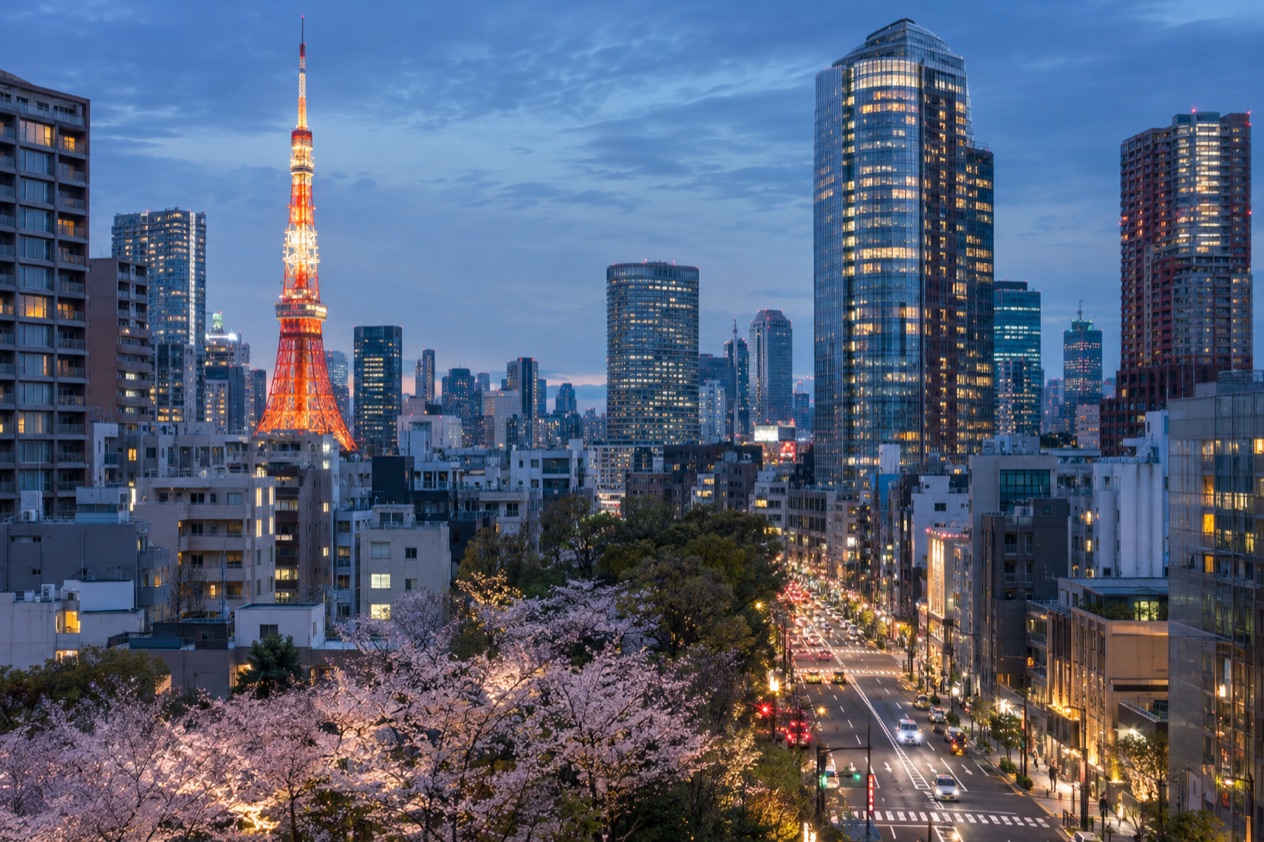
The cherry blossom, sakura, is one of Japan’s most iconic symbols and a harbinger of spring. In Tokyo the first flowers usually open around March 24, and full bloom usually falls around the end of March, around March 31.
From one spring to the next the timing shifts: in recent years the first flowers have opened anywhere from mid-March to the last days of the month. The Japan Meteorological Agency declares first bloom when a few flowers open on a sample tree, and full bloom when about 80 percent of the buds are open.
So an early March trip is more likely to catch bare branches and buds than a pink canopy, while a trip in the last week brings real odds of the first flowers or the full show. The species watched is mainly the Somei-Yoshino, the pale pink tree behind most hanami, the custom of picnicking beneath the blossoms. Plum blossoms belong to the weeks before, since they usually flower until late February, so by March they are fading.
Seasonal sweets arrive with the blossoms, and you will see sakura mochi, rice cake wrapped in a pickled cherry leaf, and pink-tinted treats in bakeries and convenience stores. Sakura-flavored drinks and desserts appear in cafés. Hanami bento boxes, packed for sitting under the trees, are one of the pleasures of the season.
Temples, shrines and towers
Senso-ji in Asakusa is Tokyo’s oldest-established temple, and you walk toward it under a great lantern gate and along a lane of snack and souvenir stalls. In March it is a good stop for nibbling street food in cool air: grilled rice crackers, sweet bean pastries and fried treats suit a day when you want something warm in the hand.
Meiji Shrine in Shibuya is dedicated to the deified spirits of Emperor Meiji and Empress Shoken. You pass through torii gates (the shrine gateways) into a wooded approach, a pleasant change of scene from the surrounding districts. Tokyo Skytree in Sumida stands 634 meters tall, and a clear day gives a long view over the city’s patchwork of neighborhoods, while a gray day is a reason to save it for later.
Beyond those, central Tokyo is a patchwork of districts: Ginza, Akihabara, Tokyo Station and Marunouchi, Nihonbashi, Kagurazaka, Akasaka and more. Roppongi and Akasaka can be reached from Shibuya Station in about 10 minutes by train, and Roppongi Station is served by the Hibiya Line and the Toei Oedo Line, which makes the two districts easy to string together for an evening of restaurants and bars. For a change of pace, the Tama area includes Mt. Takao and its surroundings, and the Izu and Ogasawara Islands are farther afield.
Food in March suits the cool weather. Ramen shops, izakaya (casual pubs serving small plates), oden stew and hot pots still fit the evenings, while strawberry sweets and spring-themed menus begin to show up at the end of the month. On wet days the city’s department store food halls and covered shopping arcades are a pleasant place to graze and browse.
A two-day itinerary for Tokyo in March
Day 1 starts in Asakusa, at Senso-ji, with the lantern gate and the market lane leading up to the main hall. Take your time and graze on street snacks, since March mornings are cool enough that a warm sweet or a grilled skewer is welcome. From there, go on to Tokyo Skytree in Sumida for the view over the city, and eat lunch at a casual place in the neighborhood.
In the afternoon, head back toward central Tokyo for a wander through Ginza or Nihonbashi, where department stores and old shopping streets make a comfortable rainy-day pivot if the weather turns. Spend the evening at an izakaya, where small plates and a warm drink fit the cool night.
Day 2 begins at Meiji Shrine in Shibuya, walking the wooded approach and passing under the torii before the day builds up. Afterward, wander the surrounding streets of Shibuya for a late breakfast or a coffee, then take the train to Roppongi and Akasaka for the afternoon. The two districts are about 10 minutes from Shibuya Station, and they hold galleries, cafés and restaurants of every style.
If the day is wet, move the shrine walk to a drier moment and spend more of the day indoors: galleries and museums in Roppongi, the lobby displays at Keio Plaza Hotel in the first days of the month, or a long lunch in a department store food hall. For dinner, choose a ramen counter or a sushi bar and end the trip with a stroll under the lights.
Is Tokyo busy in March?
March gathers pace as it goes, because the festival calendar opens in the first days of the month and the cherry blossoms start to open in its last week or so. The start of the month belongs to Hina Matsuri and the Daruma fair, and the end belongs to the first flowers and the hanami picnics that follow them.
What this means for the traveler is mostly a matter of rhythm. Early March has the feel of late winter, with bare branches, cool evenings and indoor displays. By the final week, people are checking on the trees, and the parks start to fill with groups settling onto blankets. The blossoms are the main driver of the mood: the cherry blossom is the most famous flower in the country, and the Japanese follow it closely.
The bloom date also moves from one spring to the next, so the city’s busiest-feeling days cannot be fixed on the calendar months ahead. If you want blossoms, plan for the last week of the month, and if you prefer a quieter pace and the festivals, aim for the first.
What to pack for Tokyo in March
Pack for a city that is cool in the morning, mild at its warmest and unpredictable in between. Spring in much of Japan calls only for a light jacket or a simple sweater, and Tokyo in March adds rain gear to that list.
- A light jacket or a simple sweater, which is all that spring weather usually asks of you.
- A warmer layer or scarf for the low-40s nights.
- A compact umbrella or light rain shell, since roughly a third of the month sees rain.
- Comfortable, water-resistant walking shoes for temple grounds and long city days.
- A small day bag for pastries, a snack or a hanami picnic if the blossoms open.
- A camera or phone with room for cherry buds, dolls and temple lanterns.
Good to know before you go
March dates move around, and the festivals and the blossoms are the best examples. Hina Matsuri falls on March 3 and the Jindaiji Daruma Fair on March 3 and 4, but the cherry bloom shifts with the spring, so treat any bloom date as a usual date rather than a promise. Tokyo is nine hours ahead of GMT and has no daylight saving time, so the clocks do not change in March.
A cold, wet day is possible at any point in the month, and snow or sleet can appear on a day or so. Keep one indoor plan in your pocket, such as a display, a department store or a museum, so a gray day does not derail the itinerary.
Tokyo in March vs February and April
Moving four weeks earlier brings a colder, drier Tokyo, with a lower afternoon high and far fewer wet days, and with snow or sleet on more days than in March. The days are shorter, with about an hour less daylight. Plum blossoms usually flower until late February, so February is the month for plum trees rather than cherries, and Hina Matsuri comes right at its end.
Moving four weeks later brings warmer afternoons and the longest days of the three months, and the blossoms are at or past their fullest. April also brings more rain than March, so the better weather comes with a few more showers. Other regions bloom on their own calendars: Fukuoka’s first flowers usually open around March 22, and Aomori’s around April 22, so anyone following the blossoms north moves into April.
Travelers who want the doll festival, the temple fair and the buds should stay in early March, and those who want the first flowers should aim for the last week. If your priority is walking under full blossoms in warmer air, shift into April, and if you want the plum trees and the coldest, clearest days, go in February.
Is March a good time to visit Tokyo?
Yes, for travelers who like festivals, temples and the sense of a season changing, and who are happy to carry an umbrella. March suits people who enjoy culture and food as much as scenery, and who can take a gray day in stride. It is a weaker fit for anyone who needs reliably warm, dry weather, or who wants to be sure of full cherry blossoms, since the bloom may not have arrived when you do.
On arrival, start with whichever March event is closest to your dates: a doll display in the first days, the Daruma fair on March 3 and 4, or a walk to look at the cherry buds in the last week. Then fold in Senso-ji, Meiji Shrine and the Skytree around the weather, saving the outdoor sights for the drier days.
What is special about March in Tokyo is the sense of transition, a city that still has winter in its evenings but has begun to dress for spring. Dolls in lobbies, red Daruma in temple stalls, buds on the branches and sakura sweets in the shops all arrive in the same few weeks.
Sources
- Japan Meteorological Agency (JMA), Normal values 1991-2020, monthly (https://www.data.jma.go.jp/stats/etrn/view/nml_sfc_ym.php?prec_no=44&block_no=47662), station Tokyo, elevation 25 m, checked October 11, 2026
- Computed from the date and the latitude of the place (sunrise equation, solar elevation -0.833 degrees), October 11, 2026
- Japan Meteorological Agency, cherry blossom first-bloom dates 2021-2026 and 1991-2020 normal (https://www.data.jma.go.jp/sakura/data/sakura003_07.html), checked October 11, 2026
- Japan Meteorological Agency, cherry blossom full-bloom dates 2021-2026 and 1991-2020 normal (https://www.data.jma.go.jp/sakura/data/sakura004_07.html), checked October 11, 2026
- Japan Meteorological Agency, sakura2020.pdf (https://www.data.jma.go.jp/sakura/data/sakura2020.pdf), checked October 11, 2026
- Japan National Tourism Organization, flowers by season: cherry blossom, plum, wisteria, hydrangea, where and when (https://www.japan.travel/en/see-and-do/flowers/), checked October 11, 2026
- Wikipedia, Prunus mume (https://en.wikipedia.org/wiki/Prunus_mume), checked October 11, 2026
- Japan National Tourism Organization, spring in Japan (https://www.japan.travel/en/guide/spring-guide/), checked October 11, 2026
- Japan National Tourism Organization, autumn in Japan (https://www.japan.travel/en/guide/autumn-guide/), checked October 11, 2026
- Japan National Tourism Organization, summer in Japan (https://www.japan.travel/en/guide/summer-guide/), checked October 11, 2026
- GO TOKYO, best things to do and see in Tokyo in March (https://www.gotokyo.org/en/story/guide/march/index.html), checked October 11, 2026
- Japan National Tourism Organization, Tokyo (https://www.japan.travel/en/destinations/kanto/tokyo/roppongi-and-akasaka-area/), checked October 11, 2026
- GO TOKYO, the official Tokyo travel guide (https://www.gotokyo.org/en/), checked October 11, 2026
- GO TOKYO, getting around (https://www.gotokyo.org/en/plan/index.html), checked October 11, 2026
- GO TOKYO, spots (https://www.gotokyo.org/en/spot/index.html), checked October 11, 2026
- GO TOKYO, Tokyo in autumn (https://www.gotokyo.org/en/story/guide/autumn/index.html), checked October 11, 2026
- Asakusa Kannon Sensoji (https://www.senso-ji.jp/english/), checked October 11, 2026
- Wikipedia, Sensō-ji (https://en.wikipedia.org/wiki/Sens%C5%8D-ji), checked October 11, 2026
- Wikipedia, Meiji Shrine (https://en.wikipedia.org/wiki/Meiji_Shrine), checked October 11, 2026
- Tokyo Skytree, official site (https://www.tokyo-skytree.jp/en/), checked October 11, 2026
- Wikipedia, Tokyo Skytree (https://en.wikipedia.org/wiki/Tokyo_Skytree), checked October 11, 2026