
In June, umbrellas bloom along Tokyo’s sidewalks as quickly as the hydrangeas bloom in the shrine gardens, and the soft blue and violet flower heads look even brighter against wet stone and dark roof tiles. The air is warm and damp, the evenings stretch long, and the city turns to cold noodles, shaved ice and frothy beer on a terrace. Tokyo in June is a month for flower festivals, garden walks and slow indoor afternoons when the rain settles in.
What is the weather like in Tokyo in June?
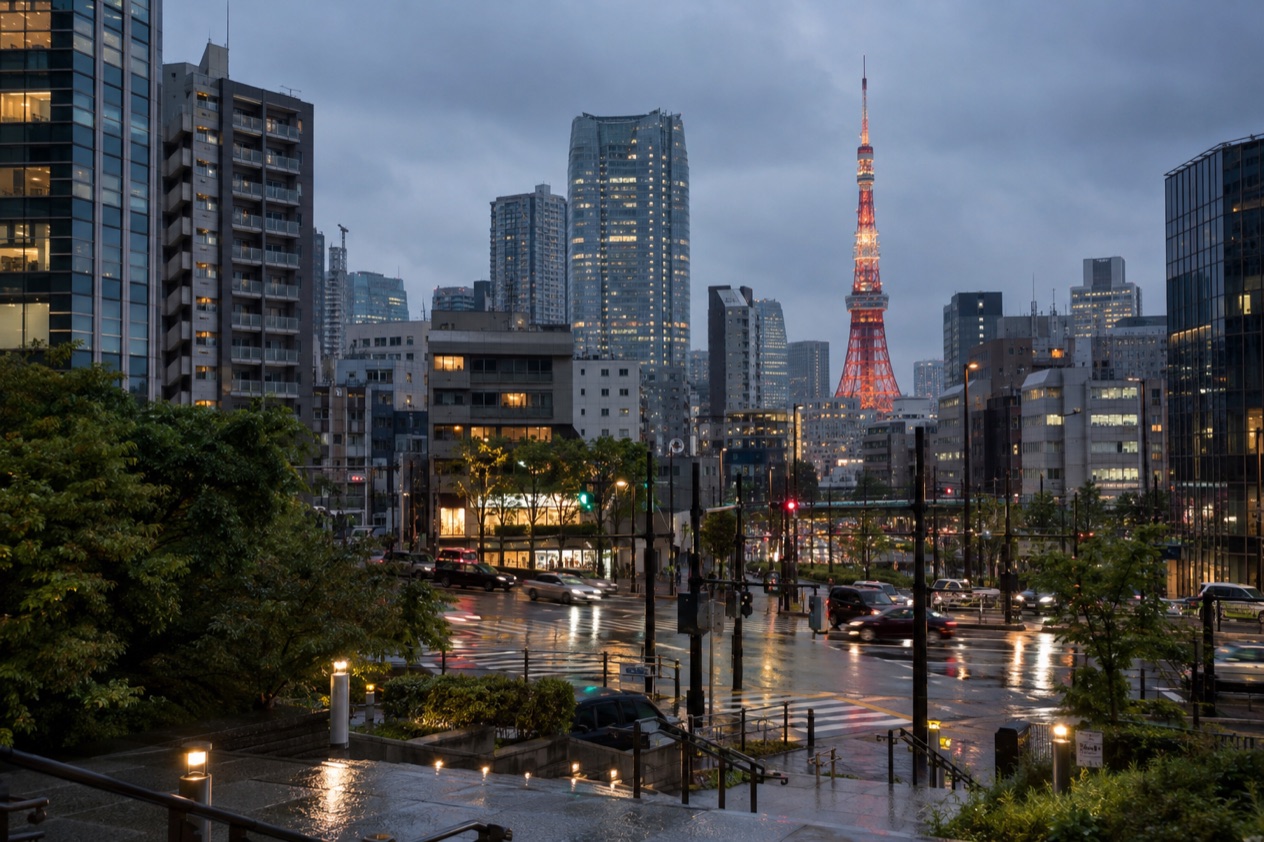
Tokyo in June is warm, damp and often gray, noticeably muggier than May and not yet as hot as July.
| Month | Average high (°F) | Average low (°F) | Precipitation (in) | Days with 1 mm or more of precipitation | Hours of sunshine | Daylight on the 15th |
|---|---|---|---|---|---|---|
| May | 74.5 | 58.3 | 5.50 | 10.1 | 180 | 14 h 01 min |
| June | 79.0 | 65.3 | 6.61 | 11.6 | 124 | 14 h 33 min |
| July | 85.8 | 72.3 | 6.15 | 10.5 | 151 | 14 h 22 min |
Rain is the thing to plan around. June has the most rainy days and the most rain of the three months, and the sunshine total drops well below May’s. Expect plenty of gray skies, with sunny stretches between them. A compact umbrella or a light rain jacket earns its place in the bag every day. Humidity hovers in the mid-70s percent, so the air feels heavier than the thermometer suggests.
The warmth is real but not extreme, so cotton and linen shirts, light trousers or skirts, and shoes that tolerate a puddle suit most days of sightseeing. The nights stay mild, and a thin layer is plenty once the sun is gone. Since the daylight is long, evening walks, garden visits and late dinners all fit comfortably into a single day.
Wet streets change the look of the city. Colors deepen, stone lanterns turn dark and glossy, and leaves in the shrine gardens shine green. It is a good month for photographs of flowers and reflections, though less so for wide views of the skyline.
What to do in Tokyo in June
June in Tokyo belongs to flowers that like water. Hydrangeas (ajisai) and irises (shobu) take over shrines, temples and gardens, and each has its own festival. Tokyo’s summer generally lasts from June to August, and the first weeks of it are about gardens, cold food and cold beer, with museums and department stores as the backup plan when the sky opens.
Hydrangea festivals
The Bunkyo Hydrangea Festival (Ajisai Matsuri) is held at Hakusan-jinja Shrine and features approximately 3,000 hydrangea plants. Blooms in blue, pink, purple and white crowd the slopes around the shrine, and the pleasure is in slowing down and looking at the petals up close. Rain beading on the flower heads suits the scene.
Takahata Fudoson Temple holds its own hydrangea festival, where the flowers surround a five-story pagoda. The red of the pagoda against a green and blue hillside is the picture most visitors come home with. Wear shoes that can handle damp paths, and keep the umbrella handy because the flowers look best when it rains.
Hydrangeas are native to Japan, and one species, Hydrangea serrata, is turned into ama-cha, a sweet herbal tea whose leaves develop a gentle sweetness. Look for ajisai motifs in the season’s wagashi (traditional sweets), which are shaped and tinted to echo the flowers.
Iris gardens in Katsushika
The Katsushika Iris Festival (Shobu Matsuri) is held at two sites, Horikiri Shobuen Iris Garden and Mizumoto Park. Horikiri Shobuen is a garden devoted to irises, laid out so you walk beside beds of purple, white and violet blooms. It is a good outing for anyone who likes gardens built around a single flower.
Mizumoto Park gives the festival a different mood, a larger green space where the irises sit among trees and open lawns. Seeing both gives you a garden-style and a park-style take on the same flower. Bring a hat as well as an umbrella, since the sky can swing between drizzle and bright cloud in an hour.
Beer gardens and Mt. Takao
Beer gardens are popular in Tokyo in June, and the idea is simple: a table outdoors, a cold mug, grilled skewers and edamame. Only those aged 20 and over can drink alcohol, since that is the legal drinking age in Japan. Rooftops and terraces suit the long light evenings.
For a beer with some greenery, Mt. Takao Beer Mount is a beer garden on Mt. Takao, west of central Tokyo. You trade the glass towers for a mountain, a good option once the city starts to feel sticky.
Eating in the damp heat
The season pulls you toward cold dishes. Zaru soba, buckwheat noodles served chilled with a dipping sauce, and hiyashi chuka, cold ramen noodles topped with strips of egg, ham and cucumber, are the kind of lunches that suit a muggy day. Kakigori, shaved ice with syrup, arrives at cafés and festival stalls as the weather warms.
In the evening, an izakaya (a casual pub) with grilled chicken skewers, cold tofu and a beer fits the mood of the month. Department store food halls make a dry detour for sweets and bento when the rain gets heavy.
June is also the wrong month for some things. The cherry trees, which bloom in Tokyo from late March to early April, are long past, and Mount Fuji’s climbing season does not open until the beginning of July. That leaves hydrangeas, irises and a damp, green city as the month’s own pleasures.
A two-day itinerary for Tokyo in June
Day 1 is for hydrangeas and the city’s core. Start the morning at Hakusan-jinja Shrine in Bunkyo, where the festival’s flowers fill the grounds, and take your time along the paths. Later, ride the JR Yamanote Line, the loop that defines central Tokyo, to Shinjuku, the administrative center, for lunch among the department stores and side-street noodle counters.
In the afternoon, stay under cover if the rain sets in: the food halls and shops around Shinjuku keep you dry, and a cold dessert fits. As the long daylight fades, head to an izakaya or a rooftop beer garden for skewers and a cold mug if you are 20 or over.
Day 2 goes to the iris and the green edge of the city. In the morning, walk the beds at Horikiri Shobuen Iris Garden in Katsushika, then continue to Mizumoto Park for the wider, greener view of the festival. Lunch can be cold soba or a bowl of chilled noodles at a local shop.
For the afternoon, head west to Mt. Takao and its beer garden, or visit the hydrangeas around the pagoda at Takahata Fudoson Temple. If the weather turns, trade the outdoor stops for a museum, a covered shopping arcade or a long lunch, and keep the flowers for the next break in the clouds.
Is Tokyo busy in June?
June is a month between the big seasons, with the cherry blossoms of late March and early April behind you and Fuji’s climbing season still ahead.
What defines the month is its flowers. The hydrangea and iris festivals draw people to Hakusan-jinja, Takahata Fudoson, Horikiri Shobuen and Mizumoto Park, so expect company in those gardens when the blooms are at their fullest. The same flowers also give you a reason to leave the center and explore corners of the city beyond the main sights.
Summer in Tokyo generally lasts from June to August, and June is its opening act. The mood is easygoing and a little damp: people carry umbrellas, linger over cold noodles and meet friends at beer gardens as the evenings stay light. The big summer events come later, with Yasukuni Shrine’s Mitama Matsuri in mid-July and the Koenji Awa-odori Dance in late August, so June has a gentler festival rhythm built around flowers.
What to pack for Tokyo in June
Pack for warm, wet days of walking through gardens, shrine grounds and city streets, with a little extra for the evenings.
- A compact umbrella and a light rain jacket, since June has the most rainy days of the three months.
- Breathable cotton or linen clothes, because the air is humid as well as warm.
- Shoes that tolerate wet paths, for the garden festivals and shrine grounds.
- A thin layer for the evenings, which stay mild but cooler than the afternoons.
- A small towel or handkerchief, for the muggy stretches between showers.
- A hat for the brighter breaks between clouds.
Good to know before you go
June in Tokyo is damp, and the flowers are the reason to go out in it. Honshu summers are humid, hot and sultry, and the city’s wet weather is part of the month’s rhythm, so build a few indoor options into each day. Beer gardens are a June pastime, but only those aged 20 and over can drink alcohol.
Pair outdoor flower stops with something under a roof nearby, such as a museum, a covered arcade or a long lunch. The gardens in Bunkyo, Katsushika and beyond reward a flexible plan, because the best moments often come when the rain eases.
Tokyo in June vs May and July
Moving the trip four weeks earlier gives you a drier, sunnier Tokyo. May has far more sunshine and cooler evenings, so long walks across the city are more comfortable. You miss the hydrangea and iris festivals, though, and the cherry blossoms of late March and early April are already over.
Moving four weeks later brings real heat. July is the warmest of the three months, with nights that stay warm and humid, and Mount Fuji’s climbing season opens at the beginning of the month. Yasukuni Shrine’s Mitama Matsuri follows in mid-July, and the flower festivals of June fade into the summer festival calendar.
Choose May if you want brighter skies and cooler walking. Choose July if you want summer festivals and the Fuji season. Stay with June if flowers matter more to you than sunshine, and if you do not mind gray days with an umbrella in hand.
Is June a good time to visit Tokyo?
Yes, June suits travelers who love gardens and flowers and who are happy to work around the rain.
You will enjoy it if you like hydrangeas at Hakusan-jinja and Takahata Fudoson, irises in Katsushika, cold noodles and shaved ice, and evenings on a beer garden terrace. You will like it less if you want reliable sun, dry streets or a skyline view, in which case another month suits you better.
On arrival, start with the flowers: pick the festival that fits your first morning, whether the hydrangeas in Bunkyo or the irises at Horikiri Shobuen, and let the rest of the plan bend around the weather. Keep an umbrella in your bag from the first day, and keep a museum or a food hall in mind for the wettest hours. What stays with you from June in Tokyo is a pagoda ringed with hydrangeas and the smell of rain on the shrine paths.
Sources
- Japan Meteorological Agency (JMA), Normal values 1991-2020, monthly (https://www.data.jma.go.jp/stats/etrn/view/nml_sfc_ym.php?prec_no=44&block_no=47662), station Tokyo, elevation 25 m, checked October 11, 2026
- Computed from the date and the latitude of the place (sunrise equation, solar elevation -0.833 degrees), October 11, 2026
- Japan National Tourism Organization, weather and seasons in Japan (https://www.japan.travel/en/plan/weather/), checked October 11, 2026
- Wikipedia, Climate of Japan (https://en.wikipedia.org/wiki/Climate_of_Japan), checked October 11, 2026
- Japan National Tourism Organization, flowers by season: cherry blossom, plum, wisteria, hydrangea, where and when (https://www.japan.travel/en/see-and-do/flowers/), checked October 11, 2026
- Wikipedia, Hydrangea (https://en.wikipedia.org/wiki/Hydrangea), checked October 11, 2026
- Japan National Tourism Organization, summer in Japan (https://www.japan.travel/en/guide/summer-guide/), checked October 11, 2026
- GO TOKYO, best things to do and see in Tokyo in June (https://www.gotokyo.org/en/story/guide/june/index.html), checked October 11, 2026
- GO TOKYO, Tokyo in spring (https://www.gotokyo.org/en/story/guide/spring/index.html), checked October 11, 2026
- GO TOKYO, Tokyo in summer (https://www.gotokyo.org/en/story/guide/summer/index.html), checked October 11, 2026
- GO TOKYO, Tokyo in winter (https://www.gotokyo.org/en/story/guide/winter/index.html), checked October 11, 2026
- Wikipedia, Tokyo (https://en.wikipedia.org/wiki/Tokyo), checked October 11, 2026
- Wikivoyage, Tokyo (https://en.wikivoyage.org/wiki/Tokyo), checked October 11, 2026