
In July, Tokyo opens the morning with the rattle of cicadas and ends it with paper strips fluttering on bamboo branches, each one carrying a wish. Shrines hang wind chimes, shops sell fans and cold noodles, and the whole city moves a little slower under the humid air. It is a month of festivals, long light evenings and plans built around the heat.
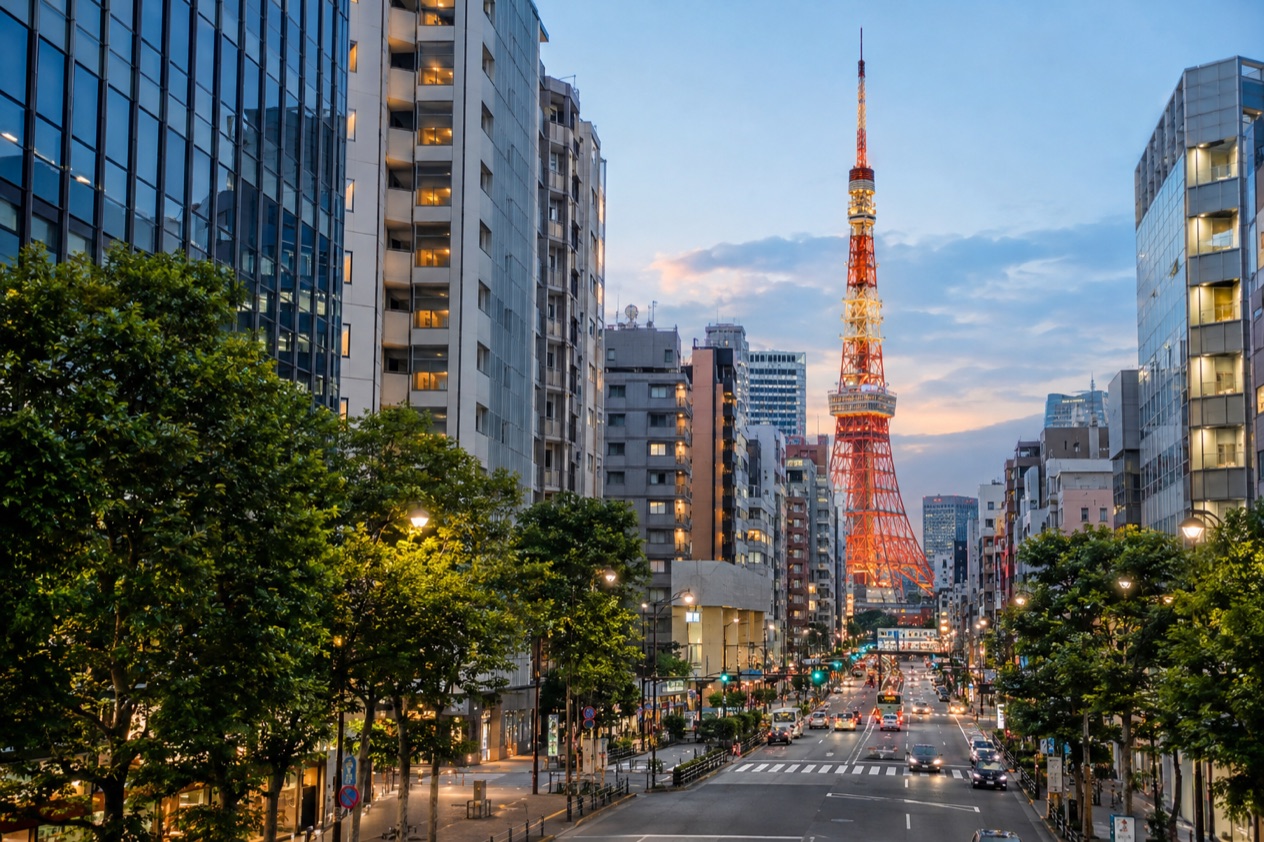
What is the weather like in Tokyo in July?
July in Tokyo is hot and humid, with the rainy spell of early summer fading and sunnier, sultrier days taking over. The table sets it between the month before and the month after.
| Month | Average high (°F) | Average low (°F) | Precipitation (in) | Days with 1 mm or more of precipitation | Hours of sunshine | Daylight on the 15th |
|---|---|---|---|---|---|---|
| June | 79.0 | 65.3 | 6.61 | 11.6 | 124 | 14 h 33 min |
| July | 85.8 | 72.3 | 6.15 | 10.5 | 151 | 14 h 22 min |
| August | 88.3 | 74.3 | 6.09 | 7.9 | 174 | 13 h 33 min |
Afternoons are properly hot, and the humidity makes them feel heavier than the thermometer says. Nights barely cool off, so evenings outdoors are comfortable in a T-shirt and you will not need a jacket anywhere except inside the air-conditioned trains, shops and museums, which can feel almost chilly after the street.
Rain still falls on about one day in three, usually as a passing shower or a gray, damp day rather than a long storm. A compact umbrella earns its place in the bag, and so does a plan B for indoor hours. When the sun does come out, it is strong, so a hat and sunscreen matter.
Daylight stretches long, and in summer it stays light until around 19:30. That leaves a generous evening for walking shrine grounds, riverside promenades and neighborhoods once the worst of the heat has eased.
What to do in Tokyo in July
The big date of the month is Tanabata, the Star Festival, celebrated in Tokyo on July 7. It marks the legend of the deities Orihime and Hikoboshi, who meet once a year across the Milky Way. People write wishes on narrow strips of paper and tie them to bamboo, and the streets and shrines fill with colorful decorations.
At Tokyo Daijingu Shrine, the Tanabata Kigansai lets visitors write a wish on a paper strip, dedicate it at the shrine and offer a prayer. The Shitamachi Tanabata Matsuri has Tanabata decorations that you wander through, a pleasant way to spend an evening in the old downtown spirit.
Senso-ji and the Hozuki-ichi fair
On July 9 and 10, Senso-ji in Asakusa holds the Hozuki-ichi fair, a market of Chinese lantern plants in pots, their orange husks hanging like tiny lanterns. Praying at the temple on July 9 or 10 is said to bring 46,000 days’ worth of blessings, which is why the grounds draw so many people on those two days.
Senso-ji is Tokyo’s oldest temple, and in July its approach, Nakamise-dori, takes on a seasonal air with wind chimes and cool snacks at the stalls. Walk through the gate, under the great lantern, and take your time on the main hall’s steps. The fair makes this a good moment to see the temple with a festival around it.
Pair it with a stroll around Asakusa’s side streets, where small shops sell fans, tenugui towels and handmade sweets. A shaved-ice stop (kakigori, flavored with syrup) is the classic answer to the heat. Make it a morning or evening visit, since midday on stone pavement can be punishing.
Morning glories at Iriya
The Iriya Morning Glory Festival is a summer tradition in Tokyo, with around 30 stalls selling morning glory plants and around 100 other stalls alongside. Vines climb bamboo frames in pots of every shade of blue, purple and pink, and buyers carry them home on foot, flowers swaying.
The mood is that of a neighborhood fair, with food stands, chatter and the smell of grilled snacks under the morning sun. It suits anyone who likes gardens, crafts or just watching a very local summer ritual. Go early, as the name suggests, when the flowers are open.
Roppongi, Akasaka and the city after dark
When the heat builds, the city turns to indoor and evening pleasures. Roppongi and Akasaka, reached from Shibuya Station in about 10 minutes by train, are districts of galleries, restaurants and nightlife. Roppongi Station is served by the Tokyo Metro Hibiya Line and the Toei Oedo Line.
With light lasting into the evening, you can wander before dinner, then step into cool dining rooms. Think cold soba noodles, chilled tofu, grilled eel (a summer favorite, eaten for stamina), and a cold beer or barley tea.
Meiji Jingu in Shibuya, a Shinto shrine dedicated to Emperor Meiji and Empress Shoken, is a leafy retreat, its forest shade welcome on a hot day. Tokyo Skytree in Sumida stands 634 meters tall and gives the city a long look across the haze.
Fireworks are called hanabi in Japanese, and summer is the season they are associated with across Japan, along with yukata, the light cotton robes some people wear to evening festivals. Mount Fuji’s climbing season also begins in early July and runs to about early September, for those who want to extend the trip beyond the city.
A two-day itinerary for Tokyo in July
Day 1 starts in Asakusa in the early morning, before the heat builds. Walk to Senso-ji and along Nakamise-dori, and if it is July 9 or 10, browse the Hozuki-ichi fair. Take a shaved-ice break in the old streets nearby, then head to Tokyo Skytree in Sumida at midday for the view and the air conditioning.
In the afternoon, stay in cool indoor spaces, a museum or a department store food hall, and have a long lunch of cold noodles. As the evening comes, head to the Shitamachi Tanabata Matsuri area or a shrine with Tanabata decorations. Sunset comes late, so there is plenty of light for a stroll. Rain card: shopping arcades and the Skytree complex keep you dry.
Day 2 begins at Meiji Jingu in Shibuya, where the forest path is shady in the morning. Afterward, take the train to Roppongi and Akasaka for a gallery visit and lunch. Eel or soba suits the heat well, and a cafe stop gives the afternoon a pause.
Spend the evening in Roppongi, where restaurants and bars glow after dark, or wander toward Tokyo Daijingu Shrine for the Tanabata wishes. If the weather turns, galleries and covered shopping streets give you plenty of options, and an izakaya dinner (a casual pub with small plates) rounds off the day.
Is Tokyo busy in July?
July brings a lively festival calendar to Tokyo, and the places tied to those events, such as Senso-ji on its Hozuki-ichi days, draw crowds of worshippers and browsers. Tanabata on July 7 fills shrines and shopping streets with decorations and people.
Beyond those dates, the heat shapes the pace more than anything. Streets feel slower in the afternoon, people duck into cafes and shops, and activity picks up again as the day cools, with the long evening light drawing people back outside.
Mount Fuji’s climbing season opens in early July, so the mountain draws its own visitors from that point onward. In the city itself, the best way to keep a calm rhythm is to place the busy outdoor sights in the morning and the festival visits in the evening, with indoor stops in between.
What to pack for Tokyo in July
Pack for heat, humidity and the occasional shower, with a layer for cold interiors.
- Light, breathable clothing, because the humidity makes the afternoons feel heavy.
- A compact umbrella for showers that pass through on about one day in three.
- A hat and sunscreen for strong sun between the rains.
- A thin cardigan or scarf for air-conditioned trains and museums.
- Comfortable walking shoes that dry quickly after a wet street.
- A small towel or handkerchief for wiping off sweat, as many people carry one in summer.
Good to know before you go
July sits within the hot, sultry summer that Honshu is known for, and the weather can switch between sunshine and showers. Build your days with a shaded or indoor option nearby. Tokyo is nine hours ahead of GMT with no daylight saving time, and the long evenings make late sightseeing pleasant.
Tokyo in July vs June and August
Moving earlier to June means a slightly cooler but wetter city, with more rainy days and fewer hours of sun. The festival calendar of July, with Tanabata and Hozuki-ichi, has not yet begun, and Mount Fuji’s climbing season has not opened.
Moving later to August brings the hottest weather of the three, with the fewest rainy days and the most sun. Days are shorter than in July, and Tanabata falls outside the month in Tokyo, though other cities hold their own, such as Sendai from August 6 to 8.
Choose July if you want festivals, a mix of sun and shower, and the long evenings. Choose June if you prefer slightly milder air and do not mind the rain, and August if you want the sunniest, hottest days and plan to spend them mostly indoors or in the shade.
Is July a good time to visit Tokyo?
Yes, for travelers who enjoy festivals, evening strolls and a city in full summer mode, and who can handle heat and humidity. Those who dislike sticky weather would be happier in another season.
July suits people who like shrines, markets and food, since the calendar is full of events that give the days a shape. It is less suited to travelers who plan long outdoor walks in the middle of the day, since the afternoons are hot and showers are common.
On arrival, start with an early morning outing to a shrine or temple before the heat, then ease into the evening when the light stays long. What is special about July in Tokyo is the sense of ritual in the air, wishes tied to bamboo, lantern plants in pots and morning glories blooming at dawn.
Sources
- Japan Meteorological Agency (JMA), Normal values 1991-2020, monthly (https://www.data.jma.go.jp/stats/etrn/view/nml_sfc_ym.php?prec_no=44&block_no=47662), station Tokyo, elevation 25 m, checked October 11, 2026
- Computed from the date and the latitude of the place (sunrise equation, solar elevation -0.833 degrees), October 11, 2026
- Japan National Tourism Organization, weather and seasons in Japan (https://www.japan.travel/en/plan/weather/), checked October 11, 2026
- Wikipedia, Climate of Japan (https://en.wikipedia.org/wiki/Climate_of_Japan), checked October 11, 2026
- Japan National Tourism Organization, summer in Japan (https://www.japan.travel/en/guide/summer-guide/), checked October 11, 2026
- Japan National Tourism Organization, festivals and events (https://www.japan.travel/en/see-and-do/festivals-and-events/), checked October 11, 2026
- Wikipedia, Hanabi (https://en.wikipedia.org/wiki/Hanabi), checked October 11, 2026
- Wikipedia, Gion Matsuri (https://en.wikipedia.org/wiki/Gion_Matsuri), checked October 11, 2026
- Japan National Tourism Organization, Mount Fuji guide (https://www.japan.travel/en/fuji-guide/), checked October 11, 2026
- Official website for Mt. Fuji climbing, about the climb (https://www.fujisan-climb.jp/en/about/), checked October 11, 2026
- Wikipedia, Tanabata (https://en.wikipedia.org/wiki/Tanabata), checked October 11, 2026
- GO TOKYO, best things to do and see in Tokyo in July (https://www.gotokyo.org/en/story/guide/july/index.html), checked October 11, 2026
- Japan National Tourism Organization, Tokyo (https://www.japan.travel/en/destinations/kanto/tokyo/roppongi-and-akasaka-area/), checked October 11, 2026
- GO TOKYO, the official Tokyo travel guide (https://www.gotokyo.org/en/), checked October 11, 2026
- GO TOKYO, getting around (https://www.gotokyo.org/en/plan/index.html), checked October 11, 2026
- GO TOKYO, spots (https://www.gotokyo.org/en/spot/index.html), checked October 11, 2026
- GO TOKYO, Tokyo in autumn (https://www.gotokyo.org/en/story/guide/autumn/index.html), checked October 11, 2026
- Asakusa Kannon Sensoji (https://www.senso-ji.jp/english/), checked October 11, 2026
- Wikipedia, Sensō-ji (https://en.wikipedia.org/wiki/Sens%C5%8D-ji), checked October 11, 2026
- Wikipedia, Meiji Shrine (https://en.wikipedia.org/wiki/Meiji_Shrine), checked October 11, 2026
- Tokyo Skytree, official site (https://www.tokyo-skytree.jp/en/), checked October 11, 2026
- Wikipedia, Tokyo Skytree (https://en.wikipedia.org/wiki/Tokyo_Skytree), checked October 11, 2026