
The sliding doors of the arrivals hall open, the air changes, and Tokyo begins with signs in two alphabets and a stream of travelers pulling suitcases toward the exits. Ahead lies Shibuya, the district of the great scramble crossing, the Hachiko statue and towers of shops and neon, and between you and it a handful of ways to travel. Haneda sits on Tokyo Bay and is one of the two airports that serve the city, which makes this the moment to decide how you want your first hour in town to feel.
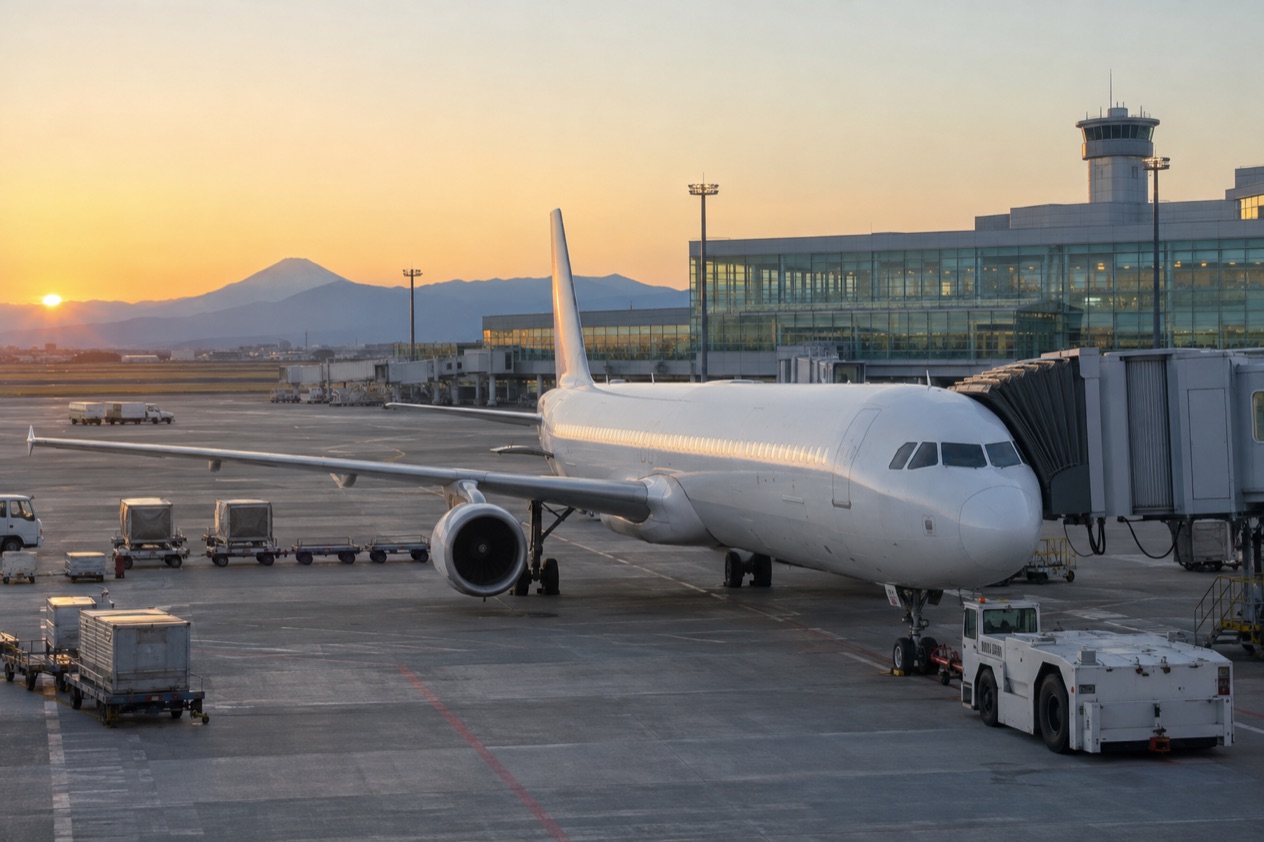
How do you get from the airport to Tokyo?
From Haneda to Shibuya you choose among trains and monorails, buses, and taxis, and the airport itself helps you sort them: from the Passenger Terminal you can search routes, departure and arrival times, and fares for trains, monorails and buses to your destination.
What decides is mostly a matter of temperament and baggage. A traveler with a single carry-on and a taste for watching the city slide past will lean toward rail.
A group with several large suitcases, or someone arriving tired after a long flight, may prefer the simplicity of a taxi that goes door to door. A bus sits in between, with your luggage stowed and your seat secured, though the ride follows the streets rather than the rails.
The terminal you land in matters as well, because each one has its own route to the transportation areas, and the airport provides a video showing the way from the arrivals lobby to every option. The hour of your arrival also plays a part, since the terminals keep different opening hours and not every area stays open through the night. Settle these two points first, and the choice of vehicle usually follows.
One more thing helps before you even leave the ground. The airlines JAL and ANA each run a service for searching and booking transportation to Haneda Airport, called JAL MaaS and ANA TRAVEL CUBE, which can be handy when you are putting the whole journey together at home.
Your options from the airport
Trains and monorails
Rail is the choice of travelers who like to see the city arrive in stages, from the airport platforms to the dense, glittering blocks around Shibuya. From the Passenger Terminal you can search the routes, the times and the fares for trains and monorails to your destination, which saves guessing at the ticket machines.
An IC card makes the rest simple. These rechargeable cards work on trains, buses and boats, and although most regions have their own, with different names and mascots, they can be used throughout Japan. A card bought for Tokyo will keep working in Osaka or Kyoto later in the trip.
A good fit for anyone traveling light and comfortable with stations, signs and a transfer or two. If you have heavy bags, picture the stairs and platforms before you commit, and use the route search to see what the journey involves.
Buses
Buses are listed in the same route search as the trains and monorails, so you can compare departure times and fares side by side before you walk to the stop. Riding a bus means a seat, a window and your suitcase in the hold rather than in your lap, which is a relief after hours on a plane.
You watch Tokyo unfold from street level, with the elevated highways, the bay and then the first dense blocks of the city passing by. That makes it a gentle first look at the capital, and a good option if you would rather not carry bags up and down station stairs.
Buses accept IC cards too, so the same card you tap at the gate can serve here. The route search at the terminal tells you what is available from where you landed.
Taxis
Taxis wait at two kinds of stands. The general stands are for anyone who simply walks up and joins the line, while a separate stand serves taxis dispatched through an app or reserved ahead. If you arranged your ride through an app or by phone, you must use that dedicated stand for reserved taxis.
A taxi suits a group splitting the ride, a traveler with a lot of luggage, or anyone who wants to go straight to a hotel door near Shibuya without thinking about stations. Some taxis in Japan also accept IC cards, which can be convenient, though it is not something to count on in every car.
Tell the driver the name of your hotel or show it on your phone. Having the address ready in Japanese is a good habit in any Tokyo taxi.
Arriving by car or leaving one behind
Haneda also serves people who drive to the airport. Spaces in parking lots P2 through P5 can be reserved in advance, with the details on each lot’s own reservation page. That is a point for travelers starting a trip from Tokyo rather than ending a flight there.
Airport transfer options compared
| Option | Best for | How to book |
|---|---|---|
| Trains and monorails | Travelers who want times and fares laid out before choosing | No booking in the table’s sense: search the route at the Passenger Terminal and tap an IC card |
| Buses | Travelers who prefer a seat and their bags stowed | Search the route at the Passenger Terminal, IC cards accepted |
| Taxi, general stand | Arrivals with no plan and luggage to carry | Join the line at a general stand |
| Taxi, reserved | Travelers who arranged a ride in advance | Arrange by app or phone, then use the dedicated stand for reserved taxis |
The trade-offs are those of any big city airport. Rail keeps you in the rhythm of the city from the first minute, but asks you to handle your own bags and read the signs.
A bus removes the stairs and gives you a seat, though it follows the streets. A taxi is the most direct, ideal for a group or for anyone arriving worn out, and you can either join the general line or arrange a car ahead of time.
Whichever you pick, the route search at the terminal gives the current times and fares, and the airport’s videos show the walk from the arrivals lobby to each option. Once you are in Shibuya, the rest of central Tokyo is close by rail, since Roppongi and Akasaka can be reached from Shibuya Station in about 10 minutes by train.
Arriving at the airport
Haneda has three passenger terminals with 71 gates with jet bridges, and which one you land in shapes your first steps. Terminal 2 handles domestic flights for All Nippon Airways, Air Do and Solaseed Air, and it has an international area as well. Terminal 3 is the international terminal, so travelers from the United States find themselves there.
| Terminal | Open |
|---|---|
| Terminal 1 and the domestic flight areas of Terminal 2 | 5:00 am to 12:00 am |
| Terminal 3 and the international flight area of Terminal 2 | 24 hours a day |
Those hours matter if your flight lands late or you are heading out early. The international areas never close, while Terminal 1 and the domestic side of Terminal 2 do, so an arrival in the small hours is best planned around Terminal 3 or the international side of Terminal 2.
Moving between buildings is straightforward on paper. An underground walkway connects Terminals 1 and 2, and a free inter-terminal shuttle bus links all the terminals on the landside. If you land in one and your transport leaves from another, the shuttle bridges the gap without a fare.
Haneda publishes a video of the route from the Terminal 2 International Arrivals lobby to each transportation option, and another from the Terminal 3 Arrivals lobby. Watching the one for your terminal before you fly takes the guesswork out of the first few minutes, when you have just landed and the signs are all new.
Tokyo itself is the capital of Japan, set on Tokyo Bay in the Kanto region on Honshu. Haneda, officially Tokyo International Airport, and Narita are the two airports nearest the city.
Good to know before you go
An IC card is the small tool that ties the whole trip together. Beyond trains, buses and boats, it pays in vending machines and convenience stores, in some taxis and for a range of other services, so a card loaded once covers your ride from Haneda and your first coffee and bottle of tea in Shibuya.
Because those cards work throughout Japan, you can carry the same one to the next city. Keep your hotel name and address saved on your phone, ready for the taxi driver or the station staff, and let the terminal’s route search do the arithmetic of times and fares.
Sources
- Haneda Airport Passenger Terminal, Access (https://tokyo-haneda.com/en/access/index.html), checked October 11, 2026
- Wikipedia, Tokyo International Airport (https://en.wikipedia.org/wiki/Tokyo_International_Airport), checked October 11, 2026
- Japan National Tourism Organization, Tokyo (https://www.japan.travel/en/destinations/kanto/tokyo/), checked October 11, 2026
- Japan National Tourism Organization, IC cards, Suica, Pasmo, ICOCA, how to use (https://www.japan.travel/en/plan/ic-card/), checked October 11, 2026