
The first morning in Tokyo often starts with a vending machine humming outside the hotel, a convenience-store breakfast of rice balls and hot coffee, and a train platform where everyone stands in neat lines. Then the city opens up, one district after another, each with its own rhythm. A short stay here works best as a series of neighborhoods, from the shrine forest of Shibuya to the temple lanes of Asakusa and the department-store streets of Ginza.
Is three days enough in Tokyo?
Tokyo is the capital of Japan and the most populous metropolitan area in the world, so no itinerary ever covers it all. What three days give you is one big district per day, with an evening in each.
This plan spends the first day in western Tokyo around Shibuya and Shinjuku, the second in the east at Asakusa and Skytree, and the third in central Tokyo, across Ginza, Nihonbashi, Roppongi and Akasaka. That covers a Shinto shrine, a Buddhist temple, two observation towers, a scramble crossing and the shopping streets, with a few meals in each part of town.
What it leaves out is the rest of the map. Central Tokyo alone has Akihabara, Tsukiji, Kagurazaka, Jimbocho and Hamamatsucho. Western Tokyo also has Shimokitazawa, Kichijoji and Koenji, and eastern Tokyo has Ryogoku, Toyosu and Kiyosumi Shirakawa. With more time, add the Tama Area, which reaches out to Mt. Takao and Okutama, or the Izu and Ogasawara Islands, a chain of islands from Oshima to Hahajima that makes a separate trip.
Day 1 in Tokyo
Start at Meiji Shrine in Shibuya, a Shinto shrine dedicated to the deified spirits of Emperor Meiji and Empress Shoken. You walk in under a great wooden torii gate and follow a wide gravel path through trees that muffle the city noise within minutes. Watch for the barrels of sake and wine stacked along the way, and, on some days, a wedding procession crossing the courtyard in formal dress.
From the shrine you drop into Harajuku, known for trendy fashion and shopping, where crepe stands, vintage shops and side streets full of small boutiques fill the afternoon. Then comes Shibuya Crossing, described as the world’s busiest pedestrian crossing, with as many as 3,000 people crossing during a single green light cycle.
Watch it from street level first, then from above, since the tallest building in the area, Shibuya Scramble Square, is wired straight into the station through its underground floor. Lunch or an early dinner fits in its restaurants.
| Site | Open |
|---|---|
| Restaurants on floors 12 and 13, Shibuya Scramble Square | 11:00 to 23:00 |
Finish in Shinjuku, a business district where glittering skyscrapers stand beside lively alleys filled with tiny bars. Choose a yakitori counter or a ramen shop for dinner, then wander the lanes where each bar seats only a handful of people. In summer it stays light until around 19:30, while in winter the nights draw in around 17:00, so the neon takes over earlier in the cold months.
Day 2 in Tokyo
Spend the second day in eastern Tokyo, the part of the city that Asakusa anchors. Senso-ji is a Buddhist temple dedicated to Kannon, the bodhisattva of compassion, and it is Tokyo’s oldest-established temple. It draws 30 million worshippers every year, and you feel it in the approach: a long shopping street of stalls selling rice crackers, sweet bean pastries and little souvenirs leads to the incense burner, where visitors wave the smoke toward themselves.
Around the temple, the older lanes of Asakusa hold tempura counters, soba shops and sweets stands, which makes the district a natural place for a slow lunch. Save the real distances for the metro and decide on the day.
In the afternoon turn to Tokyo Skytree, located in Sumida, which stands 634 meters (2,080 feet) tall. Its observation decks look back across the whole city, and on a clear day the view gives you the layout of everything you walked on Day 1. Evenings around the tower suit a relaxed dinner, with the base of the tower surrounded by shops and restaurants, and the glow of the lit spire hanging over the district after dark.
Day 3 in Tokyo
Rather than leave town, give the last day to central Tokyo at a slower pace. Ginza is an upscale downtown area with high-end restaurants and luxury shops, and its main shopping district sits right behind Ginza Station, which the Hibiya, Marunouchi and Ginza lines all serve. Department stores here turn browsing into an event, with food halls in the basements full of bento boxes, pastries and seasonal sweets.
Nihonbashi, next door, is known for its rich heritage and is the main financial district of Japan. After lunch, head to Roppongi and Akasaka, which you can reach from Shibuya Station in about 10 minutes by train.
Roppongi Station is served by the Hibiya Line and the Toei Oedo Line, Nogizaka Station by the Chiyoda Line and Roppongi-Itchome Station by the Namboku Line. The two districts host Japan’s largest film festival, and their cinemas, galleries and restaurants make a good afternoon.
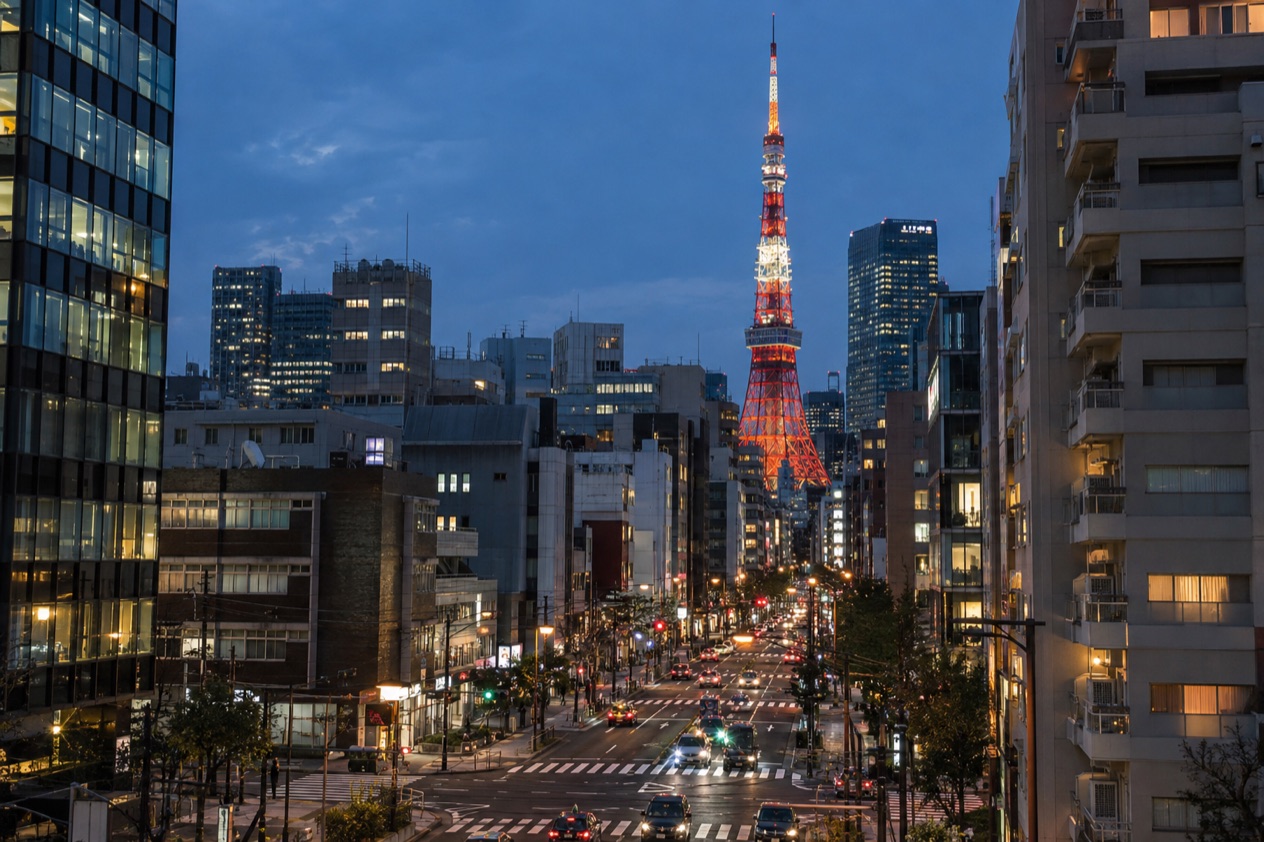
Close the trip at Tokyo Tower, a communications and observation tower in the Shiba-koen district of Minato, standing 1,092 feet tall. Its lit frame makes a fitting last view of the city, and the streets around it hold small restaurants for a farewell dinner. If you would rather swap this day for Mt. Takao in the Tama Area, it is a fair alternative, but you give up the central districts.
Where to stay for three days in Tokyo
For this plan, Shibuya or Shinjuku makes the strongest base. Both belong to western Tokyo and sit on major rail hubs, so Day 1 starts at your door, and the lines you need for Asakusa and Ginza leave from stations nearby. Shibuya Station connects underground to Shibuya Scramble Square, handy when the weather turns, and Shinjuku keeps its bars and restaurants lit late into the night.
Shibuya suits travelers who like fashion, music and a younger street scene, with Harajuku and Meiji Shrine close at hand. Shinjuku suits those who want skyscraper views and a dense maze of dinner options. Staying in Ginza fits visitors who prefer a calm, upscale base near department stores and restaurants, and you still reach the rest of the city by the three metro lines at Ginza Station.
Asakusa is the choice for travelers who want to wake up near Senso-ji and see its lanes before the day begins. Roppongi and Akasaka offer a base with good dining and several metro lines, and the airports, Haneda and Narita, both serve the city, so choose the area that matches your arrival and the part of the plan you care about most.
What to skip if you only have three days in Tokyo
Skip the far excursion. Use the time instead to linger in a neighborhood, with a second coffee, an extra alley or a longer dinner.
Skip the second city. Tokyo can feel like several cities at once, and a hop to another destination uses up a day on trains. Better to spend it on a district you only touched, such as Kagurazaka or Kichijoji, where the pace slows and the shops get smaller.
Skip stacking up observation decks. The plan already includes the heights of Shibuya and Skytree, and Tokyo Tower closes the trip, so a fourth viewpoint adds little. Replace it with a meal you will remember, such as a counter of sushi or a late izakaya dinner.
Skip trying to see every shopping district. Harajuku, Shibuya and Ginza already show three very different sides of Tokyo retail, and adding Akihabara or more department stores just repeats the experience. Take the free hour for a walk through Meiji Shrine’s grounds again or for a stroll along the Sumida after dark.
Getting around Tokyo in three days
Most moves happen by rail, and the metro lines named above carry you between the districts of this plan. Day 1 links Shibuya and Shinjuku by rail, Day 2 runs through eastern Tokyo to Asakusa and Sumida, and Day 3 connects Ginza, Nihonbashi, Roppongi, Akasaka and Shiba-koen.
An IC card makes the trip smoother, since these cards work on trains, buses and boats, and also in vending machines, convenience stores, some taxis and other services. Although most regions have their own cards with different names and characters, they can be used throughout Japan, so the one you load in Tokyo keeps working on later legs. Between stops, plan to walk inside each district, such as the Harajuku lanes or the Asakusa approach.
Arrivals come through Haneda Airport, officially Tokyo International Airport, or Narita Airport, Japan’s largest international airport. From there you continue into the city by rail or road. Tokyo sits on Tokyo Bay in the Kanto region on Honshu, so every day of this plan stays within the same urban area, with no overnight moves.
Good to know before you go
Tokyo is nine hours ahead of GMT and does not observe daylight saving time. Voltage in Japan is 100V and sockets are type A, with two flat holes, so bring an adapter if your device needs one. Dress for the weather of your month, since October runs mild but rainy, with ten days of showers on average, while January is cold and dry with some snow now and then.
Sources
- Japan National Tourism Organization, Tokyo (https://www.japan.travel/en/destinations/kanto/tokyo/), checked October 11, 2026
- GO TOKYO, the official Tokyo travel guide (https://www.gotokyo.org/en/), checked October 11, 2026
- GO TOKYO, getting around (https://www.gotokyo.org/en/plan/index.html), checked October 11, 2026
- GO TOKYO, spots (https://www.gotokyo.org/en/spot/index.html), checked October 11, 2026
- Asakusa Kannon Sensoji (https://www.senso-ji.jp/english/), checked October 11, 2026
- Wikipedia, Sensō-ji (https://en.wikipedia.org/wiki/Sens%C5%8D-ji), checked October 11, 2026
- Wikipedia, Meiji Shrine (https://en.wikipedia.org/wiki/Meiji_Shrine), checked October 11, 2026
- Tokyo Skytree, official site (https://www.tokyo-skytree.jp/en/), checked October 11, 2026
- Wikipedia, Tokyo Skytree (https://en.wikipedia.org/wiki/Tokyo_Skytree), checked October 11, 2026
- Wikipedia, Tokyo Tower (https://en.wikipedia.org/wiki/Tokyo_Tower), checked October 11, 2026
- Wikipedia, Shibuya Crossing (https://en.wikipedia.org/wiki/Shibuya_Crossing), checked October 11, 2026
- Shibuya Scramble Square, official site (https://www.shibuya-scramble-square.com/en/), checked October 11, 2026
- Wikipedia, Shibuya Scramble Square (https://en.wikipedia.org/wiki/Shibuya_Scramble_Square), checked October 11, 2026
- Japan Meteorological Agency (JMA), Normal values 1991-2020, monthly (https://www.data.jma.go.jp/stats/etrn/view/nml_sfc_ym.php?prec_no=44&block_no=47662), station Tokyo, elevation 25 m, checked October 11, 2026
- Japan National Tourism Organization, IC cards, Suica, Pasmo, ICOCA, how to use (https://www.japan.travel/en/plan/ic-card/), checked October 11, 2026
- Japan National Tourism Organization, Japan Rail Pass and regional passes (https://www.japan.travel/en/plan/jr-rail-passes/), checked October 11, 2026
To plan your stay
- Best Time to Visit Tokyo: Cherry Blossoms, Autumn Leaves, Weather by Month and Festivals
- Where to Stay in Tokyo: Shinjuku, Shibuya, Asakusa, Ginza and Roppongi
- Tokyo from the airport: Narita and Haneda, the Skyliner, Local Trains and Taxis
- Know Before You Go to Tokyo: Entry, Money, Getting Around and Local Etiquette