
Standing in front of a Tokyo station map for the first time, with colored lines tangling in every direction, nearly every traveler asks the same thing: which train, and whose? The answer is that the subway is run by two companies, Tokyo Metro and Toei, and a single multi-day ticket covers the lines of both. Add the JR trains that circle the center and the through services out to the airports, and the map starts to make sense.
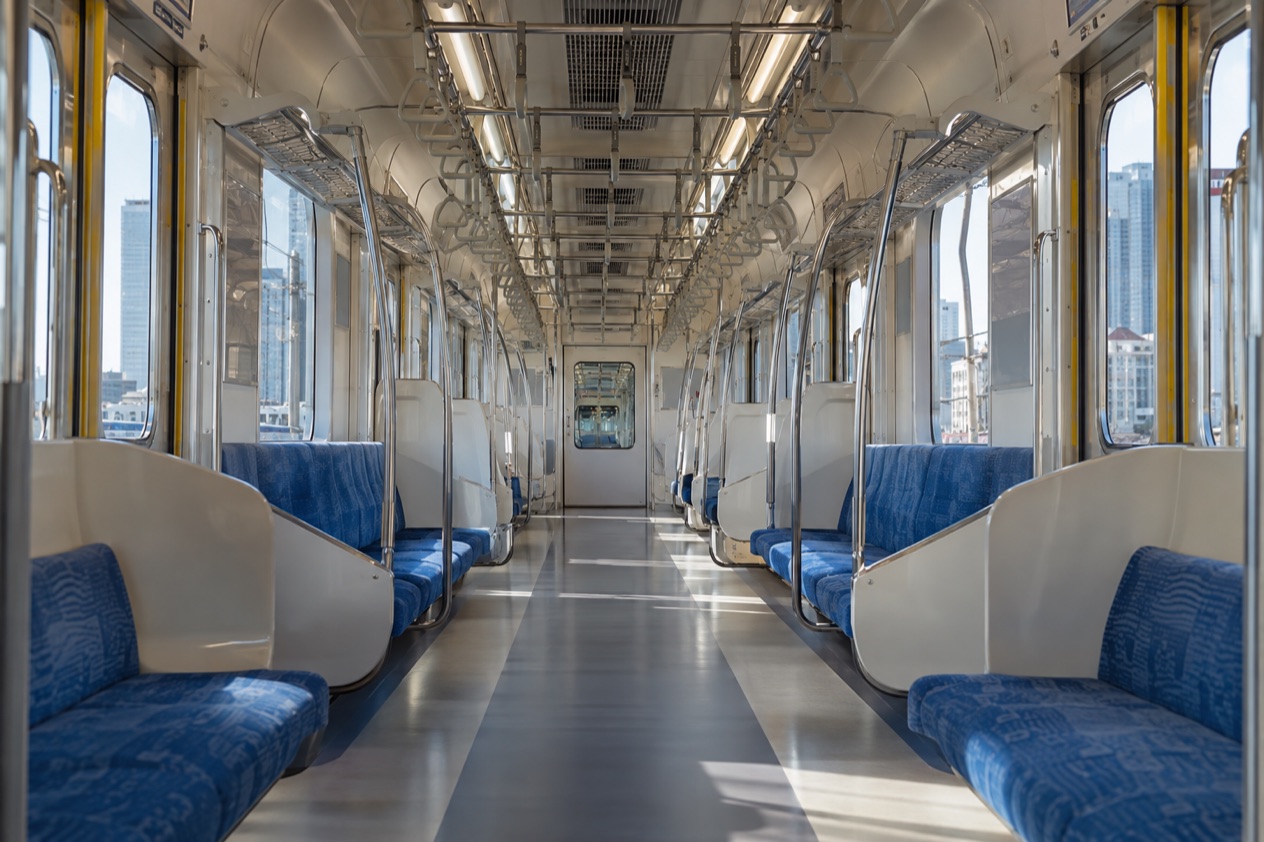
How does the Tokyo subway work?
The Tokyo subway works as two separate networks, Tokyo Metro and the Toei Subway, which share the same city and, in many places, the same stations or neighboring ones. Together they carry a combined average of over eight million passengers a day, which explains the sheer scale of the platforms and the passages that link them. For a visitor, the practical consequence is simple: a trip can use either company’s lines, and the ticket you hold decides how smoothly you move between them.
Japanese public transport has a reputation for being extremely punctual, to the point that you could set your watch by it. That shapes how a day in Tokyo unfolds. You plan around departure times rather than around luck, and a connection that looks tight on paper tends to be a real connection.
Two networks, one city
Tokyo Metro is the larger of the two by station count, while Toei is the smaller network with fewer lines. Each company has its own station names, its own signs and its own set of lines, so when you change from one to the other you are walking between two systems even if the transfer corridor feels continuous. Reading the operator name on the sign before you tap or buy is a good habit.
What you notice as you ride is how much of the city the subway reaches. Neighborhoods that feel like separate towns, each with its own shopping streets and its own small shrines, are tied together by lines that run beneath the avenues. Many travelers end up building a day around a single line, stepping out at each stop to eat, look around and go back down.
Through services and where they stop
Many subway lines do not end where the subway ends. Through services run on all lines except the Tokyo Metro Ginza and Marunouchi Lines and the Toei Oedo Line. On the lines that do offer them, a train that starts underground can carry on over the tracks of another company, so the same train may change its name and its operator along the way.
This is why the Ginza, Marunouchi and Oedo Lines are different in character: they stay within their own system. The Ginza Line also has a place in history, since it opened in 1927 and is described as Asia’s oldest subway line. Riding it is a small way of touching the early days of subway travel in the region.
When the trains stop for the night
Tokyo’s railways tend to shut down at around midnight, and the stations themselves close around 1 a.m. An evening in an izakaya (a casual Japanese pub) or a late dinner in a neighborhood far from your hotel therefore comes with a clock running in the background. Keep the time in mind when you choose where to spend the last hours of the day.
Once the trains have stopped, the city moves on to other ways of getting back, taxis above all.
Which lines and operators are there?
Tokyo Metro and Toei are the two subway operators, and around them sit the JR East lines, the Keikyu trains to Haneda and the Tokyo Monorail. The two subway companies are different in size, and the table sets their networks side by side.
| Operator | Stations | Lines | Route length (miles) |
|---|---|---|---|
| Tokyo Metro | 180 | 9 | 121.2 |
| Toei Subway | 106 | 4 | 67.7 |
Tokyo Metro and Toei
Tokyo Metro covers the greater share of the subway map, with nine lines, among them the Ginza and Marunouchi Lines. The Marunouchi, Hibiya and Chiyoda Lines also appear in the history of the city’s rail network. Toei runs four lines, including the Asakusa Line and the Oedo Line, and its network is the more compact of the two in size.
The practical point is that neither company covers the whole city alone. A route that links two districts might use a Tokyo Metro line for one leg and a Toei line for the next, and that is the situation the multi-day ticket described below is built for.
The Asakusa Line and the airports
The Toei Asakusa Line has through service to Haneda Airport (Tokyo International Airport) by way of the Keikyu Airport Line, and to Narita Airport via the Keisei Oshiage Line and other lines. That makes it the subway line that links the city center to both airports. A single line, with trains that continue onto other companies’ tracks, ties the airports into the city’s rail network.
Behind that arrangement is the Narita-Haneda service in Greater Tokyo, which brings together the track of six separate and independent rail operators. Keikyu Corporation runs trains from Shinagawa Station to Haneda Airport, so a traveler can also arrive at Haneda over that route.
JR East, the Yamanote Line and the monorail
Alongside the subway, JR East operates 23 lines within the Greater Tokyo area. The best known is the Yamanote Line, which encircles the center of Tokyo and stops at many of the stations travelers recognize by name. Because it is a loop, it ties together districts that the subway reaches from different directions.
Shinjuku Station is the busiest train station in the world by passenger throughput, and the sheer volume of people is something you see and feel as you walk through it. Tokyo Station is another major hub, a place where the subway, JR trains and the shinkansen (the high-speed train) meet. JR East is also the majority shareholder in the Tokyo Monorail, which connects central Tokyo to Haneda Airport.
Japan Railways, known as JR, is the main railway company in the country, with a network that extends across all of it. In Tokyo, though, the subway and the JR lines are separate systems run by different operators, so it helps to know which one a given line belongs to.
How do you pay?
For visitors, the Tokyo Subway Ticket is the way to pay for rides on both Tokyo Metro and Toei lines at once. It is valid on all lines of both operators for a set period counted from the time you start traveling, and it comes in three lengths.
| Ticket | Valid for | Adult (yen) | Child (yen) |
|---|---|---|---|
| Tokyo Subway 24-hour Ticket | 24 hours | 1,000 | 500 |
| Tokyo Subway 48-hour Ticket | 48 hours | 1,500 | 750 |
| Tokyo Subway 72-hour Ticket | 72 hours | 2,000 | 1,000 |
Choosing the length of the ticket
The clock on the ticket starts at the travel starting time, not at midnight. A traveler who rides in the morning and again the next day is using one continuous period, and that is worth thinking about when you plan which days will have the most trips. Each of the three lengths covers all lines of Tokyo Metro and Toei.
Because the ticket covers both operators, the question of whose line you are on stops mattering while it is valid. Transfers between a Tokyo Metro line and a Toei line are included in the same ticket, so a day of hopping between neighborhoods follows your curiosity rather than the company map.
Who can use it, and the QR version
The ticket is open to overseas visitors. It is also available to domestic visitors who live outside Tokyo, Kanagawa, Saitama, Chiba, Ibaraki, Tochigi, Gunma and Yamanashi. In other words, residents of the area around the capital are not the audience for it.
A QR code version of the Tokyo Subway Ticket is available, which allows use through a mobile device. It also makes it possible to distribute multiple tickets to devices, so a group can hold their tickets on separate phones.
Discounts at places of interest
The ticket comes with more than rides. Through the CHIKA TOKU program, it offers affiliated discounts at various spots of interest in Tokyo. If a day on the subway includes a museum, an observation spot or a shop, it is worth knowing that the ticket in your pocket may carry a benefit beyond the fare.
Good to know before you go
Taxis are the usual fallback when the last trains have gone. Japanese taxis are clean and reliable, but passengers should carry cash because not all taxis accept cards. Late at night the fare changes, which is the one extra cost worth keeping in mind next to the subway ticket.
| Fee | Amount | Who pays |
|---|---|---|
| Night taxi surcharge at most Tokyo companies | 20% between 22:00 and 5:00 | Taxi passengers |
Sources
- Japan National Tourism Organization, getting around Japan: trains, subways, buses, taxis (https://www.japan.travel/en/plan/getting-around/), checked October 11, 2026
- Wikipedia, Tokyo subway (https://en.wikipedia.org/wiki/Tokyo_subway), checked October 11, 2026
- Wikipedia, Transport in Greater Tokyo (https://en.wikipedia.org/wiki/Transport_in_Greater_Tokyo), checked October 11, 2026
- Tokyo Metro, tickets for travelers (https://www.tokyometro.jp/en/ticket/travel/index.html), checked October 11, 2026
To plan your stay
- Best Time to Visit Tokyo: Cherry Blossoms, Autumn Leaves, Weather by Month and Festivals
- Where to Stay in Tokyo: Shinjuku, Shibuya, Asakusa, Ginza and Roppongi
- Tokyo from the airport: Narita and Haneda, the Skyliner, Local Trains and Taxis
- Know Before You Go to Tokyo: Entry, Money, Getting Around and Local Etiquette