
Somewhere between the third convenience store and the tenth glowing vending machine, a traveler in Tokyo starts to wonder where the tatami rooms, the cotton robes and the quiet dinners served course by course have gone. The answer is that they have not vanished. Ryokan, the traditional Japanese inns, do exist in the capital, in a contemporary form, and the most classic versions of the experience wait in hot spring towns and old cities elsewhere in the country.
Which ryokan are in Tokyo?
Tokyo has contemporary ryokan, but they are few, and they are not where the ryokan tradition is strongest. Japan’s national tourism office lists the capital’s inns as modern takes on the form, in contrast with the prestigious ones of Nara and Kyoto and the mountain village inns of Nagano. Ryokan are also hard to find in Tokyo because many cost much more than modern hotels and hostels.
So think of a Tokyo ryokan as a chosen night rather than a default bed. It suits a traveler who wants to sleep on a futon and eat a seasonal dinner without leaving the city, and who is happy to treat the stay as the main event of the evening.
What a contemporary ryokan offers in the city
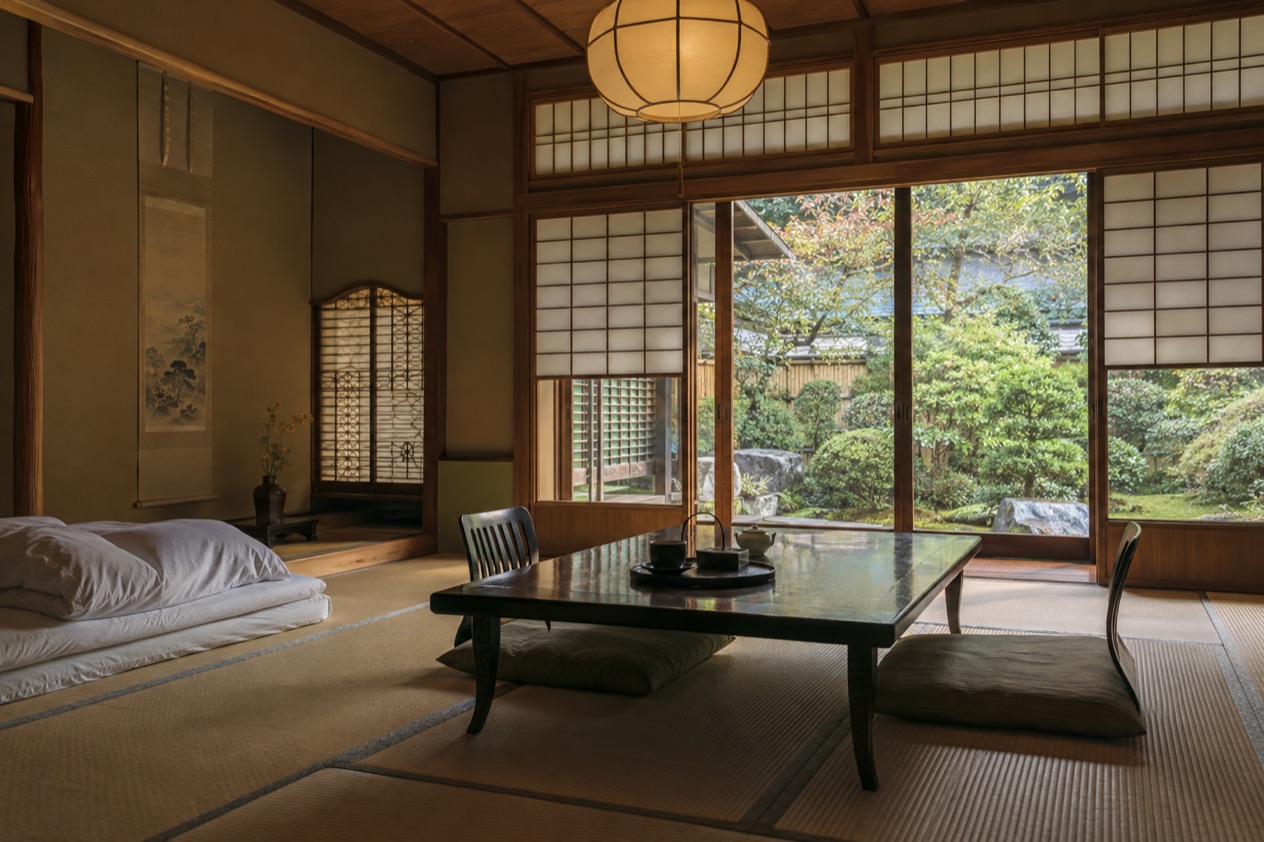
The inns of the capital keep the core of the ryokan idea while living in an urban setting. The room is the heart of it: a tatami floor, sliding doors, and a low table where tea is served. Bedding is a futon spread out on the tatami floor, which changes how a hotel room feels the moment you step out of your shoes.
Staff explain the customs of the house as you arrive, including removing shoes indoors and wearing the yukata, the light cotton robe provided for guests. These habits are part of the pleasure. They slow the evening down, and they turn a night in a big city into something that feels apart from it.
Baths, robes and sandals
Almost all ryokan have common bathing areas called ofuro, usually separated by gender, and where a hot spring is nearby the water comes from it. Some inns also have private baths, sometimes outdoors.
Ryokan typically provide a yukata to wear, and possibly geta, wooden sandals, that guests can borrow for a stroll outside. In a ryokan with a garden, guests are invited to wear geta or zori sandals with the yukata to walk among the plantings. Most ryokan have a garden and an onsen, and gardens can hold stone arrangements, water features, carefully placed shrubs and sometimes a tea house.
Dinner and breakfast in a ryokan
A ryokan stay generally includes a formal multi-course dinner called kaiseki and a traditional Japanese breakfast the next morning. Kaiseki is built on seasonal and regional specialties, so the plates change with the time of year and arrive in a deliberate sequence, each small and carefully arranged.
Depending on the ryokan, meals are served in a common room or in the guest’s own room. Some inns offer stays without meals, but the national tourism office suggests not missing the culinary experience, and that advice fits a night in Tokyo especially well, where the dinner is a large part of why you chose a ryokan.
Which areas are best?
For the fullest ryokan stay, look to hot spring areas and the old cities, with Tokyo as the place for a contemporary version. Traditional ryokan are more commonly found where natural hot springs rise, such as Beppu Onsen, and the inns of Nara and Kyoto carry a different, more historic weight. Choosing the area is really choosing what you want the night to be.
Onsen towns for a bath-centered stay
If the bath is what you imagine when you picture a ryokan, an onsen town is the place. Almost all ryokan have an ofuro, and where a hot spring is nearby the bathing water comes from it. In a town built around the springs, the inn, the bath and the evening stroll in a yukata all belong to one rhythm.
The national tourism office points to mountain villages and onsen towns in Nagano as one home of the form, and Beppu Onsen is named as an area where traditional ryokan are common. These are places to plan around the inn itself, not to squeeze in between sights.
Nara and Kyoto for historic inns
Nara and Kyoto hold the ryokan that the tourism office calls prestigious. Staying in one gives a very different feel from a night in the capital: the inn sits within a city of old temples, and the garden, the tatami room and the seasonal dinner belong to a long local tradition of hospitality.
For a traveler building a trip around Tokyo who wants one night of tradition, adding a stop in one of these cities, or in a hot spring town, can be worth considering alongside a contemporary Tokyo inn. Each night gives you the same core elements in a different setting.
Yamanashi and the oldest inns
Some of Japan’s inns are remarkable for their age. Nishiyama Onsen Keiunkan, in Yamanashi Prefecture, was created in 705 A.D. and is described as the oldest hotel in the world. Hoshi Ryokan, founded in 718 A.D., is known as the second-oldest.
Ryokan themselves are believed to have emerged in the 8th century, so these two properties go back to the very beginnings of the form. Hoshino Resorts opened its first ryokan in Karuizawa in 1914, a reminder that the tradition keeps being renewed by new operators as well as old families.
What should you know before you book?
Before booking, know that ryokan prices are quoted per person, per room, and typically include dinner and breakfast. That differs from most hotel pricing, so compare a ryokan rate with a hotel rate only after you account for the two meals.
| Item | What it means |
|---|---|
| Pricing | Quoted per person per room |
| Meals | Dinner and breakfast, typically included |
| Average cost | Around 15,000 yen per night |
| Upscale inns | Higher than the average |
Meals shape the schedule
Ryokan stress that guests should be punctual for their meals, and most ask guests to confirm the time they want to eat. The kitchen prepares kaiseki in a sequence, so the evening is organized around the dinner hour you choose. Plan your day so you are back at the inn, bathed or ready to bathe, before it begins.
Many travelers like to change into the yukata and take a bath before dinner, then eat in the room or the common room as the inn arranges. Because the dinner is a main reason for the stay, a meal-free option exists but is not what the tourism office suggests.
Customs you will meet at the door
Staff explain Japanese customs to guests, so you do not need to arrive knowing everything. Shoes come off at the entrance and stay off on the tatami. The yukata is worn in the inn, and bathing in the onsen or ofuro follows the inn’s explanation.
The bath areas are usually separated by gender. Rooms have sliding doors rather than hinged ones, and the futon is laid out on the tatami, often arranged by staff while you are at dinner. These are habits to enjoy rather than hurdles, and the staff walk you through them.
Cost compared with a regular hotel
A ryokan in Tokyo can cost much more than a modern hotel or hostel, which is part of why they are scarce there. The average ryokan stay is around 15,000 yen per night, and upscale establishments charge more. Since that price typically covers two meals, it is better read as a package than as a bare room rate.
If the budget is tight, a single ryokan night within a longer stay in ordinary hotels is a way to enjoy the experience without building the whole trip around it. The tatami, the bath, the garden and the dinner are all part of what you are paying for.
Good to know before you go
Ryokan prices are in yen and quoted per person per room, so check what is included when you compare inns. Keep the dinner time in mind when you plan the day, and arrive ready to follow the house customs, from shoes at the door to the yukata in the corridors.
Sources
- Japan National Tourism Organization, ryokan stays, what is included, etiquette (https://www.japan.travel/en/guide/japanese-ryokan/), checked October 11, 2026
- Wikipedia, Ryokan (https://en.wikipedia.org/wiki/Ryokan), checked October 11, 2026
To plan your stay
- Best Time to Visit Tokyo: Cherry Blossoms, Autumn Leaves, Weather by Month and Festivals
- Where to Stay in Tokyo: Shinjuku, Shibuya, Asakusa, Ginza and Roppongi
- Tokyo from the airport: Narita and Haneda, the Skyliner, Local Trains and Taxis
- Know Before You Go to Tokyo: Entry, Money, Getting Around and Local Etiquette