
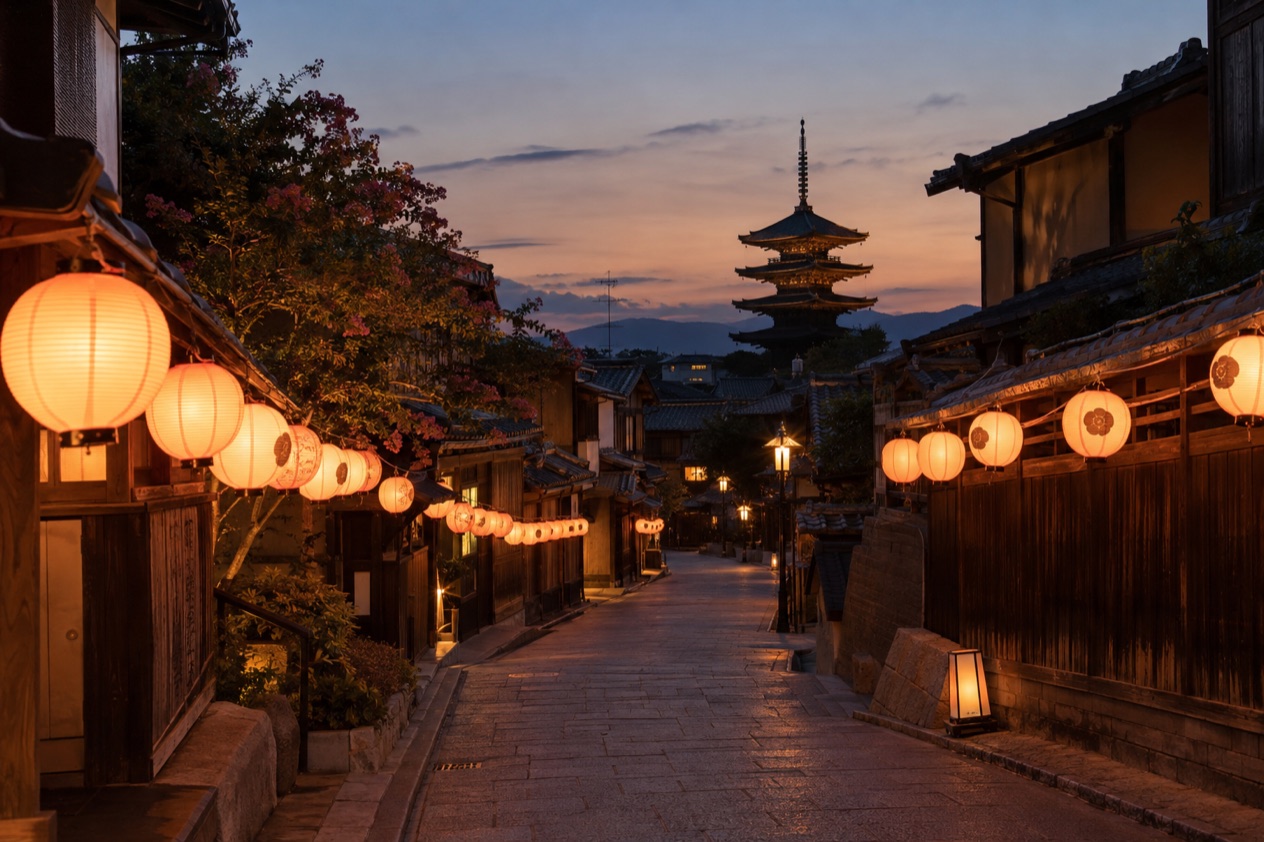
On a Takayama morning the old quarter has its Edo-style streets to itself for a while, and the station on the line to the north starts to fill with travelers who have a second city on their list. Kanazawa, on the Sea of Japan side, is the usual next question. By rail, the journey runs north on the Takayama Main Line to Toyama, then on into Ishikawa Prefecture, where Kanazawa sits.
How do you get from Takayama to Kanazawa?
You go by train, first north from Takayama on the Hida limited express to Toyama, then from Toyama into Ishikawa Prefecture and Kanazawa. The Hida is the named train on the Takayama Main Line, the railway that links Gifu and Toyama through the mountains of Hida, so Takayama sits right on the first leg of this trip.
The Hida limited express runs between Nagoya and Takayama, Hida-Furukawa and Toyama, and it is the service that carries you to the end of the line at Toyama. Ten return services a day are on the timetable. Because the trains reverse direction at Gifu on their way up from Nagoya, the one you board in Takayama simply continues north through the valleys, with the Hida mountains close on both sides.
Leg one: Takayama to Toyama on the Takayama Main Line
The Takayama Main Line is single tracked and not electrified, so trains here are diesel-powered. That gives the ride a different feel from the Shinkansen corridors elsewhere in the country. The line is one of the ways into the scenic parts of Hida, including Gero onsen, Shirakawa-go and the Kiso River valley.
Takayama Station does not accept IC cards on the JR Takayama Line, so tickets for this local line are bought in cash. Carry yen with you when you walk up to the ticket window or machine, and do not count on a Suica or Pasmo card to get you through the gate here.
Leg two: Toyama to Kanazawa
At Toyama you leave the mountain line and step into the Hokuriku region, which is the area covered by the Hokuriku Area Pass. Kanazawa is the capital of Ishikawa Prefecture, on a narrow strip of land along the Sea of Japan on Honshu, and Ishikawa is one of the three prefectures where the pass gives unlimited rides.
The pass is valid on the Hokuriku Shinkansen between Tsuruga and Kurobe-Unazukionsen, which takes in the Toyama and Kanazawa stretch of the line. On the way you cross from the Toyama side to the Ishikawa side. Kanazawa itself rewards the trip with its castle park, its garden and its history as an Edo-period center of art and culture.
What the journey is like
Japanese trains have a reputation for being on time, which lets travelers plan a connection like the one at Toyama to the minute. You spend the first part of the day in forested mountain country and the last part in a coastal city of gardens, teahouses and craft shops. That change of scenery is a good reason to do this trip in daylight, with a seat by the window.
Which options are there?
The choices come down to the kind of ticket you hold for the rail route through Toyama, and to the type of train you take on each stretch. The Hokuriku Area Pass is the main pass in play for the second half of the trip, and ordinary tickets are the alternative.
The Hokuriku Area Pass
This is a 4-day pass for visitors from abroad, and it gives unlimited rides only in Toyama, Ishikawa and Fukui prefectures. Takayama is in Gifu Prefecture, so the pass does not cover the mountain leg that starts in the city. It comes into its own from Toyama onward and for any days you spend moving around the Hokuriku coast.
| Pass holder | Age | 4-day pass price |
|---|---|---|
| Adult | 12 or over | 7,000 yen |
| Child | 6-11 | 3,500 yen |
A pass holder, adult or child, can bring up to two children aged 1 to 5 along for free. From the third child onward, each one needs a Child’s rail pass. That makes the pass a practical one for a family on the Hokuriku side of the trip.
Which trains the pass covers
The pass is valid for non-reserved seats on the Hokuriku Shinkansen between Tsuruga and Kurobe-Unazukionsen. It also covers limited express trains, rapid services and local trains on the JR-West conventional lines in the area. On the Hokuriku Shinkansen, a GranClass seat needs a separate GranClass ticket on top of the pass.
The pass cannot be used on the Hokuriku Shinkansen between Kurobe-Unazukionsen and Tokyo. It is also valid only on West Japan JR Bus route buses within the valid area and not on expressway buses.
Third-sector railways with their own conditions
Some stretches in the region are run by other companies and carry conditions. On the IR Ishikawa Railway Line between Kanazawa and Tsubata, you must ride a local or limited express train and cover the full segment between the two stations, with no stop at an intermediate station. Between Toyama and Takaoka on the Ainokaze Toyama Railway, the same full-segment rule applies, on local trains only.
On the Hapi-Line Fukui, the pass works only between Echizen-Hanando and Fukui, and going beyond those stations is not covered. These are useful details if you plan to extend your trip past Kanazawa and keep using the pass.
Local, rapid and limited express trains
On the Takayama Main Line, every train except the Hida services stops at all stations, and local trains are sometimes one-man operated. Elsewhere in Japan, local trains stop at every station, which makes them suited to short distances, while rapid trains skip the smaller stations and need no supplement. The Hida limited express is the service that links the main points on the mountain line.
What should you know before you travel from Takayama to Kanazawa?
Know that the trip changes trains at Toyama, that Takayama Station takes cash only for local tickets, and that the pass has its own limits on where it applies. A few other details help you plan the day around the places you will see at both ends.
The line and its history
The Takayama Main Line is long, with a track gauge of 1,067 mm and an operating speed of 68 miles/h. The first section, between Gifu and Kagamigahara, opened in 1920, and the whole line was complete by 1934. It is run by two companies, JR Central and JR West, which is why the journey north crosses from one operator’s territory to the other.
The mountains here can be hard on a railway. In 2004, flood damage from Typhoon Tokage closed the section between Tsunogawa and Inotani stations, and the last part of that section did not reopen until 2007. It is a reminder that the weather shapes this line, and that typhoon season is worth keeping in mind when you plan a trip through the Hida valleys.
At Takayama before you leave
Takayama is a city in the Japanese Alps, sometimes called the Little Kyoto of Hida for its well-preserved quarter of Edo-style streets. In spring the cherry blossoms come from the middle to the end of April, about three weeks later than in Nagoya. If your train is not for a while, the old quarter is a pleasant place to spend the time before heading to the station.
Remember the cash rule at the station. The local line ticket is paid in yen, so keep coins and bills ready rather than trying to tap an IC card at the gate.
What waits in Kanazawa
During the Edo period, Kanazawa was one of the most important cultural and artistic centers in Japan, and it remains a destination for art and culture lovers. Kanazawa Castle Park and the garden are both lit up at night, so an evening walk is possible if you arrive with time to spare.
The city’s location on a narrow strip of land along the Sea of Japan gives it a coastal setting very different from Takayama’s mountain valley. Pair the garden with the castle park for a first afternoon, and let the evening illumination close the day.
Good to know before you go
Carry cash in yen for the Takayama end of the trip, since the station there will not take an IC card for local line tickets. Traffic in Japan moves on the left, and road signs can be hard to read if you do not know Japanese, which is worth remembering if you ever step off the rail route and onto the road. Typhoon season can disrupt mountain lines such as the Takayama Main Line, so leave some room in your plans.
Sources
- West Japan Railway Company, Hokuriku Area Pass (https://www.westjr.co.jp/global/en/ticket/pass/hokuriku/), checked October 11, 2026
- Wikipedia, Takayama Main Line (https://en.wikipedia.org/wiki/Takayama_Main_Line), checked October 11, 2026
- Wikipedia, Takayama, Gifu (https://en.wikipedia.org/wiki/Takayama,_Gifu), checked October 11, 2026
- Wikivoyage, Takayama (https://en.wikivoyage.org/wiki/Takayama), checked October 11, 2026
- Japan National Tourism Organization, Kanazawa (https://www.japan.travel/en/destinations/hokuriku-shinetsu/ishikawa/kanazawa-and-around/), checked October 11, 2026
- Kanazawa Tourist Information Guide (https://www.kanazawa-tourism.com/), checked October 11, 2026
- U.S. Department of State, Japan travel information, travel and transportation (https://travel.state.gov/content/travel/en/international-travel/International-Travel-Country-Information-Pages/Japan.html), checked October 11, 2026
- Japan National Tourism Organization, trains and buses (https://www.japan.travel/en/guide/how-to-travel-by-train-and-bus-in-japan/), checked October 11, 2026
- Japan National Tourism Organization, traveling by rail (https://www.japan.travel/en/guide/traveling-by-rail/), checked October 11, 2026
To plan your stay
- Best Time to Visit Takayama: Cherry Blossoms, Autumn Color, Snow and Festivals
- Things to Do in Takayama: Old Town Streets, Morning Markets, Hida Beef and Festival Floats
- Where to Stay in Takayama: Station Area, Old Town Streets, Morning Market and Ryokan
- Takayama in January: Snow, Weather, Old Town Food and a Two-Day Plan