
The old town of Takayama greets you with dark wooden eaves, narrow lanes and the sound of footsteps on streets laid out in the Edo manner. Lattice windows face the lanes, and the Japanese Alps rise behind the rooftops. It is a place to walk slowly, one lane after another, with the festival floats, a historic government house and a few old temples to stop at along the way.
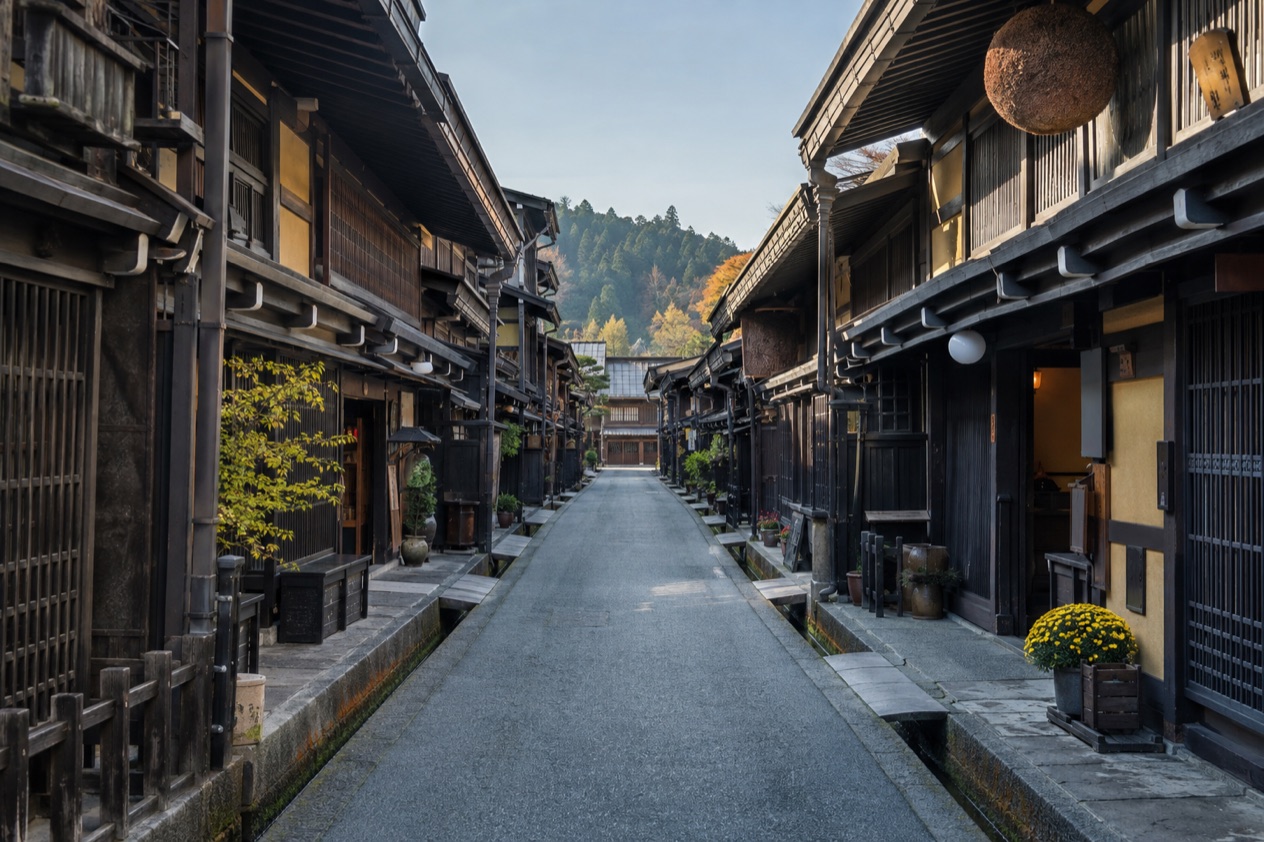
Is visiting the Takayama old town worth it?
Yes, if you like towns where the past is something you walk through rather than look at behind glass, and it suits travelers who enjoy temples, crafts and festival culture. Takayama is a city in Gifu Prefecture, in the heart of the Japanese Alps, and its well-preserved quarter with Edo-style streets has earned it the nickname Little Kyoto of Hida.
The comparison with Kyoto is flattering but incomplete. Takayama sits in the mountains of the Chubu region, so the mood is that of an alpine town: wood, snow in winter, and a calendar built around the seasons.
What truly sets it apart is the festival tradition. Takayama is home to one of the three largest Shinto festivals in Japan, the Takayama Festivals, which are in fact two distinctive festivals, and the town still organizes itself around them.
That gives a visit an unusual shape. Within a short stretch of lanes you can see the ornate floats that parade during the festivals, a government house that was once the seat of local administration, and a temple whose ginkgo tree has stood for more than twelve centuries. The old town rewards wandering as much as it rewards ticking off sights.
It is less a place for a grand checklist than for an unhurried day, with a pause for tea or a bowl of noodles when the lanes get cold. Travelers who want neon and nightlife will find it quiet. Those who want craftsmanship, mountain air and a sense of continuity will find it very much worth the trip.
What to see at the Takayama old town
The sights of the old town are a mix of festival heritage, official architecture and temple grounds. Each one tells a different part of the story of how Takayama lived and celebrated.
Takayama Yatai Kaikan, the festival float hall
The yatai, the elaborate floats used in the Takayama Festivals, are kept in the Takayama Yatai Kaikan, also called the Takayama Festival Float Exhibition Hall. These are not simple carts but richly decorated works of craft, built and maintained by the neighborhoods that parade them.
Look at the carved details, the lacquer and the metalwork, and imagine them rolling through the lanes during the festival. The hall lets you appreciate in detail what you would otherwise glimpse only in motion and in a crowd.
Sakurayama Nikko Kan
Close to the float hall stands the Sakurayama Nikko Kan, an exhibit of 1/10 scale replicas of Nikko’s famous Toshogu shrine. It is a curious companion to the floats, since it shows another kind of Japanese craftsmanship: the patient reproduction of a monumental shrine in miniature.
Pairing the two makes sense for anyone who likes to study detail. Pay attention to the ornamentation and proportions, which let you take in a whole shrine complex at a glance.
Takayama Jin’ya
Takayama Jin’ya is a historical government house and a National Historic Site. It speaks to the other side of the town’s past, the administrative one, when officials governed the region from buildings like this. Walking through such a house gives you a feel for the layout and materials of official architecture, with wood and tatami rooms in the Japanese tradition.
It pairs well with the lanes of the old town, because it shows how the ordinary streets and the seat of authority belonged to one place. Take your time in the rooms and look at the beams and the way the spaces open onto one another.
Hida Kokubun-ji and Ankokuji Temple
Hida Kokubun-ji was founded in the Nara period and is the oldest structure in the city. A three-level pagoda stands beside a ginkgo tree over 1,200 years old, and the tree is the detail visitors remember. In autumn a ginkgo turns gold, and in winter snow can settle on the pagoda and the branches.
Ankokuji Temple and its storehouse form an ancient structure from 1408 that is recognized as a national treasure. Seeing the two temples together gives you a sense of depth in time, from the Nara period foundation to the early fifteenth century building. They suit anyone who prefers quiet grounds and old timber to busy streets.
When to visit the Takayama old town
Takayama changes character with the seasons, and the old town suits almost any of them, as long as you dress for the mountain climate.
| Month | Average high (°F) | Average low (°F) | Precipitation (inches) | Days with 1 mm or more | Sunshine (hours) |
|---|---|---|---|---|---|
| January | 37.8 | 23.4 | 4.01 | 14.6 | 93 |
| April | 62.6 | 38.1 | 4.88 | 11.0 | 174 |
| July | 85.1 | 66.9 | 10.27 | 14.1 | 147 |
| October | 67.8 | 48.6 | 6.12 | 10.3 | 129 |
Spring and the cherry blossoms
Cherry blossoms can be seen from the middle to the end of April, about three weeks later than in Nagoya. That late bloom means the old town is still waking up from winter when much of Japan has already finished its hanami, the tradition of viewing blossoms. April days are mild in the afternoon and cold again at night, so a layer is welcome.
Snow has mostly gone by then, with only a trace in an average April, and sunshine is more generous than in any other month of the table. Rain falls on about a third of the days, in showers rather than long gray spells.
Summer, autumn and the festival months
July is warm and humid, with the heaviest rainfall of the four months, so the old town in summer means umbrellas and an unhurried pace. Wooden eaves give some cover when a shower arrives, and the damp brings out the dark tones of the timber.
It is a pleasant time for walking between the temples and the exhibition halls, and gingko and maple foliage adds color to the grounds.
Humidity stays high and rain still falls on about ten days, so keep a light waterproof at hand. The Takayama Festivals are the great event of the town’s calendar, and if you want to plan around them, check the dates for the year you travel, since they are not given here.
Winter in the snow
Takayama receives heavy snowfall, with an annual average of 201 inches in the city. In January snow or sleet falls on most days, and the old town takes on a quieter, whiter look, with snow along the dark roofs and lanes. Highs stay just above freezing and nights are well below it.
Winter suits travelers who want atmosphere more than long daylight, since sunshine is limited. Warm layers, waterproof boots and gloves matter more than any sightseeing plan.
Tips for your visit
The old town is best treated as a day of wandering with a few chosen stops, and the weather decides much of what you bring. Layers are the sensible answer to a mountain town, with a rain jacket for the wetter months and warm, waterproof footwear in winter.
What to bring and how to dress
In spring and autumn, plan for a cool morning and a mild afternoon, and carry a light jacket. In July the humidity is high, so breathable clothing and an umbrella help. In January, think thermal layers, a hat, gloves and boots with grip, since snow or sleet falls on most days of the month.
Shoes come off at the entrance of many traditional buildings, as is the habit across Japan, so socks without holes make the visit more comfortable. Comfortable walking shoes are the main thing, since the old town is explored on foot.
How to combine the sights
The float hall and the Sakurayama Nikko Kan sit near each other, so they make one natural pairing. Takayama Jin’ya, Hida Kokubun-ji and Ankokuji Temple each add a different layer, from official architecture to old temple grounds. Mixing them with unplanned time in the lanes gives the visit a good rhythm between indoor and outdoor stops.
Families and travelers with limited mobility should know that the town is built of wooden houses and old temple grounds, and that snow and rain change how the lanes feel underfoot. Plan the pace around the weather rather than around a long list.
Arriving by train
Takayama Station is on the JR Takayama Line and does not accept IC cards, so local line tickets must be bought in cash. Carrying some yen for the ticket machine saves you a moment of confusion at the station.
Good to know before you go
Carry some cash for the station ticket machines, since IC cards are not accepted at Takayama Station. Mountain weather turns quickly, with rain in summer and autumn and heavy snow in winter, so a flexible plan serves better than a fixed one. Treat the lanes with the same courtesy you would show in any residential neighborhood, since people live and work in these old houses.
Sources
- Wikipedia, Takayama, Gifu (https://en.wikipedia.org/wiki/Takayama,_Gifu), checked October 11, 2026
- Wikivoyage, Takayama (https://en.wikivoyage.org/wiki/Takayama), checked October 11, 2026
- Japan Meteorological Agency (JMA), Normal values 1991-2020, monthly (https://www.data.jma.go.jp/stats/etrn/view/nml_sfc_ym.php?prec_no=52&block_no=47617), station Takayama, elevation 560 m, checked October 11, 2026
To plan your stay
- Best Time to Visit Takayama: Cherry Blossoms, Autumn Color, Snow and Festivals
- Where to Stay in Takayama: Station Area, Old Town Streets, Morning Market and Ryokan
- Takayama from Nagoya: The Hida Limited Express, Ways to Go and a Day in the Old Town
- Takayama in January: Snow, Weather, Old Town Food and a Two-Day Plan