
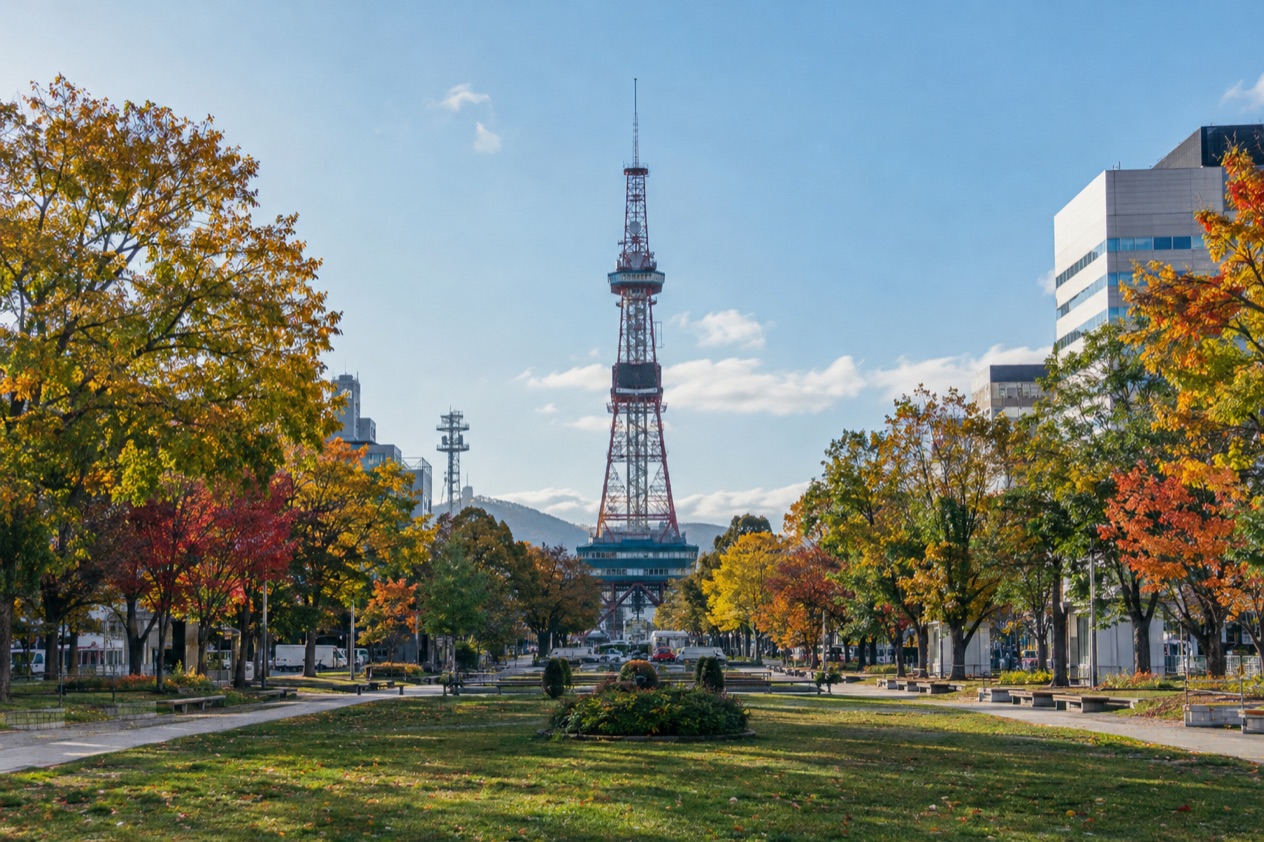
The first morning in Sapporo often starts with the smell of miso broth drifting out of a ramen counter and the sight of Odori Park’s long lawns opening out between the office blocks. Hokkaido’s biggest city is built on a wide, orderly street grid, with food, beer and a good deal of open green space close at hand. Three days here fit the park, the beer, the night streets, a hill with a view and one outing beyond the city.
Is three days enough in Sapporo?
Three days is enough for a first visit, especially for travelers who come for food, beer and a city with room to breathe rather than a checklist of temples. A second day goes to the brewery story and a university campus. A third can leave town for the Otaru canal or for the flower and forest country around Furano and Biei.
What three days leave out is the rest of Hokkaido. The island is the northernmost in Japan and the second largest, and it is known for seasonal scenery, skiing, trekking, hot springs, Ainu and Jomon culture and gourmet food.
Drift ice reaching the coast of Abashiri from late January, the Shirogane Blue Pond at Biei and the craft shops of Ningle Terrace at Furano each deserve more time than a quick add-on. If you want to see the Snow Festival, plan for February, when it runs for seven days. With a few extra days you could add a night in the countryside, a hot spring stay or a winter trip built around the ice.
The plan below keeps each day to one part of Sapporo, so you spend your time eating and looking rather than crossing the city repeatedly. It suits couples, friends and solo travelers who like to wander, sit down for a long meal and then wander again.
Day 1 in Sapporo
Start in Odori Park, the green band that runs through the heart of the city and gives Sapporo its sense of order. Walk it end to end and look at the fountains, the flower beds and the benches where office workers eat lunch.
The Sapporo TV Tower stands in the park, so it is the obvious landmark to anchor your first hours. In June the park hosts several outdoor events, and in May the Lilac Festival is held in Chuo-ku. In February the same lawns fill with the Snow Festival’s big snow sculptures, projection mapping and a snow slide.
For lunch, go for a bowl of Sapporo ramen at a small counter shop, or try soup curry, the local dish of spiced broth with large pieces of vegetables and chicken. Ramen itself began as a Japanese-Chinese fusion dish, with alkaline wheat noodles in hot broth, and Hokkaido cooks have made it their own with rich miso.
Spend the afternoon on foot through the downtown blocks around the park, ducking into department store food halls and covered shopping arcades. If the weather turns, these are the places to be.
Evening belongs to Susukino, the largest entertainment and nightlife district north of Tokyo. Neon signs hang over narrow lanes of izakaya (Japanese pubs serving small plates), bars, karaoke rooms and ramen shops open to the street.
Here is where to try jingisukan, the grilled lamb dish Sapporo is known for, at a table with a tabletop grill. In February the Susukino site of the Snow Festival carries the theme Enjoy the Ice, with an ice sculpture show and a contest. Finish with a late bowl of ramen, as locals do after a night out.
Day 2 in Sapporo
Spend the morning on the beer story at the Sapporo Beer Museum, the only beer museum in Japan and one of the Hokkaido Heritage sites since 2004. The displays follow the history of brewing in the city, and the tour ends where it should, at the Sapporo Beer Garden, the museum’s pub.
Order the pairing the place is built around, a beer with lamb barbecue. Arriving hungry makes sense, since the barbecue works as lunch.
In the afternoon, turn to the Hokkaido University campus, just north of Sapporo Station. The grounds give a calmer change of pace after the brewery, with tree-lined paths, old academic buildings and lawns that students use between classes. Afterwards, find a cafe near the station for coffee and something sweet, since Hokkaido dairy turns up in soft-serve ice cream, cheesecake and milk-based desserts.
As evening comes, head for Mount Moiwa, about 3 miles southwest of the center. The hill looks over the city grid, and the lights spreading below are the reason to go up as dusk turns to night.
Come down hungry and have dinner at an izakaya or a seafood restaurant, where Hokkaido crab, scallops and salmon roe often appear on the menu. If you skipped soup curry on the first day, this is the evening for it.
Day 3 in Sapporo
The third day suits a trip out of town, and Otaru fits well. Its canal is lined with stone warehouses and glowing gas lamps, which give it a nostalgic look, and visitors treat it as a half-day outing.
Furano and Biei are another direction, with the craft shops of Ningle Terrace in the forest and the cobalt-blue water of the Shirogane Blue Pond. Choose one, set out in the morning and be back in Sapporo for the evening.
Back in the city, treat the evening as the slow end of the trip. Take a seat at a ramen counter you noticed on the first day but passed, or settle in for a long dinner of jingisukan, grilled seafood or a bowl of soup curry with the spice level turned up. Hokkaido’s fresh dairy and seafood make a final meal here feel worth planning.
If you still have energy, walk through Odori Park again after dark, when the city lights change its character. Stop at a small bar in Susukino for a last glass of local beer, or ride the Sapporo Streetcar, one of only two operating circular tram systems in Asia. It is a quiet way to see the neighborhoods that fall between the main sights before you pack.
Where to stay for three days in Sapporo
For this plan, the best base is the area around Sapporo Station or the blocks near Odori Park. Both put you within reach of the park, the TV Tower and Susukino, and Hokkaido University lies just north of the station.
A hotel here lets you return between outings for a rest, a change of clothes or a warm-up if the weather turns. It also makes the day trip out of town straightforward to begin, since rail and road routes leave from the city center.
Staying in or beside Susukino suits travelers whose days revolve around dinner and drinks, because you can walk back from the izakaya without worrying about the last train. The trade-off is that the district is a nightlife area, so rooms facing the street can be livelier than those near the station.
If your priority is the Snow Festival in February, choosing a hotel near Odori Park puts the main site at your doorstep, and Susukino hosts the ice sculptures nearby. The third site, Tsudome, lies outside the center, so it asks for a separate trip.
Travelers arriving by air through New Chitose Airport will find the station area the natural place to land, since the express train from the airport ends at Sapporo Station. That cuts out an extra transfer with your luggage on the first day. Those with an early outing planned may prefer to be at the station, where the rail network begins.
What to skip if you only have three days in Sapporo
Skip a second day trip. It is tempting to squeeze Otaru and Furano into the same stay, but each one asks for most of a day, and the second would cost you the slow evenings that make Sapporo pleasant. Pick one and keep the other for a longer trip, when you can add a night in the countryside.
Skip the far corners of Hokkaido. The drift ice at Abashiri, which reaches the coast from late January, is a trip in its own right, built around a season and a long journey. The same goes for the island’s remote national parks and hot spring valleys. Spend that time instead in Sapporo’s own neighborhoods, where a long lunch and a stroll will give you more than a rushed transfer.
Skip a second city altogether. A three-day stay does not leave room for crossing Japan, and the planning costs more than the sights return. Better to stay in Hokkaido and see more of it than to spend a day in transit.
Finally, skip trying to fit every museum and heritage site. The Beer Museum is worth the time, and a second major museum would crowd out the park, the campus or the hill. If you have an hour left, spend it on one more meal, a coffee in a station cafe or another walk in Odori Park.
Getting around Sapporo in three days
Most of Day 1 can be covered on foot, since Odori Park, the TV Tower and Susukino lie within the city center. The Sapporo Streetcar, a circular tram, offers another way to see parts of the city, and it is one of only two operating circular tram systems in Asia. Day 2 links the Beer Museum, Hokkaido University and Mount Moiwa, so you will move between parts of the city by public transport or on foot, depending on the leg.
An IC card, the rechargeable transit card that regions across Japan issue under different names, works on trains, buses and boats, and also in vending machines, convenience stores and some taxis. The cards from different regions can be used throughout Japan, so one card covers your whole stay. For Day 3, you would go by rail or by road to Otaru or to the Furano and Biei area.
If you arrive through New Chitose Airport, an express train reaches Sapporo Station in 35 minutes. Okadama Airport handles regional flights within Hokkaido and some other parts of Japan. Holders of the Hokkaido Rail Pass can board all trains of JR Hokkaido for a set duration, except the Hokkaido Shinkansen line and the SL Fuyu-no-Shitsugen train. The Japan Rail Pass is offered jointly by six JR group companies for travel across the country.
Good to know before you go
Sapporo is a place of real seasons, and what you pack depends on when you come, from summer events in Odori Park between June and August to the snow of the Snow Festival in February. An IC card handles vending machines and convenience stores, which is useful for small purchases between meals. Leave room in the evenings for Susukino, and carry your sense of direction through the grid of streets, which makes the city easy to read once you know where Odori Park lies.
Sources
- Japan National Tourism Organization, Sapporo (https://www.japan.travel/en/destinations/hokkaido/hokkaido/sapporo-and-around/), checked October 11, 2026
- Hokkaido Love, the official Hokkaido tourism site (https://www.visit-hokkaido.jp/en/), checked October 11, 2026
- Hokkaido Love, what to see and do (https://www.visit-hokkaido.jp/en/spot/), checked October 11, 2026
- Sapporo Snow Festival official website (https://www.snowfes.com/english/), checked October 11, 2026
- Sapporo official sightseeing website (https://www.sapporo.travel/en/), checked October 11, 2026
- Wikipedia, Sapporo (https://en.wikipedia.org/wiki/Sapporo), checked October 11, 2026
- Japan National Tourism Organization, festivals and events (https://www.japan.travel/en/see-and-do/festivals-and-events/), checked October 11, 2026
- Wikipedia, Ōdōri Park (https://en.wikipedia.org/wiki/%C5%8Cd%C5%8Dri_Park), checked October 11, 2026
- Wikipedia, Mount Moiwa (https://en.wikipedia.org/wiki/Mount_Moiwa), checked October 11, 2026
- Wikipedia, Ramen (https://en.wikipedia.org/wiki/Ramen), checked October 11, 2026
- Japan Meteorological Agency (JMA), Normal values 1991-2020, monthly (https://www.data.jma.go.jp/stats/etrn/view/nml_sfc_ym.php?prec_no=14&block_no=47412), station Sapporo, elevation 17 m, checked October 11, 2026
- Japan National Tourism Organization, IC cards, Suica, Pasmo, ICOCA, how to use (https://www.japan.travel/en/plan/ic-card/), checked October 11, 2026
- Japan National Tourism Organization, Japan Rail Pass and regional passes (https://www.japan.travel/en/plan/jr-rail-passes/), checked October 11, 2026
To plan your stay
- Best Time to Visit Sapporo: Snow Festival, Summer Weather and Seasonal Highlights
- Where to Stay in Sapporo: Sapporo Station, Odori, Susukino and Ryokan Stays
- Sapporo from Tokyo: The Hayabusa Shinkansen, the Seikan Tunnel and What Awaits on Hokkaido
- Know Before You Go to Sapporo: Entry, Money, Getting Around and Local Customs