
Mornings in Naha begin with the soft rattle of the monorail gliding over rooftops, and by evening the lanes around the markets smell of grilled pork and awamori, the island’s local spirit. A few stops of the same line away, Shuri’s castle hill sits above the old streets of the Ryukyu Kingdom.
Elsewhere on the island the day starts with a sea view, a beach towel and a resort breakfast.
What is the best area to stay in Okinawa?
For a first visit, Naha is the strongest base: it is the capital, it holds about a fifth of the main island’s residents, and it has the only public rail network in Okinawa, the Okinawa Urban Monorail, known as Yui Rail.
Sightseers who care about history do well to sleep in Naha or toward the Shuri end of the monorail, since the line connects the airport, the city center and Shuri. Travelers on a tight budget will usually find the widest range of simple rooms, guesthouses and business hotels in the capital, because that is where most of the island’s residents live and work.
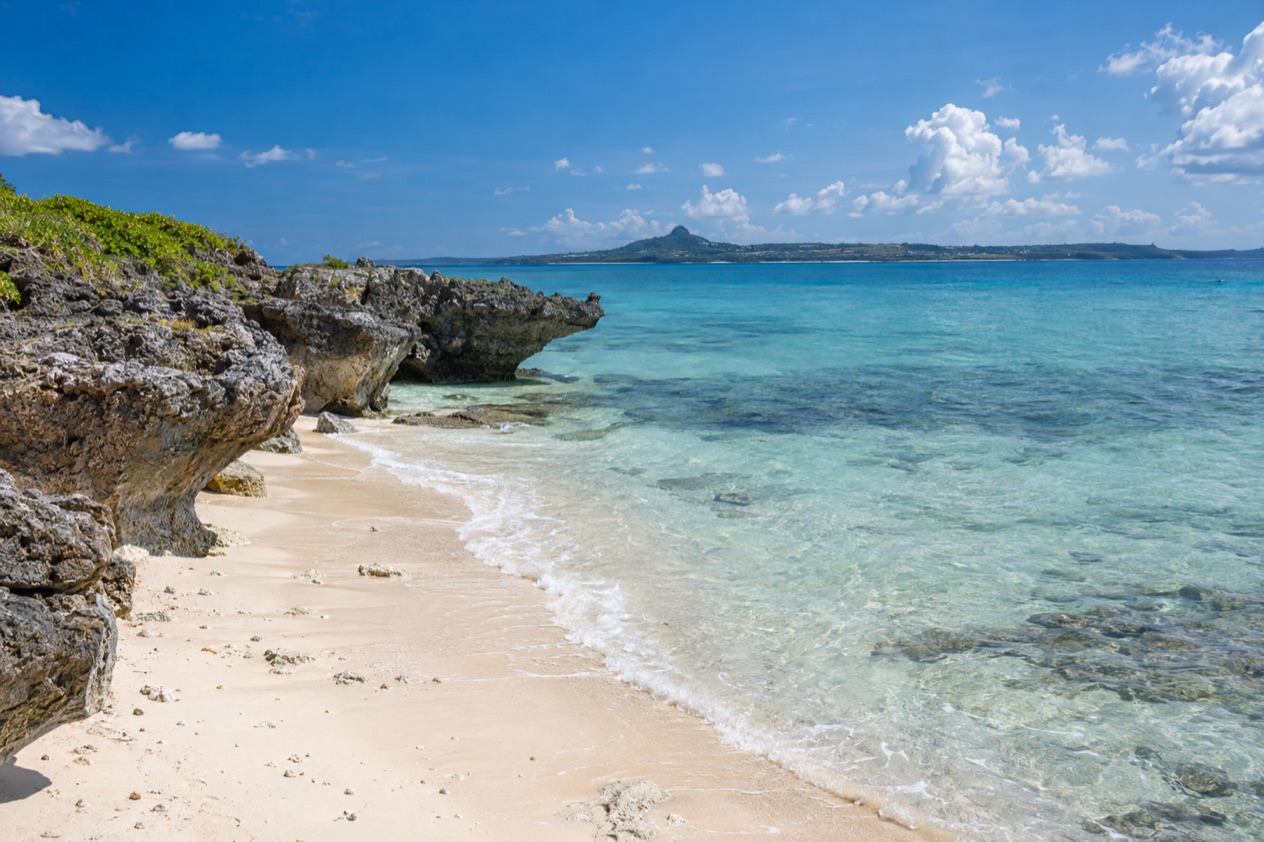
Families and couples who came for the sea tend to look at the beach coast, where Manza Beach, Emerald Beach, Okuma Beach, Zanpa Beach and Moon Beach are all names on the map of the island. Anyone who wants evenings out, with izakaya (Japanese pubs), small bars and late dinners, will want to be in Naha.
The areas differ most in how you move around. Naha is the one place where you can step off a monorail and into a neighborhood, so you can spend a whole stay without thinking about a car. Once you leave the capital, the island spreads out: beaches, the aquarium, castle ruins and waterfalls are separate stops, and the stay becomes more about the resort itself and the outings you reach from it.
Chatan, on the other hand, gives a beach-town evening of its own, with Sunset Beach in Chatan-cho as its name on the map. Around the Churaumi Aquarium the lodging serves a day that revolves around the big tanks. Think first about what fills your days, then pick the area that puts that closest to your pillow.
One more point shapes the choice: the climate. Okinawa has a subtropical climate with warm temperatures and high rainfall through the year, and a rainy season arrives in late spring. On a wet day a base in Naha, with its covered markets, museums and cafés, offers more to do than a beach resort does. If your trip falls in that rainy stretch, that is worth weighing.
The best areas to stay in Okinawa
Naha: the capital and the monorail
Naha is where visitors begin, and it suits first-timers, food lovers, travelers without a car and anyone who wants a choice of restaurants at night. Naha city is a 15-minute drive from Naha Airport, or a few stops on the monorail, so arrival day is not a long one. The lodging is mostly city hotels, business hotels and guesthouses, with apartments for longer stays.
Streets here mix market stalls, small restaurants serving Okinawan classics such as goya champuru (a stir-fry of bitter melon), Okinawa soba and rafute (braised pork belly), and bars pouring awamori. You get around on the Yui Rail, and bus route information for Naha is published in English on the city’s website. A good tip is to choose a room near a monorail stop, so the airport, the center and Shuri all come to you without a transfer.
Shuri: the castle district
Shuri is the choice for travelers who came for the Ryukyu Kingdom. Shuri Castle is one of the UNESCO World Heritage Sites on Okinawa Island, and the Yui Rail reaches the district, so you can sleep near the hill rather than treat it as a day trip from the city center. Okinawa was a kingdom with its own language and culture, and this is where that past is easiest to read in stone, lacquer and old street layouts.
Lodging around Shuri is more modest in scale than in the center of Naha: smaller hotels, guesthouses and rented apartments. It suits history-minded couples and solo travelers who like to wander slowly, and it keeps you on the same monorail line as the airport and the city. The trade-off is that the evening scene of the center is a ride away.
Chatan and Sunset Beach
Chatan-cho is where Sunset Beach sits, and the name tells you what evenings are for here: walking out to the sand with a drink and watching the light go down over the water. It suits couples and travelers who want a beach-town feel with restaurants close at hand, rather than a city or a remote resort.
Expect beach hotels, boutique properties and apartment-style stays aimed at longer visits. Without a monorail in Chatan, since Yui Rail serves only Naha, getting around depends on buses, taxis or a rental car. A practical tip is to decide before you go which outings you plan from here, so that you are not paying for a coastal room and spending the days in the capital.
Around Churaumi Aquarium
Okinawa Churaumi Aquarium was at one time the world’s largest aquarium, and it is the reason travelers want a night nearby. Its tanks hold sharks, rays and a dolphin family, and a baby bottlenose dolphin has been born there that visitors can watch swimming beside its mother. A summer night event called Churaumi Night Aquarium is also offered.
Staying close suits families with children who are excited about the animals, and travelers who prefer a resort setting to a city. Lodging near the aquarium leans toward resort hotels and holiday-style stays, with seaside views as the main draw. Plan a car or taxi for getting around, since this is a base for the aquarium and its surroundings, not for evenings in a lively downtown.
The beach coast: Manza, Emerald, Okuma, Zanpa and Moon
Okinawa Island has several beaches, among them Manza Beach, Emerald Beach, Okuma Beach, Zanpa Beach and Moon Beach. Resort hotels line this kind of shoreline, many with pools, spa treatments and restaurants of their own, so the stay becomes the destination. It suits honeymooners, families who want a pool and a beach in one place, and travelers who have already seen Naha.
Look at what each property offers for meals and activities, and think of the island’s other attractions, such as Century Beach, Pineapple Park, the Orion Beer Factory and Hiji Falls, as outings from your resort.
Okinawa areas compared
| Area | Best for | Feel | Getting around |
|---|---|---|---|
| Naha | First visit, food, no car | Capital city with markets and nightlife | Yui Rail monorail, buses |
| Shuri | History and castle sights | Old Ryukyu Kingdom district | Yui Rail monorail |
| Chatan and Sunset Beach | Couples, beach evenings | Beach town by the water | Buses, taxis or a rental car |
| Around Churaumi Aquarium | Families, aquarium visits | Resort setting by the sea | Car or taxi |
| Beach coast (Manza, Okuma, Zanpa, Moon) | Beach vacations, resort stays | Resort hotels beside the sand | Car or taxi |
The first trade-off is between rail and the open island. A room near a monorail stop in Naha puts the airport, the center and Shuri on one line, which is hard to match once you leave the capital, where no public rail exists. The cost is that you sleep in a city, and the beach is a separate outing.
The second is old against new. Shuri carries the weight of the Ryukyu Kingdom, with a castle that is a UNESCO World Heritage Site, while the beach coast and Chatan are about leisure, with sand, pools and sunsets. Naha sits between the two, with old market lanes and modern hotels side by side.
Travelers split a stay in two: a few nights in Naha for the food, the markets and the monorail, then a few nights by the sea to relax. That plan lets you give up the car for the first part and pick it up only for the second. If you only have time for one base, choose by the main reason you came: history and dining point to Naha or Shuri, the aquarium points to its own corner of the island, and the sea points to the beach coast.
A word on the island’s setting helps as you compare. Okinawa Prefecture is the southernmost and westernmost prefecture of Japan, and Okinawa Island is its main island, with Naha as its capital. The island has hills and a highest peak, Mount Omoto, so a room away from the capital can feel quite different, with green slopes behind and the sea in front.
How to choose your hotel in Okinawa
A hotel, in Okinawa, is the right choice when you want the full set: front desk, restaurant, sometimes a pool, and a clear sense of where you are. City hotels in Naha are the natural fit for short stays, with the monorail close, while resort hotels by the sea are built around the beach and the property’s own facilities.
Business hotels are plain, compact-feeling rooms in the city, meant for travelers who mostly sleep there and spend the day out. Guesthouses are smaller and more personal, with shared spaces where you can meet other travelers and ask about the island. Apartments suit longer stays, families who want a kitchen and groups traveling together.
A ryokan, a traditional Japanese inn, is a different kind of stay. Ryokan are believed to have emerged in Japan in the 8th century, and they typically feature tatami floors, futons, private baths (sometimes outdoor), yukata (light cotton robes), a kaiseki dinner (a multi-course meal) and a traditional Japanese breakfast. If that style appeals, look for a property that describes itself in those terms, since an ordinary hotel will not offer it.
Heritage Stays are another option for travelers drawn to old buildings. Guests can take part in cultural activities such as tea ceremony, calligraphy and wearing traditional Japanese clothing, and reservations are required, often made through the property’s website or by phone. Such a stay is a cultural experience in itself, so it fits travelers who care more about the setting than about a pool.
Distance to a station or an airport is the next thing to check. In Naha, the airport is a 15-minute drive away or a few monorail stops, so a room by a Yui Rail stop keeps the arrival simple. Outside the capital, ask each property how guests reach it, since rail does not go there and you will rely on buses, taxis or a car.
For families, think about what keeps children busy: a hotel near the aquarium, a resort with a pool, or an apartment where you can set your own mealtimes. Okinawa Churaumi Aquarium cautions visitors about bite-wound injuries from white-banded triggerfish during their breeding season, a reminder to follow the signs when you are close to the water.
For travelers who find stairs, long walks or crowds hard, a hotel with a direct link to a monorail station in Naha keeps daily movement simple, and a resort where everything sits within the property does the same by the sea. Ask the property directly about lifts, step-free access and room layouts, because that is information only the hotel can give.
Finally, match the room to the weather you expect. Rain is part of the picture through the year, with a rainy season in late spring, so a base with indoor things to do nearby, or a resort with its own facilities, protects a plan that is built around the beach. Then let the food decide: a guesthouse in the capital puts Okinawa soba and izakaya dinners at your door.
Good to know before you go
Naha Airport is the gateway to all of Okinawa’s islands, served by flights from dozens of cities across Japan, including low-cost carriers. From the airport, Naha city is a 15-minute drive or a few stops on the Yui Rail, which also reaches the city center and Shuri. Bus route information for Naha is available in English on the city’s website, so a hotel outside the monorail line can still be planned with public transport.
Sources
- Japan National Tourism Organization, Okinawa (https://www.japan.travel/en/destinations/okinawa/okinawa/naha-and-the-main-island/), checked October 11, 2026
- Okinawa Churaumi Aquarium (https://churaumi.okinawa/en/), checked October 11, 2026
- Wikipedia, Okinawa Island (https://en.wikipedia.org/wiki/Okinawa_Island), checked October 11, 2026
- Wikipedia, Okinawa Prefecture (https://en.wikipedia.org/wiki/Okinawa_Prefecture), checked October 11, 2026
- Wikivoyage, Okinawa (https://en.wikivoyage.org/wiki/Okinawa), checked October 11, 2026
- Japan National Tourism Organization, ryokan stays, what is included, etiquette (https://www.japan.travel/en/guide/japanese-ryokan/), checked October 11, 2026
- Japan National Tourism Organization, heritage stays (https://www.japan.travel/en/heritage-stays/), checked October 11, 2026
To plan your stay
- Best Time to Visit Okinawa: Weather by Month, Sea Temperatures, Festivals and Seasons
- Things to Do in Okinawa: Churaumi Aquarium, Shuri Castle, Kerama Reefs and Okinawan Food
- Okinawa from Tokyo: Flying to Naha, Why No Train Goes There and a First Day on the Island
- Know Before You Go to Okinawa: Entry, Money, Getting Around and Local Etiquette