
The first morning in Okinawa often starts with the soft clatter of the monorail pulling into a station above Naha’s streets, with a smell of warm pork broth drifting from a noodle counter below. The light is brighter and the air heavier than on the mainland, and shirt sleeves feel right even before breakfast.
Is three days enough in Okinawa?
Three days is enough for a first visit to the main island and one nearby island group, especially for travelers who like to settle into one base and make day outings. You get the capital, the old Ryukyu royal heritage, the aquarium and a day by the water. You do not get the whole prefecture, which is a long chain of islands and not a single destination.
Okinawa was once the Ryukyu Kingdom, with its own language and culture, and you can feel that difference in the food, the music, the lion-dog statues on rooftops and the pace of the days. Naha, the prefectural capital, is where that history is easiest to touch. Three days let you sample it and still have time on a beach.
What the plan leaves out is the rest of the map. The prefecture counts forty-nine inhabited islands, and the Sakishima Islands and the Daito Islands sit in their own groups, each worth its own trip.
The main island also has beaches along its coast, from Manza and Emerald to Zanpa and Okuma, and Hiji Falls and the island’s highest peak, Mount Omoto, for travelers with a fourth and fifth day. October is a good month to try: at Naha, afternoons in the low 80s and nights in the mid-70s keep the days warm and the evenings mild.
Day 1 in Okinawa
Start with the Yui Rail monorail, which links Naha Airport to the city center and Shuri. The city is only a few stops from the airport, so even an arrival day can begin with a first walk. Head to Shuri first and see what is open at the castle. The main castle is closed after the fire in 2019, but part of the site remains open to visitors, and you can see how the hilltop was laid out and the stonework that carried the Ryukyu court.
By midday, return down the same monorail line toward the center. Lunch is a good moment for Okinawa soba, thick wheat noodles in a clear pork and bonito broth, often topped with stewed pork ribs.
Some shops also serve goya champuru, a stir-fry of bitter melon, tofu and egg. After lunch, give the afternoon to quieter wandering through the alleys and covered arcades around the center, where shops sell awamori (the local distilled spirit), brown sugar sweets and Ryukyu glass and pottery.
In the evening, walk Kokusai-dori, the avenue of shops, restaurants and bars that runs for a mile through the middle of Naha. Souvenir stalls spill onto the sidewalks, and live sanshin music (the three-stringed Okinawan instrument) drifts out of some bars.
Dinner can be an izakaya, a casual pub where small plates arrive in waves: sea grapes, fried fish, grilled pork. Tip for a first day: keep it light, since the next morning begins with the road north.
| Site | Open |
|---|---|
| Okinawa Churaumi Aquarium | 08:30 to 18:30 (last admission 17:30) |
Day 2 in Okinawa
Day 2 goes north to Okinawa Churaumi Aquarium, which opened in November 2002 on a large piece of land along the coast and was for a time the world’s largest aquarium. Leave Naha by road in the morning and plan the aquarium as the center of the day. Inside, you look into deep tanks of reef fish and larger species, and the staff’s breeding work is part of the story: a baby bottlenose dolphin born there can be watched swimming alongside its mother, and the aquarium has also hatched Bigeye Pacific Opah in a world first.
Take your time in the halls, then step outside. The aquarium’s setting is a good excuse for a coastal afternoon.
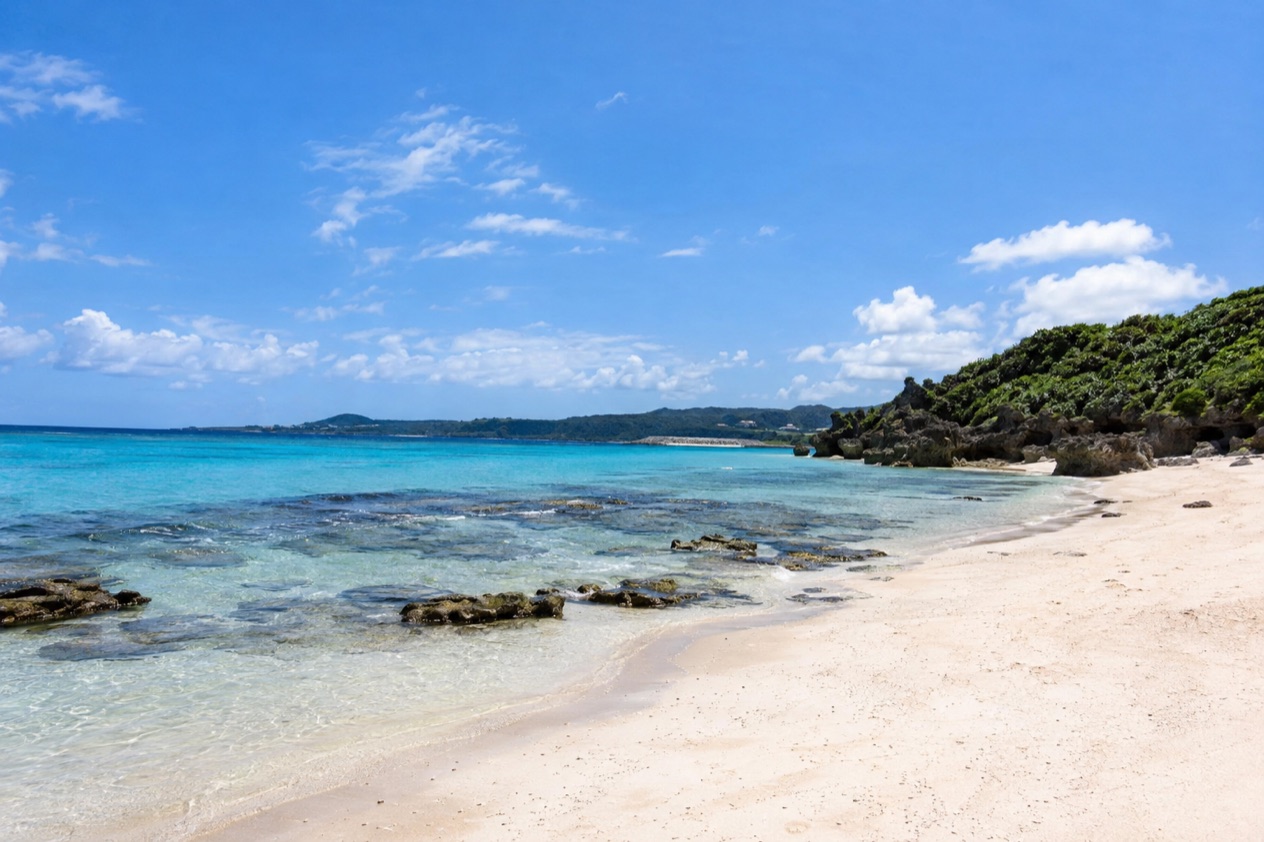
Okinawa Island is known for beaches such as Manza Beach, Emerald Beach and Okuma Beach, and the waters here are for looking and for paddling at the edge, always with an eye on local signs. Pineapple Park and the Orion Beer Factory are two of the island’s other attractions, and Hiji Falls is a stop for those who like waterfalls and green hills.
Lunch can be a seaside café or a roadside shop with tropical fruit and shaved ice, and dinner a barbecue or a simple set meal in a small town on the way back. Because the day involves a long drive in each direction, plan on a relaxed evening, an early bath and a lighter dinner back in Naha. Tip: keep the aquarium as the one fixed appointment and treat everything else as optional, since the best of the north is often a roadside beach you did not plan.
Day 3 in Okinawa
Day 3 is a slower day among the Kerama Islands, a small group of which four are inhabited: Tokashiki, Zamami, Aka and Geruma. The coral reef around them is a Ramsar Site, a wetland of international importance.
Diving is possible all year in Japan, and the islands suit a day of looking at the water, whether from a beach or beneath the surface. The detail of how to organize the trip belongs to a day-trips plan, so leave the morning for the crossing and a long, unhurried day out.
Back in Naha in the late afternoon, give yourself time to wash off the salt and rest. The evening is for the part of the city you only brushed on the first night. Look for a small izakaya on a side street and order a tasting of Okinawan plates: rafute (braised pork belly), umibudo (sea grapes, the little green beads that pop on the tongue), tofuyo (fermented tofu) and a glass of awamori with water and ice.
If you still have energy afterward, a final stroll past the shopfronts and the bright signs makes a gentle end, perhaps with a bag of local sweets for the flight home. Naha Airport is a few stops away on the monorail, so tomorrow’s departure can start without a long transfer. If you want one more taste of Okinawa before leaving, a bowl of soba at a counter near your hotel closes the trip as the first day began.
Where to stay for three days in Okinawa
Naha makes the best base for this plan. It is the capital and the largest city, home to about a fifth of the main island’s residents, and it holds Okinawa’s only public rail network, the Yui Rail monorail. That line connects the airport, the city center and Shuri, so Day 1 needs no planning beyond a ticket and a station name. The airport is also close, which matters on arrival and departure days.
Staying in Naha also puts you near restaurants, izakaya and shops at the end of every day, which suits Days 1 and 3. For the northern aquarium trip, you travel out and back by road and return to your own room in the evening.
Travelers who would prefer a beach stay can look at the coastal resort areas, such as the area around Sunset Beach in Chatan, where mornings begin on the sand. The trade-off is that you reach Naha’s streets and Shuri by a separate trip.
A third option is a night on one of the Kerama Islands, which gives a different pace and the water at your doorstep. For a first, short visit, though, one base in Naha keeps the logistics simple and the days full of what you came to see.
What to skip if you only have three days in Okinawa
Skip the far islands. Okinawa Prefecture stretches across island groups far apart, and the Sakishima Islands and the Daito Islands are trips of their own. Adding one to a three-day plan costs more time getting there than you spend on the shore. Put the time into the Kerama Islands, which fit a day, and keep the farther groups for a longer stay.
Skip trying to cover every beach and attraction on the main island. The list is long, from Century Beach to Pineapple Park, the Orion Beer Factory and Hiji Falls, and each stop adds hours of road. Pick one or two that sit along the way to the aquarium and let the rest wait. A single unhurried beach stop is worth more than four rushed ones.
Skip a mountain day. Mount Omoto, the island’s highest point, is a good reason to come back with a spare day and a plan for it. And skip a second round of museums in Naha: a morning at Shuri and an evening on Kokusai-dori give a sense of the Ryukyu story, and an extra indoor afternoon is better spent by the water or over a long dinner.
Getting around Okinawa in three days
Day 1 is the monorail day. Okinawa’s only public rail network, the Yui Rail, connects Naha Airport, the city center and Shuri, so the arrival, the castle hill and the evening in the center all link up by rail. The airport is a few stops from the city by monorail, and by road it is a 15-minute drive.
Day 2 leaves the rail line behind. The aquarium and the beaches of the north are reached by road, and the monorail does not go there. Day 3 begins with a trip out to the Kerama Islands, and once you are on the islands you move on foot or by local transport.
An IC card, the rechargeable tap-and-go card used across Japan, can pay for trains, buses and boats, as well as vending machines, convenience stores and some taxis. Most regions have their own cards with different names and characters, but they work throughout the country, so a card you already carry from another trip can be used here. It simplifies small purchases on all three days.
Good to know before you go
Okinawa has a subtropical climate with warm temperatures and rain through the year, and the island has a rainy season in the late spring. In October, the days are still humid and warm, so light clothes and a small umbrella for short showers sit well in a day bag.
Naha Airport receives flights from dozens of cities across Japan, including low-cost carriers, so travelers arrive from another Japanese city. On the beaches, follow local signs and the guidance of the staff, and keep an eye on the weather before any outing by the water.
Sources
- Japan National Tourism Organization, Okinawa (https://www.japan.travel/en/destinations/okinawa/okinawa/naha-and-the-main-island/), checked October 11, 2026
- Okinawa Churaumi Aquarium (https://churaumi.okinawa/en/), checked October 11, 2026
- Wikipedia, Okinawa Island (https://en.wikipedia.org/wiki/Okinawa_Island), checked October 11, 2026
- Wikipedia, Okinawa Prefecture (https://en.wikipedia.org/wiki/Okinawa_Prefecture), checked October 11, 2026
- Wikivoyage, Okinawa (https://en.wikivoyage.org/wiki/Okinawa), checked October 11, 2026
- Wikipedia, Shuri Castle (https://en.wikipedia.org/wiki/Shuri_Castle), checked October 11, 2026
- Wikipedia, Naha (https://en.wikipedia.org/wiki/Naha), checked October 11, 2026
- Japan National Tourism Organization, diving (https://www.japan.travel/en/guide/diving/), checked October 11, 2026
- Wikipedia, Kerama Islands (https://en.wikipedia.org/wiki/Kerama_Islands), checked October 11, 2026
- Japan Meteorological Agency (JMA), Normal values 1991-2020, monthly (https://www.data.jma.go.jp/stats/etrn/view/nml_sfc_ym.php?prec_no=91&block_no=47936), station Naha, elevation 28 m, checked October 11, 2026
- Japan National Tourism Organization, IC cards, Suica, Pasmo, ICOCA, how to use (https://www.japan.travel/en/plan/ic-card/), checked October 11, 2026
- Japan National Tourism Organization, Japan Rail Pass and regional passes (https://www.japan.travel/en/plan/jr-rail-passes/), checked October 11, 2026
To plan your stay
- Best Time to Visit Okinawa: Weather by Month, Sea Temperatures, Festivals and Seasons
- Where to Stay in Okinawa: Naha, Chatan, the Aquarium Coast and Beach Resorts
- Okinawa from Tokyo: Flying to Naha, Why No Train Goes There and a First Day on the Island
- Know Before You Go to Okinawa: Entry, Money, Getting Around and Local Etiquette