
A Shinkansen slides in under the long glass roof, doors open, and a crowd of travelers with rolling suitcases spills toward the ramen floor and the escalators that climb the great atrium. Outside, Kyoto Tower stands against the sky like a lighthouse for people who have just arrived. Staying around Kyoto Station means choosing how much of that rail-hub energy you want at your door, and how soon you want to be among temples and wooden townhouses.
What is the best area to stay in Kyoto Station?
For a first visit, the station building and the streets right beside it are the strongest choice, because Kyoto Station is on the Tokaido Shinkansen line and is described by the Japan National Tourism Organization as the ideal starting point for exploring Kyoto and connecting to major cities across Japan. Travelers who care more about temples at dawn can look toward the Honganji side. Those who want to focus on the Imperial Palace, Nijo Castle and the Manga Museum can consider central Kyoto.
If this is your first time in Kyoto, the station building itself is the simplest base. The Granvia, a luxury hotel, sits under the same roof as an Isetan department store, a theater, a shopping mall and a full floor of ramen restaurants. You step out of your room and the evening meal, the shops and the trains are all in one building.
For sightseeing on a plan that spreads across the city, the streets near Kyoto Tower suit you well. The tower, over 130 meters tall, is visible across the entire city, so it works as a landmark when you come back tired after a day of temples. Lodging near the tower tends toward business hotels and mid-range hotels, the kind with compact rooms and a good breakfast.
Budget travelers have a few good reasons to look at the temple side of the station. Nishi Honganji and Higashi Honganji are two large temple complexes that open their gates early in the morning, and the neighborhoods around them are the sort of place where guesthouses, hostels and small inns fit in. You trade the glass and escalators of the station for lanes and tiled roofs.
Families usually do best in a spot where meals, a department store and trains are all close together, so the station building and its immediate surroundings come first. A theater, a mall and a ramen floor give children something to do on a rainy afternoon and give parents a way to eat without a long search. Travelers who want more space can look at apartment-style lodging in the streets nearby.
Nightlife is the one wish that Kyoto Station answers less directly. The area around the station is built around trains, shops and hotels, and the evening here is more about a bowl of ramen and a view of the lit tower than about bars. Visitors looking for izakaya, pubs or the hanamachi districts should compare downtown Kyoto and Gion rather than the station area.
The areas differ mostly in what they put outside your door. The station building gives you transport, food and shopping under one roof. The tower side gives you hotels in a grid of streets and a clear landmark. The Honganji side gives you temple gates and the older rhythm of the city. Central Kyoto gives you Nijo Castle, the Imperial Palace and a manga museum.
None of these choices is wrong, and the difference is mostly one of mood. Kyoto has been a capital and the emperor’s residence for over a thousand years, and that history is everywhere once you leave the station. A base at the station gets you to it by train, while a base in the old neighborhoods lets you walk out of the door straight into it.
The best areas to stay in Kyoto Station
Four parts of the city make sense as a base for a stay built around Kyoto Station. Each one answers a different kind of trip, from the arrival-day traveler with a rail itinerary to the visitor who wants to wake up near a castle moat.
Inside and beside the station building
The station building is a destination in its own right. It was designed by the architect Hiroshi Hara, and under its 15-story roof it holds a shopping mall, a movie theater, an Isetan department store, several local government facilities and the Granvia hotel. It is the third-largest station building in Japan, after Osaka Station and Nagoya Station, so expect to spend a few minutes just finding the right exit.
This is the base for travelers arriving by Shinkansen or leaving the next morning, and for anyone who likes to have a department store, a theater and a ramen floor within reach of the lobby. The lodging here is the hotel inside the building and the larger hotels in the streets around it. Rooms look out over rail lines and the city, and the atmosphere is that of a place where everyone is passing through.
Tip: this area suits a stay of one or two nights built around a train schedule. If you want your mornings to start in a temple garden rather than a station concourse, treat it as a first or last night and move on.
Around Kyoto Tower
Kyoto Tower stands a few steps from the main entrance of the station, and the streets around its base are where many of the business hotels cluster. The tower is visible across the entire city, which makes it a handy landmark. On a gray evening its lit silhouette gives the streets in front of the station a small-town glow.
The lodging here runs to business hotels and mid-range city hotels, the sort with compact, tidy rooms, a breakfast buffet and a front desk used to travelers on tight schedules. It suits couples, solo travelers and anyone who wants a straightforward room within reach of the trains. Those who want a ryokan with tatami floors will usually look further into the older streets.
Tip: since you are a few steps from the station entrance, it is simple to leave luggage-free for the day and come back to the same landmark. Look for the tower when you step out of an unfamiliar exit.
The Honganji temple side
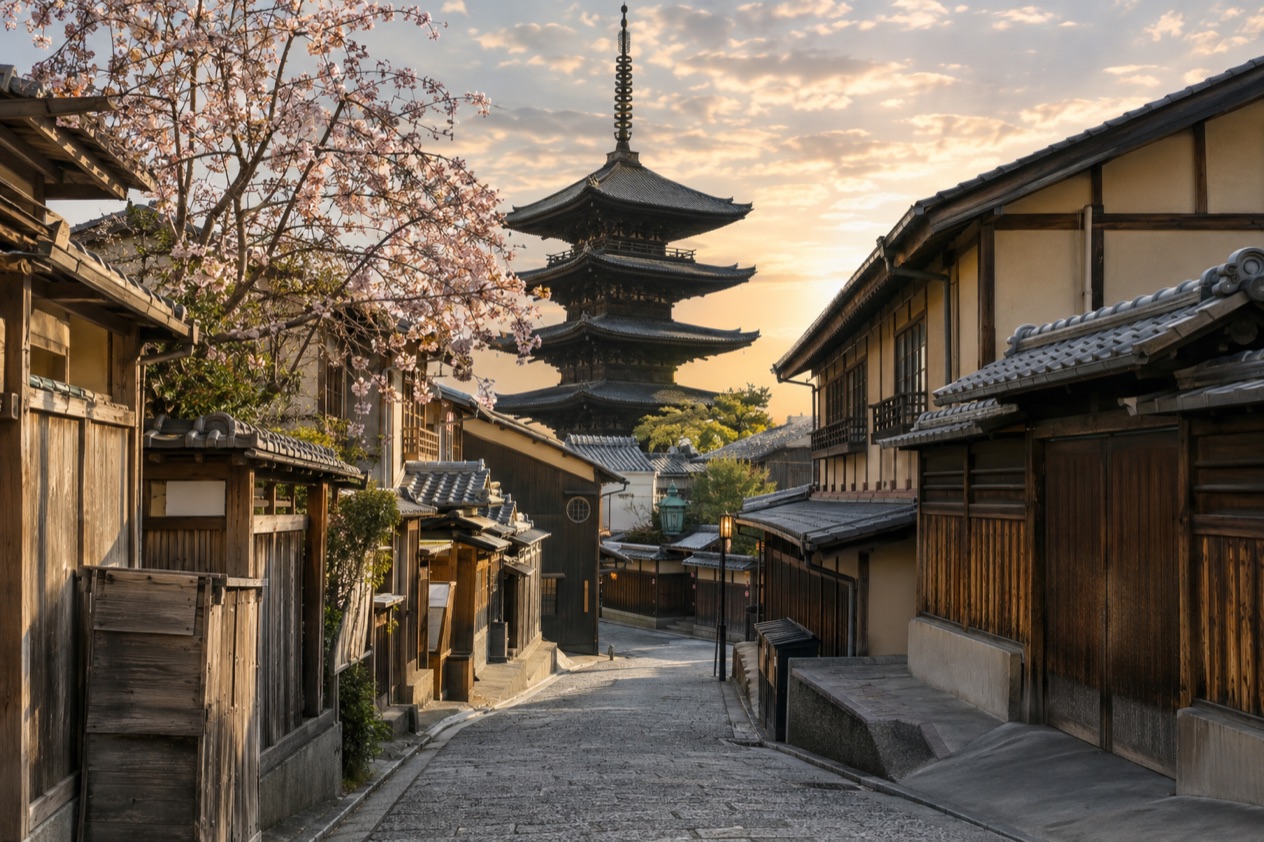
Nishi Honganji and Higashi Honganji are two temple complexes in Kyoto, and staying near them means waking up close to places that open their gates early. The neighborhoods around them mix temple walls, small shops and the machiya townhouses that are part of Kyoto’s traditions. Many of these wooden houses have been turned into guesthouses and small inns, the kind with a handful of rooms.
| Site | Open |
|---|---|
| Nishi Honganji | September, October, March and April 05:30–17:30. May through August 05:30–18:00. November through February 06:00–17:00 |
| Higashi Honganji | March through October 05:50–17:30. November through February 06:20–16:30 |
The Japan National Tourism Organization recommends visiting Kyoto’s shrines and temples at less crowded times, such as early morning or late evening when they are illuminated. A base near the Honganji temples lets you follow that advice without a long ride at dawn. This area suits travelers on a smaller budget, repeat visitors and anyone who likes a guesthouse atmosphere.
Central Kyoto: castle, palace and manga museum
Central Kyoto holds Nijo Castle, the Kyoto Imperial Palace and the Kyoto International Manga Museum, which gives the area a mix of samurai-era history and modern pop culture. Nijo Castle was built by Tokugawa Ieyasu, the first shogun of the Edo period, and its nightingale floors chirp like birds underfoot, an old security system meant to warn the guards of intruders. Staying here suits visitors who plan several days of museums and palaces.
| Site | Open |
|---|---|
| Nijo Castle | Daily 08:45–16:00, gate closes 17:00. Ninomaru Palace closed Tuesdays |
| Kyoto Imperial Palace (English tours) | Monday through Friday at 10:00 and 14:00, by appointment only |
| Kyoto International Manga Museum | Closed Wednesdays and national holidays |
Central Kyoto suits travelers who want to focus their stay on Nijo Castle, the Imperial Palace and the Manga Museum. It is the place for travelers who want the old capital outside the window and are happy to ride into the station when they need the Shinkansen. For the Imperial Palace tours, plan to be at the Imperial Household Agency building an hour before the tour or book online.
Kyoto Station areas compared
| Area | Best for | Feel | Getting around |
|---|---|---|---|
| Station building | First visit, rail itineraries, families | Mall, department store, theater and ramen floor under one roof | Tokaido Shinkansen line and the station’s connections |
| Around Kyoto Tower | Business-hotel stays, solo travelers, couples | Hotel streets by a landmark visible across the city | A few steps from the station’s main entrance |
| Honganji temple side | Budget stays, early risers, guesthouse fans | Temple gates, machiya townhouses and small inns | Close to Nishi Honganji and Higashi Honganji |
| Central Kyoto | Castle, palace and museum days | Old capital history alongside manga culture | Near Nijo Castle, the Imperial Palace and the Manga Museum |
The main trade-off is between being near the station and being near the old streets. The station building and the tower side put you beside the Shinkansen and a long list of food and shopping options, which makes departures and arrivals painless. The price of that closeness is atmosphere. You wake up to rail lines and glass, not wooden eaves and temple bells.
The Honganji side and central Kyoto reverse the deal. You give up the one-roof convenience of the station mall, and in return you get to step out of the door and into the Kyoto people picture in their heads. The city has a cultural heritage that has developed over the past 1,200 years, with machiya townhouses, the Gion Matsuri festival and hanamachi districts, and a base in an older neighborhood puts you closer to that character.
There is also the question of old against new. The station building opened in 1997 and is an architectural statement in glass and steel, while Nijo Castle dates from 1603 and the temples keep their early opening hours. Many visitors split their stay, with a night at the station on arrival and a few nights in an older district, and that mix lets you taste both sides of the city without committing the whole trip to either.
A last consideration is the shape of your days. If Nishi Honganji and Higashi Honganji are priorities, staying near them makes an early visit convenient. If your days are built around day trips by Shinkansen to other cities, the station building and the tower side keep your mornings and evenings simple.
How to choose your hotel in Kyoto Station
Start with the kind of stay you want, because Kyoto offers several. A large hotel such as the Granvia in the station building gives you a full-service stay with a department store and restaurants downstairs. A business hotel gives you a compact room and a routine. A ryokan gives you tatami floors and a meal served in the room, and a guesthouse gives you a small, personal place with a shared lounge.
A hotel in or beside the station building is the right pick if you arrive by Shinkansen with luggage and want the least fuss. Even if you do not stay there, you will likely eat in the building at least once.
A business hotel suits a traveler who treats the room as a place to sleep and wash. These hotels cluster around big stations in Japan, and the streets around Kyoto Tower are a natural place to look. Expect a small, clean room, a front desk used to short stays and a breakfast that often mixes Japanese and Western dishes.
A ryokan is a traditional inn, and in Kyoto it is often found in a machiya or in a quieter lane. Shoes come off at the entrance, rooms have tatami floors, and guests change into a yukata, the light cotton robe. Dinner and breakfast are often part of the stay. A ryokan fits best when you are staying more than one night and want the room itself to be part of the trip.
A capsule hotel is a sleeping pod in a shared space, a fit for a solo traveler on a tight budget or a late arrival with an early train. A guesthouse or hostel puts you among other travelers, with a common room where people swap tips. Both fit the temple side of the station, where the lanes are lined with small houses.
Families should think about space and meals. A hotel in the station building puts a theater, a mall and a ramen floor within reach, which helps when children are tired. Apartment-style lodging in the streets around the station can give you more room and a kitchenette. Ryokan can be a memorable experience for families, though the tatami floors and shared bathing customs are worth reading about beforehand.
For travelers with limited mobility, the station building is a large, connected complex with escalators and elevators, and staying under its roof or right beside it keeps the distance between your bed and the trains short. Older townhouse inns in the old neighborhoods often have stairs and tatami floors, so ask about the layout before you choose.
Finally, match the hotel to the plan. If you want an early start at Nishi Honganji or Higashi Honganji, staying near the temples is a sensible choice. If you want to see Nijo Castle, the Imperial Palace and the Manga Museum on the same day, look to central Kyoto. For everything else, the station is the anchor.
Good to know before you go
Kyoto Station is in Shimogyo-ku, and as a stop on the Tokaido Shinkansen line it is where many visitors arrive in the city, with the Granvia hotel, Isetan and the ramen floor waiting inside the building. Kyoto Tower stands a few steps from the main entrance and works as a landmark when you step outside. Opening hours for the temples, the castle and the museum change with the season and the day of the week, as the tables above show.
Sources
- Wikipedia, Kyoto Station (https://en.wikipedia.org/wiki/Kyoto_Station), checked October 11, 2026
- Wikivoyage, Kyoto/Central (https://en.wikivoyage.org/wiki/Kyoto/Central), checked October 11, 2026
- Japan National Tourism Organization, Kyoto (https://www.japan.travel/en/destinations/kansai/kyoto/), checked October 11, 2026
To plan your stay
- Best Time to Visit Kyoto: Cherry Blossoms, Autumn Leaves, Weather by Month and Festivals
- Things to Do in Kyoto: Temples, Gardens, Food and Day Trips
- Kyoto from Tokyo: Shinkansen Trains, Nozomi vs. Hikari and Kodama, and a First Day in Kyoto
- Know Before You Go to Kyoto: Entry, Money, Getting Around and Local Etiquette