
Arashiyama wakes to the clatter of the little train arriving at Saga-Arashiyama station, to the green hush of bamboo stalks knocking together in the breeze, and to river boats sliding out from the landing below Togetsukyo Bridge. By evening the day-trippers have gone back toward the city, and the hillsides above the river turn dark and soft. Choosing where to sleep here means choosing between the station and the lanes around it, the riverbank, the bamboo side, or a base in Kyoto proper.
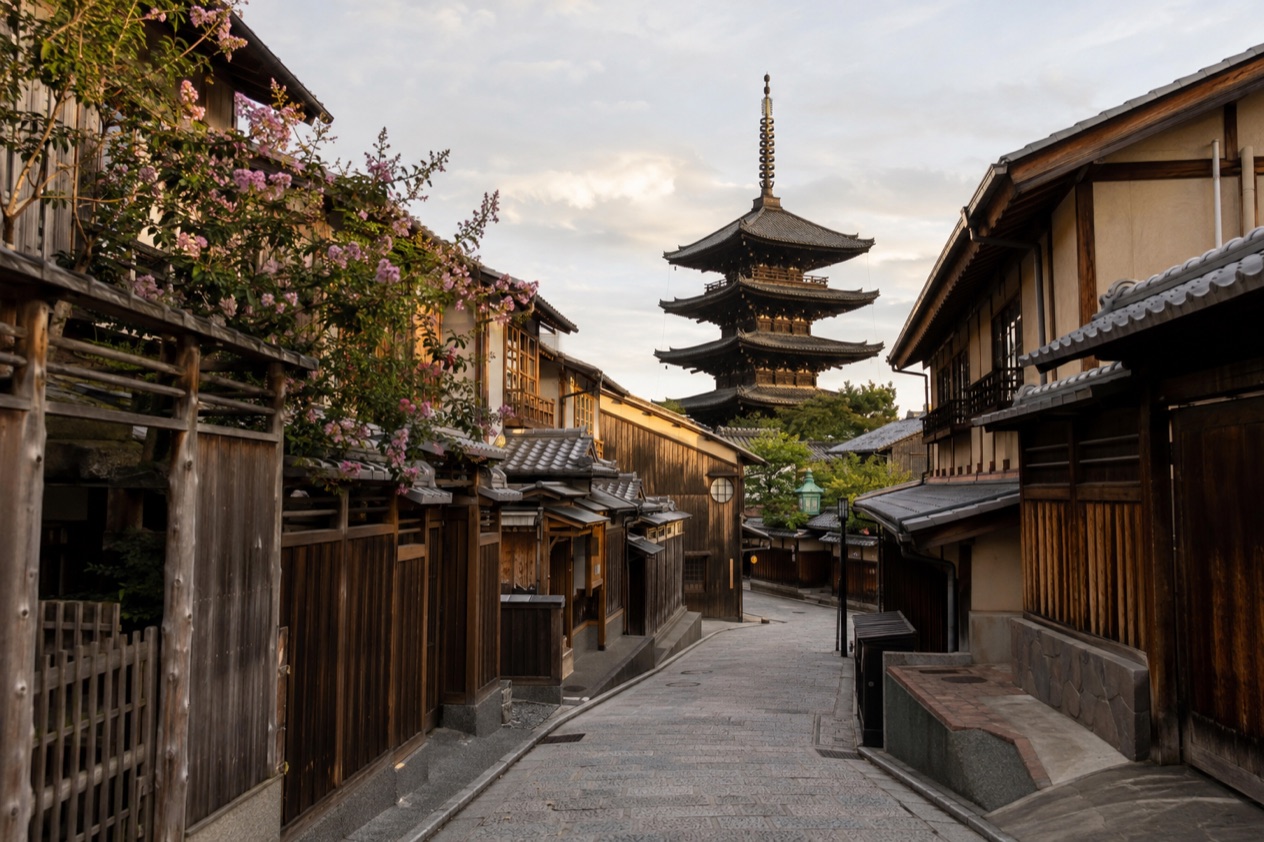
What is the best area to stay in Arashiyama?
For a first visit, the streets around Saga-Arashiyama station are the sensible choice, because the JR Sagano Line (San’in Main Line) runs there directly from Kyoto Station and the main sights fan out from that point. Families and anyone planning a wider Kyoto trip often do better at Kyoto Station, while nightlife belongs to the city itself rather than to Arashiyama.
Think of Arashiyama as a small cluster of places that each give you something different when you wake up. Around the station you find the practical side of the district: the arrival point of the train, the first cafés and sweet shops, and the way into the rest of the day.
Along the river the mood turns scenic, with Togetsukyo Bridge, the slopes of Arashiyama behind it, and the landing for the Hozu River Cruise. Toward the bamboo side, the grove itself, also called the Sagano Bamboo Forest, sets the tone.
The slopes carry their own attraction. Iwatayama Monkey Park sits on a small mountain not far from the station, with more than 170 monkeys and a fenced enclosure at the summit where visitors can feed them. Staying near that side of the district means your morning plan is already made. Staying elsewhere means you simply travel to it.
A budget trip tends to favor the base that gives you the most train connections, and that is Kyoto Station, served by the Tokaido Shinkansen and by the JR line out to Arashiyama. The station building holds a full floor of ramen restaurants, an Isetan department store, a theater and a Granvia luxury hotel, so food and a late arrival are both sorted under one roof. From there, Arashiyama is one outing among many rather than the whole trip.
Couples after a slower stay are drawn to the river and the slopes, where the evening belongs to a bath, a meal at the inn and the sound of the water. Travelers who want izakaya evenings, late dinners and wandering among old townhouses should look to central Kyoto, where machiya townhouses and hanamachi districts, the neighborhoods where geisha live and work, are part of Kyoto’s traditions as the Japan National Tourism Organization describes them. Nijo Castle, with its nightingale floors, also sits in central Kyoto.
In short, stay in Arashiyama when Arashiyama is the point of the trip, and stay at Kyoto Station when it is one chapter of several. The areas that follow show how each part of the district feels once you are there, and which kind of traveler it fits.
The best areas to stay in Arashiyama
Around Saga-Arashiyama station
This is the arrival point of the district, where the JR Sagano Line from Kyoto Station stops and where most visits begin. The surrounding lanes mix snack counters, tea rooms, souvenir shops and small restaurants, and the day starts here for travelers who step off the train and head out on foot. It suits first-timers and anyone who likes to have the train outside the door.
Lodging in this area is the small-scale kind that suits a Japanese district of this type: guesthouses, a few ryokan (traditional inns with tatami rooms and often a communal bath) and apartment-style stays, rather than big resort towers. Breakfast usually means a bakery or café stop. The station is your link to Kyoto Station and, through it, to the Shinkansen and the rest of the city.
A useful habit, and one the Japan National Tourism Organization recommends for Kyoto in general, is to visit shrines in the early morning or late evening, when they are less crowded and sometimes illuminated. Sleeping near the station makes that kind of timing a matter of stepping outside.
Along the river near Togetsukyo Bridge
Togetsukyo Bridge gives notable views of cherry blossoms in spring and autumn colors in fall on the slopes of Arashiyama, and the riverside around it is the postcard side of the district. You see the hills rise behind the water, hear the boats at the landing, and watch the light change on the leaves. It suits couples, photographers and anyone who wants the scenery to be the first thing they see in the morning.
The lodging here leans toward ryokan and boutique-style inns with views toward the water and the hillside, plus a few guesthouses. A ryokan stay usually means shoes off at the entrance, a yukata (a light cotton robe) to wear around the building, and a multi-course kaiseki dinner served in the room or a dining hall. Rooms with a river outlook are the ones to look for.
The Hozu River Cruise leaves from this stretch of Arashiyama’s waterfront country, which makes the riverside a handy base for travelers who plan to take it. The boats run from mid-March to the end of November, and the winter boats have heated seats. The hours are in the table that follows.
| Experience | Departures |
|---|---|
| Hozu River Cruise, mid-March to end of November | Hourly from 09:00, last boat 15:30 |
| Hozu River Cruise, winter (heated seats) | 10:00, 11:30, 13:00 and 14:30 |
Near the Bamboo Grove
The Arashiyama Bamboo Grove, also known as the Sagano Bamboo Forest, is a notable tourist site in Arashiyama and gives this side of the district its character. Tall green stalks arch over the path, the light turns green and filtered, and the sound is a soft creak when the wind moves through. Travelers who choose to sleep near it are mostly those who want the grove to be the first thing they walk through each day.
Here the lodging is small: family-run guesthouses, a few ryokan tucked among the trees and temples, and rental houses that give you a kitchen and more space. It suits couples, photographers and slow travelers more than anyone chasing late-night food. The Saga-Arashiyama station is the rail connection to Kyoto Station, so the city is never out of reach.
Pair a stay on this side with the other sights of the district, such as Togetsukyo Bridge and the monkey park, and you can cover them in a relaxed order rather than a rush. Bring layers, as bamboo shade can feel cooler than the streets outside it.
The slopes near Iwatayama Monkey Park
Iwatayama Monkey Park is on the slopes of Arashiyama, on a small mountain not far from Saga-Arashiyama station. More than 170 monkeys live there, and at the summit a fenced enclosure lets visitors feed them from inside. This is the nature side of the district, and a stay on the hillside suits travelers who want green slopes close to the bed.
Lodging on or near the slopes tends to be a handful of ryokan and guesthouses with garden views, along with the occasional apartment stay. Evenings are for a bath and dinner at the inn rather than for going out. Travelers with young children, who tend to love the monkeys, can build a morning around the park and keep the afternoon free for the river and the grove.
Kyoto Station as a base for Arashiyama
Kyoto Station is the one base outside Arashiyama worth weighing, because the JR Sagano Line starts there, and the Tokaido Shinkansen stops there as well, linking you to major cities across Japan. The Japan National Tourism Organization calls it the starting point for exploring all of Kyoto’s attractions. The station building holds a full floor of ramen restaurants, an Isetan department store, a theater and a Granvia luxury hotel, and Kyoto Tower stands a few steps from the main entrance.
Lodging here ranges from the luxury hotel inside the station building to business hotels and guesthouses nearby. It suits first-time visitors who plan to see several parts of Kyoto, travelers with luggage and a connecting train, and families who want food under one roof. Arashiyama then becomes a day out by rail, and you come home to a bed in the city.
Arashiyama areas compared
| Area | Best for | Feel | Getting around |
|---|---|---|---|
| Around Saga-Arashiyama station | First visit, sightseeing | Lively lanes of snacks, tea and small shops | JR Sagano Line from Kyoto Station to Sagaarashiyama station |
| Along the river near Togetsukyo Bridge | Couples, views, river cruise | Scenic, with cherry blossoms and autumn colors on the slopes | Near the bridge and the Hozu River Cruise |
| Near the Bamboo Grove | Slow travelers, photographers | Green and shaded, with a notable tourist site | Sagaarashiyama station is the rail link |
| Slopes near Iwatayama Monkey Park | Families, nature lovers | Hillside, with a monkey park on a small mountain | Not far from Saga-Arashiyama station |
| Kyoto Station | Budget, wider Kyoto trip, families | City hub with ramen floor, department store and a luxury hotel | Tokaido Shinkansen and the JR line out to Arashiyama |
The main trade-off is between being next to the station and being next to the scenery. Near the station you spend less time getting anywhere, and the lanes are lively with shops and tea rooms. Along the river or among the bamboo you give up some of that bustle and gain a view that is already in front of you when you open the curtains.
A second trade-off is between the old town and the newer comforts of the city. A ryokan in Arashiyama gives you tatami, a yukata and a kaiseki dinner, while a hotel at Kyoto Station gives you a department store, a ramen floor and a Shinkansen platform. Neither is better in the abstract, and the right choice depends on whether you want the inn to be part of the trip or simply the place where you sleep.
Finally, there is the question of how much of Kyoto you plan to see. Kyoto has a cultural heritage that has developed over the past 1,200 years and served as Japan’s capital for over a thousand, which is why so travelers pair Arashiyama with sights in the center, such as Nijo Castle, built in 1603 by Tokugawa Ieyasu. If your trip is mostly about those, the station base makes more sense, and Arashiyama becomes a single, well-chosen day.
How to choose your hotel in Arashiyama
Start with the kind of night you want, because Arashiyama and Kyoto offer very different ones. A ryokan is a traditional inn, with tatami floors, futons laid out in the evening, a bath, and a kaiseki dinner built from small seasonal dishes.
A hotel gives you a bed, a private bathroom and the freedom to eat when and where you like. A business hotel is a compact, practical room close to a station, and a guesthouse is a smaller, often family-run place with a more personal feel.
A capsule hotel is a stack of sleeping pods with shared washing areas, and it suits a solo traveler who needs a bed for a night and little else. In Kyoto proper you find the whole range, while in Arashiyama the choice leans toward ryokan, guesthouses and small inns that fit the character of the district. Machiya townhouses, the wooden city houses that are part of Kyoto’s traditions, are another kind of stay in the city center.
Distance to the station matters more than distance to any single sight. Saga-Arashiyama station is where the JR Sagano Line from Kyoto Station arrives, and Iwatayama Monkey Park is on a small mountain not far from it. A lodging close to the station keeps your arrival and departure simple, while one by the river or the bamboo trades that for scenery.
For families, the monkey park is the clearest draw, since visitors can feed the monkeys in a fenced enclosure at the summit. A base near the station or at Kyoto Station keeps the day flexible, with food close by and a train back to the city when energy runs low. Rooms that sleep several people are more common in apartment-style stays and some hotels than in small ryokan, so ask about room layouts before you settle.
For travelers with mobility needs, the slopes and the hillside inns call for extra thought, since the monkey park sits on a mountain and the hillside setting is part of its character. A stay at Kyoto Station, with its single large building holding restaurants, shops and a hotel, keeps more of your day under one roof. Whichever you choose, ask the lodging directly about steps, baths and the way from the station to the door.
If you want to eat at the lodging, a ryokan with dinner and breakfast takes care of the evening and leaves you free to enjoy the quiet hours. If you prefer to roam, a hotel or guesthouse near the station gives you the lanes, and Kyoto Station gives you a full floor of ramen restaurants. Pick a base that matches how you like to spend your evenings, and the days will take care of themselves.
Seasons shape the choice too. Togetsukyo Bridge is known for cherry blossoms on the slopes in spring and autumn colors in fall, and the Hozu River Cruise runs from mid-March to the end of November, with heated winter boats after that. A river-view room is most rewarding in those seasons, while in the other months a base nearer the station may serve you better.
Good to know before you go
Getting to Arashiyama from Kyoto Station is a matter of the JR Sagano Line (San’in Main Line), which stops at Sagaarashiyama station. Kyoto Station is also served by the Tokaido Shinkansen, so arrivals from other cities fit neatly into the same plan. Many lodgings in Arashiyama are small, so ask directly about the way from the station, luggage and meals when you reserve.
Sources
- Wikipedia, Arashiyama (https://en.wikipedia.org/wiki/Arashiyama), checked October 11, 2026
- Wikivoyage, Kyoto/Arashiyama (https://en.wikivoyage.org/wiki/Kyoto/Arashiyama), checked October 11, 2026
- Japan National Tourism Organization, Kyoto (https://www.japan.travel/en/destinations/kansai/kyoto/), checked October 11, 2026
To plan your stay
- Best Time to Visit Kyoto: Cherry Blossoms, Autumn Leaves, Weather by Month and Festivals
- Things to Do in Kyoto: Temples, Gardens, Food and Day Trips
- Kyoto from Tokyo: Shinkansen Trains, Nozomi vs. Hikari and Kodama, and a First Day in Kyoto
- Know Before You Go to Kyoto: Entry, Money, Getting Around and Local Etiquette