
A tram rattles down the street, a river slides past the Atomic Bomb Dome, and as the afternoon fades the smell of batter, cabbage and hot iron griddles drifts out of the okonomiyaki counters. Hiroshima is a city of rivers, memorials and serious eating, and the place you sleep decides which of those you meet first. The choice is between the streets around the station, the districts around the Peace Memorial Park and the castle, and a night out on Miyajima Island.
What is the best area to stay in Hiroshima?
For a first visit, stay near the Peace Memorial Park, where the Atomic Bomb Dome, the museum and the riverside paths are all part of your daily surroundings. Travelers arriving and leaving by shinkansen will find the station area a practical base, and anyone who wants a night among shrine lanterns and deer should look at Miyajima Island.
If sightseeing is the goal, the park district and the castle district sit in the part of the city where most of the memorial sites, the rebuilt castle and its Edo period museum are found. That means your mornings can begin at a memorial and your evenings can end at a restaurant counter without a long trip in between. The city’s trams, which Hiroshima Electric Railway runs under the nickname Hiroden, tie the districts together and are a sight in themselves.
A plain, practical base suits travelers who are mostly passing through, with an early train to catch or a late one to meet. Business hotels and simple guesthouses are the usual kind of lodging for that, and the station is the place where the shinkansen lines from Tokyo, Osaka, Nagoya, Kyoto and Fukuoka all arrive. You give up some of the riverside atmosphere and gain an easy handoff to the rail network.
Families usually do best in the central districts, where a hotel room with space for everyone sits close to a tram stop and to restaurants that serve a dish children tend to like, a griddled pancake of noodles, egg and cabbage. The Peace Memorial Museum admits junior high school students and younger free of charge, and the park gives young visitors room to move between stops. The park is also a place that asks for quiet attention, so a hotel nearby lets you step back to your room when a child needs a break.
Evenings are about food more than clubs. Okonomiyaki in Hiroshima is cooked on a noodle base and topped with pork and cabbage, and the city is also known for anago, the saltwater eel, and for oysters, which have been farmed here since the 16th century according to local tradition. Staying in the middle of the city puts these meals at the end of a tram ride or a stroll, and you can linger over a second round without watching the clock for a last connection.
The areas differ in what surrounds you when you open the curtains. Around the station you see rail lines, towers and the comings and goings of travelers. Around the park you see rivers, trees and memorials. Around the castle you see moats, stone walls and the grounds of Hiroshima Gokoku Shrine within them. On Miyajima you see the Seto Inland Sea, a wooded mountain and a shrine whose red torii gate stands in the water.
Your travel style matters as much as the map. A traveler who loves a traditional inn, with tatami floors, futons, a yukata to wear and a kaiseki dinner, will want to think about Miyajima first. A traveler who likes to come home to a plain room after a long day of walking and museums will be content in the city. Both choices are good ones, and neither is a mistake.
The best areas to stay in Hiroshima
Around the Peace Memorial Park
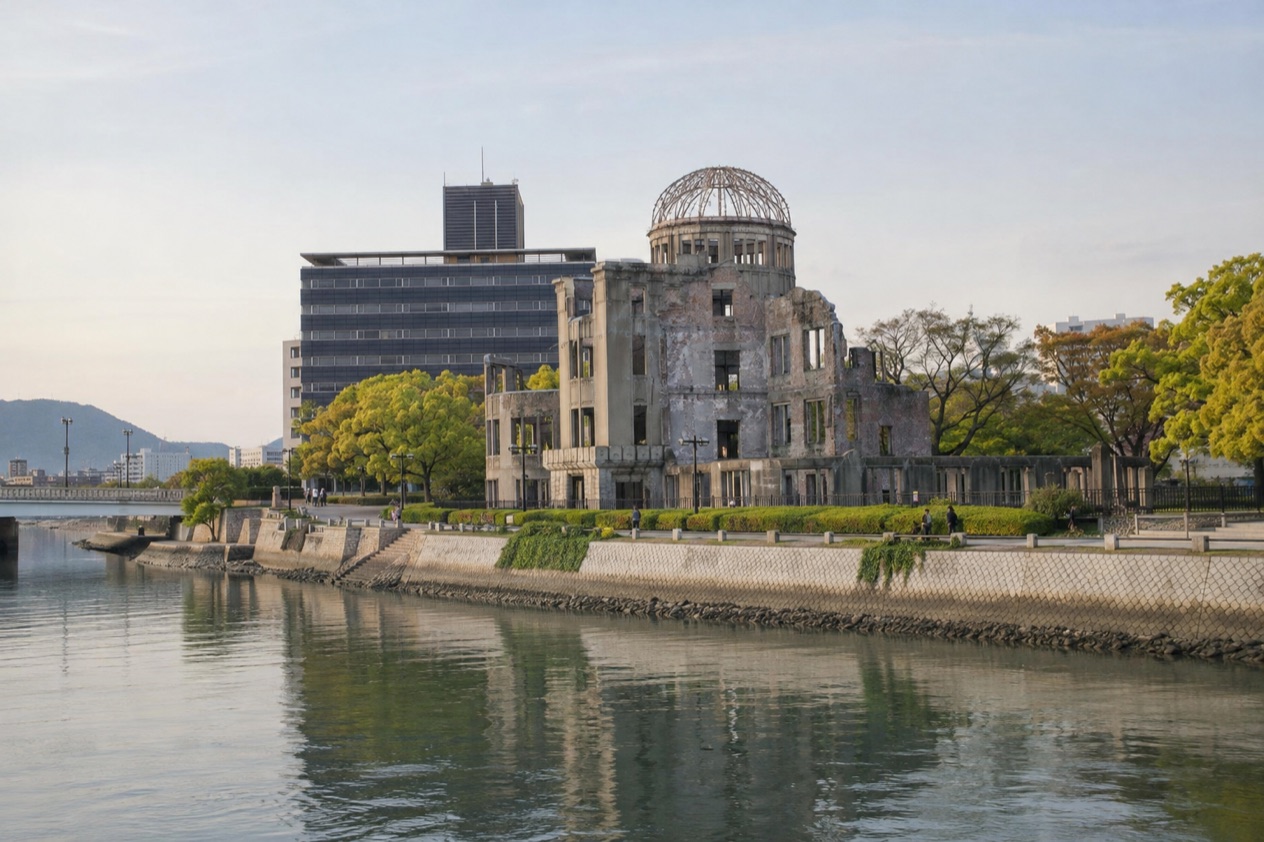
This is the district that gives Hiroshima its meaning for travelers. The Atomic Bomb Dome, which visitors can only view from the outside, stands beside the river, and the park holds the Children’s Peace Monument and the Hiroshima National Peace Memorial Hall for the Atomic Bomb Victims. The Peace Memorial Museum, which opened in the park in 1955, tells its story through belongings left by victims, A-bombed artifacts and survivor testimonies.
Lodging here runs from business hotels to larger city hotels, with some apartments and guesthouses in the surrounding streets. It suits first-time visitors, anyone who wants to walk to the memorial at their own pace, and travelers who plan to be here around August 6, when thousands of people write messages on lanterns that are lit at sunset and floated along the river in front of the Dome.
For getting around, the Hiroden trams pass through the city, and the network is the longest tram system in Japan at 21.8 miles. Since spring 2025 the QR code based MOBIRY DAYS ticketing system has replaced the older PASPY card.
A tip: the museum keeps long hours in the warmer months, so you can fit a visit around other plans and return to your room in between.
| Site | Open | Admission |
|---|---|---|
| Hiroshima Peace Memorial Museum | March to July: 7:30am to 7:00pm. August: 7:30am to 8:00pm, until 9:00pm on August 5 and 6 | Adults ¥200, high school students ¥100, junior high school students and younger free |
Around Hiroshima Station
The station is where the JR Tokaido-Sanyo Shinkansen brings travelers from Tokyo, Osaka, Nagoya and Kyoto, and where those coming from Fukuoka arrive in the opposite direction. The ride takes about four hours from Tokyo and 90 minutes from Osaka. A room here puts the end of a long rail day within a few steps of a bed, and it is the natural pick for travelers who are linking Hiroshima with other cities on a rail itinerary.
The kinds of lodging found around a major station are business hotels, larger chain-style hotels and a few guesthouses. They suit solo travelers, couples on a tight schedule and anyone who prefers a straightforward room to a setting with character. Trams from the station area run into the center of the city, so the memorial sites are reached by a tram ride rather than on foot from your door.
A tip for the evenings: the station area has its own restaurants, and okonomiyaki is cooked here as in the rest of the city, layered on a noodle base with pork and cabbage. You do not need to travel to find a first dinner.
The castle district
Hiroshima’s rebuilt castle, nicknamed Rijo, houses a museum of life in the Edo period, and Hiroshima Gokoku Shrine stands within the castle walls. The setting is one of moats, stone foundations and old trees, a change of pace from the memorial districts.
Lodging in this district is mostly business hotels and mid-sized city hotels, with a handful of apartments and small guesthouses among the side streets. It is a good fit for couples, for return visitors who have already seen the park, and for those who like to start a morning with a walk along the castle grounds before the day’s plans begin. Trams serve the district, so the park and the station are reached by the same Hiroden network.
A tip: pair a castle stay with the museum and the park on separate days, so that each place gets its own mood and the visit to the memorial is not squeezed into a short gap.
Miyajima Island
On Miyajima, the Itsukushima Shrine has a red torii gate that stands in the sea, and the island is known for its deer and for a wooded mountain behind the shrine. The shrine was registered as a World Heritage Site in 1996. Staying overnight turns the island from an excursion into a place you live in for a short time, with its own evenings and its own mornings.
The kind of lodging that fits this setting is the traditional inn. Ryokan typically offer tatami floors, futons, private baths (sometimes outdoor), a yukata to wear, a kaiseki dinner and a traditional Japanese breakfast, and the style of inn is believed to have emerged in Japan in the 8th century.
It suits couples, travelers marking an occasion and anyone who wants the slower rhythm that a ryokan brings. It is less suited to travelers who want a wide range of restaurants and tram lines at the door.
To combine the island with the city, travelers base themselves in Hiroshima and cross for the day, then book a single night on Miyajima as a contrast. Either approach works with the rest of the itinerary, since the memorial sites remain the center of the stay.
Hiroshima areas compared
| Area | Best for | Feel | Getting around |
|---|---|---|---|
| Around the Peace Memorial Park | First visit, memorial sites, families | Rivers, trees and memorials, the Atomic Bomb Dome beside the water | Hiroden trams |
| Around Hiroshima Station | Rail travelers, short stays, solo travelers | Rail lines and arrivals, a practical base | Shinkansen from Tokyo, Osaka, Nagoya, Kyoto and Fukuoka, then Hiroden trams |
| The castle district | Return visitors, history, couples | Moats, stone walls and shrine grounds | Hiroden trams |
| Miyajima Island | A ryokan night, shrine and deer | Sea, wooded mountain and a torii gate in the water | Reached as an excursion from the city |
The main trade-off is between being close to the trains and being close to the story of the city. A room by the station spares you the effort of carrying bags when you arrive or leave, but your days start with a tram ride before you reach the river and the park. A room near the park places the memorial at the start and end of each day, but you carry your luggage a little further on arrival and departure.
The old and the new sit side by side in Hiroshima more than in many cities. The castle district gives you the Edo period, a rebuilt castle and a shrine within its walls.
The park district gives you the 20th century and the rebuilt city that grew after it, with trams that Hiroden describes as a moving streetcar museum, since the fleet includes cars made across Japan and Europe. Choosing between them is partly choosing the mood you want when you close the door at night.
Miyajima stands apart from all three. A night there swaps the city’s rhythm for the sea, the deer and the shrine, and it is the one choice here that changes the character of your trip. The trade-off is that you leave the tram network and the range of dinners in the city, and take on a plan built around the island instead.
For a stay of a couple of nights, one area is enough. For a longer stay, splitting between the park district and Miyajima gives you both sides of the place, the memorial city and the island shrine, without losing time to repeated packing. Whichever you choose, the trams reach the main sights, and you can adjust the plan from day to day.
How to choose your hotel in Hiroshima
Start with the kind of stay you want. A hotel gives you the widest choice of rooms and settings, from business hotels near the station to larger city hotels near the park.
A ryokan gives you the traditional Japanese inn experience, with tatami floors, futons, a yukata, a kaiseki dinner and a Japanese breakfast. A guesthouse gives you a simpler, smaller place, often with shared spaces. A capsule hotel gives you a bed and little else, and suits a single night between trains.
Think about what you will do most. If your days are filled with the park, the museum and the river, a hotel near the Peace Memorial Park keeps those at your door.
If your plans include moving on to Osaka, Kyoto or Fukuoka by shinkansen, a hotel near the station is a sensible base. If the shrine on Miyajima is what you most want to see, a night on the island changes what you see of it.
A room near a tram stop is worth looking for, since the Hiroden network is how most of the city’s districts connect. Look at where the nearest stop is on the hotel’s own map, and think about how you will carry your bags on arrival day. The station area is the place where bags travel least.
Ryokan and heritage stays
A ryokan is a night in a different kind of Japan. You sleep on a futon laid over tatami, you change into a yukata, and dinner arrives as a kaiseki meal, a sequence of small seasonal dishes. Breakfast is a traditional Japanese one. Some ryokan have private baths, sometimes outdoors, which adds to the sense of an evening set apart from the city.
Heritage Stays go a step further. Guests at these properties can take part in cultural activities such as a tea ceremony, calligraphy and wearing traditional Japanese clothing. Reservations are required and can often be made through the property’s website or by phone. A stay of this kind suits travelers who want to build a night around an activity rather than around sightseeing.
Families and mobility
Families usually want space, a place near a tram stop and meals that work for children. The center of the city fits this, and a room in the park district puts the museum, which admits junior high school students and younger free of charge, within reach of a tram ride. Okonomiyaki, a griddled pancake with noodles, cabbage and pork, tends to please younger travelers, and the cooking is often visible from the counter.
Travelers who find long walks tiring should look at the lodging nearest to the places they most want to see. A room near the park keeps the memorial close, a room near the station keeps the trains close, and the trams link the two. Check the hotel’s own description for details on stairs, elevators and room layout, since each property differs.
Matching lodging to your season
The calendar shapes the choice. Around August 6, when the Peace Memorial Ceremony is held at the park and lanterns are floated on the river at sunset, the district beside the Dome is the place to be, and the museum stretches its hours for the occasion.
In autumn, the leaves at Sandankyo are famous from late October to late November, and a night in the city gives you a base for that excursion. Nidandaki in Sandankyo can only be reached by taking the Sarutobi ferry boat.
Other trips from the city include Okunoshima, about a 15-minute ferry ride from Tadanoumi Port in Takehara City, where visitors must not chase or pick up the wild rabbits and should offer appropriate food in a safe place. The prefecture also has the Seto Inland Sea, wooded mountains and clear waters, and outdoor pursuits such as hiking, cycling, ocean sports and skiing. A stay in the city lets you choose among these as the weather and your mood suggest.
Good to know before you go
Hiroshima can be reached by shinkansen or by air, and the flight between Haneda Airport and Hiroshima Airport takes 90 minutes. The Hiroden trams are the main way to move between districts once you arrive, and the older PASPY smart card has given way to the QR code based MOBIRY DAYS system. Whichever area you choose, the memorial sites, the castle and the okonomiyaki counters are all part of the same city, and a few nights is enough to see them.
Sources
- Japan National Tourism Organization, Hiroshima (https://www.japan.travel/en/destinations/chugoku/hiroshima/), checked October 11, 2026
- Visit Hiroshima, the official guide (https://visithiroshima.net/), checked October 11, 2026
- Hiroshima Peace Memorial Museum (https://hpmmuseum.jp/?lang=eng), checked October 11, 2026
- Wikipedia, Hiroden (https://en.wikipedia.org/wiki/Hiroden), checked October 11, 2026
- Wikipedia, Hiroshima (https://en.wikipedia.org/wiki/Hiroshima), checked October 11, 2026
- Japan National Tourism Organization, ryokan stays, what is included, etiquette (https://www.japan.travel/en/guide/japanese-ryokan/), checked October 11, 2026
- Japan National Tourism Organization, heritage stays (https://www.japan.travel/en/heritage-stays/), checked October 11, 2026
To plan your stay
- Best Time to Visit Hiroshima: Cherry Blossoms, Autumn Weather, Rainy Season and Festivals
- Things to Do in Hiroshima: Peace Memorial Park, Miyajima, Okonomiyaki and Day Trips
- Hiroshima from Osaka: Shinkansen, Local Trains and a Day at the Peace Park
- Know Before You Go to Hiroshima: Entry, Money, Getting Around and Local Etiquette