
In early September the cicadas are still sawing away in the trees along Hiroshima’s rivers, and the evening air carries the smell of batter and cabbage hitting a hot griddle. The heat of high summer has begun to loosen, and people linger on the riverbanks after dark. September in Hiroshima suits travelers who want the Peace Memorial Park, the shrine island of Miyajima and a plate of okonomiyaki in a city that is slowly turning toward autumn.
What is the weather like in Hiroshima in September?
September in Hiroshima is still warm and humid, but it is clearly a step down from August, with afternoons that feel like late summer and evenings that start to soften.
| Month | Average high (°F) | Average low (°F) | Precipitation (in) | Days with 1 mm or more of precipitation | Hours of sunshine | Daylight on the 15th |
|---|---|---|---|---|---|---|
| August | 91.0 | 77.2 | 5.17 | 7.6 | 207 | 13 h 29 min |
| September | 84.4 | 70.0 | 6.41 | 8.5 | 167 | 12 h 26 min |
| October | 74.7 | 58.8 | 4.30 | 6.2 | 179 | 11 h 23 min |
September is the wettest of the three months, and the rain tends to arrive in spells rather than as a steady drizzle, so a gray, damp day can sit between bright ones. Hiroshima sits on the Seto Inland Sea, and the humidity stays close to its August level, which means light, quick-drying clothes still make sense. Sunshine drops noticeably compared with August, so you will not get a full week of blue sky every time.
What the temperatures change in practice is how you plan a walking day. Afternoons are warm enough to sweat through a cotton shirt on the long open paths of the Peace Memorial Park, while nights, with lows in the low 70s, are mild enough to eat outside and stroll along the water without a jacket. Toward the end of the month you may start to feel a hint of freshness after dark, but a sweater is optional rather than essential.
The light is also changing. Days are shorter than in August and the evening arrives earlier, so the glow over the rivers comes at a more comfortable hour for dinner. A compact umbrella or a light rain jacket is worth keeping in your daypack, since showers can cut a plan short without much warning.
What to do in Hiroshima in September
Hiroshima is a city of wide boulevards and rivers that branch and criss-cross toward the Seto Inland Sea, and September gives you the time to follow them. The great August ceremony, when thousands of peace messages are written on lanterns and floated on the river in front of the Atomic Bomb Dome, has just passed. What remains is the city on an ordinary footing, with residents back at their routines and the memorial sites open to anyone who wants to spend a whole morning with them.
It is also a month for eating well. The warmth still calls for something cold or fresh at lunch, and the evenings belong to the griddle. Baseball fans may catch a Hiroshima Carp game, since the home team is a point of local pride and the season is still running. Between the sights, the rivers give you places to sit and watch the light change.
Peace Memorial Park and Museum
The Peace Memorial Park lies in the center of Hiroshima and holds many monuments, among them the Children’s Peace Monument and the National Peace Memorial Hall for the Atomic Bomb Victims. It is a place to walk slowly, read the inscriptions and watch how people leave paper cranes and flowers. In September the trees still give some shade, and the heat makes it natural to pause on a bench between monuments.
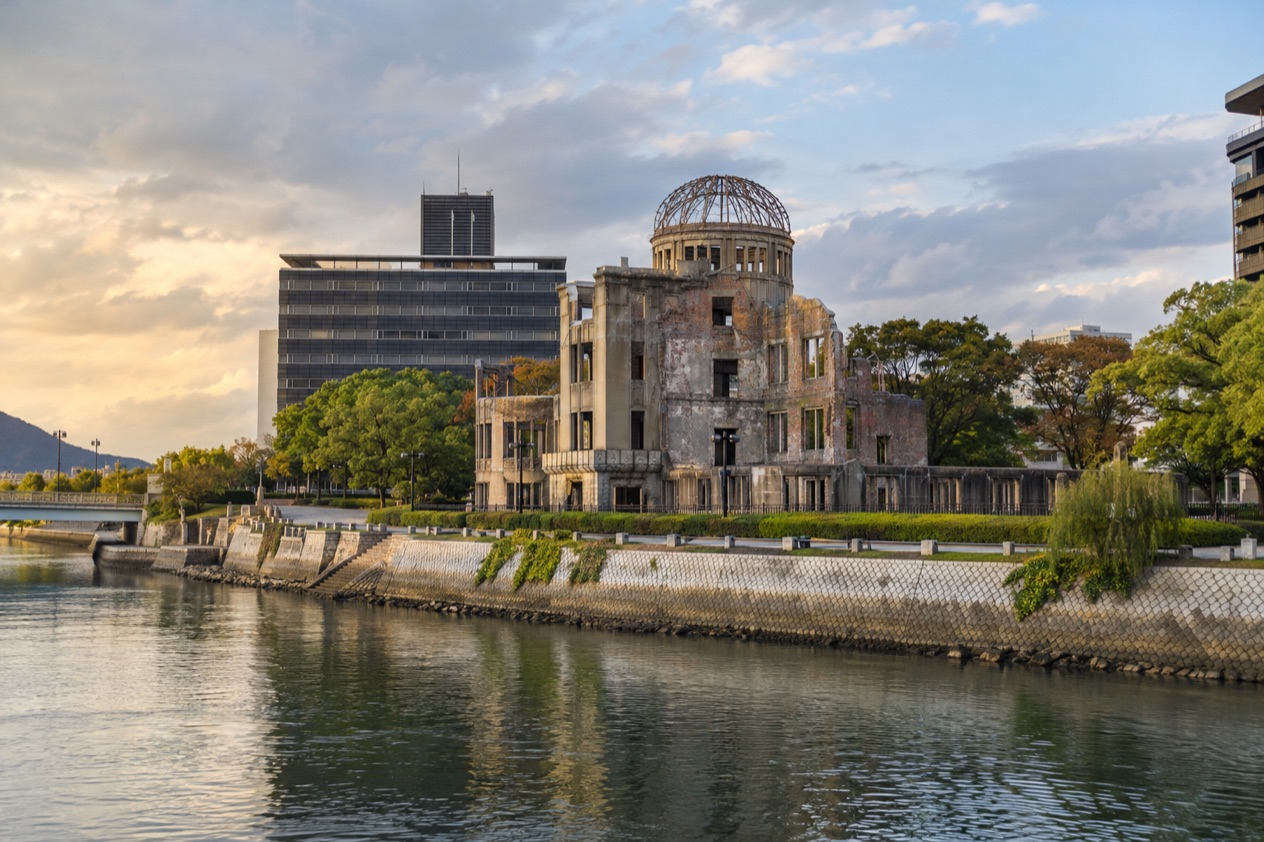
The Atomic Bomb Dome stands within the park, the only structure still standing near the hypocenter of the bomb dropped on August 6, 1945. Visitors cannot enter it, so you view it from the outside, from the riverbank or the paths nearby. The Peace Memorial Museum then tells the story through belongings left by victims, artifacts from the bombing and survivor testimonies, carrying the message of No More Hiroshimas.
Give the museum an unhurried part of your day, and plan something gentler afterward, such as a river-side coffee or a pause in the shade. On a rainy September day this is the natural indoor anchor, though it stays moving whatever the weather.
Miyajima Island and Itsukushima Shrine
A trip to nearby Miyajima Island is the excursion nearly every visitor to Hiroshima makes. The shrine’s red torii gate stands in the sea, and the shrine itself is a World Heritage Site. The island is also known for its deer, which wander among visitors and the paths in the village.
In September the sea, the wooded hills behind the shrine and the humid air together give the island a lush, slightly hazy look, and clouds can soften the view across the water. Miyajima rewards a slow pace: wander the shopping street, try the island’s momiji manju (maple-leaf-shaped cakes) and look for grilled anago (conger eel), a local favorite.
Bring a hat and water for the warm hours and expect to be outdoors for most of the visit. If the rain sets in, the covered arcades in the village and the shrine’s corridors offer some relief, though the island is most pleasant on a dry day.
Okonomiyaki and the city’s table
Hiroshima’s okonomiyaki is its own dish, not the mixed-batter pancake you may know from elsewhere. Instead it is built in layers on the griddle: a thin crepe, a mound of cabbage, bean sprouts and pork, often noodles, and a fried egg, all finished with a sweet-savory sauce. Watching the cook press and flip it is half the pleasure, and counter seats put you right in front of the griddle.
In September the heat makes it a filling choice for evening, when the air is cooler and the griddle’s warmth feels welcome. Pair it with a cold beer or tea, and follow it with a walk along the river to settle the meal. For lunch, lighter options and cold noodles suit the warm afternoons better.
Okunoshima and the wider prefecture
Hiroshima Prefecture also offers the Seto Inland Sea, wooded mountains and clear waters, plus shrines and museums beyond the city. One outing that appeals to animal lovers is Okunoshima, where wild rabbits roam. Visitors must not chase or pick up the rabbits and should offer appropriate food in a safe place.
Such a trip fits a September day when the sky is clear and you want something lighter after the weight of the memorial sites. The warm weather means water and sun protection matter, and a hat helps. It is a good way to see the island sea and its small shores in the late-summer light.
A two-day itinerary for Hiroshima in September
Day 1 belongs to the city and its memory. Start early with the Peace Memorial Park while the air is at its freshest, walking past the Children’s Peace Monument and pausing at the Atomic Bomb Dome, which you can only view from outside. The park’s open paths offer little shade, so the morning is the kinder time for this long walk in September’s humid warmth.
Spend the midday inside the Peace Memorial Museum, where the exhibits give a break from the sun and the heat. Afterward, find lunch in a small neighborhood spot near the park, something cold and light. In the afternoon, follow the rivers on foot through the center, stopping at a café when the humidity rises.
For dinner, settle at a counter for okonomiyaki as the evening cools, and finish with a stroll along the water once the light fades. If rain comes, extend your time in the museum and the National Peace Memorial Hall, and move the river walk to the next clear spell.
Day 2 is for Miyajima. Head out early to the island and the Itsukushima Shrine, seeing the red torii in the sea and the deer among the paths. Walk the village street, sample momiji manju and let the morning unfold at the pace of the shrine corridors, with a hat and water close at hand.
Take lunch on the island with grilled anago or oysters-and-rice style local fare, then wander the wooded paths as the afternoon warms. Head back to Hiroshima for a final evening of local flavors, perhaps a different griddle spot or an izakaya (a casual pub) with small plates and cold drinks. If the weather turns wet, shift to the covered arcades on the island and keep the afternoon short, saving energy for a relaxed dinner back in the city.
Is Hiroshima busy in September?
September is the pivot between late summer and autumn in Hiroshima, and the city moves at an ordinary rhythm, with the peak of the summer heat behind it and the autumn color still weeks away.
The August ceremony and its floating lanterns have passed, so the city is no longer built around that single event. What you find instead is a working city with rivers, boulevards and memorials open to anyone, and you can fit the sights together at your own speed. The maple leaves in this part of Japan change color around the end of November, so the foliage season that draws travelers is not part of September’s picture.
For the pace of a trip, that means the focus is on the weather and the sights themselves. The warm, humid afternoons shape how people move, with outdoor stops early and indoor ones in the middle of the day. Meals fall into a natural pattern, with lighter lunches and more substantial dinners at the griddle.
Miyajima, with its shrine and deer, remains a draw for day-trippers, and you will probably share the paths with other visitors there. In the city, the memorial sites hold visitors of all kinds, from school groups to travelers on a long route through Japan. Take it as a month in which the season, not a festival, sets the mood.
What to pack for Hiroshima in September
Pack for warm, humid days with the occasional shower, and for a lot of walking between the park, the museum and the island.
- Light, breathable clothes that dry quickly, because the humidity stays high and you will be walking outdoors.
- A compact umbrella or light rain jacket for showers that can arrive on any day.
- A hat and sunscreen for the open paths of the Peace Memorial Park and the shrine island.
- Comfortable walking shoes for long days across the park, the museum and Miyajima’s paths.
- A refillable water bottle for the warm afternoons.
- A thin layer for the evenings, since nights can begin to feel fresher late in the month.
Good to know before you go
September is a month of humid warmth and the heaviest rain of the late-summer stretch, so build some flexibility into your days and keep an indoor option, such as the Peace Memorial Museum, ready for a wet afternoon. The Japan Meteorological Agency runs an Emergency Warning System, in place since 2013, for the significant likelihood of catastrophes tied to natural phenomena of extraordinary magnitude. The Japan National Tourism Organization also provides a Japan Safe Travel Information page with safety tips and government information for travelers.
Respect matters at the memorial sites, where visitors come to reflect. At the Atomic Bomb Dome you view the structure from outside only, and at Okunoshima visitors must not chase or pick up the wild rabbits.
Hiroshima in September vs August and October
Moving the trip four weeks earlier puts you in August, with hotter, sunnier and more sultry days, and with the lantern ceremony on August 6, when messages are floated along the river in front of the Atomic Bomb Dome. That evening is the draw for travelers who want to be there for the remembrance itself. The trade-off is the heat, which makes long outdoor walking more tiring.
Moving four weeks later takes you into October, with cooler, drier days and longer evenings that feel more like autumn. The maple color still waits until late November in this region, so October is a quieter step toward the foliage season rather than the season itself.
If you want to be in Hiroshima for the August ceremony, go earlier. If you prefer cooler walking weather and do not mind giving up the last of the summer warmth, choose October. September suits those in between: still warm enough for evenings outside, with the August intensity easing and some rain to plan around.
Is September a good time to visit Hiroshima?
Yes, September is a good time to visit Hiroshima for travelers who want a city of memory, rivers and food, and who are comfortable with warm, humid weather and the odd shower.
It will suit those who like long days on foot with a clear thread running through them: the Peace Memorial Park, the museum, a trip to Miyajima and a griddle dinner. It is less ideal for anyone who wants dry, cool air or autumn color, who would do better to wait for October or late November. Heat-sensitive travelers should plan their outdoor hours with care.
On arrival, start with the Peace Memorial Park and the museum, since they give the rest of the visit its meaning and the weather decides how the remaining days fall. After that, the okonomiyaki counters, the rivers at dusk and the shrine island fill in the picture. What is special about Hiroshima in September is the sense of a city exhaling after the summer’s remembrance, with the cicadas still singing and the first hint of autumn in the evening air.
Sources
- Japan Meteorological Agency (JMA), Normal values 1991-2020, monthly (https://www.data.jma.go.jp/stats/etrn/view/nml_sfc_ym.php?prec_no=67&block_no=47765), station Hiroshima, elevation 4 m, checked October 11, 2026
- Computed from the date and the latitude of the place (sunrise equation, solar elevation -0.833 degrees), October 11, 2026
- Japan Meteorological Agency, Emergency Warnings (https://www.jma.go.jp/jma/en/Emergency_Warning/ew_index.html), checked October 11, 2026
- Japan National Tourism Organization, safety information (https://www.japan.travel/en/japan-safe-travel-information/), checked October 11, 2026
- Japan National Tourism Organization, weather and seasons in Japan (https://www.japan.travel/en/plan/weather/), checked October 11, 2026
- Japan National Tourism Organization, summer in Japan (https://www.japan.travel/en/guide/summer-guide/), checked October 11, 2026
- Wikipedia, Climate of Japan (https://en.wikipedia.org/wiki/Climate_of_Japan), checked October 11, 2026
- Japan Meteorological Agency, maple color-change dates 2025-2026 with difference from the 1991-2020 normal (https://www.data.jma.go.jp/sakura/data/phn_014.html), checked October 11, 2026
- Japan Meteorological Agency, kaede2020.pdf (https://www.data.jma.go.jp/sakura/data/kaede2020.pdf), checked October 11, 2026
- Japan National Tourism Organization, autumn in Japan (https://www.japan.travel/en/guide/autumn-guide/), checked October 11, 2026
- Japan National Tourism Organization, spring in Japan (https://www.japan.travel/en/guide/spring-guide/), checked October 11, 2026
- Wikipedia, Hiroshima (https://en.wikipedia.org/wiki/Hiroshima), checked October 11, 2026
- Wikivoyage, Hiroshima (https://en.wikivoyage.org/wiki/Hiroshima), checked October 11, 2026
- Japan National Tourism Organization, Hiroshima (https://www.japan.travel/en/destinations/chugoku/hiroshima/), checked October 11, 2026
- Visit Hiroshima, the official guide (https://visithiroshima.net/), checked October 11, 2026
- Hiroshima Peace Memorial Museum (https://hpmmuseum.jp/?lang=eng), checked October 11, 2026
To plan your stay
- Things to Do in Hiroshima: Peace Memorial Park, Miyajima, Okonomiyaki and Day Trips
- Where to Stay in Hiroshima: Peace Park, Station Area, Castle District and Miyajima Island
- Hiroshima from Osaka: Shinkansen, Local Trains and a Day at the Peace Park
- Know Before You Go to Hiroshima: Entry, Money, Getting Around and Local Etiquette