
On a December evening in Hiroshima, steam rises from the iron griddles of the okonomiyaki counters, and the boulevards that cross the river delta turn cool and clear. The maple color has just finished on the hills, the crowds of autumn have thinned, and the city settles into a quieter rhythm. It is a month for memorial sites, a ferry to the shrine island and long, hot lunches.
What is the weather like in Hiroshima in December?
December in Hiroshima is cold but mostly manageable, a month of crisp days, chilly nights and little rain, sitting between the mild end of autumn and the deeper cold of January.
| Month | Average high (°F) | Average low (°F) | Precipitation (in) | Days with 1 mm or more of precipitation | Hours of sunshine | Daylight on the 15th |
|---|---|---|---|---|---|---|
| November | 63.9 | 48.0 | 2.73 | 6.1 | 153 | 10 h 24 min |
| December | 53.8 | 39.2 | 2.13 | 5.7 | 141 | 9 h 53 min |
| January | 49.8 | 35.6 | 1.82 | 5.5 | 139 | 10 h 05 min |
Afternoons are cool rather than cold, enough for a coat and a scarf while you walk between the memorial sites. Nights drop close to freezing, so evenings are for warm indoor meals rather than lingering on a riverbank. Compared with November, the shift is clear: the light jacket of autumn gives way to a proper winter coat.
Rain comes on a handful of days, so most of the month is dry enough to plan outdoor visits without worry. A light, packable umbrella covers the occasional shower. Snow or sleet is possible on a number of days, but it amounts to very little in the city itself, a dusting at most, and it is more a reason for gloves than a reason to change plans.
Daylight is short, so the sun sets early and the day has to be used with that in mind. Plan the outdoor stops for the middle of the day and leave museums and long meals for the dark hours. The humidity is moderate, which keeps the cold from feeling damp.
What to do in Hiroshima in December
December in Hiroshima is about winter comfort food, quiet reflection and a ferry ride to the island of Miyajima. Christmas is not a national holiday in Japan, though gifts are sometimes exchanged, so the city carries a light seasonal glow rather than a holiday rush. The streets stay open and ordinary, and the focus stays on the sights.
The maple leaves are mostly done by now. The color change at Hiroshima usually arrives around the end of November, so early December may still hold a few late reds on the hillsides, while the rest of the month turns to bare branches and clear winter air.
Peace Memorial Park and the Atomic Bomb Dome
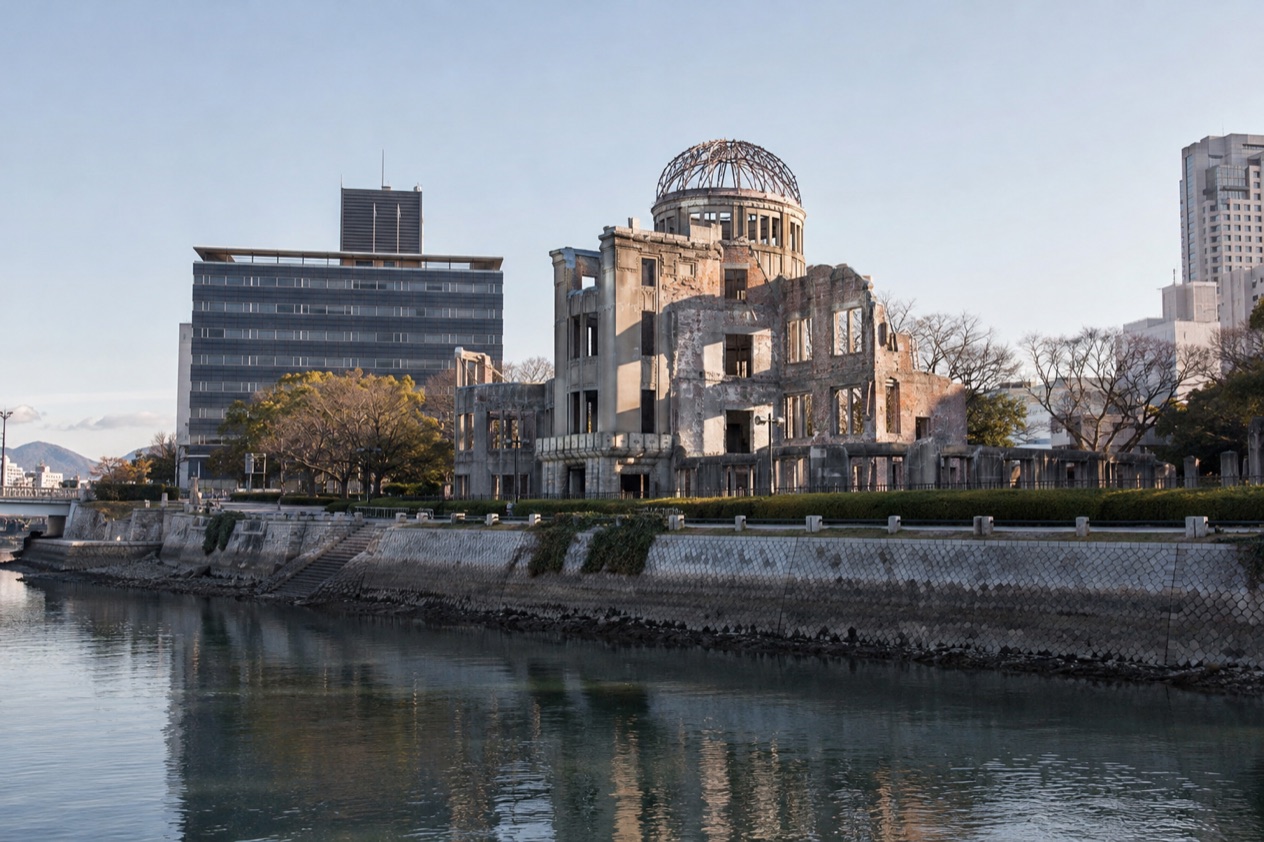
Hiroshima became the site of the first atomic bomb attack on August 6, 1945, and the Peace Memorial Park, with the Atomic Bomb Dome beside it, is where the city tells that story. The Atomic Bomb Dome, beside Peace Memorial Park, is a UNESCO World Heritage Site. The Dome cannot be entered, so you see it from outside, along the river path that passes in front of it.
The Peace Memorial Museum carries the visit indoors. It shows belongings left by victims, artifacts from the bombing and survivor testimonies, and it spreads the message of No More Hiroshimas. In a cold month, the indoor galleries make a natural place to spend the middle of the day. Expect a serious, slow visit, and leave room afterward to walk by the river and absorb it.
| Site | Admission |
|---|---|
| Hiroshima Peace Memorial Museum | Adults ¥200, high school students ¥100 |
Miyajima and Itsukushima Shrine
The island of Miyajima is the classic outing from Hiroshima, with Itsukushima Shrine and its red torii gate standing in the sea, a World Heritage Site since 1996. The island is also known for its deer. In winter, the cold, clear air gives the vermilion shrine a sharp outline against the water and the wooded hills behind it.
Give the island a good half of your day, wear warm layers because the sea wind is cold, and keep a hot drink or a grilled snack in mind for the walk through the shopping street. Go earlier in the day if you want to see the shrine and shopping street in daylight.
Okonomiyaki and winter food
Hiroshima’s version of okonomiyaki is layered rather than mixed: a thin crepe topped with cabbage, bean sprouts, pork and noodles, finished with a sweet-savory sauce. Eaten at a counter, straight off the griddle, it is exactly what a cold evening asks for.
The Seto Inland Sea is known for oysters, and winter is when many people order them, grilled, fried or in a hot pot. Pair them with a cup of local sake. Heated soups, noodles and simmered dishes round out the season.
Around the year’s end, many restaurants and attractions close for the New Year holidays, and families eat osechi, a selection of special dishes, on January 1. If your trip runs late in the month, plan meals with that closure in mind.
A two-day itinerary for Hiroshima in December
Day 1 is for the city’s memory. Start in the Peace Memorial Park while the morning light is low and the air is crisp, and walk to the Atomic Bomb Dome, viewing it from outside along the river. Move into the Peace Memorial Museum around midday, where the indoor galleries give a warm, quiet shelter from the cold.
After the museum, take the afternoon slowly along the riverbanks and boulevards, with a stop in a café for something hot. As the short day fades, head to an okonomiyaki counter for dinner, where the griddle’s heat is welcome. If rain or sleet arrives, stay under cover and add more time in the museum.
Day 2 belongs to Miyajima. Go over to the island in the morning so you have the daylight hours there, and walk to Itsukushima Shrine and its torii gate standing in the sea. Wander among the island’s deer and the shopping street, with a hot snack in hand.
Return to the mainland before dark, since the sun sets early. Spend the evening on oysters, a hot pot or another winter meal in the city. If the weather turns wet, shorten the island visit and spend the leftover time in the covered shopping arcades of Hiroshima.
Is Hiroshima busy in December?
December is a calmer month in Hiroshima, after the autumn leaf season has finished and before the New Year travel period begins.
The maple color change usually falls near the end of November, so by December the leaf-watching visitors have mostly gone. What remains is a steady flow of people coming for the memorial sites and Miyajima. The pace of the city feels ordinary, with the shops open as they are throughout the year.
Late in the month the mood shifts toward the New Year, when many restaurants and attractions close. The holiday is celebrated on January 1, so plan the last days of December around those closures. Christmas itself is not a national holiday in Japan, so it does not close the city.
What to pack for Hiroshima in December
Pack for cold days and near-freezing nights, with layers you can add and remove as you move between outdoors and heated interiors.
- A warm winter coat, for the cool afternoons by the river and the cold evenings.
- Gloves and a scarf, since snow or sleet is possible on some days.
- A compact umbrella for the few rainy days.
- Comfortable walking shoes for the park paths and the island of Miyajima.
- Thermal layers for the ferry crossing, where the wind off the water bites.
Good to know before you go
December falls outside the main travel seasons of autumn and spring, so the city runs at its everyday pace. In urban areas, shops are generally open from 10:00 a.m. to 8:00 p.m. every day, while in rural areas they often close earlier, sometimes as early as 6:00 p.m. That matters if you head out of the city.
During the New Year holidays, many restaurants and attractions are closed, so plan your last days of the month accordingly.
Hiroshima in December vs November and January
Moving the trip earlier, to November, means milder days and a bit more light, and the maple leaves usually turn around the end of that month. The air is warmer for walking, and the days are longer for fitting in the park and Miyajima in one stretch.
Moving later, to January, brings colder days and more frequent snow or sleet in the city, though the rain amounts stay small. The New Year holiday closures fall at the start of the month, and many restaurants and attractions are closed then.
Choose November if you want the leaf season and gentler temperatures. Choose December if you want the cool, clear air and a city between the seasons. Choose January only if you are comfortable with the deepest cold of the winter and can work around the holiday closures.
Is December a good time to visit Hiroshima?
Yes, December suits travelers who like cool, clear days, quiet reflection and hot winter meals, and who do not mind an early sunset.
It is a good fit for anyone coming mainly for the Peace Memorial Park and Museum, where the indoor galleries work well in cold weather. It also suits those who want to see Itsukushima Shrine without the autumn leaf season attached. Travelers who want warm weather or long evenings outdoors should choose another month.
On arrival, start with the Peace Memorial Park while the light is good, then keep the island of Miyajima for a day with a clear morning. What is special about December here is the combination: a serious, thoughtful city, a shrine standing in winter water, and a griddle of okonomiyaki waiting at the end of the day.
Sources
- Japan Meteorological Agency (JMA), Normal values 1991-2020, monthly (https://www.data.jma.go.jp/stats/etrn/view/nml_sfc_ym.php?prec_no=67&block_no=47765), station Hiroshima, elevation 4 m, checked October 11, 2026
- Computed from the date and the latitude of the place (sunrise equation, solar elevation -0.833 degrees), October 11, 2026
- Japan National Tourism Organization, winter in Japan (https://www.japan.travel/en/guide/winter-guide/), checked October 11, 2026
- Wikipedia, Christmas in Japan (https://en.wikipedia.org/wiki/Christmas_in_Japan), checked October 11, 2026
- Japan National Tourism Organization, shop and attraction hours, national holidays (https://www.japan.travel/en/plan/business-hours-and-holidays/), checked October 11, 2026
- Wikipedia, Japanese New Year (https://en.wikipedia.org/wiki/Japanese_New_Year), checked October 11, 2026
- Wikipedia, Public holidays in Japan (https://en.wikipedia.org/wiki/Public_holidays_in_Japan), checked October 11, 2026
- Japan National Tourism Organization, skiing guide (https://www.japan.travel/en/guide/skiing/), checked October 11, 2026
- Japan National Tourism Organization, skiing and snowboarding in Japan: regions, resorts, seasons (https://www.japan.travel/en/sports/snow/), checked October 11, 2026
- Wikipedia, List of ski areas and resorts in Japan (https://en.wikipedia.org/wiki/List_of_ski_areas_and_resorts_in_Japan), checked October 11, 2026
- Wikipedia, Climate of Japan (https://en.wikipedia.org/wiki/Climate_of_Japan), checked October 11, 2026
- Japan Meteorological Agency, maple color-change dates 2025-2026 with difference from the 1991-2020 normal (https://www.data.jma.go.jp/sakura/data/phn_014.html), checked October 11, 2026
- Wikivoyage, Hiroshima (https://en.wikivoyage.org/wiki/Hiroshima), checked October 11, 2026
- Japan National Tourism Organization, Hiroshima (https://www.japan.travel/en/destinations/chugoku/hiroshima/), checked October 11, 2026
- Visit Hiroshima, the official guide (https://visithiroshima.net/), checked October 11, 2026
- Hiroshima Peace Memorial Museum (https://hpmmuseum.jp/?lang=eng), checked October 11, 2026
To plan your stay
- Things to Do in Hiroshima: Peace Memorial Park, Miyajima, Okonomiyaki and Day Trips
- Where to Stay in Hiroshima: Peace Park, Station Area, Castle District and Miyajima Island
- Hiroshima from Osaka: Shinkansen, Local Trains and a Day at the Peace Park
- Know Before You Go to Hiroshima: Entry, Money, Getting Around and Local Etiquette