
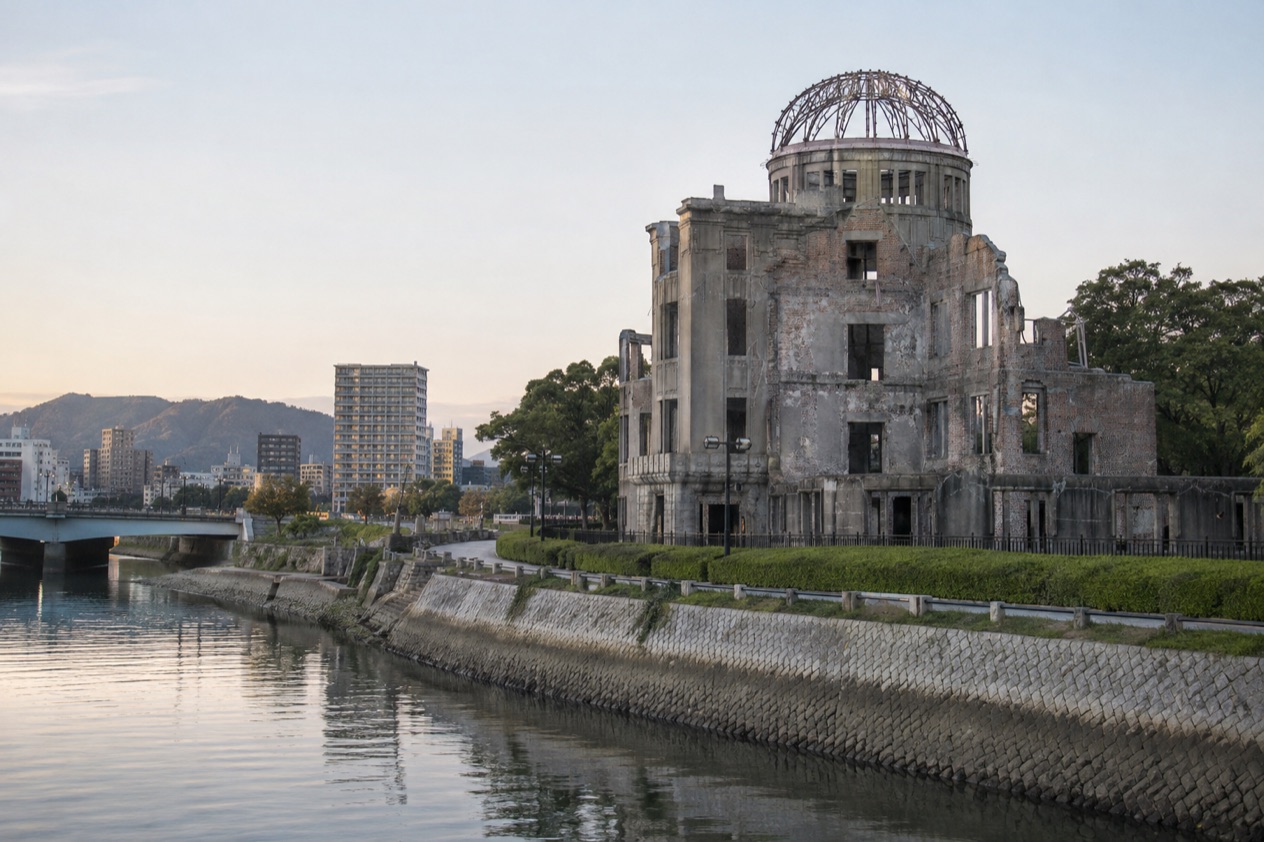
On a first morning in Hiroshima, a green and white streetcar rattles past the river, and the ribbed steel dome that survived the bomb comes into view across the water. The city around it is a working, eating, living place, with grills hissing in the okonomiyaki counters and trams threading through the center. Three days give you the memorial core of the city, the island shrine of Miyajima, a day among rabbits or autumn leaves, and enough evenings to taste what Hiroshima cooks.
Is three days enough in Hiroshima?
Three days is enough for a first visit, especially for travelers who want the memorial sites, the floating shrine and a few good meals without rushing.
What the days leave out is the wider prefecture, which the Japan National Tourism Organization describes as a land of the Seto Inland Sea, wooded mountains and clear waters. With more time you could hike or cycle, look at the autumn color of Sandankyo, or simply add a second round of okonomiyaki counters. Weather shapes the plan too, since the city’s own figures change a lot through the year.
| Month | Average high (°F) | Average low (°F) | Precipitation (in) | Rain days | Sunshine (hours) |
|---|---|---|---|---|---|
| January | 49.8 | 35.6 | 1.82 | 5.5 | 139 |
| April | 67.6 | 50.2 | 5.55 | 8.8 | 192 |
| July | 87.6 | 75.4 | 11.02 | 10.6 | 173 |
| October | 74.7 | 58.8 | 4.30 | 6.2 | 179 |
In practice, January is a winter coat month with snow or sleet on a good number of days, though very little of it piles up. July is hot and humid, with long rainy stretches that suit museum time better than island wandering. October is the comfortable middle, warm in the afternoon and cool in the evening.
Day 1 in Hiroshima
Spend the morning in the Peace Memorial Park, in the center of the city, and begin with the Atomic Bomb Dome, also called the Genbaku Dome. Visitors cannot go inside, so you view it from the outside, and that is how it is meant to be seen: a ruined frame left standing near the hypocenter, a UNESCO World Heritage Site within Peace Memorial Park. The Children’s Peace Monument and the Hiroshima National Peace Memorial Hall for the Atomic Bomb Victims stand among the park’s many other monuments, and the river runs along the edge.
Go to the Peace Memorial Museum for the afternoon, so that you walk in having already seen the ground it speaks about. It opened in 1955 inside the park and tells its story through belongings left by victims, artifacts from the bombing and survivor testimonies. Its message is ‘No More Hiroshimas.’ Give the rooms time and leave a gap afterward to sit down before moving on.
| Site | Open | Admission |
|---|---|---|
| Hiroshima Peace Memorial Museum | 7:30am to 7:00pm (March to July) | Adults ¥200 (groups of 30 or more adults ¥160 per person), high school students ¥100 (groups of 20 or more free), junior high school students and younger free |
For the evening, head to a counter that serves Hiroshima-style okonomiyaki, the savory crepe built on a noodle base and topped with pork and cabbage. The city has well over 2000 restaurants for it, so you can choose a small grill where the cook works in front of you. On August 6, lanterns carrying peace messages are floated along the river in front of the Dome at sunset, a tradition worth knowing about if your dates match.
Day 2 in Hiroshima
Day 2 belongs to Miyajima Island, the excursion that nearly every visit to Hiroshima includes. Itsukushima Shrine stands here with its red torii gate rising out of the sea, and the shrine has been a World Heritage Site since 1996. The island is also known for its deer, which wander the paths near the shrine.
Spend the morning at the shrine and the gate, looking at how the buildings sit over the water and how the view changes as the tide moves. Walk the lanes behind the shrine, where the island’s food stalls and souvenir shops are, and let lunch be something grilled or fried on a stick.
Back in the city, use the evening for the second Hiroshima specialty, anago, saltwater eel, grilled or served over rice. It is a different pleasure from okonomiyaki, softer and sweeter, and it makes a good contrast with the day’s sightseeing. If you still have energy afterward, a stroll along the river gives the city a calmer feel after a day of ferries and crowds.
Day 3 in Hiroshima
Day 3 suits a trip out to Okunoshima, the island of the wild rabbits, or, in the second half of autumn, to Sandankyo for its leaves, which are famous from late October to late November. Both take you out of the city and into the prefecture’s quieter landscape.
On Okunoshima, visitors must not chase or pick up the rabbits, and if you bring food it should be appropriate and set down in a safe place. At Sandankyo, Nidandaki can only be reached by the Sarutobi ferry boat.
Return to Hiroshima for the evening and spend it at the castle. Hiroshima Castle was originally built between 1589 and 1599 by Mori Terumoto, and it adds an older layer to a city mostly known for its twentieth-century story. Walk around its grounds and let the history sink in.
Dinner can be a second visit to an okonomiyaki grill, this time one you pick because it looked good from the street. The prefecture has more okonomiyaki restaurants per capita than anywhere else in Japan, so the choice is wide. Order it the way the cook suggests and watch the layers go on the griddle one by one. It is a good last meal in the city.
Where to stay for three days in Hiroshima
The best base for this plan is central Hiroshima, close to the Peace Memorial Park, since the park sits in the middle of the city and Day 1 is built around it. From there, the streetcar network reaches across the city, and an evening return from Miyajima or the countryside does not leave you far from a meal and a bed.
A central base also gives you the evening walk to the river and the Atomic Bomb Dome, which looks different when the lights are on. Okonomiyaki counters and anago restaurants are spread through the center, so dinner is not a trip of its own.
Travelers who plan to spend most of their time outdoors, hiking or cycling in the prefecture, may prefer a stay closer to the mountains or the Seto Inland Sea. The same goes for anyone who wants to wake up near Miyajima. For a city-centered plan like this one, though, the middle of town keeps everything within reach of the tram.
What to skip if you only have three days in Hiroshima
Skip a second big city. Osaka is 90 minutes away by shinkansen, but adding it turns a calm three-day stay into a day of packing and moving. The time is better spent on a second okonomiyaki dinner or a longer walk through the park.
Skip rushing the museum. It is tempting to add several other museums to Day 1, but the Peace Memorial Museum is heavy material, and a visit on top of other stops leaves less room to take it in. Keep the afternoon open and let the rest of the day be light.
Skip Sandankyo and Okunoshima together. Each is a full outing with its own logistics, including the Sarutobi ferry boat for Nidandaki and the rules for the rabbits. Pick one for Day 3 and save the other for a return trip, ideally one timed for autumn leaves.
Skip the outdoor list of hiking, cycling, ocean sports and skiing. They are real reasons to come back to the prefecture, but each one needs a day or more and the right season. Use the spare hours instead for the city itself, its river and its grills.
Getting around Hiroshima in three days
In the city, the streetcar is the way you will see Hiroshima. Hiroden, the Hiroshima Electric Railway, operates the longest tram network in Japan, 21.8 miles of it, and its fleet of trams from across Japan and Europe has earned it the nickname ‘The Moving Streetcar Museum.’ The company was established on June 18, 1910, and also runs buses in and around the prefecture.
For payment, Hiroden accepted the PASPY smart card from January 2008, and in spring 2025 it was replaced by the QR code based MOBIRY DAYS ticketing system. IC cards from other regions can be used on trains, buses and boats, as well as in vending machines and convenience stores, and these cards work throughout Japan even though each region has its own.
Getting to Hiroshima is by shinkansen from Tokyo, about four hours, or from Osaka, 90 minutes. By air, the flight from Haneda Airport to Hiroshima Airport takes 90 minutes. Day 1 in the park needs no transport beyond your feet and the tram, and Days 2 and 3 are excursions from the city, which you will reach by rail or by road and by water to the islands.
Good to know before you go
Carry some yen for small grills, stalls and museum admission, and keep an IC card handy for trains, buses and boats. In the city, normal habits apply, such as keeping an eye on your bag and following posted rules at memorials.
The rainy stretch of summer brings the most precipitation, July in particular, so pack a light rain layer then, and a warm coat for January. Treat the August 6 ceremony with the same quiet respect you would give any memorial gathering.
Sources
- Japan National Tourism Organization, Hiroshima (https://www.japan.travel/en/destinations/chugoku/hiroshima/), checked October 11, 2026
- Visit Hiroshima, the official guide (https://visithiroshima.net/), checked October 11, 2026
- Hiroshima Peace Memorial Museum (https://hpmmuseum.jp/?lang=eng), checked October 11, 2026
- Wikipedia, Hiroden (https://en.wikipedia.org/wiki/Hiroden), checked October 11, 2026
- Wikipedia, Hiroshima (https://en.wikipedia.org/wiki/Hiroshima), checked October 11, 2026
- Wikipedia, Okonomiyaki (https://en.wikipedia.org/wiki/Okonomiyaki), checked October 11, 2026
- Japan Meteorological Agency (JMA), Normal values 1991-2020, monthly (https://www.data.jma.go.jp/stats/etrn/view/nml_sfc_ym.php?prec_no=67&block_no=47765), station Hiroshima, elevation 4 m, checked October 11, 2026
- Japan National Tourism Organization, IC cards, Suica, Pasmo, ICOCA, how to use (https://www.japan.travel/en/plan/ic-card/), checked October 11, 2026
- Japan National Tourism Organization, Japan Rail Pass and regional passes (https://www.japan.travel/en/plan/jr-rail-passes/), checked October 11, 2026
To plan your stay
- Best Time to Visit Hiroshima: Cherry Blossoms, Autumn Weather, Rainy Season and Festivals
- Where to Stay in Hiroshima: Peace Park, Station Area, Castle District and Miyajima Island
- Hiroshima from Osaka: Shinkansen, Local Trains and a Day at the Peace Park
- Know Before You Go to Hiroshima: Entry, Money, Getting Around and Local Etiquette